







Understanding Compact Flash Cards
What Is a Compact Flash Card and Its Uses
A Compact Flash Card is a robust, high-speed storage device commonly used in professional cameras, audio equipment, and other electronic devices. If you’re wondering about compact flash card types, they include:
- Type I: Standard thickness, widely compatible
- Type II: Slightly thicker, used in specialized devices
- CFast and CFexpress: High-speed variants for professional media
Compact flash cards are favored for their durability, large storage capacities, and fast read/write speeds. They differ from SD cards in size and performance, which is why a compact flash card vs SD comparison often shows CF cards are better suited for demanding applications.
⚠️Warning: Using a CF card in an incompatible device can result in data loss or hardware issues.
Common Uses and Advantages
Compact flash cards are widely used in photography, videography, and industrial electronics. Key advantages include:
- High-speed data transfer for large files
- Compatibility with professional devices
- Reliable storage under harsh conditions
- Longer lifespan than most consumer-grade SD cards
Understanding these benefits explains why professionals prefer CF cards over other storage media.
Why Data Loss Happens on Compact Flash Cards
Reasons for Formatting and File Loss
Data loss on a Compact Flash Card can occur due to:
- Accidental formatting
- File deletion or corruption
- Power interruptions during data transfer
- Device incompatibility or errors
These issues highlight the importance of having reliable compact flash card recovery methods.
⚠️Warning: Immediately stop using the card after data loss to prevent overwriting recoverable files.
Signs That a CF Card Needs Recovery
Indicators that a CF card requires attention include:
- Device does not recognize the card
- Files appear missing or corrupted
- Error messages such as “Card Error” or “Format Required”
- Slow performance during data access
Recognizing these signs early improves success rates for compact flash card data recovery.
Methods for Compact Flash Card Recovery
Method 1: Undelete Files Using Pandaoffice Drecov
Test Environment:
- Windows 11 PC
- 256GB Compact Flash Card accidentally formatted
- Files included high-resolution photos and videos
Steps:
- Install Pandaoffice Drecov on your computer
- Connect the CF card via a compatible reader
- Launch the software and select the card for scanning
- Run a deep scan to locate lost or deleted files
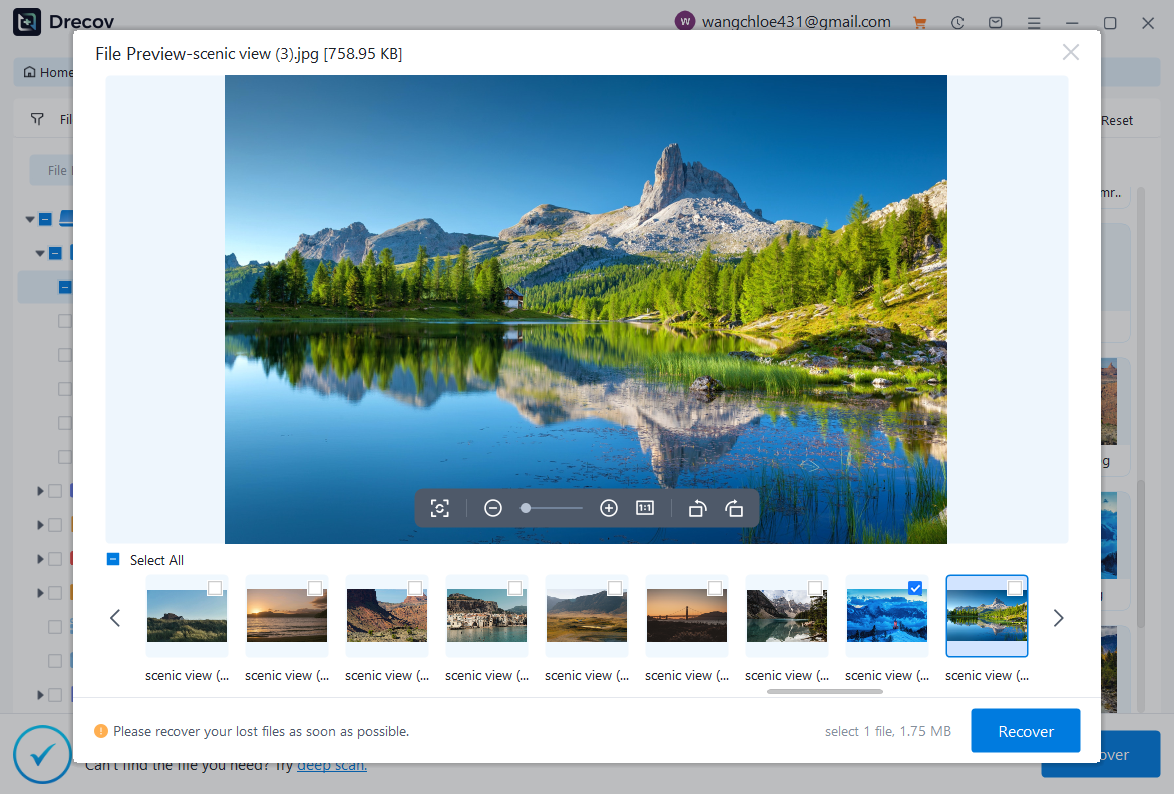
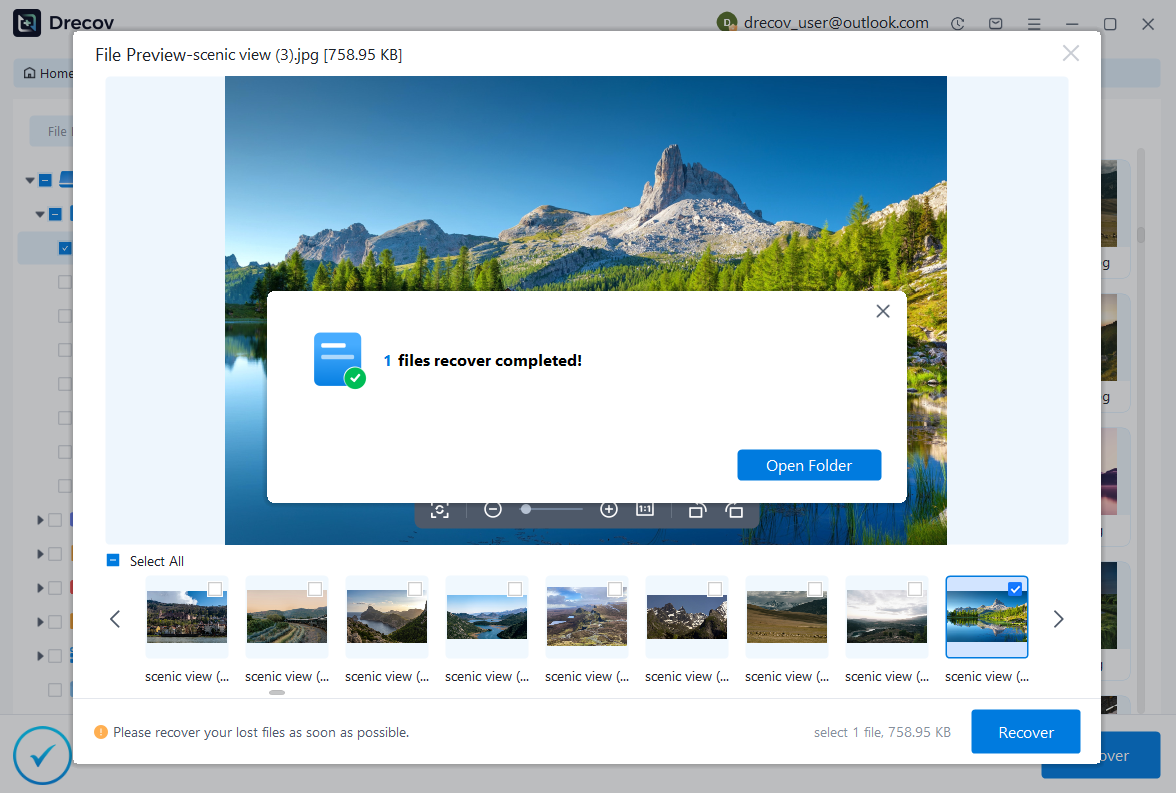
- Preview files and select those you want to recover
- Save recovered files to a different drive

Why Choose PandaOffice Drecov?
PandaOffice Drecov is a versatile and reliable solution for recovering a wide range of lost or inaccessible files. Whether you need audio recovery, video recovery, or excel recovery files, PandaOffice Drecov provides fast and efficient results, ensuring your important data is safely restored.
For creative professionals, it supports file recovery Illustrator projects, allowing designers to retrieve unsaved or accidentally deleted artwork without compromising file integrity. Businesses and individuals can also benefit from its restore Windows previous date feature, which helps recover documents or spreadsheets that were lost due to system errors or accidental deletions.
When external storage devices fail, such as a Lacie hard drive not showing up, PandaOffice Drecov can detect and restore files from these drives, ensuring you do not lose critical data. Even deleted files in the recycle bin can be recovered using its advanced recycle bin recovery software capabilities.
Additionally, the software supports recovering data from lost partitions, making lost partition recovery straightforward and reliable. Its intuitive interface allows users to perform audio recovery, video recovery, and excel recovery effortlessly, even for large or complex files.
With PandaOffice Drecov, you get a professional, all-in-one recovery solution that covers nearly every type of file and storage scenario. Its robust algorithms, combined with easy-to-use tools, make it the go-to choice for anyone who wants to restore lost or corrupted data quickly and securely.
This method is highly effective for undelete compact flash card operations.
⚠️Warning: Do not save recovered files back to the same card to avoid overwriting.
Method 2: Use Disk Utility Tools for File System Repair
Test Environment:
- Windows 10 system
- 128GB CF card showing file system errors
Steps:
- Connect the CF card to your PC
- Open Disk Management or equivalent utility
- Locate the card and run “Check and Repair”
- Follow prompts to repair logical errors
While this method may not recover deleted files, it restores access to a corrupted Compact Flash Card, allowing future recovery attempts.
Method 3: Recover from Backups
Test Environment:
- Professional DSLR camera
- CF card containing deleted photos synced to cloud or external backup
Steps:
- Access backup storage or cloud account
- Locate the deleted files section
- Restore selected files to a secure location
Using backups is the safest way to recover data without additional recovery tools.
Method 4: Command-Line Recovery Techniques
Test Environment:
- Windows 11 PC
- 64GB CF card unreadable in File Explorer
Steps:
- Insert the CF card into a PC CF card reader
- Open Command Prompt as administrator
- Type the following commands: chkdsk X: /f /r
attrib -h -r -s *.* /s /d - Replace
X:with the CF card’s drive letter - Press Enter and wait for scan completion
Command-line recovery works when the card is detected but files are inaccessible, providing a method to repair logical errors.
Method 5: Format and Recover Using Safe Tools
Test Environment:
- DSLR camera
- 128GB Compact Flash Card repeatedly prompting formatting
Steps:
- Connect the CF card to a PC CF card reader
- Use a trusted formatting tool (do not use the device’s default format if files are needed)
- Format the card with FAT32 or exFAT, depending on the device
- Run Pandaoffice Drecov or similar recovery software to scan and recover files
This method ensures the file system is refreshed while allowing compact flash card recovery from formatted media.
⚠️Warning: Formatting erases all data; recover important files first.
Method 6: Use Professional Recovery Software on Mac
Test Environment:
- MacBook Pro running macOS Ventura
- 256GB CF card with deleted video files
Steps:
- Connect the CF card via a PC CF card reader or USB adapter
- Launch Mac-compatible recovery software (e.g., Pandaoffice Drecov Mac)
- Select the CF card and perform a deep scan
- Preview and recover files to a separate drive
This method is particularly effective for compact flash card recovery Mac, ensuring compatibility with Apple systems.
Method 7: Use Cloud or Local Backups for Quick Restoration
Test Environment:
- Professional photography studio
- CF card with deleted RAW images
Steps:
- Check if the deleted files were synced to cloud storage or local backup
- Restore the required files to a safe location
- Verify integrity and move files to a permanent storage solution
Backups provide a fast and reliable method to restore files without relying on recovery software.
Frequently Asked Questions About CF Cards
What Are the Different Compact Flash Card Types?
There are several compact flash card types:
- Type I: Standard size, compatible with most devices
- Type II: Slightly thicker, used in specialized equipment
- CFast: Modern high-speed variant
- CFexpress: Next-generation card for professional 4K/8K video
Each type differs in speed, size, and compatibility. Knowing your card type ensures proper device usage and recovery procedures.
Compact Flash Card vs SD: Key Differences
A compact flash card vs SD card comparison shows:
| Feature | Compact Flash Card | SD Card |
|---|---|---|
| Physical Size | Larger | Smaller |
| Speed | High (professional) | Moderate to high |
| Durability | Very durable | Less durable |
| Use Case | Pro cameras, media | Consumer devices |
This helps professionals choose the right media for photography, videography, or industrial use.
Can I Undelete a Compact Flash Card?
Yes, undelete compact flash card operations are possible if the data hasn’t been overwritten. Using software like Pandaoffice Drecov improves recovery success for:
- Accidentally deleted files
- Formatted cards
- Corrupted file systems
Early intervention and stopping card usage increases recovery chances.
How Do I Recover Data from a Formatted CF Card on Mac?
Steps for recovery Mac:
- Connect the CF card via a compatible reader
- Launch Mac-compatible recovery software
- Scan the formatted card thoroughly
- Preview and recover desired files to a separate drive
This method is essential for photographers using Apple systems.
Conclusion: Key Takeaways on CF Card Recovery
Understanding Compact Flash Cards and Data Safety
A Compact Flash Card is a professional-grade storage solution. Knowing the compact flash card types and understanding compact flash card vs SD helps users choose the right media and maintain data integrity.
Best Practices for CF Card Handling and Recovery
- Stop using the card immediately after data loss
- Backup important files regularly
- Use proper PC CF card readers
- Recover files before formatting
- Use professional recovery software for deep recovery
Following these practices ensures successful compact flash card data recovery and prolongs the lifespan of the card.
Final Thoughts
While data loss can happen due to formatting, deletion, or corruption, proper recovery methods—including Pandaoffice Drecov—allow safe retrieval. Understanding your CF card type, maintaining backups, and using compatible readers are essential for secure and efficient storage management.





