







We have all been there. You are clearing out old files to free up space, and a few minutes later, you realize you deleted something incredibly important. The immediate panic sets in as you wonder how to restore recycle bin data that seemed lost forever. Fortunately, accidentally deleting files does not mean they are gone for good.
When you delete a file on Windows, it typically sits in a temporary holding area. However, if you empty that folder, recovery becomes slightly more complex. This comprehensive guide will walk you through the most effective methods to get your data back. We will explore native Windows features and introduce PandaOffice Drecov data recovery software, a powerful tool designed to salvage your files even after severe data loss.
Understanding the Basics of How to Restore Recycle Bin
Before diving into the step-by-step recovery solutions, it helps to understand what happens behind the scenes. When you send a file to the trash, Windows moves it to a hidden system directory. Learning how to restore in recycle bin interfaces is usually the first line of defense for any computer user.
Common Data Loss Challenges
- Accidental Emptying: Clicking the empty button by mistake removes the visible pointers to your files.
- Bypassing the Bin: Large files often bypass the temporary storage entirely via the Shift plus Delete shortcut.
- Storage Corruption: Malware infections or drive errors can corrupt the system folder, making files inaccessible.
Once the storage is cleared, the operating system marks that space as available for new data. This is why time is of the essence. If you continue using your computer, new files might overwrite the remnants of your deleted data, making recovery impossible.
Introducing PandaOffice Drecov Data Recovery Software
When manual methods fail, specialized software is your best option. PandaOffice Drecov data recovery software is an advanced utility built to scan storage drives at a deep cluster level. It can piece together fragmented file signatures even after a drive formatting event or a severe virus attack.
Whether you need to know how to restore deleted recycle bin files after a weekly cleanup or require a specialized USB flash drive recovery guide to salvage files from external media, this software handles various file systems including NTFS, FAT32, and exFAT.
⚠ Warning: Install it on a drive different from the one where your data was lost to prevent overwriting.
Solutions to Restore Recycle Bin Issues
Method 1: Standard Restoration from the Desktop
If you have not emptied your trash folder yet, the recovery process is incredibly simple. Windows keeps files intact until you explicitly command it to purge them.
- Double-click the trash icon on your desktop to open it.
- Locate the files or folders you need to bring back.
- Right-click the selected items and select the Restore option.
Consequently, the files will instantly disappear from the temporary folder and reappear in their original locations.
Method 2: Use PandaOffice Drecov Data Recovery Software
When files are permanently deleted, native Windows tools cannot see them. This is where PandaOffice Drecov data recovery software becomes essential. Follow these precise steps to restore emptied recycle bin data.
⚠ Warning: Install it on a drive different from the one where your data was lost to prevent overwriting.
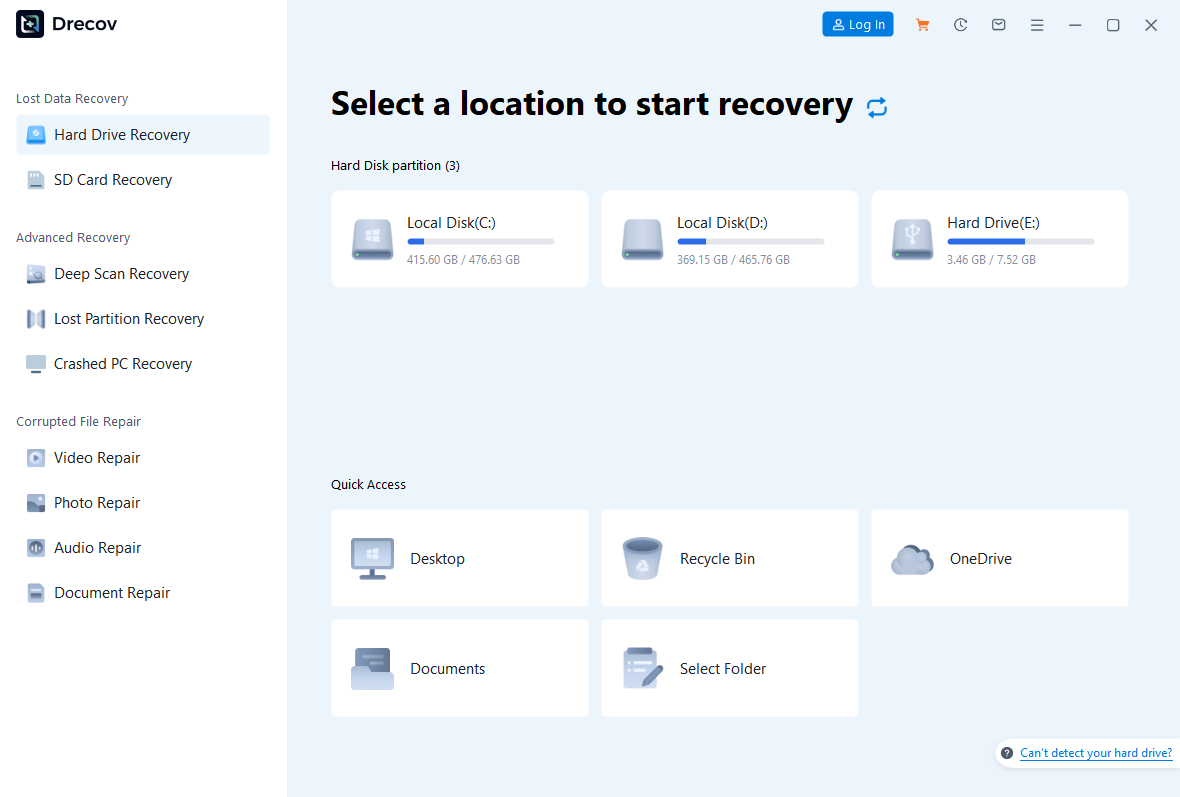
Step 1: Select the Target Location
Select the drive or original folder that actually stored the deleted file. Use C: only when that was the original location; the desktop Recycle Bin combines views from multiple volumes.
Step 2: Scan for Deleted Files
Click the Scan button. The software will initiate a quick scan followed automatically by a deep sector-by-sector scan to locate hidden file fragments.
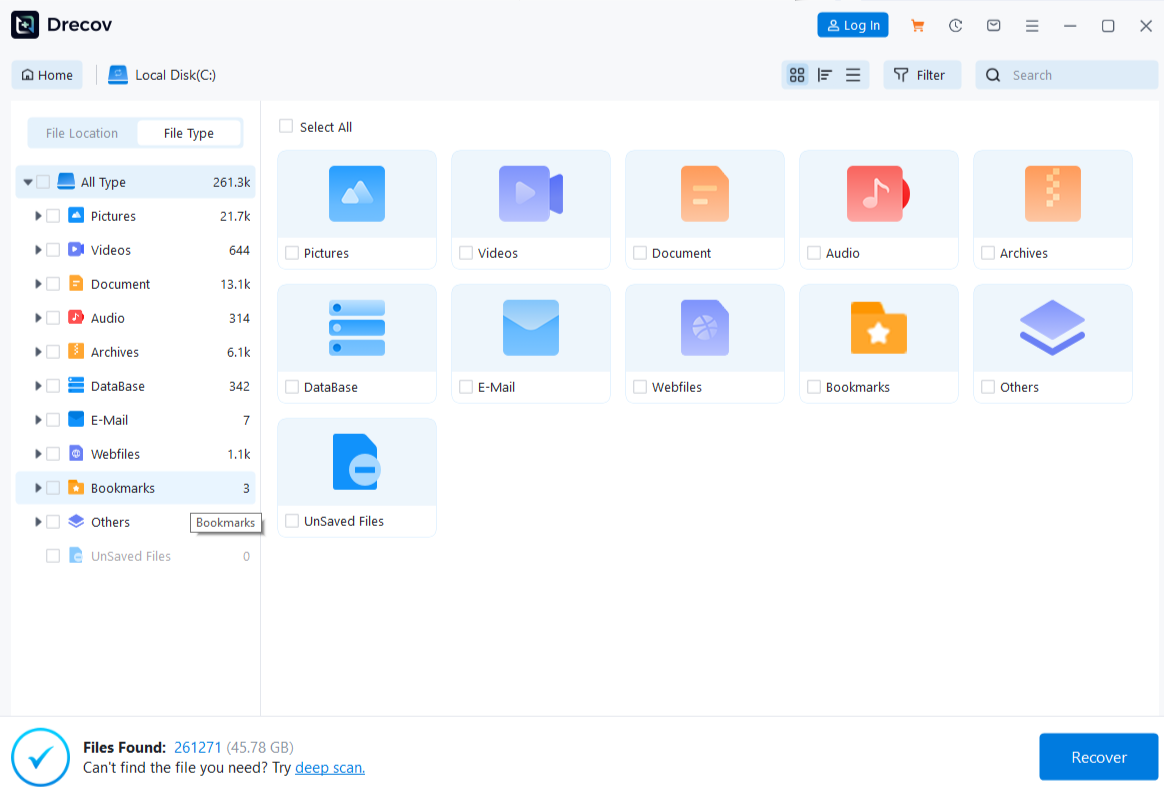
Step 3: Preview and Recover Your Data
Browse through the found files using the preview window. Check the boxes next to your missing items and click the Recover button, saving them to an external drive.
Alternative or Complementary Methods
If you want to explore other avenues before using third-party tools, Windows offers built-in utilities that might contain copies of your files.
1. Windows File Recovery Tool
Microsoft provides a command-line utility available in the app store for Windows 10 version 2004 and later.
- The Process: You open the command prompt as an administrator and type specific syntax strings like winfr C: E: /regular to attempt recovery.
- Pros: It is completely free and developed by Microsoft.
- Cons: The tool lacks a visual user interface, making it difficult for beginners. Incorrect syntax can also cause errors.
2. Restoring Previous Versions
If you have File History enabled, Windows automatically backs up files in your main user directories.
- The Process: Navigate to the folder that used to contain your deleted file, right-click the empty space, and select Restore previous versions.
- Pros: No software downloads are required.
- Cons: This method only works if you proactively configured File History before the data loss occurred.
Method Comparison Table
| Recovery Method | Success Rate | Difficulty Level | Time Required |
| PandaOffice Drecov | Very High | Easy | Fast |
| Windows File Recovery | Medium | Hard | Moderate |
| File History Backups | High | Easy | Fast |
Tips & Best Practices for Data Recovery
Maximizing your chances of a successful recovery requires following strict data discipline.
Optimizing Recovery Success
First, stop using the affected computer immediately. Activities like web browsing, downloading new applications, or even updating system files write new data to the drive. This background activity can permanently overwrite the space holding your deleted items. Furthermore, always save recovered files to an external hard drive or a secondary flash drive rather than the original source disk.
Maintaining Data Integrity and Pitfalls
Avoid registry modifications unless you are an expert. Changing values inside the Windows Registry Editor at HKEY_LOCAL_MACHINE\SOFTWARE\Microsoft\Windows\CurrentVersion\Explorer\Desktop\NameSpace can sometimes restore a missing desktop icon, but it will not bring back deleted file content. For users looking to optimize their operating system workspace further, learning tricks like removing OneDrive from File Explorer can streamline your folders and reduce accidental deletion mishaps.
Frequently Asked Questions
How to restore in recycle bin when the icon is missing?
Open the Windows Settings app by pressing the Windows key plus I hotkey. Navigate to Personalization, click Themes, and select Desktop icon settings. Check the box next to Recycle Bin and click Apply to make the icon reappear on your desktop.
Can I restore emptied recycle bin files without software?
You can only do this if you have an active cloud backup or File History backup turned on. Otherwise, once the folder is emptied, the file markers are deleted, and you must use an advanced tool like PandaOffice Drecov data recovery software to scan the drive clusters directly.
How to restore deleted recycle bin files that were very large?
Large files often bypass the temporary trash folder entirely due to system size limitations. Because they are instantly deleted, your best option is to immediately run a deep scan using dedicated recovery software.
Is it safe to use PandaOffice Drecov data recovery software?
Yes, the software operates in a read-only mode during the scanning process. This guarantees that it will not alter, overwrite, or damage your existing data while searching for lost files.
What should I do if my browser files are lost?
Data recovery tools can help restore local browser caches and application data folders. For specific web browser issues, referencing a guide on how to get Google Chrome bookmarks back provides targeted solutions for cloud-synced applications. For additional context on data storage rules, you can read the Microsoft Storage Documentation to understand how Windows manages file deletions.
Conclusion
Mastering how to restore recycle bin files is an essential skill for anyone navigating digital workspaces. While basic accidental deletions can be resolved in two clicks, permanent data loss requires a more robust approach.
Using PandaOffice Drecov data recovery software provides peace of mind by offering a dependable safety net when files seem permanently erased. However, software should be your secondary line of defense. Moving forward, implement a proactive data management strategy by configuring automated cloud backups and double-checking your file selections before pressing the delete key.
Recover from the original drive, not automatically C:
If the file remains in Recycle Bin, inspect Original Location and Date Deleted before restoring it. If a newer file now uses the same name at that location, keep both versions or restore the old one to a separate review folder rather than automatically replacing current work.
After the bin is emptied, identify the volume that originally held the file. A photo deleted from D: is not made recoverable by scanning C: merely because the Recycle Bin icon is on the desktop. Do not select a backup or recovery-output disk as the source.
Check an independent backup or cloud recycle bin first. If local scanning is still appropriate, use another physical device for recovered files. SSD TRIM, overwrite, encryption, and file fragmentation can prevent a complete result. Compare file contents and open representative recovered items; no general Very High/Medium comparison establishes a success rate for your case.
Further guidance: Microsoft Windows File Recovery






