







If Windows says the format did not complete successfully, do not keep clicking Format. The failure may come from an open volume, write protection, damaged file-system metadata, a faulty connection, or unstable flash memory. Formatting writes a new file system; it does not recover old files. If the device contains anything important, stop writes, check whether it remains stable, and recover the data before another formatting attempt.
Read the drive state before choosing a fix
The same message can appear on a USB flash drive, memory card, external drive, or internal partition, but the safest response depends on what Windows still detects. Open Disk Management without accepting any prompt to initialize or format. Record the disk capacity, partition layout, file-system label, and status. A recognizable volume with the correct capacity is a different case from a device that repeatedly disappears or reports a wildly incorrect size.
| What you observe | What it suggests | Safest next action |
|---|---|---|
| Correct capacity; files still open | The format target may be busy or the request was unnecessary | Copy and verify files, then close programs before deciding whether to format |
| Correct capacity; volume is RAW or inaccessible | Logical file-system damage is plausible | Recover data first; do not run CHKDSK or create a new file system yet |
| Write-protected message | Physical lock, policy, controller state, or failing media | Check the lock and device history; avoid registry tricks until data is safe |
| Disconnects, severe read errors, unusual heat, or sounds | Connection or physical failure | Stop retries; image the device or seek professional recovery |
| Stable empty device that never held needed data | A formatting or compatibility problem | Test another port and use a supported Windows formatting route |
Do not mistake a drive letter problem for a formatting failure. If the partition is Healthy but has no letter, assigning an unused letter may make it accessible without replacing the file system. Conversely, an Unallocated label means Windows does not currently see a usable partition. Creating a new volume writes metadata and should wait until recovery is complete.
Rule out a busy volume and a weak connection
A format cannot proceed when Windows or another program is actively using the target. Close File Explorer windows that show the drive. Exit backup, synchronization, media, virtual-machine, and security tools that may hold files open. If the device is removable, use Safely Remove, reconnect it, and restart Windows once. Do not force-remove it while activity is visible.
For a USB device, connect directly to the computer instead of a hub, dock, front-panel extension, or unpowered adapter. Try one known-good port. On an external hard drive, use the correct data and power cable. A format that works only when a cable is held in a certain position is not a successful repair; it is evidence of an unreliable connection.
Test the device on one other trusted computer only after protecting important data. If both systems show the same capacity and failure, the cause likely follows the device. If one system works, inspect the original computer’s USB controller, security software, or policy rather than repeatedly rewriting the drive.
Understand write protection before trying to remove it
Full-size SD adapters often have a physical lock tab. Move it to the unlocked position, reinsert the card, and check whether Windows still reports read-only access. A loose tab or damaged reader can report the wrong state, so another known-good reader is a useful comparison. Some USB drives also have hardware switches.
Software write protection may come from organizational policy, a read-only disk attribute, security software, or a device controller that has placed failing flash memory into a protective state. The last case matters: forcing writes to worn media can make remaining data harder to retrieve. Check whether existing files can be copied and whether the device remains stable before changing attributes.
DiskPart commands such as attributes disk clear readonly change a software flag; they do not repair worn flash, a damaged controller, or a physical lock. Confirm the selected disk by model and capacity before any DiskPart command. Never use clean as a formatting shortcut when files may still be needed, because it removes partition information.
Recover important files before file-system repair
If the failed format followed a RAW warning, accidental format request, or suddenly inaccessible volume, preserve the current state. Do not run CHKDSK first. CHKDSK modifies file-system structures and may discard damaged references while making a volume mountable. That can be useful after recovery, but it is not a read-only recovery method.
Drecov is Windows data recovery software for PCs, USB drives, SD cards, memory cards, HDDs, SSDs, and external drives. Its read-only recovery mode can search a stable, correctly detected source without repairing it. Quick Scan, Deep Scan, filtering, preview, and Lost Partition Recovery help locate photos, videos, documents, email data, audio, and archives. Drecov cannot repair physical damage or guarantee recovery of overwritten data. If the device disconnects or reports severe read errors, stop direct scans and consider an image or a recovery specialist.
Prepare another healthy drive with enough free space. Install and run Drecov from a Windows volume other than the affected source. Saving software or recovered files back to the source can overwrite the material you are trying to retrieve. SSD and some flash devices may process deletion through TRIM or internal garbage collection, so reducing further writes is more important than repeating scans.
⚠ Warning: Install it on a drive different from the one where your data was lost to prevent overwriting.
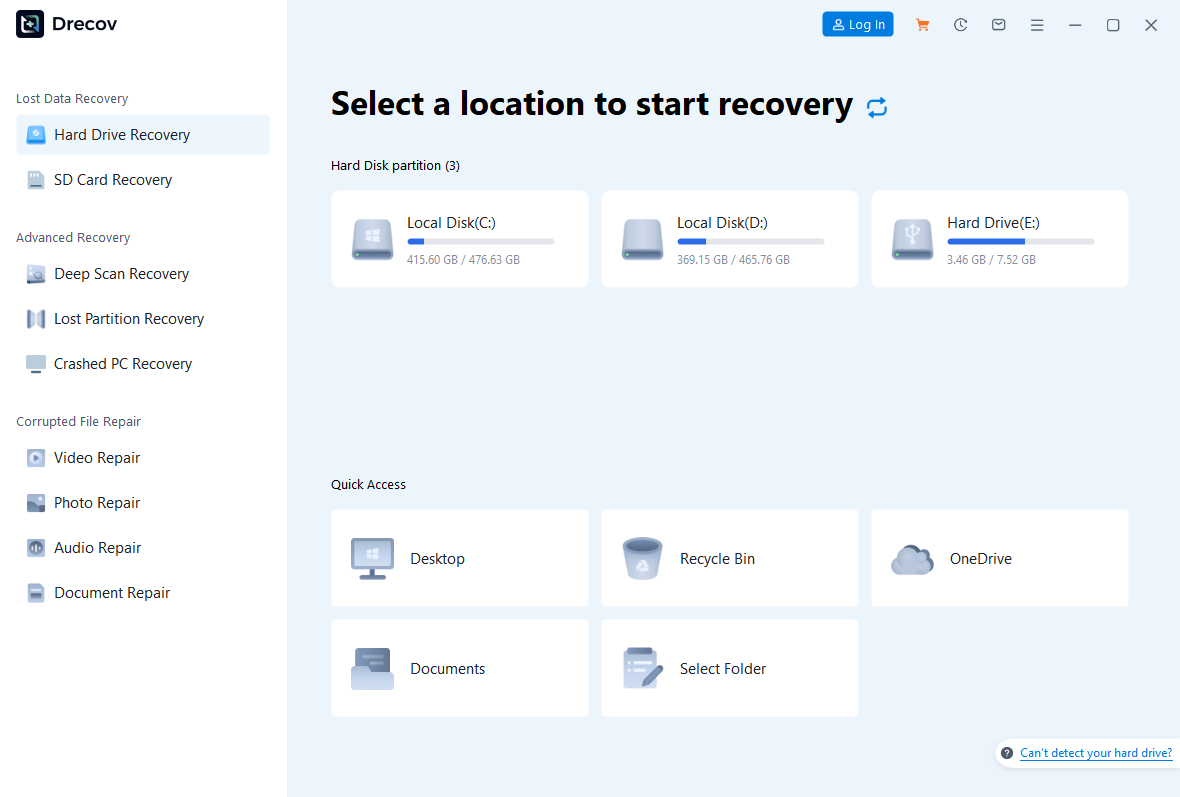
Step 1: Open Drecov and select the failed-format location
Choose the original partition, USB device, memory card, or external drive by capacity and former location. If the partition disappeared, use Lost Partition Recovery rather than creating a replacement volume.
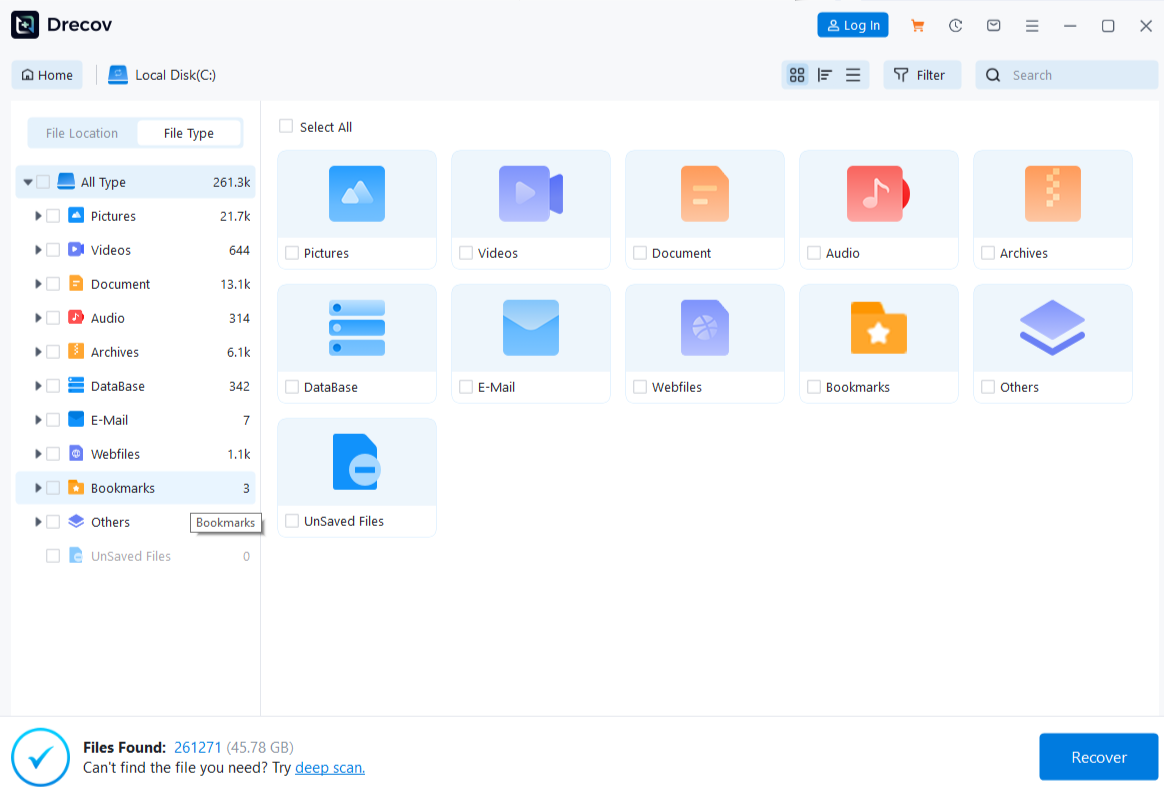
Step 2: Run Quick Scan and inspect recognizable folders
Start with Quick Scan. Filter by file type, name, date, and former path. Compare sizes and timestamps instead of choosing a candidate only because its name looks familiar.
Step 3: Use Deep Scan only while the device stays stable
If Quick Scan misses important files and detection remains consistent, continue with Deep Scan. Stop if the device drops offline, overheats, clicks, or develops serious read errors.
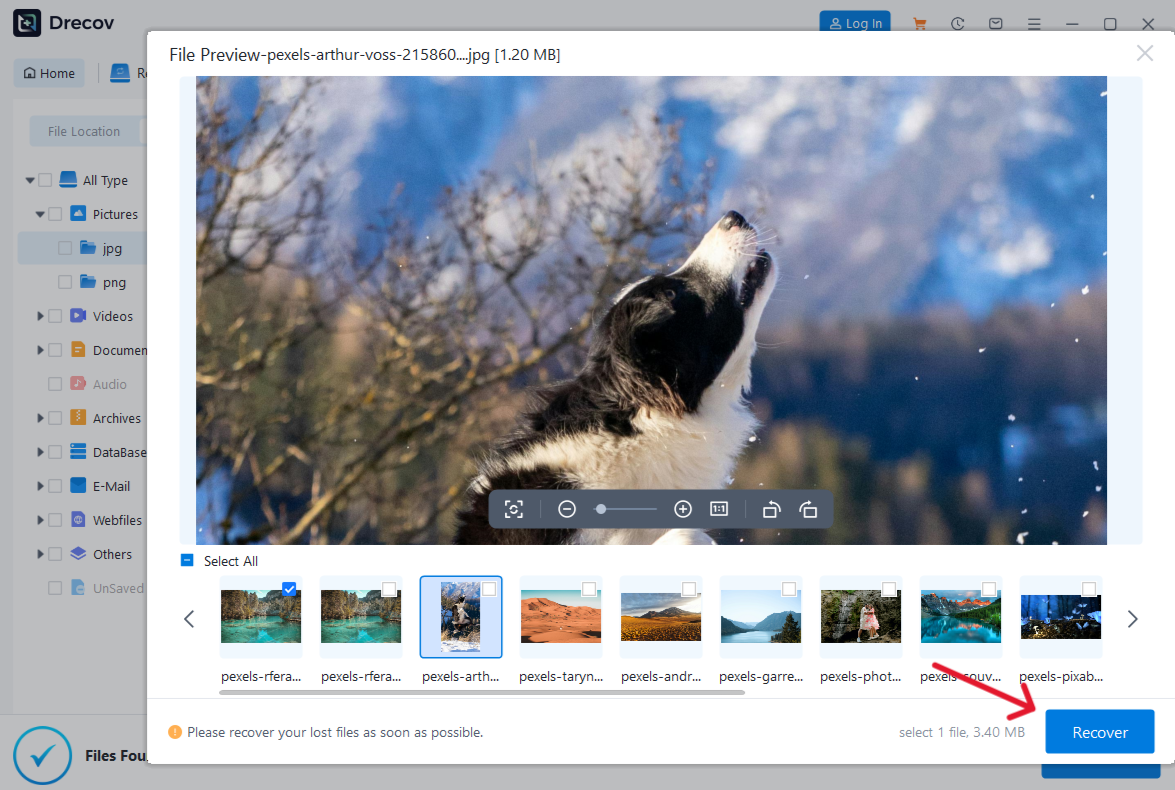
Step 4: Preview, recover elsewhere, and verify
Preview representative supported files. An available preview shows that sample can be decoded, but it does not certify every page or frame. Recover selected items to the prepared healthy drive. If output is not where expected, check Drecov Folder or Recovery Folder. Open a sample, compare sizes, and verify critical content before modifying the original device.
Choose the least destructive formatting route afterward
Once needed files have been copied and verified, decide whether the source is trustworthy enough to reuse. Microsoft states in its official Disk Management guidance that formatting destroys data on the volume. A quick format creates a new file table; it is still a destructive action and should not precede recovery.
For a stable removable drive, try formatting through Disk Management after closing programs and confirming the correct volume. Choose a file system according to the device and its destinations: exFAT is broadly useful for large files and cross-platform removable storage, while NTFS suits many Windows-focused uses. FAT32 has broad legacy compatibility but a 4 GB single-file limit. Do not change allocation unit size without a specific workload reason.
If Disk Management fails, check Event Viewer and the device manufacturer’s diagnostic tools. A full format performs more writes and is a poor stress test for a device already showing instability. Replacement is usually wiser when errors return, capacity changes, or the drive becomes read-only again. A successful format does not prove that failing flash or a weak cable is healthy.
Confirm the device before trusting it again
After formatting, safely eject and reconnect the drive. Copy a disposable test set that includes several small files and at least one large file. Open the copies, compare their total size, eject again, and verify them after reconnection. This catches a device that accepts directory entries but fails under sustained writing.
For related procedures, see the Drecov homepage, the guide to formatting a USB drive after recovery, an explanation of flash-drive formatting errors, and the safer path to format a USB drive without losing files. Use each method only after matching it to the device state.
The format did not complete successfully FAQs
Does a failed format erase everything?
Not always. The result depends on how far the operation progressed and what was written afterward. Stop using the device and assess recovery before retrying.
Can CHKDSK make the drive format normally?
It may modify file-system structures, but it is not a recovery tool. Recover important data first because those changes can affect later recovery.
Why did my USB drive become write-protected?
A physical switch, policy, disk attribute, reader issue, or failing flash controller can cause it. Identify the source before forcing writes.
Should I use DiskPart clean?
Not before needed recovery. Clean removes partition information and creates more work for locating the old layout.
Can Drecov finish the format?
No. Drecov recovers files from supported stable storage. Format or replace the device only after the recovered data has been verified elsewhere.
Conclusion
When the format did not complete successfully, treat the message as a storage-state warning rather than permission to repeat the operation. Check stability, connection, open handles, and write protection. If data matters, use Drecov to recover it to another healthy drive and verify the results first. Only then format the stable source with an appropriate file system, test it with disposable data, and replace it if the failure returns.
⚠ Warning: Install it on a drive different from the one where your data was lost to prevent overwriting.






