







The system service exception message is a Windows stop error that usually points to a faulty driver, incompatible software, damaged system files, memory trouble, or another kernel-level conflict. Record the stop code and any named file, remove newly added hardware, and try Safe Mode if crashes repeat. Back up important files before driver rollbacks, system restore, or storage repair. If Windows cannot remain stable, prioritize data access before aggressive troubleshooting.
Quick Answer
Undo the most recent driver, hardware, or security-software change, install trusted Windows updates, and check Device Manager. Test in Safe Mode, then run memory and system-file diagnostics. Microsoft recommends removing new hardware, using Safe Mode, checking drivers, updating Windows, and reviewing recovery options in its blue screen error guidance.
What the Symptom Usually Means
The stop name may appear with code 0x3B, but the useful clue is often the module listed after What failed. A storage-related filename does not automatically prove the disk is bad. Compare patterns with other Windows stop errors and use this system crash repair guide for controlled command use.
Write down when the crash occurs and what changed beforehand. A crash during one app suggests a driver or filter conflict. Crashes under memory load suggest RAM or low-level software. Crashes during disk access require both system and storage checks.
| Clue | Likely area | Safest first action |
|---|---|---|
| Named driver on blue screen | Driver or filter conflict | Update or roll back from a trusted source |
| Started after new hardware | Device or driver incompatibility | Remove the new device and retest |
| Works in Safe Mode | Third-party service or driver | Use a clean boot to isolate it |
| Random crashes and file errors | Memory, storage, or system corruption | Back up, then run diagnostics |
Preserve Work Before System-Level Troubleshooting
A system service exception usually calls for driver, memory, Safe Mode, or Windows-component checks rather than disk recovery. Save open work after the computer becomes stable and create a backup before uninstalling drivers, using System Restore, or resetting Windows.
Use the Stop-Screen Evidence
- Record the stop code and the module named after What failed.
- Note recent drivers, security software, hardware, and Windows updates.
- Test Safe Mode before changing several components at once.
- Check free space and backup access while Windows is stable.
When Storage Safety Becomes Relevant
Escalate to data protection only if crashes coincide with disk read errors, disappearing volumes, inaccessible folders, or an unbootable system. CHKDSK modifies file-system structures and should not precede recovery of irreplaceable files. Formatting and partition changes do not belong in normal BSOD diagnosis.
Fixes From Lowest to Highest Risk
1. Remove Recent Hardware and Peripheral Changes
Shut down, disconnect nonessential new devices, and restart. If the error began after installing RAM, a graphics card, or a USB device, test without it. Do not open hardware or reseat components unless you understand static and warranty risks.
2. Start in Safe Mode
Use Windows Recovery Environment and choose Startup Settings, then Safe Mode. If the crash stops, focus on third-party drivers, antivirus filters, virtualization tools, and recent applications. Safe Mode is diagnostic and should not become the permanent configuration.
3. Update or Roll Back Drivers
Use Windows Update or the device maker for drivers. If the problem began immediately after an update, roll back that specific driver. Avoid bulk driver-updater utilities because they can introduce unrelated versions and obscure the cause.
4. Run a Clean Boot
Disable non-Microsoft services and startup apps in a documented sequence, restart, and test. Re-enable half at a time until the fault returns. Restore normal startup after identifying the conflicting service.
5. Check Memory and Windows Files
Run Windows Memory Diagnostic and review its result. Then use System File Checker and DISM on a stable installation. These tools repair Windows components; they do not recover personal files that were deleted or overwritten.
6. Use Restore or Startup Repair Carefully
If a recent system change caused the error, System Restore may roll back drivers and settings. For boot failures, the Windows recovery media guide explains how to prepare access without treating a reset as the first choice.
7. Recover Files Before Resetting
If Windows remains unstable and files are inaccessible, use a stable connection or another Windows computer for recovery. The file recovery tool guide provides a complementary scan and verification workflow.
Recover Files Only if the BSOD Blocks Normal Access
If Safe Mode or a backup still provides access, copy important files with built-in tools first. Recovery software becomes relevant when files are missing or the Windows installation cannot stay usable, yet the storage device remains physically stable and readable from another Windows environment.
What PandaOffice Drecov Does Here
PandaOffice Drecov is Windows data recovery software with a read-only recovery mode, Quick Scan, Deep Scan, filters, preview, and export to a healthy destination. It does not diagnose RAM, repair drivers, or fix the system service exception itself.
⚠ Warning: Install it on a drive different from the one where your data was lost to prevent overwriting.
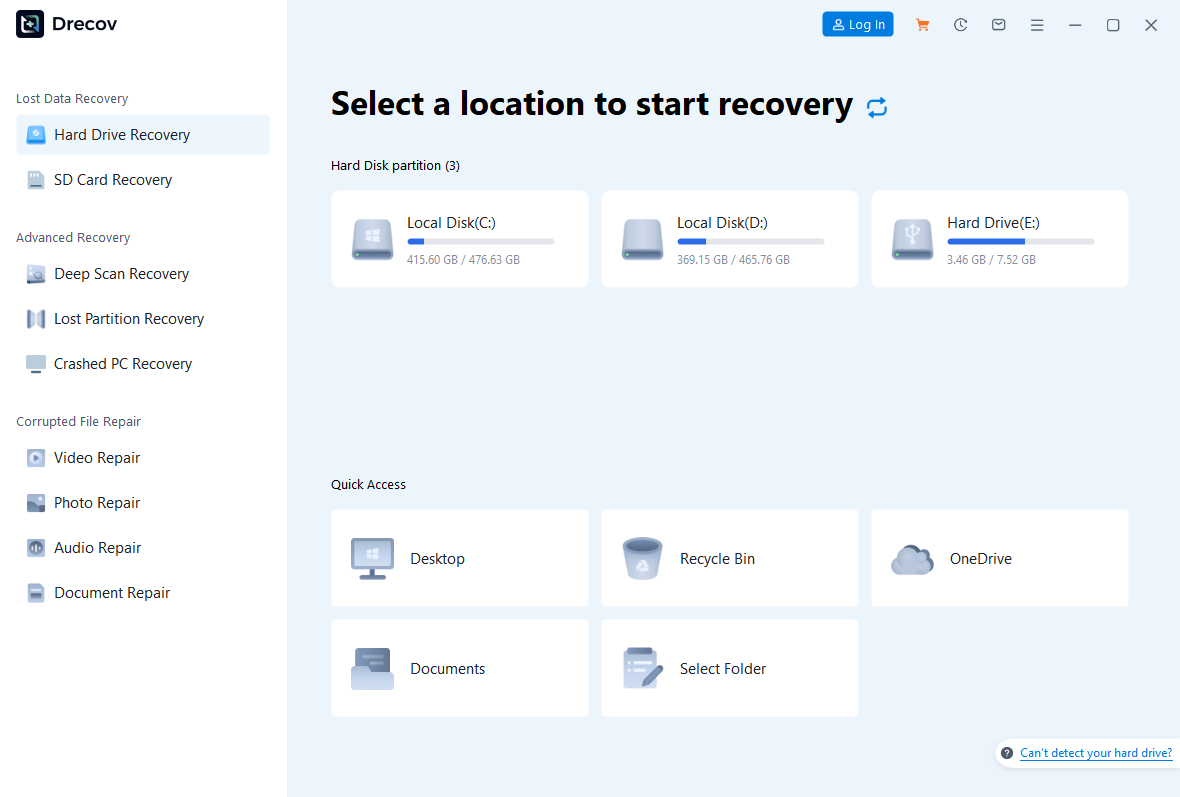
Step 1: Select the Original Windows Location
Open Drecov from a healthy Windows installation and select the original location of the inaccessible files. If the system disk is attached to another PC, identify it by capacity and partitions. Do not install onto the affected Windows partition.
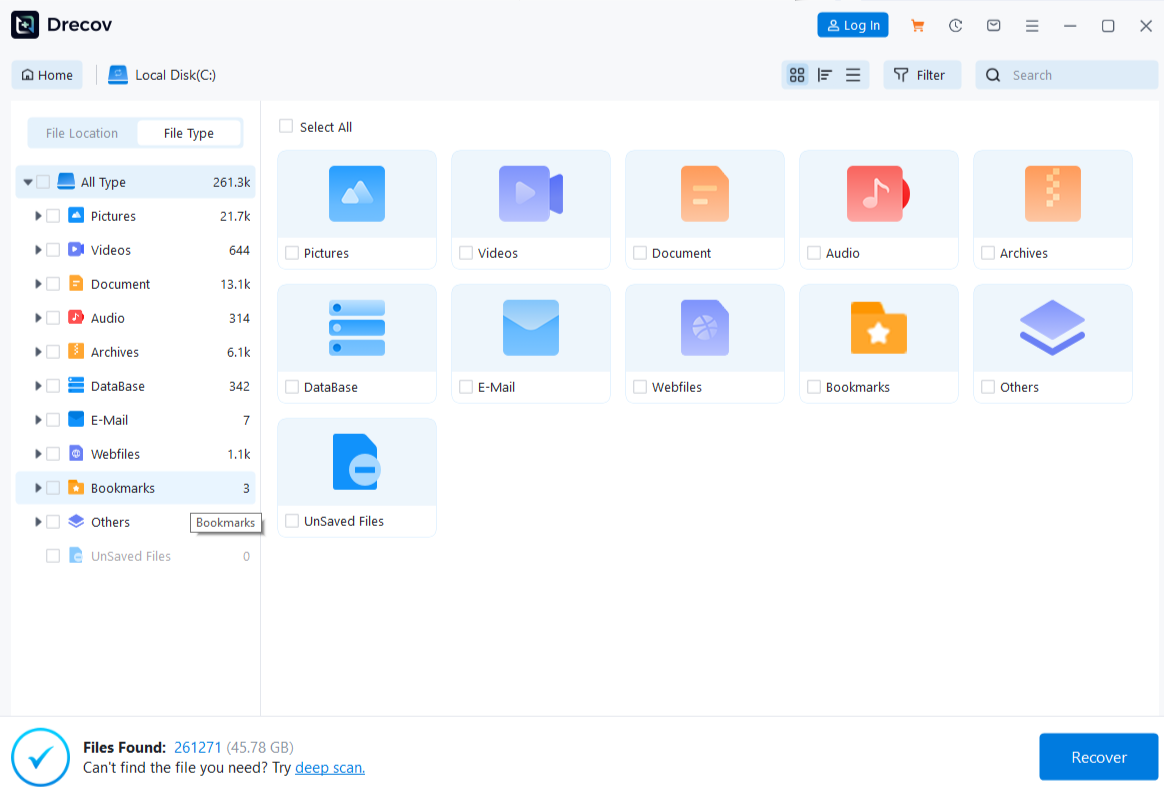
Step 2: Scan According to the Loss
Use Quick Scan for recently missing files. Continue with Deep Scan only when the expected folders are absent. Stop direct scanning if the disk disconnects or reports severe read errors, since the problem may extend beyond the BSOD.
Step 3: Preview and Export Critical Files First
Filter for priority documents and media, preview them, and recover them to another healthy device. Check the Drecov folder or Recovery folder if the chosen destination does not show the results where expected. Verify files before System Restore, reset, or storage repair.
When to Stop DIY Work
Stop repeated boots if the storage device disappears, clicks, or reports severe read errors. Also stop if every memory test shows hardware errors. Software cannot repair defective RAM or physical drive damage, and repeated crashes can create more file-system inconsistency.
A recurring blue screen alone does not prove physical storage failure. However, disk disappearance, severe read errors, and abnormal sounds change the diagnosis. Stop stress tests in that branch, preserve an image when feasible, and let a specialist evaluate hardware before more Windows repair commands run.
Prove the BSOD Fix Under the Original Workload
Repeat the Trigger Carefully
Use the application or device that previously caused the stop error. Check Reliability Monitor and Event Viewer for fresh failures. One successful boot is not enough if the crash appeared only under load.
Restore Normal Startup
Re-enable clean-boot services and startup items in controlled groups. Keep only the driver rollback or software change that actually prevented the error. Confirm Device Manager no longer shows the related problem.
Verify Data Separately
Open important files and confirm backups remain readable. System stability and file integrity are separate outcomes. Retain recovered copies until the machine completes normal work and several restarts.
Use the Faulting Module as a Lead, Not a Verdict
A filename on the stop screen identifies code active near the failure, but it may not be the original cause. A security filter can call a storage driver, while faulty memory can corrupt data used by an unrelated module. Compare several crashes before replacing hardware or removing software.
Build a Controlled Retest
Choose one repeatable activity, such as opening the affected application or connecting the recent device. Test after one change, record the result, and restore the prior setting when it does not help. This method prevents multiple simultaneous changes from hiding the real source of the system service exception.
SYSTEM SERVICE EXCEPTION FAQs
Is SYSTEM_SERVICE_EXCEPTION always a driver problem?
No. Drivers are common, but memory, system files, security filters, storage, and hardware can also cause the stop error.
What does ntfs.sys mean on the blue screen?
It identifies a Windows file-system component in the failing path. It does not alone prove the disk or NTFS is the root cause.
Can SFC fix the error?
SFC can replace damaged protected Windows files. It cannot fix faulty hardware, every driver conflict, or recover missing personal files.
Should I reset Windows immediately?
No. Back up data and try targeted low-risk checks first. A reset changes the system extensively and may remove applications or data depending on the option.
Conclusion
Fix SYSTEM_SERVICE_EXCEPTION by using the stop-screen clues, undoing recent changes, testing Safe Mode, and checking drivers, memory, and system files in order. Protect files before restore, reset, or disk repair. PandaOffice Drecov is relevant only when stable storage contains lost or inaccessible data.






