







Accidentally deleting files can disrupt work and personal projects. Windows’ Recycle Bin often serves as the first line of defense against data loss, allowing users to restore mistakenly deleted files. However, once files are permanently removed from the Recycle Bin, recovering them requires advanced methods. This guide explores how to restore things from Recycle Bin, strategies for prevention, and practical recovery solutions, including Pandaoffice Drecov, a professional tool for retrieving permanently deleted files.
⚠️Warning: Once the Recycle Bin is emptied, the risk of permanent data loss increases significantly. Immediate action improves the likelihood of successful recovery.
Understanding the Recycle Bin in Windows
How the Recycle Bin Works
The Recycle Bin is a temporary storage location for deleted files in Windows. Key points include:
- Files remain in Recycle Bin until it is manually emptied or storage limits are reached
- Deleting files with Shift + Delete bypasses the Recycle Bin entirely
- Restoring files from Recycle Bin returns them to their original folder
Understanding these mechanisms is crucial for those attempting to recover deleted files deleted from Recycle Bin or seeking preventive measures.
Storage Limits and Automatic Deletion
Windows sets a size limit for the Recycle Bin per drive. When the limit is exceeded:
- Older deleted files are automatically removed
- Users may not be able to retrieve them via the Recycle Bin
- Third-party recovery tools become essential for retrieving lost data
Managing storage limits ensures that the Recycle Bin remains an effective safety net for accidental deletions.
Restoring Files from Recycle Bin
Step-by-Step Recovery
To restore deleted Recycle Bin items:
- Open the Recycle Bin on your desktop
- Browse or search for the deleted file
- Right-click the item and select Restore
- The file will return to its original location
This method is straightforward for most accidental deletions, including documents, photos, and videos.
Searching for Specific Files
Windows provides built-in search functionality:
- Type the file name or extension in the Recycle Bin search bar
- Use filters such as date deleted or file type
- Quickly locate the intended file for restoration
This approach saves time when dealing with large Recycle Bins or multiple deletions.
Recovering Files Across Drives
If multiple drives are in use:
- Each drive has its own Recycle Bin storage
- Restoring a file returns it to the drive where it originated
- Ensure the correct drive is selected when searching
Proper awareness of drive locations enhances efficiency when attempting to find files deleted from Recycle Bin.
Advanced Recovery Options
Using Recycle Bin Recovery Software
Files permanently deleted or missing from the Recycle Bin require specialized software. Recycle Bin recovery software can:
- Scan storage sectors for remnants of deleted files
- Retrieve a file deleted from Recycle Bin, even after emptying
- Support a wide range of file types, including documents, images, and videos
Professional recovery tools maximize the chance of full restoration.
Pandaoffice Drecov for Advanced Recovery
For files deleted beyond the Recycle Bin retention period, Pandaoffice Drecov offers advanced recovery:
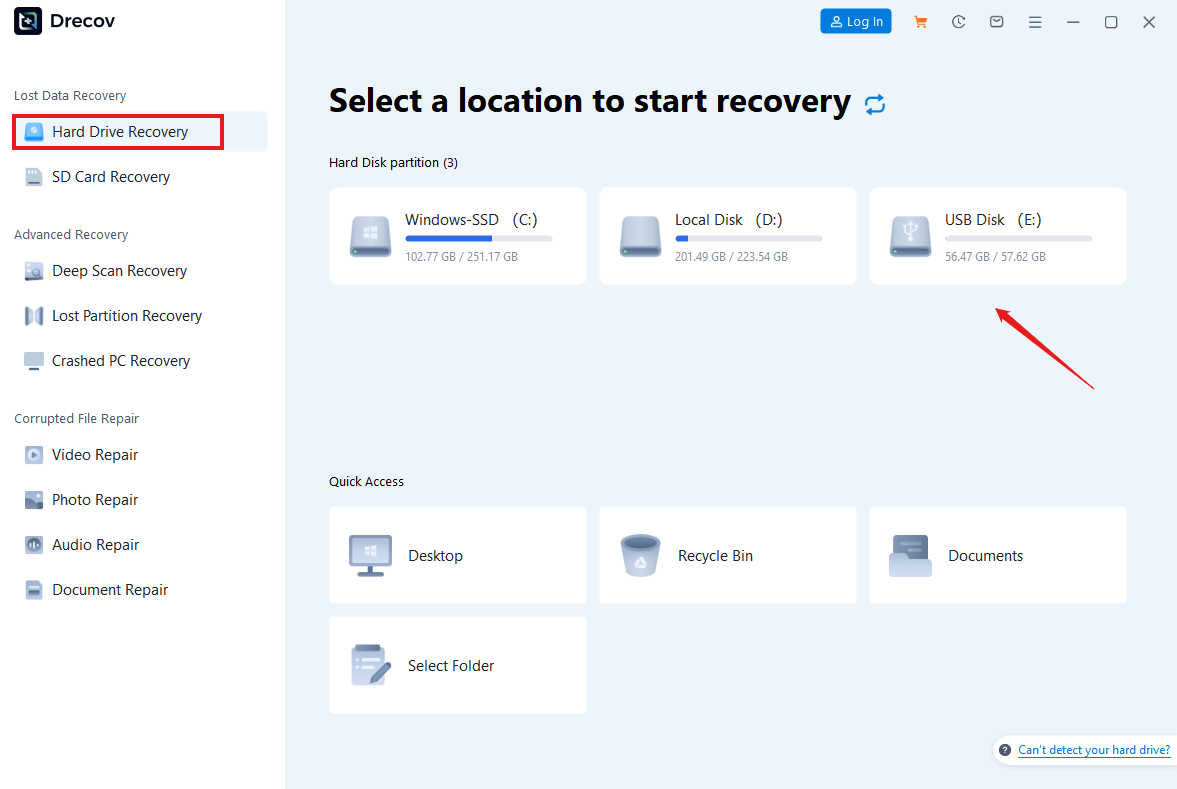
- Selecting the right recovery software is essential when unexpected data loss occurs. Pandaoffice Drecov provides a powerful, secure, and efficient solution designed to handle a wide range of storage failure scenarios across different devices.
- Advanced Recovery for SD Cards and Hard Drives
- Pandaoffice Drecov supports recovering photos from an SD card as well as performing professional hard drive recovery. Whether files were accidentally deleted, a storage device was formatted, or data was lost due to corruption, its deep scan technology thoroughly analyzes storage sectors to locate recoverable content. The software is compatible with internal drives, memory cards, and various file systems, ensuring flexible recovery options in different environments.
- Reliable Support for Recovering External Hard Drives
- The software also specializes in recovering external hard drives that become inaccessible due to accidental formatting, partition loss, or file system damage. It automatically detects connected devices and performs comprehensive scans without altering original data, helping improve recovery success rates.
- Efficient Recovery of Deleted Photos
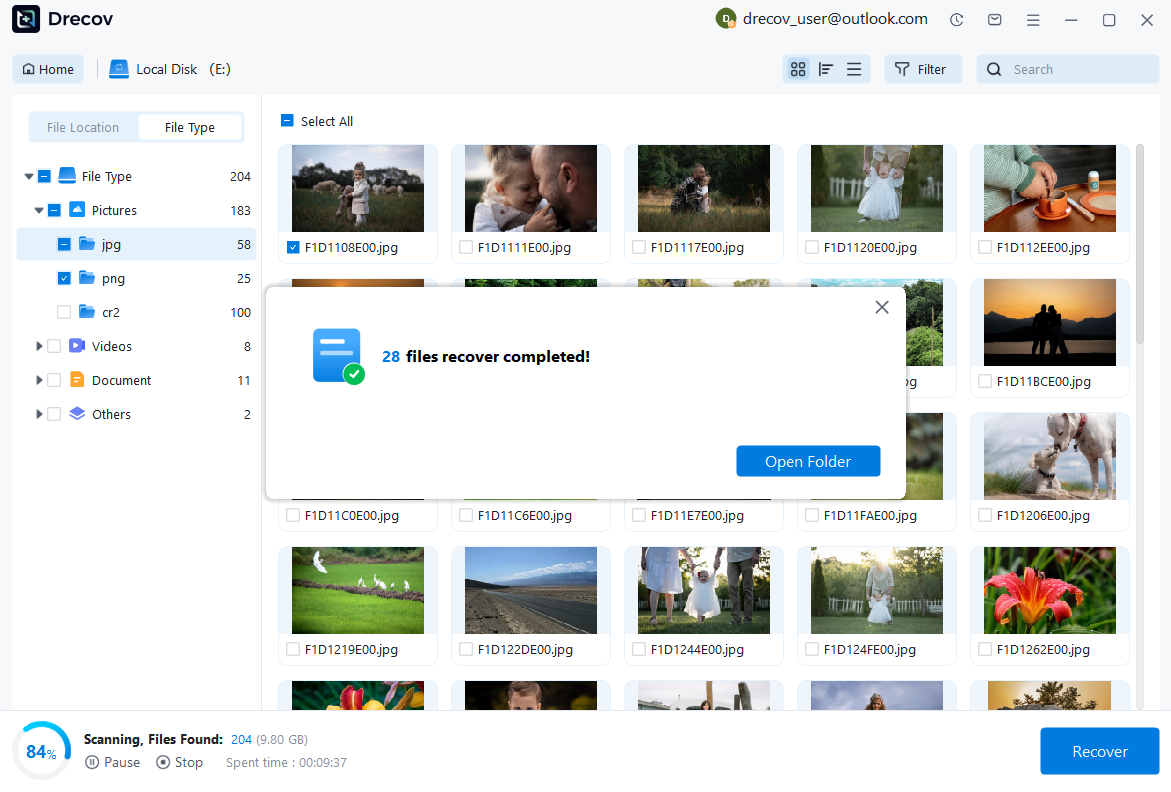
- One of its strongest capabilities is recovering deleted photos, even after permanent deletion from the Recycle Bin. The built-in preview feature allows users to verify files before restoration, ensuring accurate and controlled recovery.
- With strong scanning performance, broad device compatibility, and an intuitive interface, Pandaoffice Drecov offers a dependable and professional solution for modern data recovery needs.

⚠️Warning: The longer the storage device is used after deletion, the lower the chance of successful recovery. Avoid writing new data to the drive.
When Native Recovery Fails
Even with careful use of the Recycle Bin, some files may remain unrecoverable. Signs include:
- Files were deleted using Shift + Delete
- Recycle Bin was emptied before retrieval
- Files were lost due to storage corruption or malware
In these cases, third-party recovery software becomes essential.
Preventive Measures
Regular Backups
Preventing data loss is always better than recovery:
- Use cloud storage or external drives for backups
- Enable File History or Windows Backup
- Schedule periodic backups to ensure critical files are protected
Organizing Recycle Bin Usage
- Avoid large, unnecessary files in the Recycle Bin
- Regularly check the Recycle Bin before emptying
- Educate users about safe deletion practices
This approach minimizes accidental permanent deletion and reduces reliance on recovery software.
Best Practices for Recovery
- Act quickly after accidental deletion
- Avoid installing software or saving files on the affected drive
- Use professional tools like Pandaoffice Drecov only when native recovery fails
Advanced Recovery Techniques for Recycle Bin Files
Recovering Permanently Deleted Files
When files are deleted from the Recycle Bin or removed using Shift + Delete, they no longer appear in the Bin. Advanced recovery techniques are required to recover deleted files deleted from Recycle Bin:
- Stop using the affected drive immediately – continued writing can overwrite deleted file data.
- Use recovery software capable of deep scanning, such as Pandaoffice Drecov, to locate residual data fragments.
- Preview and selectively restore files to avoid overwriting important existing files.
Recovering permanently deleted files relies on how quickly action is taken. Delays reduce success rates because deleted files are often overwritten by new data.
Scanning External Drives and USB Storage
Deleted files are not limited to internal drives. Recycle Bin recovery software can scan external devices such as USB flash drives, external HDDs, and SD cards:
- Connect the external device to your computer
- Select the drive for a deep scan
- Locate lost or deleted files
- Restore them to a safe location
This method ensures users can retrieve a file deleted from Recycle Bin even from external media, maintaining data integrity.
⚠️Warning: Avoid saving recovered files back to the same drive until scanning completes to prevent overwriting.
Recovering Specific File Types
Documents, Photos, and Media
Different file types require slightly different approaches:
- Documents (Word, Excel, PDF): Use filters in recovery software to locate by extension or modification date.
- Photos and Videos: Preview thumbnails before restoration to confirm correct files.
- Archives (ZIP, RAR): Ensure the recovery tool supports compressed formats for accurate retrieval.
By targeting file types, users can streamline the recovery process and find files deleted from Recycle Bin more efficiently.
Handling Large-Scale Deletions
In cases where hundreds or thousands of files are accidentally deleted:
- Divide the scan into smaller batches for efficiency.
- Prioritize important directories first to maximize recovery success.
- Use recovery software’s sorting and filter features to organize results.
Large-scale recovery is common in enterprise scenarios, requiring careful planning to prevent data loss.
Cross-Platform and Enterprise Recovery
Files deleted from network drives or shared folders may not appear in local Recycle Bins. Admins should:
- Check server-level Recycle Bin or trash
- Ensure users have appropriate permissions
- Use enterprise-grade recovery software to scan server drives
This ensures critical shared data can be restored when needed.
Using Recovery Logs and Reports
Professional software often provides:
- Recovery logs showing scan results
- Status reports of recovered files
- Option to export results for documentation
Logs help admins verify that restore deleted Recycle Bin operations are successful and maintain accountability.
Common Issues and Solutions
Problem: Recovered files are corrupted.
Solution: Use software with file integrity checks or multiple scan modes.
Problem: Recovery software cannot detect files.
Solution: Run a deep scan instead of a quick scan, and avoid using the drive in the meantime.
Problem: Recovered files appear with generic names.
Solution: Check file extensions and preview content before saving.
Preventive Tips for Avoiding Data Loss
Regular Backups
Backing up files regularly reduces dependency on Recycle Bin recovery:
- Cloud storage services ensure deleted files can be restored from the cloud.
- Local backups on external drives provide additional safety.
- Scheduling automatic backups prevents accidental permanent loss.
Optimizing Recycle Bin Usage
- Avoid deleting large files unnecessarily
- Confirm file selection before emptying the Bin
- Educate users about safe deletion techniques
These measures reduce the risk of permanent data loss and make recovery straightforward.
Best Practices for Recovery
- Act immediately after noticing a deletion.
- Avoid saving new files on the same drive until recovery completes.
- Use professional tools like Pandaoffice Drecov selectively for files that are permanently deleted or lost due to corruption.
Combining preventive strategies, native Recycle Bin features, and professional recovery tools ensures maximum data security and recovery success.
⚠️Warning: Delay in recovery or continued use of the affected drive may permanently overwrite deleted files.
Final Notes on Recovery
- Recovery success depends on file type, drive activity, and elapsed time since deletion.
- Users should document the recovery process, especially in professional environments.
- Keeping a combination of cloud backups and local recovery strategies ensures both convenience and safety.
By following these practices, both casual users and enterprise administrators can can i recover deleted files from recycle bin effectively and maintain access to critical data across devices.






