







How We Create Data Recovery Content You Can Trust
People rarely look for data recovery advice on an ordinary day. They arrive after a folder disappears, an SD card becomes unreadable, or a work drive stops responding. In that moment, unclear advice can make a stressful situation worse. Our job is to make the next safe step easier to understand.

Our promise to readers
Protect the data first.
When valuable files are at risk, our primary role as a recovery guide is to protect the user’s data. That means knowing when to advise stopping drive activity, checking for existing backups, recovering files prior to any repair attempts, or recognizing when physical hardware issues call for professional help over DIY tools.
PandaOffice Drecov publishes guides on deleted files, formatted storage, lost partitions, inaccessible devices, file systems, and common Windows issues. We write for readers who may be anxious, pressed for time, or unfamiliar with technical jargon. For every method, we clearly explain what changes, what limits exist, and what needs to be checked before proceeding.
Data recovery is never guaranteed. Factors like continued disk activity, overwriting, SSD TRIM, encryption, file fragmentation, and hardware failure can all alter the outcome. Where there is insufficient evidence to support a definitive conclusion, we do not make our statements sound as though they were certain.
1.A safe first step
We identify what the reader should stop doing before we introduce recovery or repair options.
2.A clear boundary
We distinguish logical data loss that software may address from physical failure that requires specialist help.
3.An honest outcome
We separate files found by a scan from files that were restored, opened, and verified.
From the editorial team
Good recovery content should reduce panic—not add pressure
When someone searches for recovery help, they may be worried about photos, coursework, business records, or work they cannot easily replace. Our editorial approach is to make the next safe decision clear, explain the limits, and never use that anxiety to force a recommendation. Editorial principle overseen by Chloe Wong, Senior SEO Strategist & Content Experience Lead
That principle influences both the information we include and the order in which we present it. A guide should not bury an important warning below a download button. It should not recommend formatting before needed files are recovered. It should not make a physically failing drive sound like a routine software problem. And it should never turn a possibility into a promise.
Safety-first standard
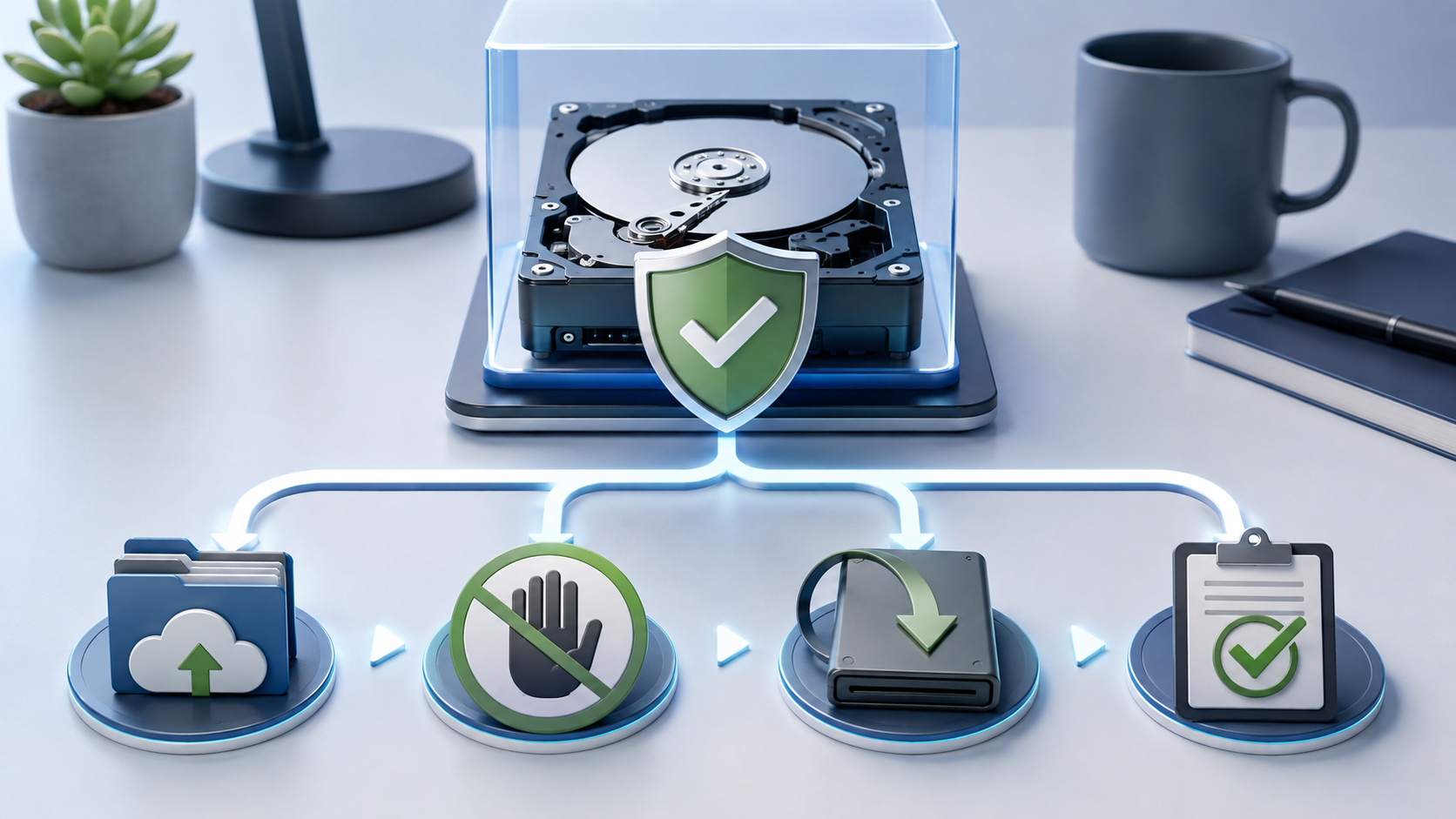
Recovery comes before repair when the data still matters
Data retrieval extracts readable files to a safe secondary location, which differs completely from fixing damaged storage. File-system repair, partition rebuilding, initialization, and formatting modify the original storage structure. Those changes may be appropriate later, but they should not casually come before the recovery of important data.
Stop unnecessary use of the affected device
New downloads, installations, file transfers, system updates, and ordinary computer use can overwrite space that still contains deleted data. When practical, we tell readers to stop writing to the affected drive and avoid installing recovery software on the same partition that held the lost files.
Check backups without changing the source
Recycle Bin, File History, cloud version history, application recovery folders, and existing backups may provide a safer solution. We explain when these options apply before moving to deeper scans or source-modifying fixes.
Save recovered files somewhere else
Direct all recovered output to a separate, healthy drive. Returning files to the source storage can overwrite existing data, causing unrecoverable corruption or permanent loss.
Recognize physical warning signs
Clicking, grinding, burning smells, abnormal heat, repeated disconnections, severe read errors, or a device that cannot remain stable are reasons to stop repeated scans. Software cannot repair physical hardware damage; important media may require professional imaging or laboratory recovery.
Why this matters
A technically possible action is not always the safest first action. For example, CHKDSK may modify file-system structures, while formatting creates a new file system. If the files are more important than restoring access to the volume, recovery or imaging should come first.
From question to publication
How we create and review an article
Not every article carries the same level of risk. A guide to locating a download folder and a tutorial about a RAW drive do not require identical review depth. We adjust research, testing, warnings, and technical review to the decisions the reader may make.
We define the real reader problem
The editor identifies the intended reader, operating system, device or application, likely loss scenario, expected answer, and actions that could put data at risk. A page must solve the problem promised by its title rather than use the question as a doorway to an unrelated product pitch.
We look for the strongest available sources
Research starts with current operating-system documentation, device manufacturers, software publishers, technical standards, and original project documentation. Community reports may reveal a common symptom, but they are not treated as the sole proof of a technical conclusion.
We test what can be tested—and label what was not
When a method or feature is tested, we record the environment and observed result. When we rely on official documentation or reasoned explanation instead, we do not present it as an internal hands-on test.
We write around the reader’s decisions
The writer explains prerequisites, safe order of operations, expected results, alternatives, limitations, and stop conditions. Technical terms are defined when they affect the decision rather than added to make the article sound more advanced.
We check clarity, accuracy, and commercial disclosure
An editorial review checks whether the article answers its headline, whether sources support the claims, whether the language overpromises, and whether the relationship between PandaOffice and Drecov is clear.
High-risk guidance receives technical review
Storage behavior, file-system repair, formatting, lost partitions, unstable devices, and recovery limitations may require review by a technical specialist. The reviewer checks the relevant version of the article—not merely its topic or title.
We publish accountable information
A substantial guide should display a named author, a meaningful update date, and a reviewer when that review actually occurred. “Updated” should represent a real factual, technical, or usability review rather than a cosmetic edit.
Publication is not the end of the process
We monitor software changes, broken links, reader reports, new official guidance, and articles whose instructions no longer match the current interface. Any substantive errors that have been identified will be corrected.
Sources and fact-checking
We match the strength of the statement to the strength of the evidence. Some facts can be confirmed directly in official documentation. Others require a reproducible test. Some recovery outcomes can only be described as possibilities because storage history and device condition vary. Our editors are expected to recognize the difference.
| Evidence source | How we use it | Important limitation |
|---|---|---|
| Official primary documentation | Operating-system behavior, product features, compatibility, commands, and published limitations | Documentation can become outdated and may not describe every real-world failure |
| Documented internal testing | What happened in a named environment under a defined scenario | A test observation does not prove the same result for every device |
| Credible technical sources | Supporting explanation, independent context, security information, and recognized research | We check whether the source directly supports the claim being made |
| Community discussions | Identifying recurring symptoms, edge cases, and questions readers are asking | A forum comment or user report is not treated as universal evidence |
For changing information such as product features, prices, system requirements, and interface steps, we check the most current authoritative source available at the time of review. If reliable sources disagree, we explain the uncertainty, narrow the statement, or leave the claim out until it can be verified.
Testing transparency
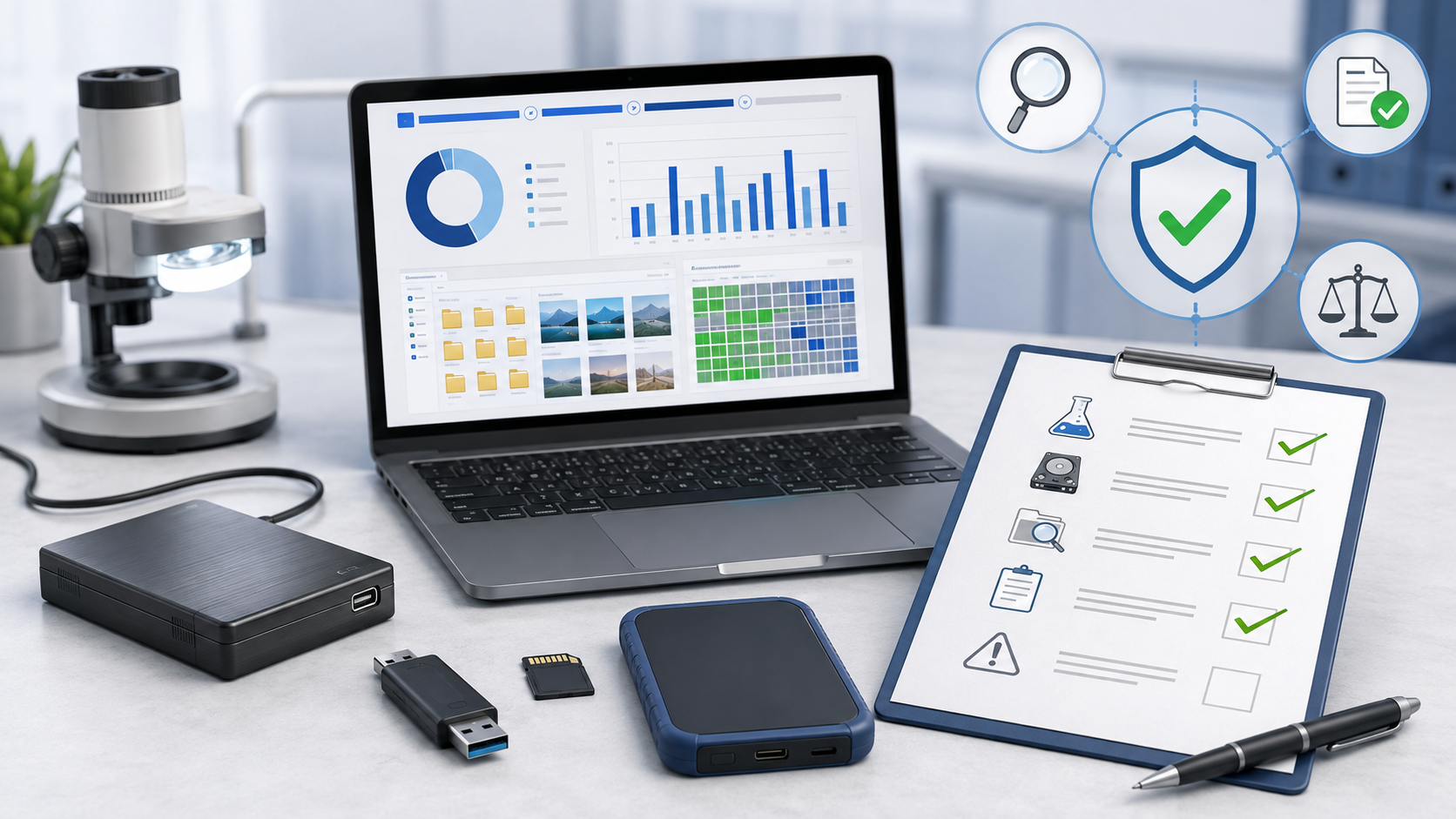
A test label is useful only when the conditions are understandable. A publishable record should connect the claim to a date, tester, software environment, storage environment, loss scenario, procedure, observed output, and known limitation.
| Test detail | What we record | Why readers need it |
|---|---|---|
| Software environment | Windows edition and build, product version, and relevant settings | Behavior and interfaces change between versions |
| Storage environment | HDD, SSD, USB drive, SD card, capacity, connection, file system, and encryption status | Different storage technologies behave differently after deletion |
| Loss scenario | Deletion, emptied Recycle Bin, quick format, RAW file system, lost partition, or another defined event | A method that fits one loss event may not fit another |
| Baseline files | File types, count, approximate size, and checksums where integrity is being measured | Known originals allow meaningful comparison |
| Observed result | Detected, previewed, restored, opened, integrity verified, partially recovered, or not recovered | A scan result is not the same as a usable recovered file |
| Limitations | Missing filenames, damaged output, incomplete metadata, failed scans, instability, and deviations | Failures and uncertainty belong in the evidence record |
Where our evidence currently stands
Drecov is expanding its centralized testing records. Until a claim is supported by a dated record, we do not publish a numerical recovery rate, imply that the result applies to every device, or call an observation “proven.”
When a guide includes a tested method, we aim to show the tested system, software version, device type, and recovery scenario where practical. This helps readers understand why a result may differ across devices, file systems, and loss events.
Language with a clear meaning
What we will not claim without evidence
| What the evidence may support | What it does not automatically prove |
|---|---|
| “The scan detected a deleted file.” | “The file was successfully recovered.” |
| “The application displayed a preview.” | “The complete file was undamaged.” |
| “The method worked in this documented test.” | “The method will work for everyone.” |
| “Drecov supports recovery from this type of storage.” | “Recovery is guaranteed from every device.” |
| “A product performed well under stated criteria.” | “It is universally the best product.” |
| “Lost Partition Recovery can search for recoverable data from a lost partition.” | “The software repairs hardware or guarantees partition-table reconstruction.” |
This distinction is especially important in data recovery. A filename may survive even when the file content has been overwritten. A preview may be incomplete. A restored document may open but contain damage. We prefer a precise description over a more impressive but unsupported conclusion.
100% human-written
People make the editorial decisions—and remain responsible for them
Every article published under this policy is written by a human author. People decide which reader problem to solve, which sources deserve trust, how to explain a technical risk, what belongs in the article, and whether the evidence supports the conclusion.
Automated spelling, grammar, accessibility, link-checking, or formatting tools may assist with quality control. They do not replace the author, perform a recovery test, decide whether a drive is safe to scan, or receive authorship credit. We do not allow automated tools to invent tests, statistics, quotations, credentials, customer stories, recovery rates, or sources.
A named person remains accountable for the finished article. When technical review is shown, it means the named reviewer evaluated the relevant content version and accepted responsibility for that review.
No paid rankings
Payment cannot buy an editorial conclusion
PandaOffice develops and sells Drecov. Our articles may explain where Drecov fits a recovery problem, and our site branding should make that relationship clear. We do not present ourselves as an unrelated third-party publisher when discussing our own product.
We do not accept payment in exchange for a favorable review, a higher position in a comparison, inclusion in a “best” list, removal of a supported criticism, or conversion of a product limitation into a recommendation. Payment cannot change a documented test result.
Reviews and comparisons should explain the criteria that matter to the reader. Depending on the task, those criteria may include supported platforms, storage types, file systems, loss scenarios, preview capability, safety, usability, licensing, support, and documented observations. Strengths and relevant limitations belong together.
Accuracy after publication
We correct meaningful errors and explain important changes
Software interfaces, operating systems, product features, prices, and official recommendations change. Readers also notice details that editors may miss. We review good-faith reports and prioritize issues according to the risk they create.
- Critical issues include instructions that could overwrite data, worsen hardware damage, expose credentials, or create a serious security or privacy risk.
- Material issues include incorrect compatibility information, product limitations, comparison conclusions, recovery claims, and source interpretations.
- Routine updates include outdated labels, broken links, clearer explanations, improved accessibility, and new official documentation.
Editorial accountability
Policies matter only when real people are responsible for applying them. Drecov separates editorial responsibility from technical responsibility so readers can understand what each byline means.
Chloe Wong
Senior SEO Strategist & Content Experience Lead
Chloe oversees reader intent, clarity, structure, editorial consistency, disclosure, content maintenance, and whether an article genuinely answers the problem promised by its title.
Alan Chan
Technical Director & Senior Data Recovery Specialist
Alan reviews high-impact recovery guidance, storage and file-system explanations, physical-failure boundaries, test terminology, and warnings that protect readers from unsafe source-modifying actions.
Feedback & Corrections
We appreciate your help keeping our guides accurate and helpful! If you spot an error or a step that needs updating, please drop us a note at support@pandaoffice.com with the page URL, the detail in question, and any supporting info. If it’s about a specific process, letting us know your OS, software version, and exact error message helps us investigate much faster.
For your security, please avoid sharing private files, passwords, license keys, or screenshots with sensitive info.





