







If you have ever accidentally deleted a crucial document and felt that sudden rush of panic, you are likely searching for a solution and wondering is recuva free to use in 2026. While it remains a popular choice, understanding the specific recuva free version limitations is essential before you begin the recovery process. Many users specifically want to know how much data can recuva recover for free and whether its capabilities match today’s complex storage systems. Developed by Piriform, Recuva is widely regarded as one of the most accessible data recovery tools for Windows users—lightweight, easy to install, and designed for everyday people rather than IT specialists.
However, as the digital landscape evolves, these limitations have become more pronounced compared to modern alternatives. To help you navigate the world of data recovery, this article provides a deep dive into what Recuva can—and cannot—do, alongside professional methods to ensure your data stays safe.
What Is Recuva and How Does It Work
Overview of Recuva Software
At its core, Recuva works by scanning your storage device for files that the operating system has marked as deleted but has not yet overwritten with new data. When you delete a file, Windows does not immediately erase the actual bits from the disk; it simply marks the space as “available.” Recuva acts like a digital archaeologist, uncovering these traces before they vanish forever.
The free version is particularly popular because it offers a functional set of features without requiring a credit card. You can perform quick scans, deep scans, and even preview certain images before deciding to restore them. But while the “free” price tag is appealing, users often encounter walls when dealing with complex data loss scenarios.
Key Features of the Free Version
The Recuva free version provides the following essential capabilities:
- Standard File Recovery: Retrieve deleted documents, photos, and music.
- Scan Modes: Access to both “Quick Scan” for recent deletions and “Deep Scan” for older files.
- Wizard Interface: A step-by-step guide that makes the process beginner-friendly.
- Portable Version: The ability to run the software from a USB drive to avoid overwriting data on the main hard drive.
Recuva Free vs Professional Version
Understanding the Recuva free version limitations starts with comparing it to the Professional edition. While the underlying recovery engine is largely the same, the Professional version adds layers of utility that are vital for advanced users.
Feature Comparison Table
| Feature | Free Version | Professional Version |
| Basic File Recovery | Yes | Yes |
| Deep Scan | Yes | Yes |
| Virtual Hard Drive Support | No | Yes |
| Automatic Updates | No | Yes |
| Premium Customer Support | No | Yes |
| Compatibility | Windows XP – 11 | Windows XP – 11 |
Pricing Differences
As of 2026, the Professional version is typically priced around $24.95 per year. For most casual users, this cost might seem unnecessary until they encounter a situation involving a virtual disk or a technical bug that requires priority support.
Core Limitations of Recuva Free Version
No Deep Recovery for Virtual Drives
One of the most significant Recuva free version limitations is the lack of support for virtual hard drives (VHD/VHDX). If you use virtual machines or disk images, the free version cannot “see” inside these files to recover lost data. You must upgrade to the Pro version to unlock this specific functionality.
Limited File System and Drive Support
Recuva is strictly a Windows tool. It handles NTFS, FAT32, and exFAT well, but it cannot read Mac (APFS) or Linux (Ext4) partitions. Furthermore, if a drive appears as “RAW” or “Unallocated” in Windows Disk Management, Recuva often fails to recognize the drive entirely, meaning you cannot even start a scan.
Is Recuva Free Really “Unlimited”?
A common question users ask is: is Recuva free truly free with no data caps? Technically, yes. Unlike many competitors that limit you to 500MB or 2GB of recovery, Recuva allows you to recover an unlimited amount of data for free. However, the “catch” is the success rate. While it allows you to try to recover everything, it often struggles with fragmented files or large videos (2GB+), which frequently result in corrupted “unplayable” files after recovery.
Performance and User Experience Limitations
How much data can Recuva recover for free?
While there is no software-enforced limit on how much data can Recuva recover for free, the physical limit is determined by your drive’s health. In 2026, modern SSDs use a technology called TRIM, which proactively clears deleted data. Because Recuva has not received a major architectural update in years, its ability to bypass TRIM or handle modern NVMe drive structures is lower than that of contemporary professional tools.
The Interface and Support Gap
The interface has remained largely unchanged for a decade. It lacks modern filtering options, such as sorting by “Date Modified” or “Original Folder Path” effectively. Additionally, if you run into an error code, free users are relegated to community forums. There is no direct line to technical experts to help you troubleshoot a mission-critical recovery.
Professional Alternative: PandaOffice Drecov
When the Recuva free version limitations prevent you from getting your files back—especially in cases of formatted drives or RAW partitions—you need a more robust solution. PandaOffice Drecov is a professional-grade recovery tool designed for 2026 hardware and file systems. It offers a 99.8% success rate and supports over 2,000 file types.
⚠ Warning: Install it on a drive different from the one where your data was lost to prevent overwriting.
How to Use PandaOffice Drecov for Data Recovery
If Recuva fails to find your files, follow these steps to use PandaOffice Drecov:
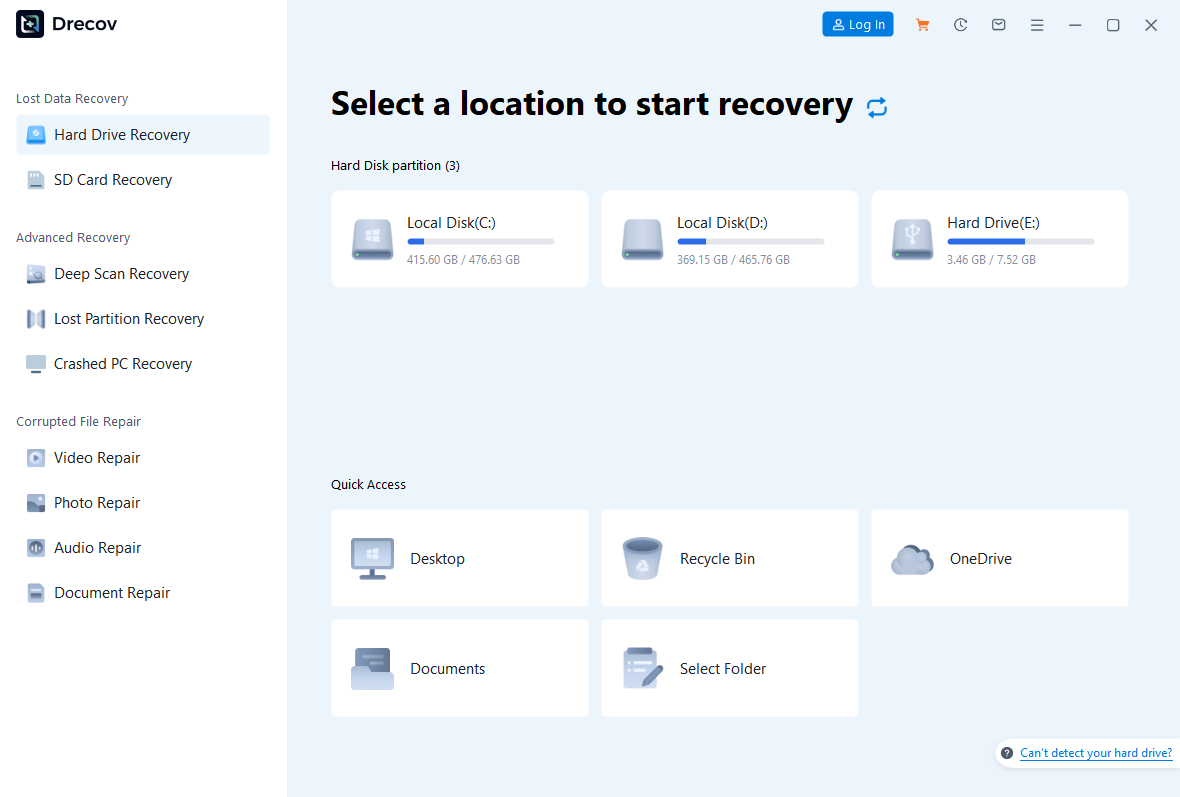
- Step 1: Select Device. Open the application and choose the specific partition or external device (USB, SD Card, etc.) where the data was lost.
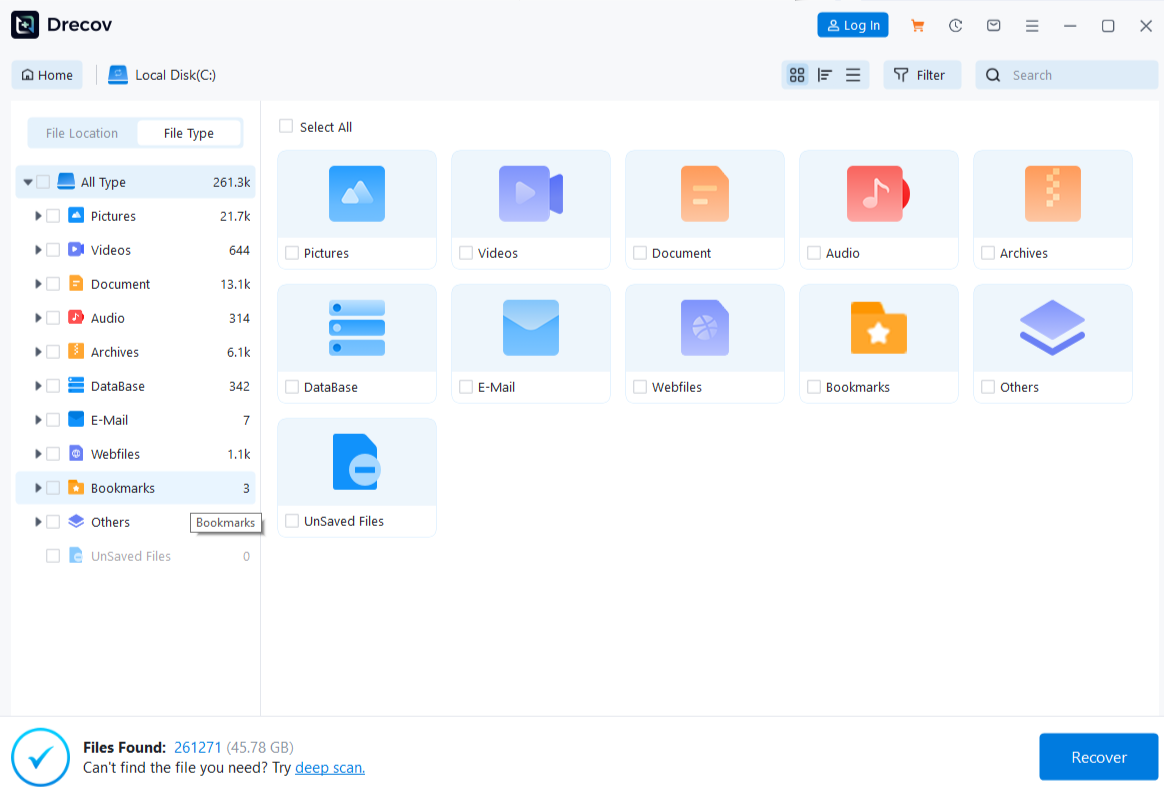
- Step 2: Deep Scan. Click the Scan button. The software will automatically run a Quick Scan and then transition into a Deep Scan. You can use the Filter sidebar to narrow down results by file type (Photo, Video, Document) while the scan is still running.
- Step 3: Preview Files. Double-click on any file (like a JPG or MP4) to open a Preview window. This ensures the file is not corrupted before you spend time recovering it.
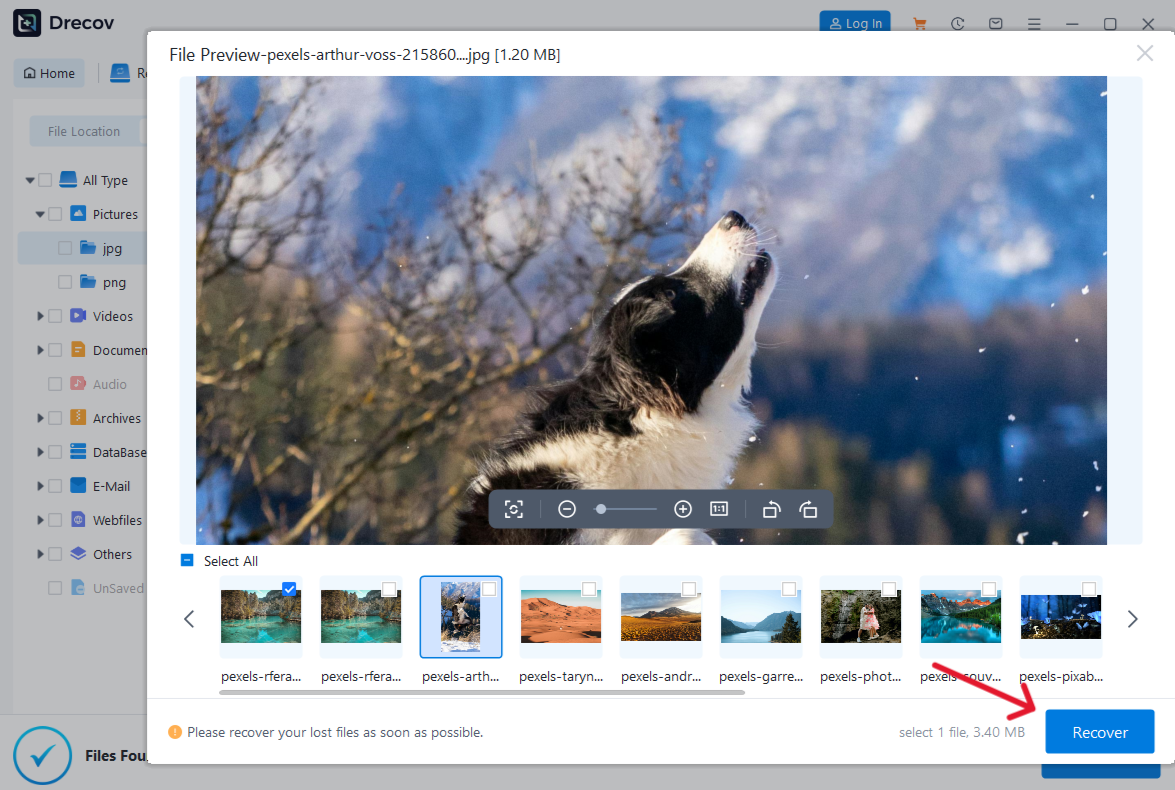
- Step 4: Secure Recovery. Select the files you need and click Recover. Choose a destination folder on a different drive (e.g., save files from C: to an external USB drive) to complete the process safely.
Mastering Recovery: Advanced Guides
Data recovery is a broad field. Depending on your specific hardware, you may need tailored instructions. After attempting the steps above, you can explore these specialized guides:
- How to use Recuva to recover deleted files from SD Card: A focused look at memory card recovery.
- A Master Guide to Recuva for Windows and Beyond: Deep dive into advanced settings like “Deep Scan” and “Action Actions.”
- Recover deleted data with Recuva for USB Drive: A Simple Guide: Best practices for flash drives and external disks.
When Should You Upgrade or Switch?
Accidental Deletion (Recuva Free is Enough)
If you just emptied the Recycle Bin 5 minutes ago and the files were small documents or photos, Recuva Free will likely work perfectly. Its lightweight nature makes it ideal for these “oops” moments.
Formatted or Corrupted Drives (Switch to Professional)
If you formatted your drive or your computer says “Disk must be formatted before use,” the Recuva free version limitations will likely lead to a “0 files found” result. In these scenarios, professional tools like PandaOffice Drecov are necessary because they can reconstruct file directories from the raw hex data of the drive.
Recuva Free Version Limitations FAQs
1. Is Recuva free version safe to download in 2026?
Yes, as long as you download it from the official Piriform website. Avoid “cracked” versions, as they often contain malware.
2. Why are my recovered files unplayable?
This is a common limitation of free recovery tools. If the data was fragmented or partially overwritten, the software might recover the file “header” but not the actual content.
3. Does Recuva work on SSDs?
It works, but success rates are lower than on traditional HDDs due to how SSDs manage deleted data.
4. Can Recuva recover files from a phone?
No. Recuva cannot access the internal storage of modern Android or iOS devices. You would need specialized mobile recovery software.
5. What is the biggest “hidden” limitation?
The lack of a “Search by File Signature” update. Modern file types (like newer 8K video codecs) may not be recognized by Recuva’s aging database.
Conclusion
The Recuva free version limitations do not make it a bad tool; they simply define its boundaries. For simple, cost-free recovery of recently deleted files on a healthy Windows PC, it remains a champion of the freeware world. However, if you are facing a data catastrophe involving formatted partitions, RAW drives, or mission-critical business documents, relying solely on an outdated free tool is a risk.
By understanding how much data can recuva recover for free and knowing when to transition to a powerful solution like PandaOffice Drecov, you can ensure that your digital memories and professional work are never truly lost. Always remember: the best recovery strategy is a proactive backup, but when that fails, the right tool makes all the difference.






