







Introduction to PATA Hard Drives
What is a PATA Hard Drive?
A pata hard drive (Parallel ATA) is an older storage interface widely used before SATA became standard. It connects a hard disk to a computer motherboard via a 40- or 80-wire ribbon cable, enabling parallel data transmission. The IDE PATA hard drive is a common type for desktops, while 2.5 ide pata hard drive models are more compact for laptops.
PATA drives were favored in legacy systems because of their simplicity, wide compatibility, and ability to connect two devices on a single channel using master/slave jumper settings. While newer systems predominantly use SATA, 3.5 pata hard drive and 2.5 pata hard drive remain essential for maintaining or retrieving data from older machines.
Background and Evolution of PATA Drives
The PATA interface evolved to replace older storage interfaces such as ST-506 and ATA-1 standards. The introduction of pata eide hard drive (Enhanced IDE) enhanced transfer speeds, added support for larger drives, and improved system compatibility. Despite being largely outdated, PATA drives are still relevant in environments where legacy hardware is necessary.
⚠️Warning: Connecting a PATA hard drive to a modern motherboard without proper adapters may cause system recognition issues.
Why PATA Hard Drives Still Matter
Advantages and Applications
Even in modern times, hard disk drive pata devices are used for legacy desktop systems, server maintenance, industrial machinery, and archival storage. Their ability to run without modern drivers and their physical robustness makes them reliable for certain applications.
For laptop users, 2.5 pata hard drive models provide a compact form factor ideal for older notebooks. Desktop users benefit from 3.5 pata hard drive devices for high-capacity storage.
Limitations and Common Problems
While dependable, pata hard drive technology has inherent limitations:
- Maximum transfer rates are limited (up to 133 MB/s for EIDE).
- Ribbon cables are prone to wear and connection issues.
- Jumpers must be set correctly to distinguish master and slave drives.
Common failures include:
- Mechanical wear of platters or read/write heads
- Ribbon cable damage or loose connectors
- File system corruption due to sudden shutdowns or malware
Different Types of PATA Hard Drives
Desktop vs. Laptop PATA Drives
3.5 pata hard drive units are standard for desktops, offering higher storage capacities, usually ranging from 20GB to 500GB in older systems. They consume more power and require dedicated mounting in standard bays.
2.5 pata hard drive units are used in laptops and small devices, offering lower power consumption and compact size. Despite smaller capacity, they are perfect for portable data recovery tasks or legacy laptops still in use.
IDE vs. EIDE PATA Drives
The classic IDE PATA hard drive supports basic ATA commands suitable for small-to-medium storage. The pata eide hard drive improves upon this with features like:
- Enhanced transfer rates up to 133 MB/s
- LBA (Logical Block Addressing) for larger drives
- Improved error handling
⚠️Warning: Not all motherboards support EIDE fully; compatibility checks are required before installation.
Understanding Jumper Settings
Most PATA drives use master/slave jumpers to manage dual-drive connections on the same cable. Correct jumper placement is essential:
- Master: Primary drive on the channel
- Slave: Secondary drive sharing the same ribbon cable
- Cable Select (CS): Automatically determines position based on cable connector
Incorrect jumper settings can cause drive recognition failures.
Common Causes of PATA Drive Failure
Mechanical Issues
The most frequent cause of PATA failure is physical wear, such as:
- Head crashes
- Motor failures
- Platters becoming unreadable due to age or dust
These issues often result in clicking noises or complete inaccessibility of the drive.
Interface and Cable Problems
Pata hard drive cables are sensitive. Bent or damaged pins, loose connectors, or old 40-wire cables can interrupt data transmission, causing errors during read/write operations.
Data Corruption
Unexpected shutdowns, malware, or file system errors can corrupt the stored data. While the hardware may remain functional, files may be partially or fully unreadable.
Methods to Recover Data from PATA Hard Drives
Method 1: Manual Disk Check and Repair
Test Environment: Desktop computer with a 3.5 pata hard drive, Windows 7 OS, PATA ribbon cable, and a SATA-PATA adapter for testing.
Manual checking involves connecting the pata hard drive to a working system and performing disk integrity tests:
- Verify the drive is detected in BIOS.
- Use built-in OS tools (e.g., Windows CHKDSK) to scan and repair errors.
- Correct any master/slave jumper configuration issues.
Advantages: No additional software required; basic repair can fix minor corruption.
Limitations: Only works for logical errors, not mechanical failures.
⚠️Warning: Running disk repair on a failing PATA drive may worsen mechanical issues if the drive is physically damaged.
Method 2: Connecting via USB-to-PATA Adapter
Test Environment: Laptop with 2.5 ide pata hard drive, USB-to-PATA adapter, Windows 10 OS.
For portable 2.5 pata hard drive recovery, adapters allow you to connect the drive externally. Steps:
- Attach the PATA drive to the adapter.
- Connect to USB port and check disk recognition.
- Use file explorer or recovery software for accessible files.
This method is suitable for drives removed from laptops or desktops when internal installation is not convenient.
Method 3: Using Data Recovery Software
Test Environment: Desktop with 3.5 pata hard drive, Windows 10 OS, recovery software installed.
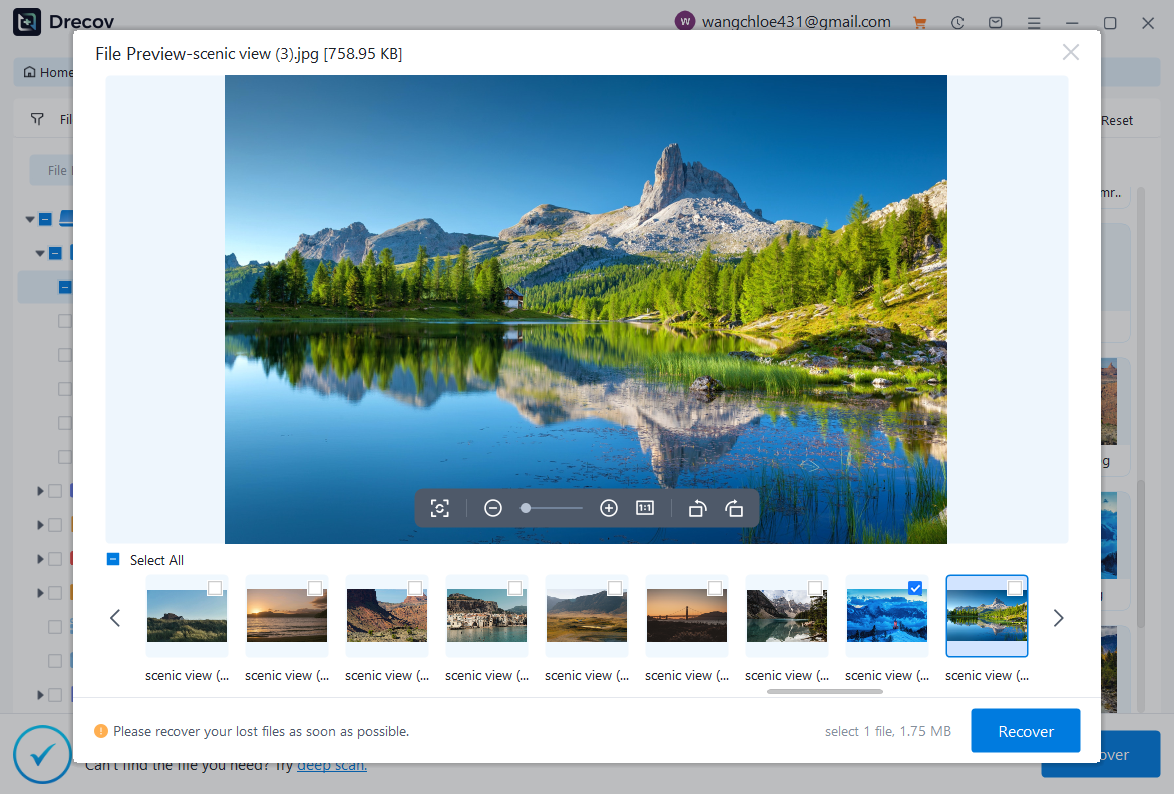
Data recovery software scans the hard disk drive pata for lost or deleted files. Features to look for include:
- Deep scanning mode
- Support for IDE/EIDE drives
- Preview before recovery
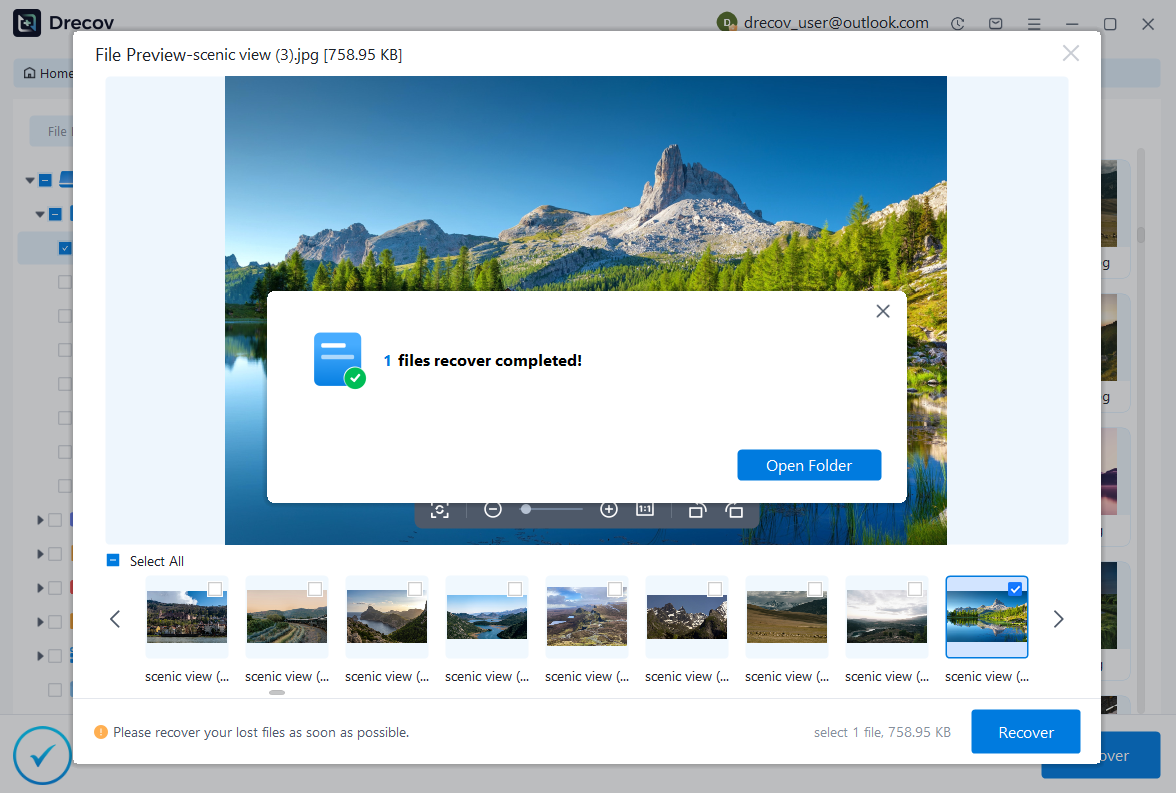
Recommended Software: Pandaoffice Drecov is a reliable option for pata eide hard drive recovery. It supports both 2.5/3.5 pata hard drive formats and can recover files lost due to corruption or accidental deletion.
Steps:
- Connect the PATA drive to your PC.
- Launch Pandaoffice Drecov and select the target drive.
- Perform a deep scan to locate lost files.
- Preview and restore the required data to a safe location.
Advantages: High success rate for logical failures; supports multiple file types.
Limitations: Cannot repair mechanical damage.

Why Choose PandaOffice Drecov?
PandaOffice Drecov is a versatile and reliable solution for recovering a wide range of lost or inaccessible files. Whether you need audio recovery, video recovery, or excel recovery files, PandaOffice Drecov provides fast and efficient results, ensuring your important data is safely restored.
For creative professionals, it supports file recovery Illustrator projects, allowing designers to retrieve unsaved or accidentally deleted artwork without compromising file integrity. Businesses and individuals can also benefit from its restore Windows previous date feature, which helps recover documents or spreadsheets that were lost due to system errors or accidental deletions.
When external storage devices fail, such as a Lacie hard drive not showing up, PandaOffice Drecov can detect and restore files from these drives, ensuring you do not lose critical data. Even deleted files in the recycle bin can be recovered using its advanced recycle bin recovery software capabilities.
Additionally, the software supports recovering data from lost partitions, making lost partition recovery straightforward and reliable. Its intuitive interface allows users to perform audio recovery, video recovery, and excel recovery effortlessly, even for large or complex files.
With PandaOffice Drecov, you get a professional, all-in-one recovery solution that covers nearly every type of file and storage scenario. Its robust algorithms, combined with easy-to-use tools, make it the go-to choice for anyone who wants to restore lost or corrupted data quickly and securely.
Method 4: Professional Recovery Services
Test Environment: Any IDE PATA hard drive with severe mechanical failure; testing performed in a cleanroom environment.
If a pata hard drive has physical damage (e.g., head crash, motor failure), professional services may be required. Certified technicians:
- Open drives in a cleanroom to prevent contamination.
- Replace faulty components and attempt data extraction.
- Transfer recovered files to a new storage medium.
Frequently Asked Questions (FAQ)
Q1: Can a 2.5 pata hard drive be used in a desktop system?
Yes, using a 2.5 ide pata hard drive in a desktop requires a mounting adapter to fit the 3.5-inch bay. Compatibility with the PATA interface must be verified, and jumper settings should be configured correctly.
Q2: How do I differentiate IDE and EIDE PATA drives?
IDE PATA hard drive usually supports up to ATA-33 or ATA-66, whereas pata eide hard drive supports higher speeds (up to ATA-133) and larger storage. Look for the EIDE label or check manufacturer specifications.
Q3: Is data recovery from a 3.5 pata hard drive risky?
Recovering data from 3.5 pata hard drive can be safe if the drive is connected properly and handled carefully. Using software like Pandaoffice Drecov reduces the risk of data loss. Physical repair should be done by professionals.
Q4: Can old PATA drives work on modern motherboards?
Only if the motherboard supports legacy PATA interfaces or with an adapter. Many modern systems have dropped the PATA port entirely, requiring USB or SATA conversion for access.
Conclusion and Key Takeaways
- PATA hard drives remain relevant for legacy systems and specialized applications.
- Proper methods can recover both 2.5 pata hard drive and 3.5 pata hard drive despite their differences in size and power.
- Users can address logical failures using manual repair, adapters, or software such as Pandaoffice Drecov.
- Physical failures require professional cleanroom services to prevent permanent data loss.
- ⚠️Warning: Mishandling old PATA drives can result in unrecoverable damage.
Summary: Understanding the types, limitations, and recovery options of pata hard drive technology ensures data safety for legacy systems. Proper handling, correct jumper settings, and reliable recovery tools are essential. Pandaoffice Drecov provides a convenient solution for software-based recovery of both IDE PATA hard drive and pata eide hard drive formats.






