







Introduction to Solid State Drives
What Is a Solid State Drive?
A solid state drive (SSD) is a storage device that uses flash memory to store data, unlike traditional magnetic hard drives. Solid-state drive ssd technology allows faster data access, lower latency, and increased durability since it has no moving parts. Users often replace conventional drives with solid state drives to improve system boot time, application loading, and overall performance.
Background and Evolution of SSDs
Early computing relied on mechanical hard drives (solid state drive and hard drive) for storage, which had spinning platters and moving read/write heads. With the advent of SSDs, devices became more energy-efficient, lightweight, and resistant to physical shocks. Modern external solid state drives are portable, making them ideal for backup and data transfer.
⚠️Warning: While SSDs are durable, improper ejection or sudden power loss can still lead to data corruption.
Why SSDs Matter Today
SSDs dominate personal computing, gaming consoles, and enterprise storage due to their speed. For example, a m 2 solid state drive for ps5 significantly reduces loading times for games and applications compared to traditional hard drives. Furthermore, the compact design of SSDs enables thinner laptops and faster data centers.
How Solid State Drives Work
Core Components of an SSD
A typical solid-state drive ssd contains:
- NAND Flash Memory: Stores data without moving parts.
- Controller: Manages read/write operations and error correction.
- DRAM Cache (Optional): Improves performance for frequently accessed data.
Unlike mechanical drives, SSDs access data electronically, eliminating delays from spinning disks. This contributes to faster boot times and better multitasking capabilities.
SSD vs Hard Drive
When comparing solid state drive and hard drive, key differences include:
- Speed: SSDs can reach read/write speeds several times faster than HDDs.
- Durability: No moving parts reduce the risk of mechanical failure.
- Energy Efficiency: Lower power consumption is ideal for laptops and mobile devices.
- Noise: SSDs operate silently, unlike spinning hard drives.
⚠️Warning: SSDs have a limited number of write cycles; regular backups are recommended to avoid data loss over time.
Types and Formats of SSDs
Internal vs External SSDs
Internal SSDs replace a laptop or desktop drive, connecting via SATA or PCIe interfaces.
External solid state drives offer portable storage via USB, Thunderbolt, or other interfaces, providing fast data transfer on-the-go.
M.2 and NVMe SSDs
A m 2 solid state drive for ps5 or high-performance PC uses the NVMe protocol for maximum speed. These drives are smaller and faster than traditional SATA SSDs, making them ideal for gaming and professional workstations.
Form Factors: 2.5-inch vs M.2
- 2.5-inch SSD: Similar in size to laptop hard drives, connects via SATA.
- M.2 SSD: Slim, stick-shaped drives that directly plug into the motherboard, supporting faster protocols like NVMe.
Common Problems with SSDs
Logical Failures
Corruption can occur due to malware, accidental deletion, or sudden shutdowns. These issues do not damage hardware but make data inaccessible.
Physical Failures
Although rare, SSDs can fail due to controller damage, NAND wear, or power surges. Solid state drives are more durable than HDDs but not immune to electrical issues.
Data Recovery Considerations
For a solid-state drive ssd, logical failures are often recoverable using software, while physical failures may require professional intervention. SSDs with TRIM enabled may permanently erase deleted data, making timely recovery critical.
Methods to Recover Data from Solid State Drives
Method 1: Using Built-in OS Tools
Test Environment: Desktop PC with a solid-state drive ssd, Windows 10 OS, SATA connection.
For minor logical issues, built-in OS utilities can repair and recover data:
- Check if the solid state drive is detected in Disk Management.
- Run the CHKDSK or Error Checking tool to fix file system errors.
- Restore accidentally deleted files from the Recycle Bin.
Advantages: No additional software is required, suitable for basic corruption.
Limitations: Only works for logical failures, not hardware damage.
⚠️Warning: Running disk repair on a failing SSD may worsen corruption if TRIM is enabled.
Method 2: Connecting via USB-to-SSD Adapter
Test Environment: Laptop with external solid state drive, USB 3.1 adapter.
For portable external solid state drive recovery:
- Connect the SSD using a USB adapter.
- Verify detection in the OS.
- Copy accessible files immediately.
This approach is useful when the SSD cannot be installed internally or the laptop lacks a free SATA port.
Method 3: Using Recovery Software
Test Environment: Desktop with a 2.5-inch SSD or m 2 solid state drive for ps5, Windows 10 OS.
Software-based recovery is ideal for recovering data from logical failures:
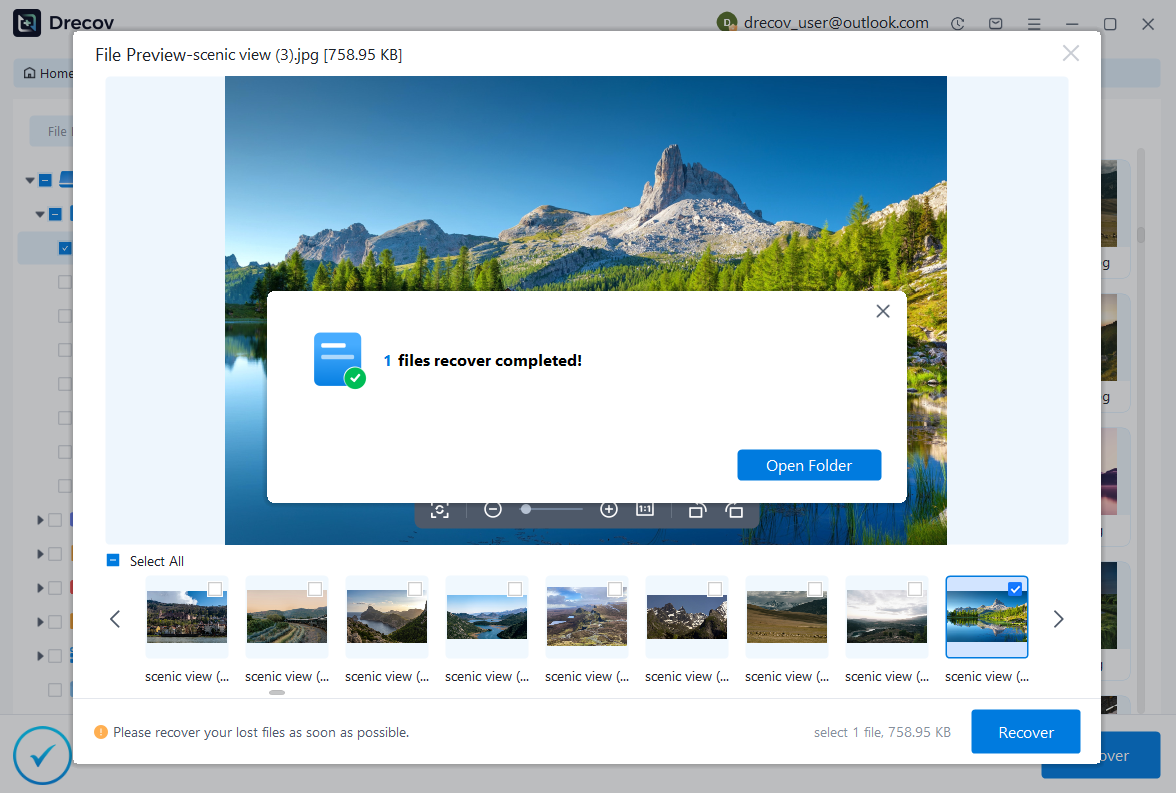
- Pandaoffice Drecov is a reliable solution for solid state drives.
- Connect the SSD, launch Pandaoffice Drecov, and select the target drive.
- Perform a deep scan to locate deleted, corrupted, or lost files.
- Preview results and recover essential files to a separate storage device.
Advantages: High success rate for logical issues; supports multiple file types.
Limitations: Cannot repair physically damaged SSDs.


Why Choose PandaOffice Drecov?
PandaOffice Drecov is a versatile and reliable solution for recovering a wide range of lost or inaccessible files. Whether you need audio recovery, video recovery, or excel recovery files, PandaOffice Drecov provides fast and efficient results, ensuring your important data is safely restored.
For creative professionals, it supports file recovery Illustrator projects, allowing designers to retrieve unsaved or accidentally deleted artwork without compromising file integrity. Businesses and individuals can also benefit from its restore Windows previous date feature, which helps recover documents or spreadsheets that were lost due to system errors or accidental deletions.
When external storage devices fail, such as a Lacie hard drive not showing up, PandaOffice Drecov can detect and restore files from these drives, ensuring you do not lose critical data. Even deleted files in the recycle bin can be recovered using its advanced recycle bin recovery software capabilities.
Additionally, the software supports recovering data from lost partitions, making lost partition recovery straightforward and reliable. Its intuitive interface allows users to perform audio recovery, video recovery, and excel recovery effortlessly, even for large or complex files.
With PandaOffice Drecov, you get a professional, all-in-one recovery solution that covers nearly every type of file and storage scenario. Its robust algorithms, combined with easy-to-use tools, make it the go-to choice for anyone who wants to restore lost or corrupted data quickly and securely.
Method 4: Professional Recovery Services
Test Environment: High-end solid-state drive ssd with controller or NAND failure; tested in cleanroom conditions.
Physical failures require specialized recovery services:
- SSDs are disassembled in a controlled environment.
- Faulty components, like controllers, are replaced to retrieve data.
- Recovered files are transferred to a safe storage medium.
Frequently Asked Questions (FAQ)
Q1: Can I use an M.2 SSD in my PS5?
Yes, a m 2 solid state drive for ps5 is compatible if it meets the console’s size and speed specifications. Proper installation ensures faster loading and smoother gameplay.
Q2: How do SSDs differ from traditional hard drives?
Solid state drive and hard drive differences include:
- Speed: SSDs are much faster.
- Durability: No moving parts in SSDs.
- Power: SSDs consume less energy.
- Noise: SSDs operate silently.
Q3: Can I recover data from a physically damaged SSD?
Physical failures usually require professional services. Logical issues can be recovered using tools like Pandaoffice Drecov. Timely action increases recovery success.
Q4: Does TRIM affect SSD recovery?
Yes, TRIM can permanently erase deleted data, making recovery difficult. Always attempt recovery immediately after accidental deletion or corruption.
Conclusion and Key Takeaways
- Solid state drives are faster, more durable, and more energy-efficient than traditional hard drives.
- Internal SSDs and external solid state drives provide flexible storage solutions.
- Logical failures can be addressed using built-in tools, adapters, or software like Pandaoffice Drecov.
- Physical failures require professional recovery in cleanroom environments.
- ⚠️Warning: Always back up SSDs regularly and handle them carefully to prevent irreversible data loss.
Summary: Understanding SSD technology, its advantages, common issues, and recovery methods ensures the longevity and safety of data. Tools like Pandaoffice Drecov provide reliable software-based recovery for solid-state drive ssd, whether internal or external. Proper care, timely backups, and professional services are key to maintaining data integrity.






