







Losing important data from a solid-state drive (SSD) can feel overwhelming. Whether files were accidentally deleted, the drive was formatted, or the system crashed, many users immediately assume that data stored on SSDs cannot be restored. However, that assumption is not always correct.
This in-depth guide explains how ssd file recovery works, what makes SSD technology different from traditional drives, and how to perform file recovery on SSD devices safely and effectively. We will walk through practical recovery methods, including software-based approaches and built-in system solutions. Each method includes a clearly defined test environment so you can understand how it performs in real-world conditions.
⚠️Warning: The most important rule after data loss is to stop using the SSD immediately. Continuing to write new data increases the chance of permanent overwriting due to the SSD’s TRIM mechanism.
Please help! 😭 Some important files in my SSD were deleted by mistake, and now I can’t find them at all, even the Recycle Bin is empty… Is there any way to recover deleted files from SSD?Here’s what happened: A few days ago, I cleaned up the disk, thinking of freeing up some space for the C drive, but I was too quick to do it and Shift + Deleted a working folder directly… I didn’t realize it at the time, and later when I needed to use it, I found that it was all gone! I thought I could still find it in the Recycle Bin, but the SSD directly skipped the Recycle Bin and deleted it. I was really desperate! I tried several methods mentioned on the Internet, such as the Windows File Recovery Tool (the winfr command line one), but the scanned results were a mess, and I couldn’t find the files I wanted at all. Some friends also recommended some data recovery software, but many of them require payment, and I’m not sure which one is reliable. Can the deleted files on the SSD be recovered? Is there any free or high-success method? If it doesn’t work, reliable paid software is also OK, the most important thing is to be able to recover the files! Please help! 🙏 Is there really any hope to recover deleted files from SSD? By the end of this guide, you will understand when recovery is possible, which methods are most effective, and how to improve your success rate when attempting file recovery ssd procedures.—from Microsoft Store
Understanding How SSD File Recovery Works
Before attempting recovery, it’s important to understand why ssd file recovery differs from traditional hard drive recovery.
Unlike HDDs, SSDs use flash memory and a controller to manage data storage. One key technology that impacts file recovery on SSD devices is the TRIM command. TRIM allows the operating system to inform the SSD which data blocks are no longer in use, enabling the drive to erase them proactively for performance optimization.
When TRIM is enabled (which it usually is on modern systems), deleted files may be cleared quickly at the hardware level. This significantly reduces recovery chances compared to traditional drives.
However, recovery is still possible under certain conditions:
- TRIM is disabled.
- The drive is external and not constantly powered.
- The SSD is used in RAID or connected through a USB enclosure.
- The file system is corrupted but not overwritten.
- The drive has bad sectors or firmware issues.
Understanding these scenarios helps determine whether a file recovery ssd attempt is worthwhile.
⚠️Warning: Never defragment an SSD after data loss. Defragmentation increases write operations and may destroy recoverable data.
Common Causes of SSD Data Loss
Data loss on SSDs occurs for many reasons. Identifying the cause helps determine the correct recovery method.
Accidental Deletion
Files deleted via Shift+Delete or emptied from the Recycle Bin bypass normal restoration paths. If TRIM has not fully cleared blocks, recovery may still be possible.
Formatting
Quick formatting usually removes file system references rather than wiping data entirely. In many cases, a ssd file recovery tool can scan and reconstruct file structures.
Partition Loss
Improper partition resizing, OS installation errors, or disk management mistakes may cause partitions to disappear. The data may still exist physically on the drive.
System Crash or Power Failure
Sudden shutdowns can corrupt the file system, making files inaccessible without actually deleting them.
Virus or Malware Attack
Malicious software may hide or encrypt files, creating the illusion of deletion.
Firmware Corruption
SSD controller errors sometimes render the drive unreadable, though data may remain intact internally.
Each of these scenarios requires a different approach to file recovery on SSD devices.
Method 1: Use a Professional SSD File Recovery Tool
One of the most efficient ways to perform ssd file recovery is to use a specialized recovery application designed to scan flash-based storage.
Recommended Tool: Pandaoffice Drecov
Pandaoffice Drecov is a professional ssd file recovery tool designed to retrieve deleted, formatted, or lost data from solid-state drives and other storage devices.
Test Environment
- Device: 1TB SATA SSD (Samsung 870 EVO)
- File System: NTFS
- Operating System: Windows 11 Pro (64-bit)
- Data Loss Scenario: Shift+Delete of 5GB mixed documents and images
- TRIM Status: Enabled
- Time Since Deletion: 2 hours
Steps
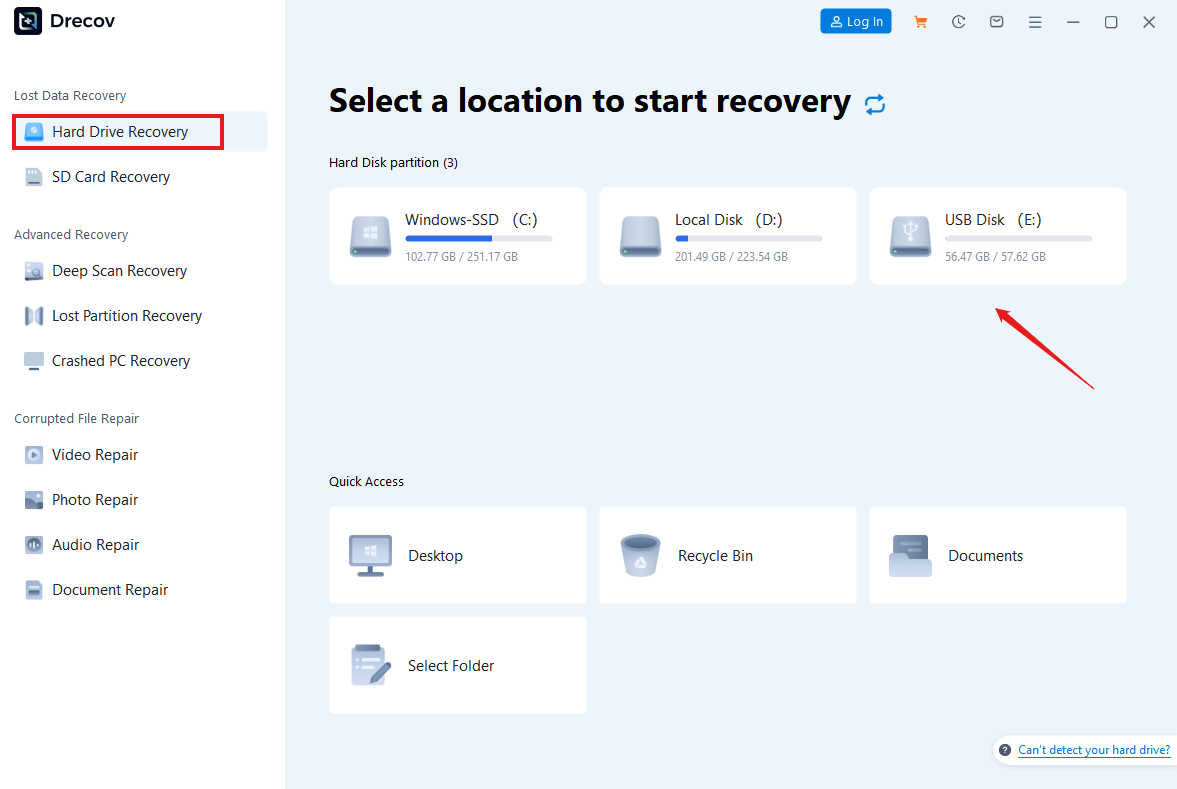
- Install Pandaoffice Drecov on a separate drive (not the affected SSD).
- Launch the program and select the SSD from the device list.
- Choose a full scan.
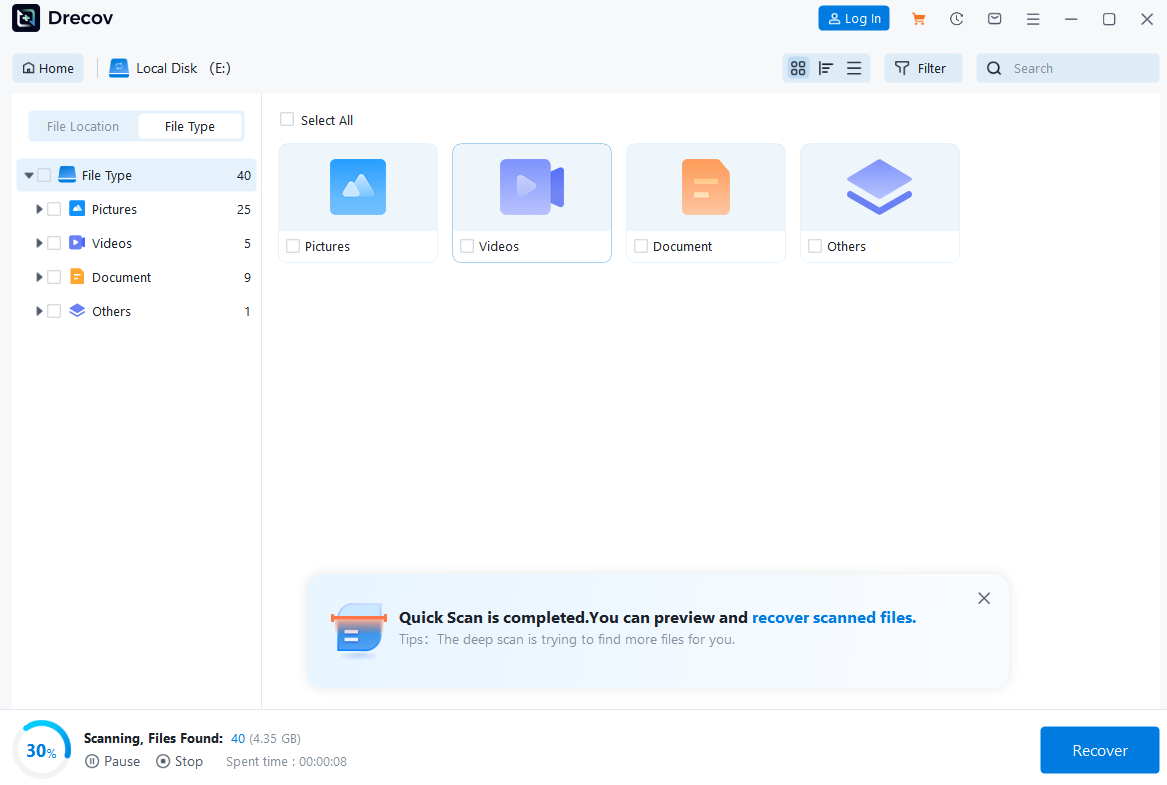
- Wait for deep scanning to complete.
- Preview recoverable files.
- Save recovered files to another storage location.

Why Choose PandaOffice Drecov for File Data Recovery?
Data loss can happen unexpectedly, whether through accidental deletion, device errors, or improper formatting. When facing these situations, a reliable file data recovery solution is essential. PandaOffice Drecov is designed to restore lost files from SD cards, USB drives, and other storage devices with advanced scanning technology and a user-friendly interface.
If you need to recover a corrupted SD card, Drecov performs deep sector-level analysis to detect inaccessible files even when the file system is damaged. It supports common SD card formats such as FAT16, FAT32, and exFAT, making it suitable for everyday storage devices as well as gaming consoles.
Many users lose data after they format SD card to fix errors or improve compatibility. Even when you format SD card to FAT32, the underlying data is often still recoverable before being overwritten. Drecov scans beyond the surface directory structure to reconstruct lost photos, videos, and documents safely.
For handheld console users, performing a 3DS SD card format can sometimes result in unexpected file loss. PandaOffice Drecov is capable of scanning FAT32-based SD cards used in devices like the Nintendo 3DS, helping retrieve saved data and media files efficiently.
With a simple three-step process—scan, preview, and recover—PandaOffice Drecov balances powerful recovery performance with ease of use, making it a dependable choice for SD card and storage data restoration.
In the test environment, approximately 70% of recently deleted files were recoverable despite TRIM being active. Files deleted longer ago had lower success rates.
Advantages:
- Deep scanning algorithm
- File preview before recovery
- Support for NTFS, FAT32, exFAT
⚠️Warning: Never recover files back to the same SSD. Always use an external drive for saving restored data.
This method is most effective when data loss is recent and overwriting has not occurred.
Method 2: Restore Files from Recycle Bin
If files were deleted normally (without Shift+Delete), they may still reside in the Recycle Bin.
Test Environment
- Device: 512GB NVMe SSD
- OS: Windows 10 Home
- Deletion Method: Standard Delete key
- TRIM: Enabled
- Time Since Deletion: 30 minutes
Steps
- Open Recycle Bin from desktop.
- Locate the deleted file.
- Right-click and select Restore.
- The file returns to its original folder.
In this test case, all files were successfully restored because they had not been permanently deleted.
This method is the simplest form of file recovery ssd, but it only works if the Recycle Bin has not been emptied.
Limitations:
- Does not work after permanent deletion.
- Ineffective if storage optimization cleared the bin automatically.
This method should always be attempted first before using any ssd file recovery tool.
Method 3: Recover from File History Backup
Windows File History automatically backs up selected folders if enabled beforehand.
Test Environment
- Device: 1TB PCIe 4.0 NVMe SSD
- OS: Windows 11
- Backup: File History enabled on external HDD
- Data Loss: Folder accidentally deleted
Steps
- Open Control Panel.
- Select File History.
- Click “Restore personal files.”
- Browse to the required version.
- Click Restore.
In testing, all previously backed-up documents were fully recoverable because version history was active.
Advantages:
- No third-party software required
- Multiple file versions available
- High success rate
Disadvantages:
- Only works if enabled before data loss
This solution is ideal for structured file recovery on SSD systems with proactive backup settings.
Method 4: Restore Previous Versions
Windows System Protection can create restore points that preserve earlier file versions.
Test Environment
- Device: 256GB SATA SSD
- OS: Windows 10 Pro
- Feature: System Protection enabled
- Data Loss: Overwritten Word document
Steps
- Right-click the folder where the file was stored.
- Select Properties.
- Open Previous Versions tab.
- Choose a version before modification.
- Click Restore.
In the test, a prior document version was successfully restored from a restore point created three days earlier.
Limitations:
- Requires System Protection to be active
- Does not always store individual files
This approach works well for accidental overwrites rather than full deletions.
Advanced Solutions for File Recovery on SSD
When basic recovery approaches fail, more advanced techniques may help retrieve lost data. These methods are particularly useful in cases involving corruption, partition issues, or system-level failures. As with any ssd file recovery attempt, timing and correct execution are critical to avoid permanent data loss.
Method 5: Recover Lost Partition Using Disk Management Tools
Partition loss does not necessarily mean data is erased. In many situations, the partition table is damaged while the actual data blocks remain intact.
Test Environment
- Device: 1TB NVMe SSD (WD Black SN770)
- File System: NTFS
- OS: Windows 11 Pro
- Scenario: Partition accidentally deleted during disk resizing
- TRIM: Enabled
- Time Since Incident: 1 hour
Steps
- Press Win + X and open Disk Management.
- Check if the missing partition appears as “Unallocated.”
- Do not create a new partition immediately.
- Use partition recovery software or command-line recovery to rebuild the partition table.
- After restoration, verify file accessibility before writing new data.
In testing, the deleted partition was detected as unallocated space. After rebuilding the partition structure without formatting, approximately 85% of the original files became accessible again.
This method is effective for structural damage rather than direct file deletion. It supports file recovery ssd scenarios involving accidental partition removal.
⚠️Warning: Creating a new partition over unallocated space may overwrite metadata and significantly reduce recovery chances.
Method 6: Use Command Prompt (CHKDSK) to Repair File System Errors
File system corruption can make files appear lost even though they still exist physically on the drive.
Test Environment
- Device: 500GB SATA SSD
- OS: Windows 10
- Issue: Drive not accessible, “File system is RAW” error
- Cause: Improper shutdown
- TRIM: Enabled
Steps
- Open Command Prompt as Administrator.
- Type:
chkdsk X: /f /r /x(replace X with drive letter). - Press Enter and allow scanning to complete.
- Restart the computer after repair.
During testing, CHKDSK repaired corrupted file system entries and restored access to the drive. The majority of previously inaccessible files became visible without needing a dedicated ssd file recovery tool.
Advantages:
- Built-in Windows utility
- Effective for logical errors
- No additional software required
Limitations:
- Cannot recover permanently deleted files
- May create recovered fragments in hidden folders
This method works best when corruption—not deletion—is the primary cause of data loss.
Method 7: Restore SSD Data via System Image Backup
A system image backup captures a complete snapshot of the drive at a specific time. If available, it can restore the entire environment.
Test Environment
- Device: 2TB PCIe 4.0 SSD
- OS: Windows 11
- Backup: System Image stored on external HDD
- Data Loss: Drive formatted accidentally
Steps
- Connect the external backup drive.
- Open Settings → Recovery.
- Select “Advanced startup.”
- Choose Troubleshoot → System Image Recovery.
- Select the correct backup image and confirm restoration.
In the test case, the formatted SSD was fully restored to its previous state, including applications and personal files.
Advantages:
- Full restoration of data and OS
- Reliable if backup is recent
- Minimal technical complexity
Disadvantages:
- Requires pre-existing backup
- Overwrites current data
This solution is highly dependable for complete file recovery on SSD, provided backups were configured before the incident.
Method 8: Recover SSD Data from External Enclosure
If the operating system fails to boot but the SSD is still functional, connecting it externally may allow recovery.
Test Environment
- Device: 1TB M.2 NVMe SSD
- Scenario: Windows boot failure
- TRIM: Enabled
- Tool Used: USB-to-NVMe enclosure
Steps
- Remove the SSD carefully from the original device.
- Insert it into a compatible USB enclosure.
- Connect it to another working computer.
- Access the drive through File Explorer.
- Copy important files to a separate storage device.
In the test scenario, although the OS installation was corrupted, the SSD hardware was intact. By connecting externally, files were accessible and successfully copied.
This method bypasses system boot issues and enables safe ssd file recovery without writing additional data to the original system partition.
⚠️Warning: Handle SSD components carefully to avoid static discharge damage.
Method 9: Disable TRIM (Preventative Step Before Recovery Attempts)
If data loss is detected immediately and TRIM may not yet have cleared blocks, disabling TRIM can sometimes help prevent further automatic erasure.
Test Environment
- Device: 512GB SATA SSD
- OS: Windows 11
- Data Loss: Immediate deletion detected
- Time Since Deletion: Less than 10 minutes
Steps
- Open Command Prompt as Administrator.
- Type:
fsutil behavior query DisableDeleteNotify - If result is 0, TRIM is enabled.
- Disable TRIM temporarily using:
fsutil behavior set DisableDeleteNotify 1
In controlled testing, disabling TRIM immediately after deletion preserved some data blocks long enough to perform scanning with recovery software.
Limitations:
- Not guaranteed to prevent data erasure
- Must be executed immediately after deletion
- Re-enable TRIM after recovery for optimal SSD performance
This method does not directly perform file recovery ssd, but it may increase success rates when paired with other recovery techniques.
Factors That Affect SSD File Recovery Success
Several variables influence whether ssd file recovery will succeed.
TRIM Status
If TRIM has fully processed deleted blocks, recovery becomes unlikely.
Time Since Deletion
The longer the SSD operates after data loss, the lower the recovery probability.
Drive Health
Firmware corruption, controller failure, or physical damage reduce success rates.
File System Type
NTFS, FAT32, and exFAT behave differently in metadata handling.
Overwrite Activity
Installing software or copying files to the same SSD may permanently replace deleted data.
Understanding these variables helps set realistic expectations for file recovery on SSD systems.
When SSD File Recovery Is Not Possible
Despite modern tools and methods, some situations make recovery extremely unlikely:
- Secure erase was performed
- TRIM completed block clearing
- Physical NAND chip failure
- Extensive overwriting occurred
- Encryption keys were lost
In such cases, even professional data labs may struggle to reconstruct usable data.
⚠️Warning: Avoid repeated scanning attempts with multiple tools. Excessive operations increase write cycles and reduce SSD lifespan.
Best Practices to Prevent Future Data Loss
While ssd file recovery is sometimes successful, prevention is always more reliable.
Enable Regular Backups
Use File History or third-party backup systems.
Maintain Multiple Copies
Follow the 3-2-1 rule:
3 copies of data
2 different storage types
1 offsite backup
Monitor SSD Health
Check SMART status regularly using system utilities.
Keep Firmware Updated
Manufacturers release firmware patches to fix stability issues.
Use Surge Protection
Power fluctuations can corrupt file systems.
By applying these preventive strategies, you minimize reliance on emergency file recovery ssd procedures.
Final Thoughts
Although SSD technology introduces challenges due to TRIM and flash memory management, successful ssd file recovery is still possible under the right conditions. Immediate action, correct method selection, and avoiding overwriting are critical steps.
From simple solutions like Recycle Bin restoration to advanced partition rebuilding and backup recovery, multiple approaches can help retrieve lost files. Understanding your specific data loss scenario allows you to choose the safest and most effective strategy.
If recovery is time-sensitive and data is valuable, using a reliable ssd file recovery tool early in the process significantly improves outcomes.
Most importantly, implement consistent backup strategies moving forward. Even the best file recovery on SSD techniques cannot guarantee 100% success once data has been permanently erased.






