







Introduction to Recover Word from Desktop External Drive
Why External Drive Word File Recovery Matters
Losing a Word document stored on an external drive or desktop can be frustrating, especially when it contains important work, academic files, or business data. Many users rely on external storage devices such as USB drives, HDDs, or SSDs to save and transfer files. However, data loss can still happen due to accidental deletion, formatting errors, or unexpected system failures. Understanding how to recover Word from Desktop External Drive is essential for preventing permanent data loss. Unlike files stored on a system drive, external devices may not have built-in recovery features enabled, making recovery more challenging without proper methods.
In most cases, deleted or lost Word files are not immediately erased. Instead, the system marks the storage space as available for reuse. This means there is still a chance to recover the document if no new data overwrites it.
By learning the correct recovery techniques, users can restore documents quickly and avoid unnecessary stress. This guide explores multiple recovery methods suitable for different situations, from simple recovery options to advanced solutions.
Common Reasons Why Word Files Are Lost on External Drives
Typical Causes of Word Document Loss
Before applying any recovery method, it is important to understand why Word files disappear from external drives. Identifying the cause can help determine the most effective recovery approach.
One common reason is accidental deletion. Users may mistakenly remove files while cleaning up storage or organizing folders. Another frequent cause is formatting, where the external drive is unintentionally reformatted, erasing all stored data.
Hardware-related issues can also lead to data loss. External drives may become corrupted due to improper ejection, physical damage, or bad sectors. In such cases, Word files may become inaccessible or appear missing.
Virus or malware attacks can hide, delete, or damage files without warning. Additionally, sudden power outages or system crashes during file transfer can interrupt the saving process, resulting in incomplete or lost documents.
⚠️Warning: Avoid using the external drive immediately after data loss. Continued use may overwrite recoverable files and reduce recovery success.
Understanding these causes will help you choose the most appropriate solution and improve the chances of successful recovery.
Effective Methods to Recover Word from Desktop External Drive
Overview of Recovery Approaches
There are several reliable ways to recover Word from Desktop External Drive, depending on the situation. Some methods are simple and require no additional tools, while others involve specialized recovery software.
Basic recovery options include checking the Recycle Bin, restoring previous versions, or searching for temporary files. These methods work best when files were recently deleted or automatically saved by the system.
Advanced recovery methods involve using professional data recovery software to scan the external drive deeply. These tools can locate lost or deleted Word files even after formatting or corruption.
In addition, cloud backups or system backups can serve as alternative recovery sources if enabled beforehand. Each method has its own advantages and limitations, which will be explained in detail below.
⚠️Warning: Do not install recovery software on the same external drive where data was lost. This may overwrite existing files.
Proven Solutions to Restore Word Files from External Devices
Method 1: Check Recycle Bin for Deleted Word Files
One of the simplest ways to recover lost Word documents is by checking the Recycle Bin. When files are deleted from a desktop or external drive connected to the system, they may temporarily remain in the Recycle Bin.
Test Environment
- Windows 10/11
- External USB drive connected
- Recently deleted Word document
Steps to Recover Files
- Open the Recycle Bin on your desktop.
- Browse or search for the missing Word document.
- Right-click the file and select “Restore.”
- The file will return to its original location.
This method is effective only if the file was deleted normally and not permanently removed using Shift + Delete.
⚠️Warning: Files deleted directly from some external drives may bypass the Recycle Bin entirely.
Method 2: Use AutoRecover and Temporary Files
Microsoft Word automatically saves temporary versions of documents during editing. These files can help recover unsaved or lost documents.
Test Environment
- Microsoft Word 2016/2019/365
- AutoRecover enabled
- Unexpected system shutdown scenario
Steps to Locate AutoRecover Files
- Open Word and go to “File” > “Options.”
- Select “Save” and locate the AutoRecover file path.
- Navigate to the folder using File Explorer.
- Open files with extensions like .asd or .tmp.
You can also search your system using keywords like “.asd” or “.tmp” to find temporary Word files.
This method works best when the document was not saved before closing Word or when the system crashed.
Method 3: Restore Previous Versions of Word Files
Windows includes a built-in feature that allows users to restore previous versions of files or folders.
Test Environment
- Windows system with File History enabled
- External drive previously connected
Steps to Restore Previous Versions
- Right-click the folder where the Word file was stored.
- Select “Restore previous versions.”
- Choose a version from the available list.
- Click “Restore” to recover the file.
This method depends on whether backup features like File History or System Restore were enabled earlier.
Method 4: Recover Word Files Using PandaOffice Drecov
When basic methods fail, professional recovery software provides a more powerful solution.
Test Environment
- Windows 10/11
- External drive with deleted/formatted data
- PandaOffice Drecov installed on system drive
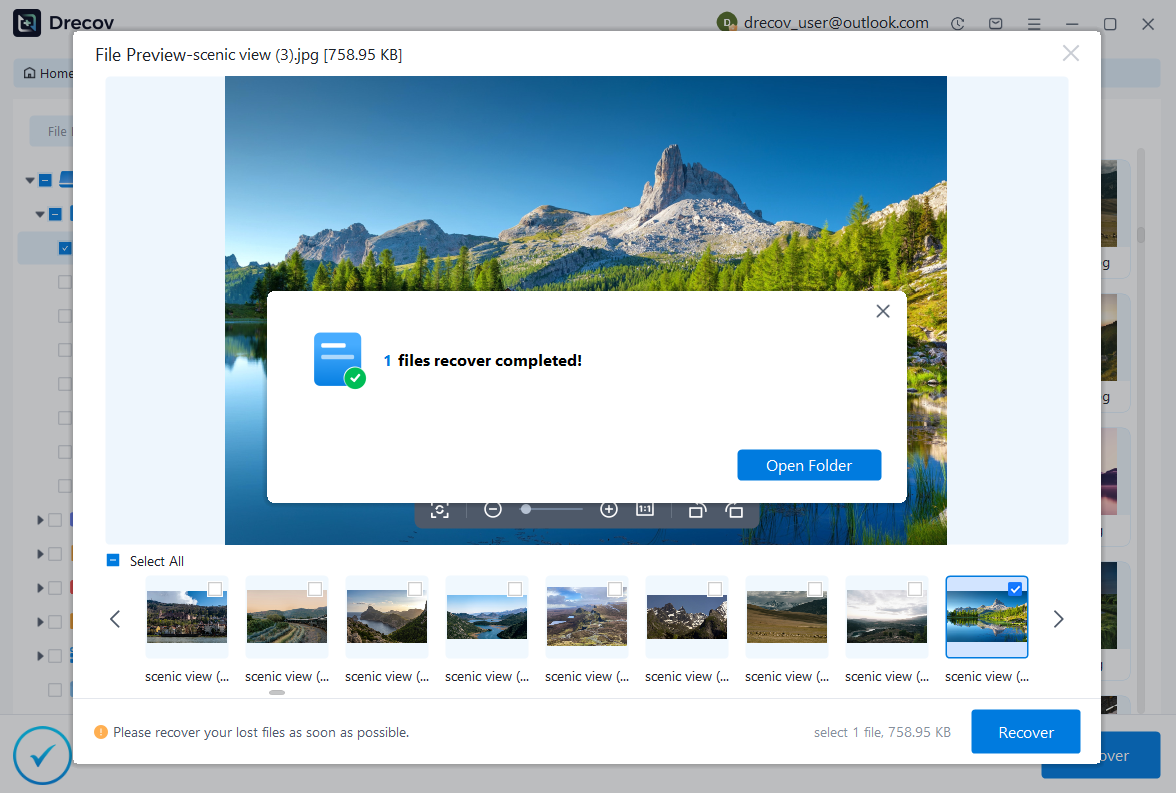
Steps to Recover Files
- Launch PandaOffice Drecov on your computer.
- Select the external drive where the Word file was lost.
- Start a deep scan to search for recoverable files.
- Preview found Word documents.
- Select and recover files to a safe location.
PandaOffice Drecov can scan deeply and detect files even after formatting or corruption. It supports various file formats, including DOC and DOCX.


Why Choose PandaOffice Drecov?
PandaOffice Drecov is a versatile and reliable solution for recovering a wide range of lost or inaccessible files. Whether you need audio recovery, video recovery, or excel recovery files, PandaOffice Drecov provides fast and efficient results, ensuring your important data is safely restored.
For creative professionals, it supports file recovery Illustrator projects, allowing designers to retrieve unsaved or accidentally deleted artwork without compromising file integrity. Businesses and individuals can also benefit from its restore Windows previous date feature, which helps recover documents or spreadsheets that were lost due to system errors or accidental deletions.
When external storage devices fail, such as a Lacie hard drive not showing up, PandaOffice Drecov can detect and restore files from these drives, ensuring you do not lose critical data. Even deleted files in the recycle bin can be recovered using its advanced recycle bin recovery software capabilities.
Additionally, the software supports recovering data from lost partitions, making lost partition recovery straightforward and reliable. Its intuitive interface allows users to perform audio recovery, video recovery, and excel recovery effortlessly, even for large or complex files.
⚠️Warning: Always save recovered files to a different drive to prevent overwriting.
Method 5: Search for Hidden or Missing Word Files
Sometimes Word documents are not actually deleted but become hidden due to system settings, file attribute changes, or malware interference. In such cases, manually searching for hidden files can help you recover Word from Desktop External Drive without using additional tools.
Test Environment
- Windows 10/11
- External drive with suspected hidden files
- File Explorer access
Steps to Find Hidden Files
- Connect your external drive to the computer.
- Open File Explorer and go to the external drive.
- Click on the “View” tab and enable “Hidden items.”
- Search for your Word document using the search bar.
- If found, right-click and select “Properties,” then uncheck “Hidden.”
You can also use the search filter *.doc or *.docx to locate all Word files on the drive.
This method is especially useful when files disappear due to virus attacks or accidental attribute changes rather than deletion.
Method 6: Recover from Backup or Cloud Storage
If you previously created backups or used cloud synchronization services, recovering Word files becomes much easier. Many users unknowingly have backup copies stored in locations like system backups or synced folders.
Test Environment
- Windows or Mac system
- Backup enabled (File History, Time Machine, or cloud sync)
- External drive previously synced
Steps to Recover from Backup
- Open your backup tool (e.g., File History or Time Machine).
- Navigate to the folder where the Word file was stored.
- Browse available backup versions.
- Select the correct version and restore it.
If you use cloud services, check the online recycle bin or version history feature.
This method provides a safe and reliable way to recover files without risking further damage to your external drive.
Method 7: Use Command Prompt to Recover Files
The Command Prompt can help recover files that are hidden or affected by minor corruption issues. This method is more technical but still effective in certain scenarios.
Test Environment
- Windows 10/11
- External drive with logical errors
- Administrator access
Steps to Recover Files Using CMD
- Connect your external drive to the computer.
- Open Command Prompt as Administrator.
- Type the following command: attrib -h -r -s /s /d X:\*.* (Replace X with your external drive letter.)
- Press Enter and wait for the process to complete.
This command removes hidden and system attributes from files, making them visible again.
⚠️Warning: Incorrect use of Command Prompt commands may affect system files. Proceed carefully.
Frequently Asked Questions About Recovering Word Files
Can I recover Word files from a formatted external drive?
Yes, it is possible to recover Word files even after formatting an external drive. Formatting usually removes file references rather than permanently deleting data. Recovery software or deep scanning tools can still locate and restore lost files if they have not been overwritten.
However, the success rate depends on how much new data has been written to the drive after formatting. To improve recovery chances, stop using the drive immediately after data loss.
Why can’t I find my Word document on the external drive?
There are several reasons why a Word file may not appear on an external drive. It could be hidden, accidentally deleted, corrupted, or affected by malware. In some cases, the file system itself may be damaged, preventing files from displaying correctly.
You should first enable hidden files and perform a thorough search. If the file still cannot be found, try recovery methods such as AutoRecover, backups, or recovery software.
Is it safe to use recovery software on external drives?
Yes, using recovery software is generally safe if done correctly. Ensure that you install the software on your computer rather than the external drive. This prevents overwriting the lost data.
Always preview files before recovery and save them to a different location. Following these precautions will help maintain data integrity during the recovery process.
How can I prevent Word file loss in the future?
To avoid losing important Word documents, consider enabling AutoSave and AutoRecover features in Microsoft Word. Regularly back up your files to cloud storage or external devices.
Additionally, always eject external drives properly to prevent corruption. Using reliable antivirus software can also protect your files from malware-related issues.
Key Takeaways on Recovering Word Files from External Drives
Best Practices for Successful Recovery
Recovering lost Word files from external drives is possible in most cases if you act quickly and choose the right method. From checking the Recycle Bin to using advanced recovery tools, each method serves a specific scenario.
Basic solutions work well for recently deleted files, while advanced techniques handle more complex cases like formatting or corruption. Understanding the cause of data loss plays a crucial role in selecting the appropriate recovery approach.
⚠️Warning: Avoid writing new data to the external drive before recovery, as this can permanently overwrite lost files.
Final Thoughts on Data Protection
Learning how to recover Word from Desktop External Drive not only helps restore lost documents but also improves your overall data management strategy. Prevention is always better than recovery, so implementing backup systems and safe usage habits is essential.
External drives are convenient but vulnerable to data loss if not handled properly. By combining preventive measures with effective recovery techniques, you can ensure that your important Word documents remain safe and accessible at all times.






