







SD cards are widely used in cameras, smartphones, drones, dash cams, and gaming consoles. However, accidental deletion, formatting, corruption, or physical damage can result in unexpected data loss. If you’re searching for reliable sd card file recovery, this comprehensive guide will walk you through proven solutions, technical explanations, and preventive strategies.
This guide covers multiple file recovery from sd card methods, including built-in system tools and professional recovery software. Whether you need recovery sd files after formatting or want a free sd card file recovery tool, you’ll find actionable solutions below.
Has anyone encountered a similar situation? My SD card suddenly became unreadable. After inserting it into a Windows 11 computer, it prompted “needs to be formatted before use”, but there are many important photos, videos in it, and I dare not format it at all 😭. I checked it with the chkdsk command, and it reported an error “The type of the file system is RAW.” It seems that the file system is damaged. I also tried to check the disk with diskpart and found that the partition of the SD card was displayed in RAW format and was completely inaccessible. Now the question is, is there any way to recover these files on Windows 11? Has anyone successfully recovered files from corrupted SD card on Windows 11?—from Microsoft Store
Common Causes of SD Card Data Loss
Before attempting sd file recovery, it’s important to understand why data loss happens in the first place. Identifying the cause improves recovery success rates and helps prevent permanent damage.
One of the most common reasons is accidental deletion. Many users remove photos or videos without checking backups. Another frequent issue is formatting. Quick formatting does not erase data immediately but removes file references, making recovery file sd card free possible if action is taken quickly.
File system corruption is also a major factor. Improper ejection, sudden power loss, or virus infections can damage the file allocation table. When this happens, the SD card may show as RAW or request formatting.
Physical issues like worn-out NAND cells, bad sectors, or controller failure can also lead to inaccessible files.
⚠️Warning: Stop using the SD card immediately after data loss. Continued use may overwrite recoverable data and drastically reduce sd card file recovery free success rates.
Understanding these causes will help you choose the most effective recovery method in the next sections.
How SD Card File Recovery Works
When files are deleted from an SD card, they are not instantly erased. Instead, the operating system marks the storage space as available. Until new data overwrites that space, file recovery from sd card remains possible.
Professional recovery software scans the storage device sector by sector. It identifies file signatures, reconstructs directory structures, and restores recoverable fragments. This process is known as deep scanning.
There are typically two types of scanning:
- Quick Scan: Searches recently deleted file entries.
- Deep Scan: Analyzes raw data blocks for file patterns.
The effectiveness of best sd card file recovery software depends on scanning algorithms, supported file formats, and corruption handling capability.
If the SD card is physically damaged, logical recovery tools may not work. In such cases, hardware-level intervention may be required.
⚠️Warning: Never format your SD card multiple times after data loss. Each formatting attempt reduces the chances of successful sd file recovery.
With this understanding, let’s move on to practical recovery methods.
Method 1: Recover SD Files Using Professional Recovery Software
Using a Dedicated SD Card File Recovery Tool
For users without backups, specialized recovery software offers the highest success rate. A reliable free sd card file recovery tool can scan deleted or formatted SD cards and restore lost files efficiently.
The general recovery process includes:
- Remove the SD card and connect it to a computer via card reader.
- Launch the recovery software.
- Select the SD card from the device list.
- Perform a deep scan.
- Preview recoverable files.
- Save recovered files to a different drive.
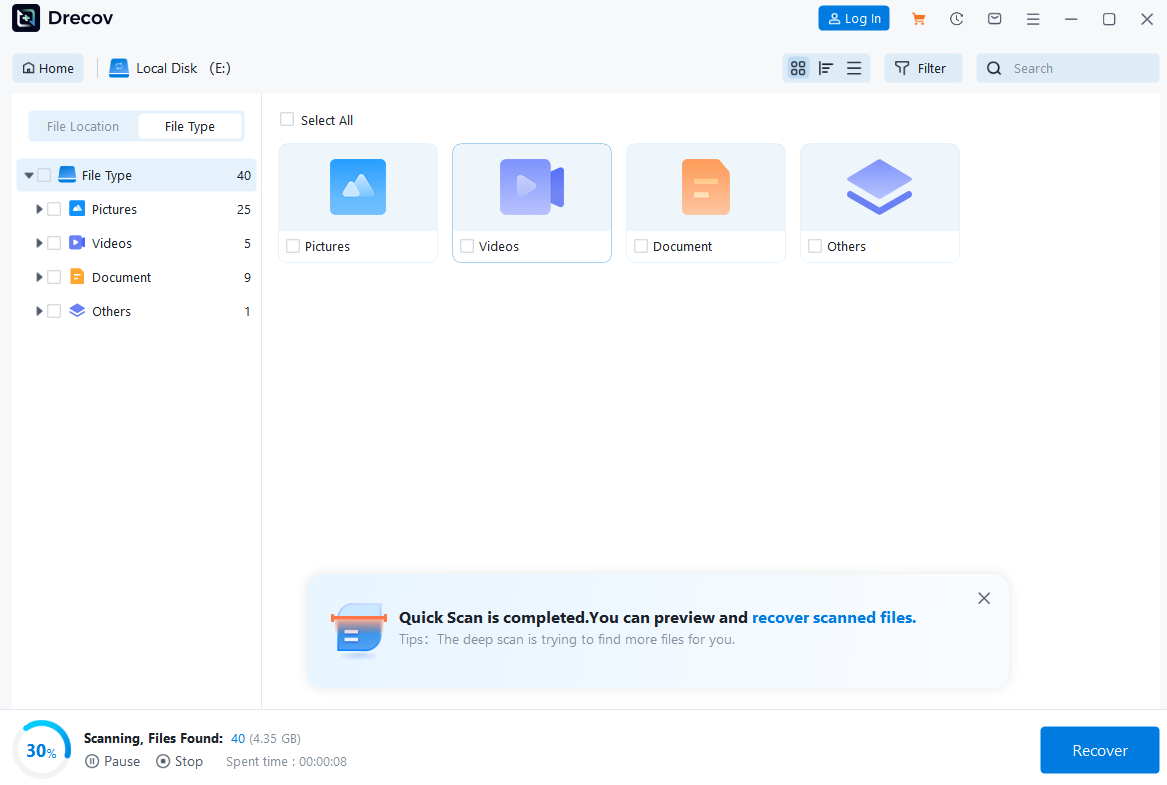
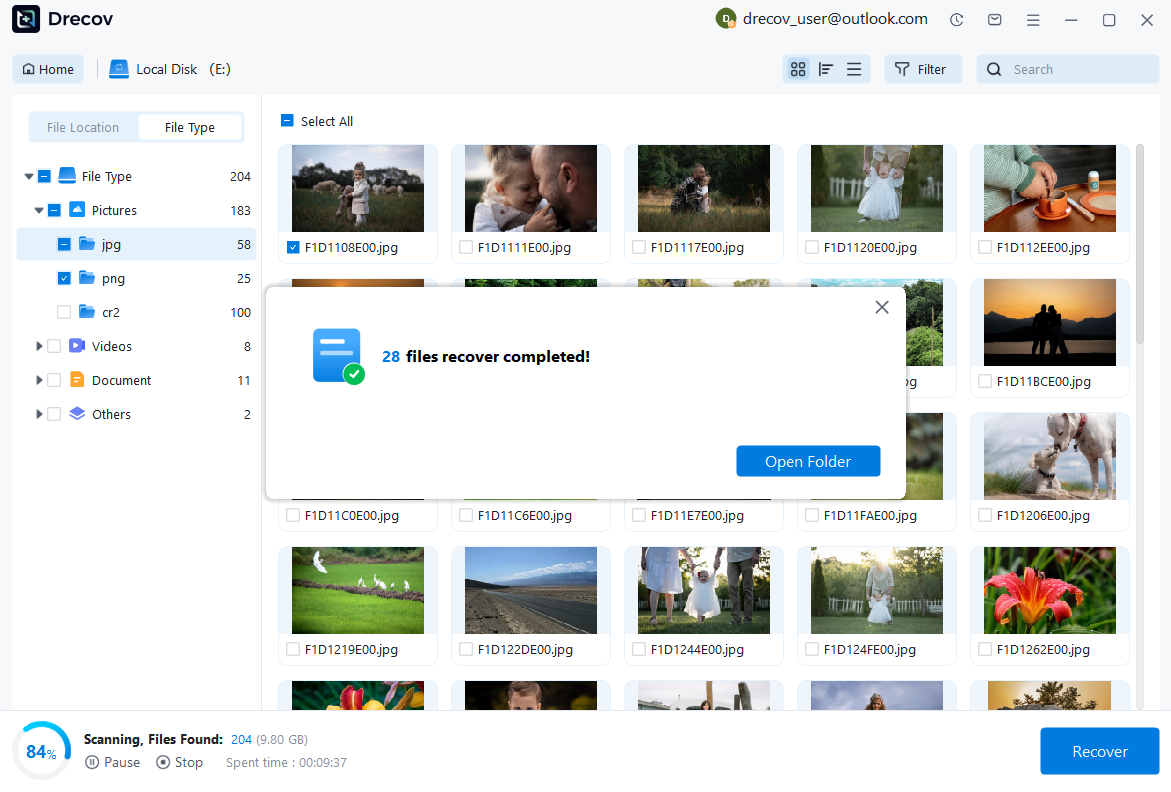
One of the most effective solutions available is PandaOffice Drecov, designed specifically for advanced sd card file recovery scenarios. It supports recovery of photos, videos, documents, and RAW camera files. Its deep-scan engine helps recover files even after formatting or corruption. The preview feature ensures you only restore necessary files, minimizing storage clutter.
Download Drecov
Why Choose PandaOffice Drecov for File Data Recovery?
Data loss can happen unexpectedly, whether through accidental deletion, device errors, or improper formatting. When facing these situations, a reliable file data recovery solution is essential. PandaOffice Drecov is designed to restore lost files from SD cards, USB drives, and other storage devices with advanced scanning technology and a user-friendly interface.
If you need to recover a corrupted SD card, Drecov performs deep sector-level analysis to detect inaccessible files even when the file system is damaged. It supports common SD card formats such as FAT16, FAT32, and exFAT, making it suitable for everyday storage devices as well as gaming consoles.
Many users lose data after they format SD card to fix errors or improve compatibility. Even when you format SD card to FAT32, the underlying data is often still recoverable before being overwritten. Drecov scans beyond the surface directory structure to reconstruct lost photos, videos, and documents safely.
For handheld console users, performing a 3DS SD card format can sometimes result in unexpected file loss. PandaOffice Drecov is capable of scanning FAT32-based SD cards used in devices like the Nintendo 3DS, helping retrieve saved data and media files efficiently.
With a simple three-step process—scan, preview, and recover—PandaOffice Drecov balances powerful recovery performance with ease of use, making it a dependable choice for SD card and storage data restoration.
This method is ideal when:
- The SD card was formatted.
- Files were permanently deleted.
- The device shows RAW file system errors.
Unlike basic utilities, professional tools significantly improve recovery sd files success rates in complex situations.
Method 2: Recover Deleted Files from Recycle Bin (If Applicable)
Checking Temporary Deletion Locations
If you deleted files while the SD card was connected to your computer, there’s a chance they were sent to the Recycle Bin instead of being permanently removed.
To check:
- Open Recycle Bin on Windows.
- Search for recently deleted files.
- Right-click and choose Restore.
This simple approach works only if files were deleted via file explorer and not from cameras or smartphones.
Although limited, this method provides a quick solution for recovery file sd card free without requiring third-party tools.
Keep in mind:
- Files deleted directly from cameras bypass the Recycle Bin.
- Shift + Delete permanently removes files.
- Formatting erases file references completely.
If files are not found in the Recycle Bin, proceed with software-based sd card file recovery free options described earlier.
Method 3: Restore from Backup
Using Windows File History or Mac Time Machine
If you enabled backup systems before data loss, restoring from backup is often the safest option.
On Windows:
- Connect the backup drive.
- Open File History.
- Navigate to the folder containing SD card backups.
- Restore selected files.
On Mac:
- Connect the Time Machine backup.
- Enter Time Machine.
- Locate deleted files.
- Click Restore.
Cloud storage services like Google Photos or OneDrive may also automatically sync media files.
Backup restoration avoids the need for sd file recovery scanning and ensures original file integrity. However, this method only works if backups were created before data loss.
For users without backups, advanced scanning software remains the best alternative for file recovery from sd card.
Method 4: Repair Corrupted SD Card Using Command Prompt
Fixing File System Errors with CHKDSK
Sometimes the issue is not deletion but file system corruption. In such cases, running CHKDSK can repair logical errors and restore access.
Steps:
- Connect SD card to PC.
- Open Command Prompt as Administrator.
- Type:
chkdsk X: /f
(Replace X with your SD card drive letter.) - Press Enter.
This command checks for bad sectors and fixes file system inconsistencies.
If successful, previously inaccessible files may reappear without requiring a free sd card file recovery tool.
⚠️Warning: Do not interrupt the CHKDSK process. Sudden disconnection can worsen corruption.
If CHKDSK fails or reports severe damage, proceed with deep scanning software for effective best sd card file recovery.
Can You Perform SD Card File Recovery Free?
Many users search for completely sd card file recovery free solutions. The answer depends on the severity of the data loss.
Free options include:
- Recycle Bin restoration
- Backup recovery
- Basic recovery software with limited free scanning
However, free versions often limit the amount of recoverable data or restrict advanced scanning features.
When dealing with large media files such as 4K videos or RAW photos, premium tools significantly increase success rates.
Choosing the right solution depends on:
- Type of data lost
- Whether formatting occurred
- Presence of backups
- Physical condition of the SD card
In Part 2, we will explore advanced recovery techniques, RAW SD card repair, formatted SD recovery strategies, prevention tips, and expert recommendations to maximize sd card file recovery success.
Method 5: Recover Data from a Formatted SD Card
Performing Deep Scan After Accidental Formatting
Formatting is one of the most common causes of SD card data loss. Fortunately, quick formatting does not immediately erase the stored data. Instead, it rebuilds the file system structure and marks previous data blocks as reusable. This makes sd card file recovery possible if no new data has overwritten the original files.
To perform file recovery from sd card after formatting:
- Stop using the SD card immediately.
- Connect it to a computer using a card reader.
- Launch a reliable recovery tool.
- Choose the formatted SD card.
- Run a deep scan instead of a quick scan.
- Preview and save the recovered files to another drive.
Deep scanning analyzes the raw storage sectors and identifies file signatures such as JPEG, MP4, DOCX, or RAW formats. This approach is especially useful for photographers and videographers who need recovery sd files after accidental reformatting inside cameras.
⚠️Warning: Never save recovered files back to the same SD card. Doing so may overwrite other recoverable data and permanently reduce sd card file recovery free success rates.
Formatted SD cards often remain highly recoverable if action is taken quickly.
Method 6: Recover SD Files from a RAW SD Card
Fixing RAW File System and Extracting Data
An SD card showing as “RAW” means the file system has become corrupted. This prevents the operating system from recognizing its structure. The device may display messages like “You need to format the disk before you can use it.”
In this scenario, avoid formatting immediately. Instead, perform sd file recovery first.
Steps to recover from a RAW SD card:
- Connect the SD card to your computer.
- Launch professional recovery software.
- Select the RAW SD card.
- Run a full deep scan.
- Recover files to a secure storage location.
RAW recovery works by bypassing damaged file tables and scanning for file signatures directly. This is one of the most effective techniques for best sd card file recovery in severe corruption cases.
After recovering data, you can format the SD card to rebuild its file system and reuse it safely.
⚠️Warning: Formatting a RAW SD card before recovery may drastically reduce the chances of retrieving complete file structures.
Recovering first, repairing later — this sequence maximizes your recovery file sd card free potential.
Method 7: Repair Bad Sectors on SD Card
Using Disk Management and Error Checking Tools
Bad sectors are damaged areas on storage media that cannot reliably store data. Logical bad sectors can often be repaired, while physical bad sectors indicate hardware degradation.
To check and repair logical errors:
- Open This PC.
- Right-click the SD card.
- Choose Properties.
- Select the Tools tab.
- Click Check under Error Checking.
This process scans for file system inconsistencies and attempts repair. If successful, inaccessible files may become readable again without requiring additional sd card file recovery software.
However, if bad sectors are extensive, recovery software that supports sector-level scanning will be required for effective file recovery from sd card.
Frequent bad sector errors usually indicate that the SD card is nearing the end of its lifespan. In such cases, replace the card after completing recovery sd files.
Regular monitoring and safe ejection practices help reduce the risk of sector damage over time.
Best SD Card File Recovery Practices
How to Increase Recovery Success Rate
When performing sd card file recovery, following best practices significantly improves your chances of success.
First, immediately stop using the SD card. Continued use increases the likelihood of overwriting deleted data. Second, avoid installing recovery software directly onto the affected SD card. Always install it on your computer’s internal drive.
Third, choose deep scanning when dealing with formatting or RAW file systems. Deep scan technology improves best sd card file recovery outcomes by analyzing raw sectors rather than relying solely on file tables.
Fourth, preview recoverable files before saving. This ensures file integrity and avoids wasting time recovering corrupted fragments.
Finally, store recovered files on a separate storage device such as an external hard drive or cloud storage.
⚠️Warning: Do not attempt repeated formatting and scanning cycles. Excessive attempts may worsen corruption.
Following these principles enhances both sd card file recovery free attempts and professional-level restoration processes.
Can You Perform SD Card File Recovery Free?
Understanding Free vs Paid Recovery Options
Many users search for free sd card file recovery tool solutions. While free options exist, they often come with limitations.
Free recovery methods include:
- Recycle Bin restoration
- Backup recovery
- Limited free scanning versions of recovery software
Some tools allow scanning at no cost but require payment for file export. Others restrict recovery volume. If your data loss involves only a few small files, a recovery file sd card free option may be sufficient.
However, for larger datasets such as 4K videos or extensive photo libraries, professional solutions typically provide better scanning accuracy and file reconstruction reliability.
Choosing between free and paid recovery depends on:
- Size of lost data
- File importance
- Level of corruption
- Presence of backups
For critical data, investing in a reliable sd file recovery solution often ensures higher success rates and better file integrity.
How to Prevent Future SD Card Data Loss
Practical Data Protection Strategies
Preventing data loss is always easier than performing file recovery from sd card. Implementing smart storage habits reduces risk significantly.
Always eject SD cards safely before removal. Abrupt removal during data transfer can corrupt the file system. Enable automatic backups when possible. Cloud synchronization services help maintain duplicate copies of important files.
Avoid using the same SD card across multiple devices without formatting. Different devices may create incompatible file structures, increasing corruption risk.
Regularly scan SD cards for errors using system tools. Early detection prevents severe corruption later.
Store SD cards in protective cases to avoid physical damage from dust, moisture, or static electricity.
For photographers and content creators, maintaining multiple SD cards reduces reliance on a single device. Rotational usage extends lifespan and decreases wear.
Practicing these habits minimizes the need for future sd card file recovery free attempts and ensures long-term storage reliability.
Frequently Asked Questions About SD Card File Recovery
How Long Does SD Card Recovery Take?
The duration depends on card capacity and scan type. Quick scans may take minutes, while deep scans for 128GB or 256GB cards may require several hours.
Can I Recover Files from a Physically Damaged SD Card?
If the SD card has severe hardware damage, software-based sd card file recovery may not work. Professional hardware repair services may be necessary.
Is It Safe to Reuse an SD Card After Recovery?
Yes, but only after confirming no physical damage exists. Reformatting the card after successful recovery sd files ensures a clean file system.
What Is the Best SD Card File Recovery Option?
The best solution depends on the data loss scenario. For accidental deletion or formatting, deep-scan software offers the highest recovery potential.
Conclusion: Choosing the Right SD Card Recovery Strategy
Losing important files from an SD card can feel overwhelming, but in most cases, sd card file recovery is achievable. Whether files were deleted, formatted, corrupted, or lost due to RAW file system errors, multiple solutions are available.
Start with basic checks like the Recycle Bin or backups. If those fail, use a reliable free sd card file recovery tool to scan your device. For complex cases involving corruption or formatting, advanced deep scanning delivers the best results.
Remember these key principles:
- Stop using the SD card immediately.
- Perform recovery before formatting.
- Save recovered files to a separate drive.
- Avoid overwriting data.
With the right approach, file recovery from sd card is often successful — even in challenging scenarios.
By following the methods and best practices outlined in this guide, you can confidently perform recovery sd files, protect your data, and reduce future data loss risks.






