







Losing valuable photos from a Canon DSLR camera can be frustrating, especially when the images capture important moments such as vacations, family events, professional projects, or once-in-a-lifetime experiences. Photos can disappear because of accidental deletion, SD card formatting, file system errors, camera operation mistakes, or unexpected interruptions during data transfer.
Fortunately, deleted images are not always permanently lost. When a photo is removed from a memory card, the camera usually does not immediately erase the actual data. Instead, the storage space is marked as available for new files. If no new photos overwrite that space, there is still a chance to restore pictures from Canon DSLR camera storage.
This guide explains several practical methods to recover lost photos from different Canon camera models, including the Canon XTi DSLR camera and Canon XS DSLR camera. It covers built-in options, backup solutions, professional recovery software, and useful precautions to improve recovery success.
Whether you accidentally deleted pictures while reviewing images on your camera or lost files after formatting an SD card, the methods below can help you understand how to retrieve your missing photos safely.
⚠️Warning: Stop using the Canon camera or memory card immediately after losing photos. Taking new pictures may overwrite deleted files and reduce the possibility of successful recovery.
Common Reasons Why Pictures Disappear from a Canon DSLR Camera
A Canon DSLR camera stores images on removable memory cards such as SD cards, SDHC cards, or other compatible storage media. Although these cards are designed for repeated use, problems can occur over time and cause photos to become inaccessible.
One of the most common causes is accidental deletion. While browsing images on the camera screen, users may mistakenly select important files and press the delete button. Since DSLR cameras usually do not include a recycle bin feature, deleted photos may seem to disappear immediately.
Another frequent situation happens during file transfers. Removing an SD card while copying photos to a computer, disconnecting the card reader too early, or experiencing a sudden power failure can interrupt the transfer process and damage the file structure.
Formatting errors are another major reason for missing pictures. Many photographers format their memory cards directly inside the camera to prepare them for new shooting sessions. However, if the wrong card is selected or formatting happens accidentally, stored photos may become unavailable.
Other possible causes include corrupted memory cards, virus infections from computers, damaged card readers, or using the same card between multiple devices without proper formatting.
For example, both the Canon XTi DSLR camera and Canon XS DSLR camera rely on removable storage cards. If the card develops errors, the camera may display messages such as “Card Error,” “Memory Card Error,” or fail to show previously captured photos.
Understanding the cause of photo loss is important because different situations require different recovery approaches. In many cases, the images are still physically stored on the card and can be recovered with the correct method.
Things to Do Before Recovering Deleted Pictures from Canon DSLR Camera
Before attempting to recover deleted pictures from Canon DSLR camera, taking the correct first steps can significantly improve recovery results. Many failed recovery attempts happen because users continue using the camera after data loss.
The first action should be stopping all new operations on the memory card. Avoid taking additional photos, recording videos, or formatting the card again. Every new file written to the card may replace deleted photo data and make recovery impossible.
Next, remove the SD card from the camera and connect it to a computer using a reliable card reader. A card reader is usually safer because it avoids additional operations performed by the camera system.
If your computer asks you to format the memory card after connection, do not accept the request immediately. A formatting prompt often appears when the file system becomes damaged, but formatting can overwrite important information needed for recovery.
You should also avoid using random repair tools that modify the card structure before recovering files. Some repair operations may fix the card but accidentally remove recoverable image information.
⚠️Warning: Do not save recovered files back to the original Canon memory card. Always choose another storage location, such as your computer hard drive or an external drive, to prevent overwriting remaining data.
Following these precautions creates the best possible environment for photo recovery. The earlier you stop using the storage device, the higher the chance of retrieving your lost images.
Method 1: Check the Camera and Memory Card Settings
Before using recovery tools, it is worth checking whether the pictures are actually deleted or simply hidden because of camera settings or display issues. Sometimes images may appear missing because the camera cannot properly read the memory card rather than because the files have been erased.
Many Canon DSLR cameras provide playback options that allow users to filter images by date, folder, or protection status. Incorrect playback settings may prevent certain photos from appearing on the camera screen.
You can also test the memory card on another compatible device. Insert the card into a computer using a card reader and check whether the DCIM folder contains your photos. Canon cameras typically store captured images inside the DCIM directory, where folders may contain JPEG or RAW files.
Test environment:
- Camera model: Canon DSLR camera with removable SD card support
- Storage device: Original camera memory card containing missing photos
- Computer system: Windows 11 PC with built-in File Explorer
- Connection method: USB card reader
If the card is recognized and photos appear on another device, the issue may be related to the camera settings rather than actual data loss.
However, if the memory card is empty, shows incorrect capacity, or requests formatting, the photos may have become inaccessible because of file system damage. In this situation, checking settings alone will not solve the problem, and a dedicated recovery approach may be required.
This method is useful as a quick inspection step because it does not modify the memory card. If the pictures are truly deleted or the card has been formatted, continue with the following recovery methods.
Method 2: Restore Pictures from Canon DSLR Camera Using Backup Files
If you regularly transfer photos from your camera to another storage location, checking backups can be the fastest way to restore missing images. Many photographers create copies of their DSLR photos on computers, external hard drives, cloud storage platforms, or network storage systems.
Before trying complicated recovery procedures, search your existing backups carefully. Check folders where you usually import images, including photo management applications and external storage devices.
For professional photographers, backup systems are especially important because RAW images from DSLR cameras often represent valuable work that cannot easily be recreated.
Test environment:
- Camera model: Canon DSLR camera
- Backup source: Windows computer or external storage drive
- Backup folders: Pictures folder, imported camera folders, external HDD folders
- File types checked: JPEG, CR2 RAW files, and other Canon image formats
If you previously copied images manually, open the destination folders and search by file extension. Canon cameras commonly create image files with formats such as JPG and CR2 depending on camera settings.
You can also check cloud synchronization folders if automatic backup was enabled. Some users store their photography collections in online storage services, making recovery much easier.
However, backups are only useful if they were created before the photo loss happened. If the deleted pictures were never copied elsewhere, you will need another method to scan the memory card directly.
Keeping multiple backups is always recommended for future photography projects. A single memory card should never be considered the only location for important images.
Method 3: Recover Deleted Photos from Canon DSLR Camera with Photo Recovery Software
When deleted pictures are not available in backups, photo recovery software can scan the memory card and search for recoverable image data. This method works because deleting files usually removes the file references rather than immediately destroying the actual photo content.
Recovery software analyzes the storage device sector by sector and identifies remaining image information. Depending on the condition of the memory card, it may recover recently deleted pictures, formatted photos, and files lost because of file system errors.
For photographers who need a simple recovery process, PandaOffice Drecov provides a Windows-based solution for recovering lost photos from SD cards, external storage devices, and other supported media. It supports previewing recoverable files before restoration, allowing users to check whether their missing images can be recovered.
Test environment:
- Camera model: Canon DSLR camera
- Memory card type: SDHC card previously used for photography
- Computer system: Windows 10/11 PC
- Recovery software: PandaOffice Drecov
- Recovery destination: Separate computer drive
The recovery process generally includes:
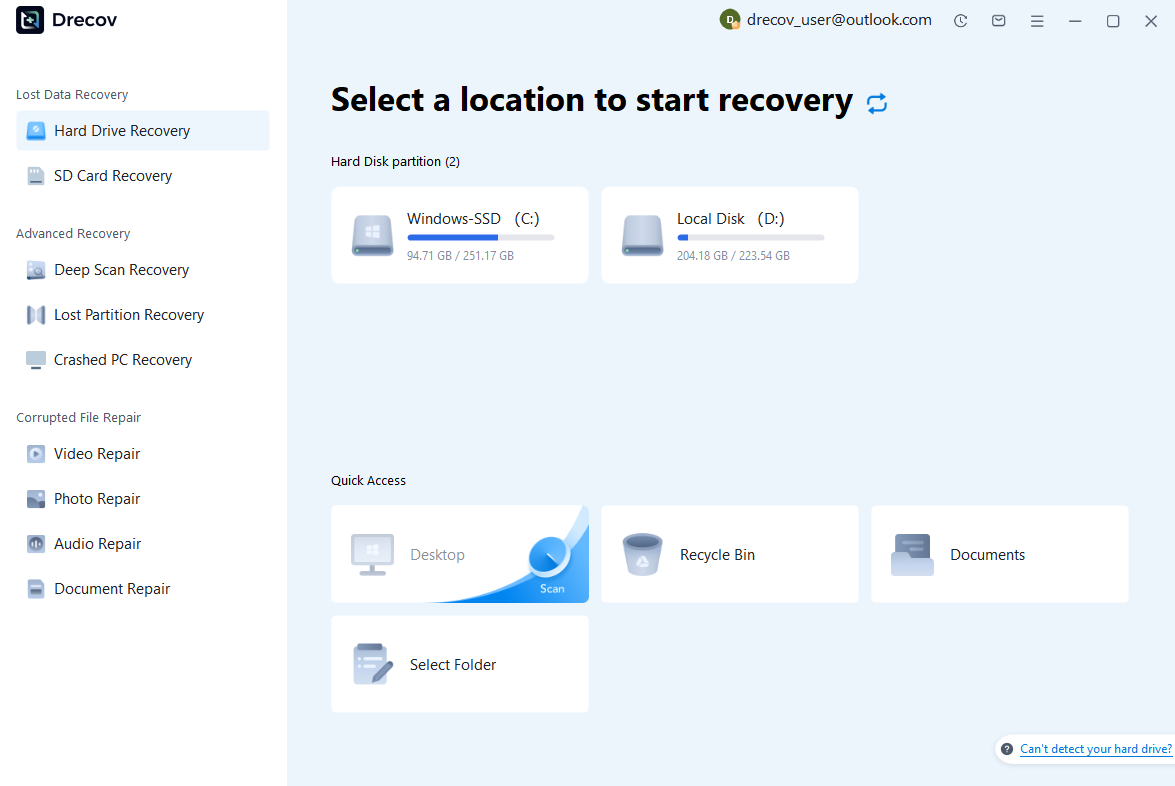
Step 1: Connect the Drive / USB)
Connect your device (SD card, HDD/SSD, or USB drive) to your computer and launch PandaOffice Drecov. Select the target device and start the scan. The software will perform a quick scan and deep scan to detect lost or deleted data.
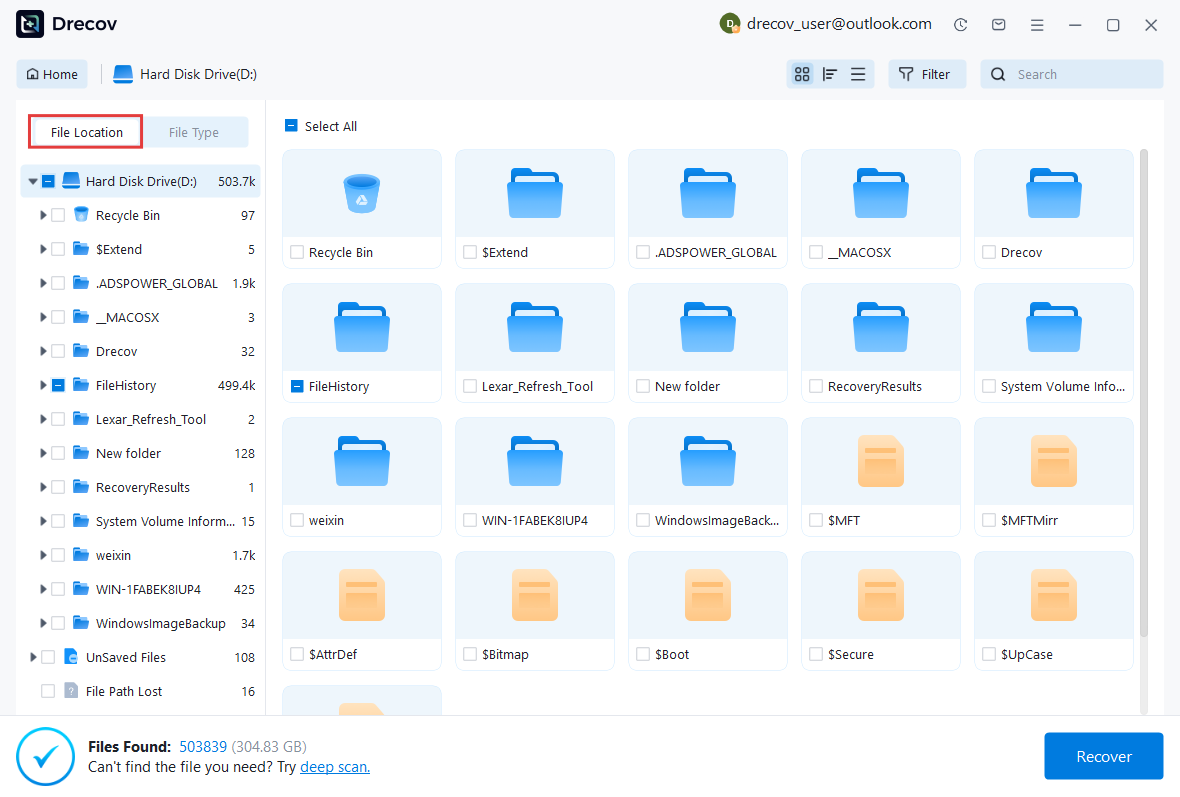
Step 2: Locate and Preview Lost Files
After scanning, browse the detected files and use the preview feature to check recoverable data. You can preview documents (Word, Excel, PDF), photos, and videos to ensure file integrity before recovery.
Step 3: Recover and Save to a New Location
Select the files you want to restore and click recover. Save all recovered data to a different drive or location (not the original device) to avoid overwriting lost data.

Some questions you may be interested in:
how to format a hard drive windows 11
how to recover deleted drafts in outlook
what is healthy recovery partition
how to make steam not open on startup
⚠️Warning: Recovery success depends on whether new data has overwritten the deleted photos. Avoid using the memory card until the recovery process is complete.
This method is generally effective for accidental deletion, formatting mistakes, and many common SD card errors. For severely physically damaged cards, professional data recovery services may still be necessary.
Method 4: Recover Canon DSLR Photos from Windows Previous Versions or File History
Windows provides several built-in backup features that may help users restore lost images if the photos were previously stored on a computer. Although these tools cannot directly recover deleted files from a Canon camera memory card, they can restore copies that were saved on the PC before the data loss occurred.
When photographers transfer images from a Canon DSLR camera to a Windows computer, they may organize files into folders such as Pictures, Photography Projects, or Camera Imports. If Windows backup features were enabled, previous versions of these folders may still contain older copies of deleted photos.
The Previous Versions feature works by using restore points or file history backups created by Windows. If a folder containing your Canon photos was backed up before deletion, you may be able to return it to an earlier state.
Test environment:
- Camera model: Canon DSLR camera used for photo transfer
- Computer system: Windows 10/11 PC
- Backup feature: Windows File History or Previous Versions enabled
- Photo location: Local folders previously used for importing camera images
To check available versions, locate the folder where your Canon photos were saved, right-click the folder, and select the restore option related to previous versions. If available backups exist, choose a version created before the photos disappeared and restore the files.
This method is safe because it does not modify the original memory card. However, its success depends completely on whether Windows created backups in advance. Many users discover that this option is unavailable because File History was never configured.
For photographers who frequently work with large numbers of images, enabling automatic backups can prevent future data loss. Combining local backups with external storage provides better protection for important DSLR photographs.
Method 5: Use Cloud Storage to Find Missing Canon DSLR Pictures
Cloud storage services can sometimes provide another way to restore lost pictures from a Canon DSLR camera, especially when users automatically synchronize their photography folders. Many photographers upload selected images to online storage platforms after transferring files from their cameras.
If your missing pictures were previously uploaded, you may be able to retrieve them without scanning the memory card. Check cloud folders, synchronized albums, and recently deleted sections provided by your storage service.
Some cloud platforms keep deleted files temporarily before permanently removing them. This means photos deleted from a synchronized folder may still be recoverable for a limited period.
Test environment:
- Camera model: Canon DSLR camera
- Transfer device: Windows computer
- Cloud backup: Enabled synchronization service
- Internet connection: Required for accessing online files
Start by logging into the cloud account you normally use for photography backups. Search for folders containing camera imports, RAW files, JPEG images, or project names related to the missing photos.
If you use automatic synchronization software, check whether the application has a recycle bin or recovery section. Some services preserve deleted files separately from normal folders.
However, this approach only works when cloud backup was configured before the images disappeared. If the photos existed only on the camera memory card and were never uploaded, cloud storage cannot help.
For photographers who capture important events, automatic backup workflows are highly recommended. A memory card can fail unexpectedly, but keeping copies in multiple locations greatly reduces the risk of permanent photo loss.
Why Deleted Pictures from Canon DSLR Camera Can Still Be Recovered
Many users wonder why deleted photos can still be recovered after they have been removed from a camera. The reason is related to how digital storage devices manage deleted files.
When you delete pictures from a Canon DSLR camera, the camera usually does not immediately erase every piece of image data. Instead, the storage system marks the space occupied by those files as available for future use.
The actual photo information may remain on the SD card until new files overwrite that space. Recovery tools work by scanning the card for remaining data structures and rebuilding accessible images.
For example, if you accidentally delete several photos and immediately stop using the memory card, the chances of recovery are much higher. On the other hand, if you continue taking hundreds of new pictures afterward, the deleted files may become permanently damaged.
The same principle applies to formatted memory cards. Quick formatting often removes the file system references while leaving much of the original data untouched.
Test environment example:
- Camera: Canon XTi DSLR camera
- Memory card: SD card containing deleted JPEG and RAW images
- Computer: Windows recovery workstation
- Condition: No new photos saved after deletion
Different situations create different recovery results. Recently deleted files usually have a better chance of being restored than files lost from heavily used or physically damaged cards.
Understanding this process helps users avoid common mistakes after photo loss and improves the possibility of successfully recovering valuable images.
Common Problems When Restoring Pictures from Canon DSLR Camera
Even when users follow recovery instructions correctly, they may encounter problems during the process. Understanding these issues can help determine the next step.
One common problem is that the camera does not recognize the memory card. This may happen because of file system corruption, physical damage, or compatibility problems. Trying another card reader or connecting the card directly to a computer may help identify the issue.
Another situation occurs when recovery software finds files but the pictures cannot be opened. This usually indicates that the image data has been partially overwritten or damaged.
Some users may also recover photos with incorrect file names. This happens because recovery tools often reconstruct files based on remaining data instead of original folder information.
Test environment:
- Camera model: Canon XS DSLR camera
- Storage media: SD card with missing images
- Operating system: Windows 11
- Recovery condition: Deleted photos after accidental formatting
If your Canon XS DSLR camera shows a card error, avoid repeatedly formatting the card. Each operation can change the storage structure and reduce recovery opportunities.
⚠️Warning: If the SD card makes unusual sounds, disconnects repeatedly, or is physically damaged, stop attempting recovery. Continued use may worsen hardware problems.
For logical problems such as deletion, formatting, or corrupted file systems, software-based recovery is usually the first option. For physical damage, specialized recovery technicians may be required.
How to Prevent Future Photo Loss on Canon DSLR Cameras
Recovering lost pictures is possible in many situations, but preventing data loss is always better than attempting recovery afterward. Photographers who use a Canon DSLR camera should develop reliable storage habits.
The first recommendation is to create regular backups. After important photography sessions, transfer images to a computer and create another copy on an external storage device.
Avoid filling memory cards completely. Leaving some free space can reduce file system stress and improve camera performance.
It is also important to safely remove memory cards from computers. Removing a card while files are still transferring may damage the file structure and make pictures inaccessible.
Formatting memory cards inside the camera is generally safer than formatting them through different devices. However, always confirm that important photos have already been backed up before formatting.
Test environment:
- Camera models: Canon XTi DSLR camera and Canon XS DSLR camera
- Storage devices: SD and SDHC memory cards
- Backup devices: External hard drive and Windows computer
Professional photographers may consider using multiple memory cards during important shoots instead of relying on a single card.
Additional good practices include:
- Regularly checking memory card health
- Using reliable card readers
- Avoiding unknown computers when transferring files
- Keeping multiple copies of important images
These habits reduce the chance of losing valuable photographs and make future recovery situations much easier to handle.
Frequently Asked Questions About Restoring Canon DSLR Photos
Can I recover deleted pictures from a Canon DSLR camera?
Yes. Deleted photos may still be recoverable if the storage space has not been overwritten. Stop using the memory card immediately and use an appropriate recovery method.
Can a formatted Canon camera SD card be recovered?
In many cases, formatted cards can still be scanned for recoverable photos, especially if no new files have been saved after formatting.
Does deleting photos from a Canon DSLR permanently remove them?
Usually, deletion only removes file references. The original image data may remain until new information replaces it.
Can I recover RAW photos from Canon cameras?
Yes. Many recovery tools can detect common Canon RAW formats, including CR2 files, depending on the condition of the memory card.
Why are recovered pictures damaged or incomplete?
Damaged recovered images usually happen because parts of the original data were overwritten or the storage device had existing corruption.
Final Thoughts on Recovering Pictures from Canon DSLR Camera
Losing important photos from a camera can be stressful, but deleted images are not always gone forever. Whether the problem comes from accidental deletion, formatting errors, or memory card corruption, there are several ways to restore missing files.
The best approach is to stop using the memory card immediately, check available backups, and choose a suitable recovery method based on your situation. Simple solutions such as Windows backups or cloud storage may work if copies already exist, while recovery software can help when photos remain on the card.
For users who need to restore pictures from Canon DSLR camera storage, acting quickly is the most important factor. Avoid writing new data to the memory card and always recover files to another location.
By following proper backup habits and safe storage practices, photographers can protect their valuable images and reduce the risk of future photo loss.






