







Managing a large collection of digital photos can become difficult over time. With the increasing use of smartphones, cameras, and cloud storage services, users often save thousands of pictures on their computers. During repeated transfers, backups, or downloads, the same image may be copied multiple times, creating unnecessary duplicate files.
Duplicate pictures not only consume valuable storage space but also make photo organization more complicated. Finding a specific image becomes harder when multiple identical copies exist in different folders. In addition, duplicate files can increase backup size and make synchronization processes slower.
Learning how to remove duplicate photos can help users organize their image libraries and recover storage space. Whether you have personal memories, professional photography projects, or large collections of downloaded images, removing unnecessary copies can make file management much easier.
Windows users have several ways to identify and delete duplicate pictures. Some people prefer manually checking folders, while others use specialized tools such as a duplicate photo remover to automatically compare images and find repeated files.
This guide explains different methods to remove duplicate photos, including built-in Windows options, manual approaches, and recovery solutions for accidentally deleted pictures. It also provides tips for preventing duplicate images from appearing again in the future.
Understanding Duplicate Photos and Why They Appear
What Are Duplicate Photos and How Do They Affect Storage
Duplicate photos are multiple copies of the same image stored in different locations or with different file names. These copies may be completely identical or visually similar but saved separately on a computer, external drive, or other storage device.
For example, a user may transfer photos from a smartphone to a computer several times. Each transfer process may create another copy of the same images instead of replacing the existing files.
Some duplicate photos have exactly the same file size and data structure. Others may look identical but contain different information, such as different file names, compression levels, or metadata.
Over time, duplicate pictures can occupy a significant amount of storage space. A single image may not seem important, but hundreds or thousands of repeated files can quickly consume gigabytes of storage.
Duplicate files can also affect organization. When searching for a specific memory or project image, users may need to check several copies stored in different folders. This wastes time and increases the chance of accidentally editing or sharing the wrong version.
Test environment:
- Operating system: Windows 11
- Storage device: Internal SSD
- Photo collection size: More than 10,000 images
- File formats tested: JPG, PNG, and camera image files
Removing unnecessary copies helps create a cleaner photo library and improves overall storage management. However, users should always confirm that a file is truly duplicated before deleting it.
⚠️Warning: Do not delete duplicate images immediately without checking their content. Some photos may look similar but contain important differences, such as higher resolution or edited versions.
Common Reasons Why Duplicate Pictures Are Created
Duplicate photos usually appear because of repeated file transfers, backups, downloads, or synchronization activities. Understanding these causes can help users avoid creating unnecessary copies in the future.
One common cause is importing photos from mobile devices multiple times. When users connect a smartphone or camera to a computer repeatedly, they may accidentally copy the same images into different folders.
Backup operations can also create duplicates. For example, users may manually copy a photo folder to an external drive while also using automatic backup software. Both processes may store the same images separately.
Cloud synchronization is another possible source of duplicate files. When multiple devices sync the same photo collection, conflicts may create additional copies if the system cannot determine which version should be kept.
Downloading images from websites, messaging applications, and email attachments can also contribute to duplicate storage. Users may save the same image several times under slightly different names.
Editing workflows create another type of duplicate. A photographer may keep the original image, an edited version, and multiple exported copies. While these files may not be identical, they can increase storage usage.
Test environment:
- Devices tested: Smartphone, camera, and external drive
- Transfer methods: USB connection and cloud synchronization
- Photo formats: JPG and PNG
Knowing why duplicates appear makes it easier to create better file management habits. Instead of repeatedly copying entire folders, users can organize photos carefully and avoid unnecessary duplication.
Why Removing Duplicate Photos Helps Improve File Management
Removing duplicate images provides several benefits beyond saving storage space. A well-organized photo collection makes it easier to locate important files, create backups, and manage future photo imports.
One major advantage is improved storage efficiency. Computers and external drives often contain thousands of images, and duplicate files can occupy a large amount of unnecessary space. By cleaning repeated photos, users can free storage for new files and improve system organization.
Backup management also becomes easier after removing duplicates. When duplicate images are eliminated, backup processes become faster because fewer files need to be copied or synchronized.
For users who work with photography professionally, removing duplicate photos can improve workflow efficiency. Large image collections become easier to review, edit, and archive.
A clean photo library also reduces confusion. Instead of choosing between multiple copies of the same picture, users can maintain one preferred version while storing important edited copies separately.
Test environment:
- Computer: Windows 10/11 PC
- Storage type: SSD and external HDD
- Photo library: Personal and professional image folders
A regular cleanup routine helps prevent duplicate files from building up. Combining organized storage habits with a reliable duplicate photo remover can make long-term photo management much simpler.
Methods to Find and Remove Duplicate Photos on Windows
Manually Search and Delete Duplicate Pictures
Manual checking is one of the simplest ways to remove duplicate photos, especially when the number of images is relatively small. Users can open photo folders, compare files, and delete unnecessary copies individually.
The process usually begins by organizing photos into clear folders. For example, images can be separated by year, event, or device source. This makes it easier to compare pictures and identify repeated files.
Windows File Explorer provides useful information such as file name, size, date modified, and image dimensions. These details can help users determine whether two images are identical.
Users can also preview photos before deleting them. This is important because two pictures may appear similar but contain different edits, resolutions, or metadata.
Test environment:
- Operating system: Windows 11
- Tool used: File Explorer
- Photo collection: 1,000 image files
- File formats: JPG and PNG
Manual removal works well for smaller collections, but it becomes inefficient when dealing with thousands of pictures. Comparing files individually requires significant time and attention.
⚠️Warning: Always keep a backup copy of important photos before manually deleting files. Accidental deletion can permanently remove valuable memories.
For large photo libraries, automated solutions may provide faster and more accurate results.
Use Windows Built-in Features to Remove Duplicate Photos Windows 10
Windows provides several built-in functions that can help users organize files and identify repeated images. Although Windows does not include a dedicated duplicate photo scanner, features such as File Explorer search and sorting options can assist with windows 10 remove duplicate photos tasks.
Users can begin by opening a photo folder and changing the view settings. Displaying thumbnails makes it easier to compare images visually. Sorting files by name, size, or modification date can also reveal possible duplicates.
The search function can help locate photos with similar names. For example, files created during repeated imports may contain similar naming patterns.
When performing remove duplicate photos windows 10 operations, users should carefully review images before deleting them. Windows tools can identify similar file information, but they may not understand whether two visually similar pictures are actually the same.
Test environment:
- Operating system: Windows 10
- Tool tested: File Explorer
- Photo formats: JPG, PNG
- Storage location: Internal hard drive
Built-in Windows methods are free and do not require additional software. However, they are better suited for small or medium-sized collections.
For users with large numbers of photos, using a specialized duplicate photo remover can save time by automatically comparing images.
Methods to Find and Remove Duplicate Photos on Windows
Find Similar Images With a Duplicate Photo Remover
When dealing with a large collection of pictures, manually checking every folder can take a significant amount of time. A duplicate photo remover can simplify this process by automatically scanning storage locations and comparing image information.
Unlike basic file searches, specialized duplicate detection tools can analyze multiple factors, including file names, file sizes, image dimensions, and visual similarities. This allows them to identify pictures that may have different names but contain the same content.
For example, a photo named “IMG_001.jpg” and another file named “Vacation_Copy.jpg” may actually be identical images. A duplicate scanning tool can recognize that they contain the same visual information and group them together for review.
Many duplicate photo management tools provide preview features, allowing users to decide which copies should be deleted. This helps prevent accidental removal of important images.
Test environment:
- Operating system: Windows 11
- Storage device: Internal SSD and external HDD
- Photo library size: 20,000+ image files
- Image formats tested: JPG, PNG, and JPEG
Using an automated solution is especially useful for photographers, designers, and users with years of accumulated photos.
However, users should always review detected results before deletion. Some images may be similar but not identical, such as edited versions, resized copies, or different exports of the same photo.
⚠️Warning: Avoid deleting all detected duplicates automatically. Always check whether the selected files contain important edits, higher resolution, or original metadata.
A reliable duplicate scanning process should combine automatic detection with manual confirmation to achieve better results.
Remove Duplicate Photos Using File Explorer Search Options
Windows File Explorer provides several tools that can help users manually identify repeated pictures. Although it is not designed specifically as a duplicate finder, its search and sorting features can assist with basic cleanup.
Users can begin by opening the folder containing their images and selecting a detailed view. Sorting photos by file size can reveal identical files because duplicate copies often have the same storage size.
Another useful method is sorting by date created or date modified. Repeated imports from cameras or smartphones often create groups of photos with similar timestamps.
The preview panel in File Explorer also helps users compare images without opening every file separately. This can speed up the process when checking small groups of photos.
Test environment:
- System: Windows 10
- Tool used: Windows File Explorer
- Storage source: External USB drive
- Number of images tested: 5,000 photos
This method works best when users already know where duplicate photos are likely located. For example, checking a recent import folder or a backup folder may quickly reveal repeated files.
However, File Explorer cannot compare image content deeply. Two identical pictures with different names may not be easily detected through basic sorting methods.
For large collections, combining File Explorer organization with a dedicated duplicate detection method provides better results.
How to Remove Duplicate Photos Windows 10 Efficiently
Check Photo Folders and Compare Image Information
When users want to perform remove duplicate photos windows 10 tasks, organizing image folders before deletion is an important first step. A structured photo library makes it easier to identify repeated files and avoid removing valuable images.
Start by separating photos into categories such as family events, work projects, downloads, and camera imports. This prevents confusion caused by having thousands of unrelated images in one location.
After organizing folders, compare important file information. Details such as resolution, file size, and modification date can help identify possible duplicates.
For example, two photos with identical dimensions and nearly identical file sizes are likely copies of the same image. However, users should still preview both files before deletion.
Test environment:
- Operating system: Windows 10
- Storage device: Desktop hard drive
- Photo folders tested: Camera imports and backup folders
- Image formats: JPG and PNG
Organizing files before cleanup reduces mistakes and makes the deletion process safer.
A good approach is to keep the highest-quality version of an image and remove unnecessary copies. If one file has a larger resolution or better image quality, it is usually preferable to keep that version.
Organize Photos Before Deleting Duplicate Copies
Before removing duplicate pictures, creating a clear organization system can prevent accidental data loss. Many users discover duplicates because their photo folders contain mixed copies from different sources.
For example, a smartphone photo may exist in the original camera folder, a cloud synchronization folder, and a manually created backup folder. Without organization, it can be difficult to determine which copy should be kept.
A practical approach is to create a main photo library and move important images into clearly labeled folders. After organizing, duplicate detection becomes easier because users understand where original files are stored.
Test environment:
- Computer system: Windows 11
- Photo sources: Smartphone, camera, and external drive
- Organization method: Folder classification
Users should avoid immediately deleting files from unorganized collections. A careful review process helps protect important memories and professional images.
Creating a clean structure also makes future backups easier because users can avoid repeatedly copying the same folders.
Create Backups Before Removing Duplicate Images
Although removing duplicate photos is generally safe when done carefully, mistakes can still happen. Creating a backup before cleanup provides an additional layer of protection.
A backup copy allows users to restore images if they accidentally delete the wrong files. This is especially important when managing large photo collections containing years of personal memories.
Users can create backups using external hard drives, network storage, or cloud services. The backup should be stored separately from the original photo collection.
Test environment:
- Backup device: External HDD
- Original storage: Computer SSD
- Files protected: Personal photos and image archives
A backup-first approach is recommended before performing large-scale cleanup operations.
Recover Important Photos Deleted by Mistake
Restore Deleted Photos with PandaOffice Drecov
During the process of removing duplicate images, users may occasionally delete the wrong photo or remove a file that was not actually a duplicate. When this happens, recovery methods may help restore lost pictures.
PandaOffice Drecov is a Windows-based data recovery solution designed to help users recover deleted or lost files from supported storage devices. It can scan drives, locate recoverable image files, and assist users in restoring photos that disappeared because of accidental deletion, formatting, or storage problems.
Recovering the original photo is often better than trying to recreate it from a lower-quality copy. Once the image is restored, users can organize the photo library again and continue removing unnecessary duplicates.
The recovery process generally includes:
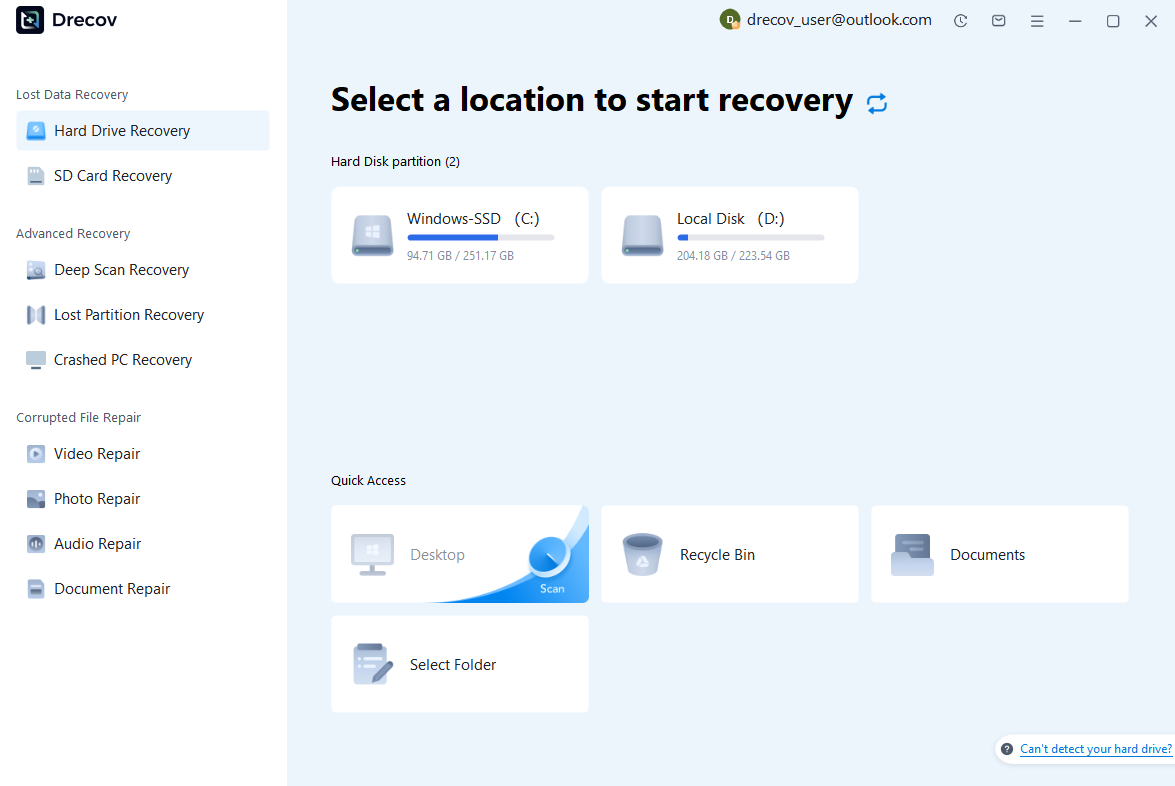
Step 1: Connect the Drive / USB)
Connect your device (SD card, HDD/SSD, or USB drive) to your computer and launch PandaOffice Drecov. Select the target device and start the scan. The software will perform a quick scan and deep scan to detect lost or deleted data.
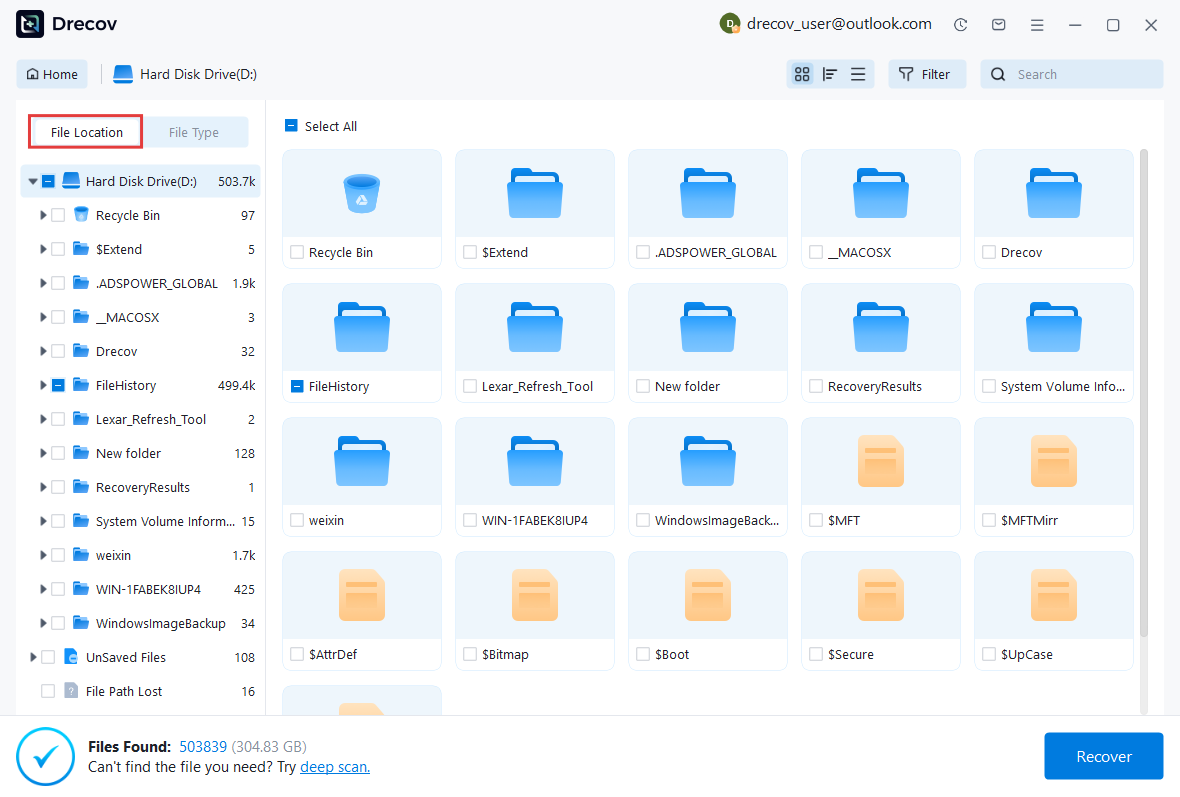
Step 2: Locate and Preview Lost Files
After scanning, browse the detected files and use the preview feature to check recoverable data. You can preview documents (Word, Excel, PDF), photos, and videos to ensure file integrity before recovery.
Step 3: Recover and Save to a New Location
Select the files you want to restore and click recover. Save all recovered data to a different drive or location (not the original device) to avoid overwriting lost data.

Some questions you may be interested in:
how to format a hard drive windows 11
how to recover deleted drafts in outlook
what is healthy recovery partition
how to make steam not open on startup
Test environment:
- Operating system: Windows 10/11
- Storage devices: HDD, SSD, USB drive, and SD card
- File types tested: JPG, PNG, and camera photos
- Recovery destination: Separate storage device
⚠️Warning: Stop saving new files to the storage device after accidental deletion. New data may overwrite the deleted pictures and reduce recovery chances.
For better results, users should perform recovery as soon as possible after losing important images.
Recover Pictures After Accidental Duplicate Removal
Accidentally deleting the wrong image during duplicate cleanup is a common mistake, especially when managing thousands of files. Some users may remove original pictures while trying to keep only one copy.
When this happens, avoid continuing to organize or add new files to the same drive. The deleted photo data may still exist, but new files can overwrite the storage space where the original image was located.
The recovery process usually involves scanning the affected storage device and identifying available photo files.
Test environment:
- System: Windows 11
- Storage source: External hard drive
- Deleted files: Photo collection
- Recovery goal: Restore original images
After recovering lost pictures, create a safer organization strategy to prevent similar mistakes in the future.
Tips to Prevent Duplicate Photos in the Future
Create an Organized Photo Storage System
Preventing duplicate photos is easier when your image collection has a clear organization system. Many duplicate files are created because users save pictures randomly across multiple folders, making it difficult to know whether an image already exists.
A structured storage system helps reduce unnecessary copies. For example, users can organize photos by year, event, location, or source device. Creating separate folders for smartphone photos, camera images, downloaded pictures, and edited versions can make file management much simpler.
For professional users, maintaining separate folders for original images and edited versions is especially important. An original photo should be stored separately from resized copies, exported files, and versions created for different purposes.
Regularly reviewing photo folders can also prevent duplicates from accumulating. Instead of waiting until thousands of images occupy storage space, users can perform smaller cleanup tasks regularly.
Test environment:
- Operating system: Windows 11
- Storage method: Internal SSD and external backup drive
- Photo sources: Smartphone, digital camera, and downloaded images
A consistent organization method reduces the need to repeatedly compare files and makes it easier to identify unnecessary copies.
Creating a clear naming system can also help. For example, adding dates or event names to folders allows users to locate original images more quickly and avoid importing the same photos multiple times.
Avoid Importing the Same Photos Multiple Times
Repeated photo imports are one of the main reasons duplicate images appear. This often happens when users transfer photos from smartphones, cameras, or memory cards without checking whether the files already exist.
Before importing new pictures, review the destination folder first. If the same images are already stored on the computer, copying them again creates unnecessary duplicates.
Many camera and smartphone users transfer photos frequently. Without a consistent workflow, the same images may be copied during every connection.
A better approach is to import only new photos and keep track of previous transfers. Some devices provide options to skip existing files during import, which can help prevent duplicate creation.
Test environment:
- Devices tested: Smartphone and digital camera
- Transfer method: USB connection
- Computer system: Windows 10/11
Users should also avoid manually copying entire photo folders when only a few new images need to be transferred.
A careful import process saves storage space and reduces the need to use duplicate detection tools later.
Use Cloud and External Storage Properly
Cloud storage and external drives provide convenient ways to protect photos, but incorrect usage can also create duplicate files.
For example, manually copying photos to an external drive while automatic cloud synchronization is active may create several versions of the same image. Understanding how each backup system works can help prevent unnecessary duplication.
When using cloud services, users should decide whether the service is intended for synchronization or backup. Synchronization keeps folders identical across devices, while backup creates additional copies for protection.
External storage devices should also be managed carefully. Instead of creating multiple backup folders with similar names, maintain one organized backup structure.
Test environment:
- Storage devices: External HDD and cloud storage
- Photo library: Personal image collection
- Backup workflow: Manual and automatic backup comparison
A balanced storage strategy ensures photos remain protected without creating unnecessary duplicate copies.
Frequently Asked Questions About Removing Duplicate Photos
Can I Delete Duplicate Photos Without Losing Original Images
Yes, duplicate images can usually be removed safely if they are carefully reviewed before deletion. However, users should confirm that the files are truly identical before removing them.
Some photos may appear similar but contain important differences. For example, one image may have a higher resolution, better quality, or additional editing information.
When using a duplicate photo remover, review the detected files before confirming deletion. Keeping the highest-quality version and removing unnecessary copies is usually the safest approach.
Test environment:
- Operating system: Windows 11
- Photo types: JPG and PNG
- Detection method: Manual comparison and duplicate scanning
Creating a backup before deleting large numbers of files provides additional protection.
What Is the Best Way to Remove Duplicate Photos
The best method depends on the size of your photo collection and your technical needs.
For small collections, manually checking folders may be enough. Users can compare file names, sizes, and previews before deleting repeated images.
For larger collections, automated tools provide faster results. A dedicated duplicate photo remover can compare thousands of images and identify repeated files more efficiently.
A good workflow combines automatic detection with manual review. This approach saves time while reducing the chance of deleting important photos.
Test environment:
- Computer system: Windows 10/11
- Photo collection size: Small and large libraries
- Storage devices: SSD and external HDD
The safest cleanup method is one that protects original images while removing unnecessary copies.
Does Windows 10 Have a Built-in Duplicate Photo Finder
Windows 10 does not include a dedicated duplicate photo finder. However, users can use built-in features such as File Explorer search, sorting, and preview options to manually identify repeated images.
For basic cleanup tasks, these features may be sufficient. Users can sort files by size, date, and name to locate possible duplicates.
However, Windows tools cannot perform advanced visual comparison. They may not detect identical images with different names or locations.
Test environment:
- Operating system: Windows 10
- Built-in tools: File Explorer
- Photo formats tested: JPG, PNG
For large photo collections, using specialized duplicate detection methods can save significant time.
Conclusion: The Best Way to Remove Duplicate Photos Safely
Learning how to remove duplicate photos helps users maintain a cleaner, more organized image library while saving valuable storage space. Over time, duplicate pictures can accumulate because of repeated imports, backups, downloads, and synchronization activities.
For small collections, manual methods using Windows File Explorer may be enough. Users can compare file names, sizes, and previews to identify unnecessary copies.
For larger collections, a duplicate photo remover provides a faster solution by automatically analyzing image files and identifying repeated pictures. These tools can simplify cleanup while reducing the effort required to review thousands of photos.
When performing windows 10 remove duplicate photos tasks, users should always create backups before deleting files. This ensures that important memories or professional images can be restored if mistakes occur.
If important photos are accidentally deleted during cleanup, recovery solutions such as PandaOffice Drecov can help restore lost images from supported storage devices.
The best long-term strategy is prevention. Creating organized folders, avoiding repeated imports, and maintaining proper backup systems can significantly reduce the number of duplicate photos created.
By combining careful file management with reliable cleanup methods, users can keep their photo collections organized, protect valuable memories, and make better use of available storage space.






