







Photo vault applications are widely used to protect private images by hiding them behind passwords, PIN codes, fingerprints, or encryption systems. Many users store important personal photos inside these apps because they believe the files are safer than regular gallery folders. However, photos saved in a vault app can still disappear due to accidental deletion, app crashes, forgotten passwords, device resets, corrupted storage, or uninstalling the application.
When these problems happen, users often search for ways to recover photos from photo vault app and restore their hidden pictures. The recovery process depends on how the photo vault app stores data, whether backups exist, and whether the original image files are still available on the device storage.
Some vault applications simply hide pictures by moving them into a private folder, while others encrypt files and store them in a protected database. This difference determines which recovery method will work best.
In this guide, we will explain practical ways to perform photo vault app recovery, including checking backup locations, restoring deleted files from device storage, recovering photos after app removal, and using professional recovery software when necessary.
Each method below includes a test environment to help you understand when the solution is suitable and what conditions are required before attempting recovery.
⚠️Warning: Stop saving new files to your phone immediately after losing vault photos. New data may overwrite the deleted photo information and reduce the chance of successful recovery.
Common Reasons Photos Disappear from Photo Vault Applications
Before attempting to recover photos in photo vault app, it is important to understand why the pictures became unavailable. Different causes require different recovery approaches.
One common reason is accidental deletion. Users may remove images inside the vault application without realizing that the deletion is permanent. Unlike normal gallery apps, many vault programs do not move deleted pictures to a recycle bin.
Another situation occurs when users uninstall the photo vault application. Some apps store encrypted photos inside the application folder. Removing the app may also delete the hidden image database, making the photos appear lost.
Device problems can also lead to missing vault pictures. System updates, factory resets, storage errors, or phone crashes may damage the private folders used by vault applications.
Forgotten passwords are another frequent issue. In some cases, the photos still exist on the device, but users cannot access them because the vault app requires authentication.
Understanding the reason behind the loss helps determine whether you should look for backups, restore app data, or use a recovery solution.
Test Environment:
- Device: Android smartphone
- Storage: 128GB internal storage
- Photo vault app: Installed third-party privacy application
- Problem tested: Hidden photos disappeared after accidental deletion
- Data condition: No new files saved after deletion
Check Backup Sources Before Starting Photo Vault Recovery
The easiest way to restore hidden pictures is to check whether the photo vault application created backups. Many modern privacy apps provide cloud synchronization or local backup options that allow users to restore deleted or missing images.
Some applications automatically upload encrypted photos to cloud services when backup features are enabled. If you previously activated synchronization, you may be able to retrieve your pictures by signing back into the same account.
Users should also check device backups. Android phones may contain application data backups through Google services or manufacturer backup systems. If a previous backup was created before the photos disappeared, restoring that backup may bring back the missing files.
However, backup recovery only works when the backup was created before the data loss occurred. A newly created backup after deleting photos usually cannot restore the missing content.
Test Environment:
- Device: Android phone with cloud backup enabled
- Backup service: Google backup or application-specific backup
- Photo status: Deleted after previous backup creation
- Goal: Restore photos without using recovery tools
Restore Photos Through the Photo Vault Application
Many photo vault applications include built-in recovery options. Before trying advanced methods, check the application settings carefully because some vault tools provide features such as recently deleted folders, recovery bins, or backup restoration.
Open the photo vault application and look through sections such as “Trash,” “Recycle Bin,” “Recently Deleted,” or “Backup.” If the deleted pictures remain available, they can usually be restored with only a few taps.
The exact recovery process depends on the design of the application. Some apps keep deleted photos temporarily before permanently removing them, while others delete files immediately.
If the application is still installed and you can access your account, this method should always be attempted first because it does not risk damaging existing data.
However, this solution cannot help when the app itself has been deleted, the private database is corrupted, or the images have already been permanently removed.
Test Environment:
- Device: Android smartphone
- Application status: Photo vault app still installed
- Account status: User can open the application
- Data condition: Photos deleted recently inside the vault
Recover Hidden Photos from Device Storage
When a photo vault app hides pictures, the files may still exist somewhere inside the phone storage. Many applications do not completely encrypt every image. Instead, they rename files, change extensions, or move them into hidden folders.
In this situation, users may be able to locate the original images by checking internal storage folders. Connect the phone to a computer or use a file manager application to search for unfamiliar folders created by the vault app.
Look for folders containing image files, encrypted files, or recently modified data. Some applications store photos in directories that are not visible in the default gallery.
Keep in mind that manually searching storage is only effective when the files are hidden rather than deleted. If the photos were removed from storage, additional recovery methods may be required.
⚠️Warning: Avoid modifying, renaming, or moving suspicious vault files during manual inspection. Incorrect changes may make recovery more difficult.
Test Environment:
- Device: Android smartphone connected to Windows PC
- Storage access: Internal storage available
- File condition: Hidden but not deleted photos
- Recovery goal: Locate original image folders manually
Try Advanced Storage Recovery When Other Methods Fail
When photos disappear from a photo vault application and cannot be restored through backups or the app’s built-in recovery options, the remaining solution is to check whether the deleted image data still exists on the storage device.
Before trying advanced recovery methods, avoid adding new files to the device. Deleted photos are not always removed immediately. In many cases, the system only marks the storage space as available, while the original data remains until new files overwrite it.
Users can first check whether the photo vault application created hidden folders, backup files, or exported copies. Some applications store images separately from the normal gallery, meaning the files may still exist even when they are not visible.
If the photos were deleted due to application errors, storage problems, or accidental removal, recovery success depends on the condition of the storage space and how quickly recovery is attempted.
Test Environment:
- Device: Android smartphone
- Storage type: Internal phone storage
- Application status: Photo vault app no longer displays saved images
- Data condition: Deleted photos not overwritten by new files
Recover Photos After Uninstalling a Photo Vault Application
Uninstalling a photo vault application is one of the most common reasons users lose access to their private pictures. Many people assume that removing the app only deletes the program itself, but some vault applications also remove the hidden folders, encrypted databases, or private storage locations where photos are saved.
Whether you can restore these pictures depends on how the application manages files. Some apps store images in normal folders with hidden attributes, while others use encrypted containers that are deleted together with the app. If the storage area has not been overwritten, recovery may still be possible.
The first step is to avoid reinstalling multiple applications or downloading large files after losing the photos. New data can occupy the same storage space where deleted vault images were located.
You can also check whether the application created a backup before removal. Some apps synchronize private photos with cloud accounts, allowing users to restore pictures simply by logging in again.
If no backup exists and the original files are no longer visible, a recovery scan may be required. A professional recovery tool can search storage sectors and identify deleted image data that is still recoverable.
Test Environment:
- Device: Android smartphone
- Application status: Photo vault app removed accidentally
- Storage condition: No new photos or videos added after uninstalling
- Recovery target: Hidden images previously stored by the application
⚠️Warning: Do not reinstall the same vault application immediately after data loss. The installation process may overwrite deleted storage areas and reduce recovery success.
Recover Photos After Resetting or Updating Your Phone
Factory resets and major system updates can cause unexpected photo loss. When a phone is reset, most user data is removed from internal storage, including files created by privacy applications. Similarly, system updates may sometimes affect application databases or storage permissions.
Users looking to recover photos from photo vault app after a reset should first determine whether a backup was available before the reset happened. Cloud backups, computer backups, and manufacturer backup services may contain previous versions of application data.
If no backup exists, recovery becomes more complicated because modern smartphones use encryption systems. On many newer Android devices, internal storage encryption makes direct recovery difficult after a factory reset because the original encryption keys may be removed.
However, photos stored on external memory cards have a higher chance of recovery because the card can often be scanned separately. If your photo vault app stored pictures on an SD card, removing the card and scanning it with recovery software may help locate deleted files.
For future protection, regularly exporting important images or enabling backup features is recommended. A vault application protects privacy, but it should not be considered a replacement for a complete backup strategy.
Test Environment:
- Device: Android smartphone after factory reset
- Storage: Internal storage and optional SD card
- Backup status: No available cloud backup
- Recovery goal: Find remaining recoverable image files
Recover Photo Vault Pictures from an SD Card Using PandaOffice Drecov
Some photo vault applications allow users to store private images on external memory cards. When these pictures are deleted or become inaccessible, the SD card can often be removed and scanned separately, making recovery easier compared with some internal phone storage situations.
To recover photos stored on an SD card, first remove the card from the device and connect it to a Windows computer using a card reader. Then use PandaOffice Drecov to scan the SD card and search for recoverable image files.
The software can analyze the storage structure and identify deleted photos that are still available on the card. After scanning, users can preview detected images before recovery and select the files they want to restore. It is recommended to save recovered photos to another storage location instead of the original SD card to prevent possible data overwriting.
This method is useful when photos were deleted accidentally, the photo vault folder became unavailable, or the SD card experienced file system problems.
Steps:
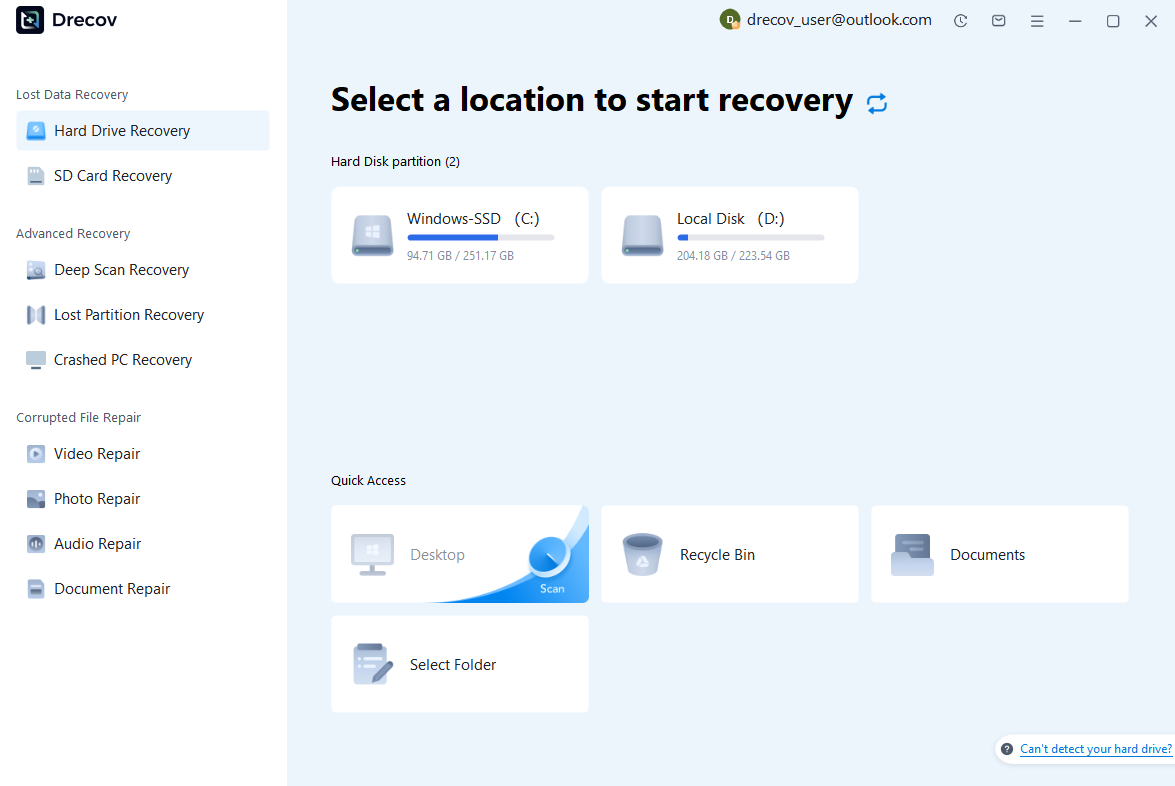
Step 1: Connect the Drive / USB)
Connect your device (SD card, HDD/SSD, or USB drive) to your computer and launch PandaOffice Drecov. Select the target device and start the scan. The software will perform a quick scan and deep scan to detect lost or deleted data.
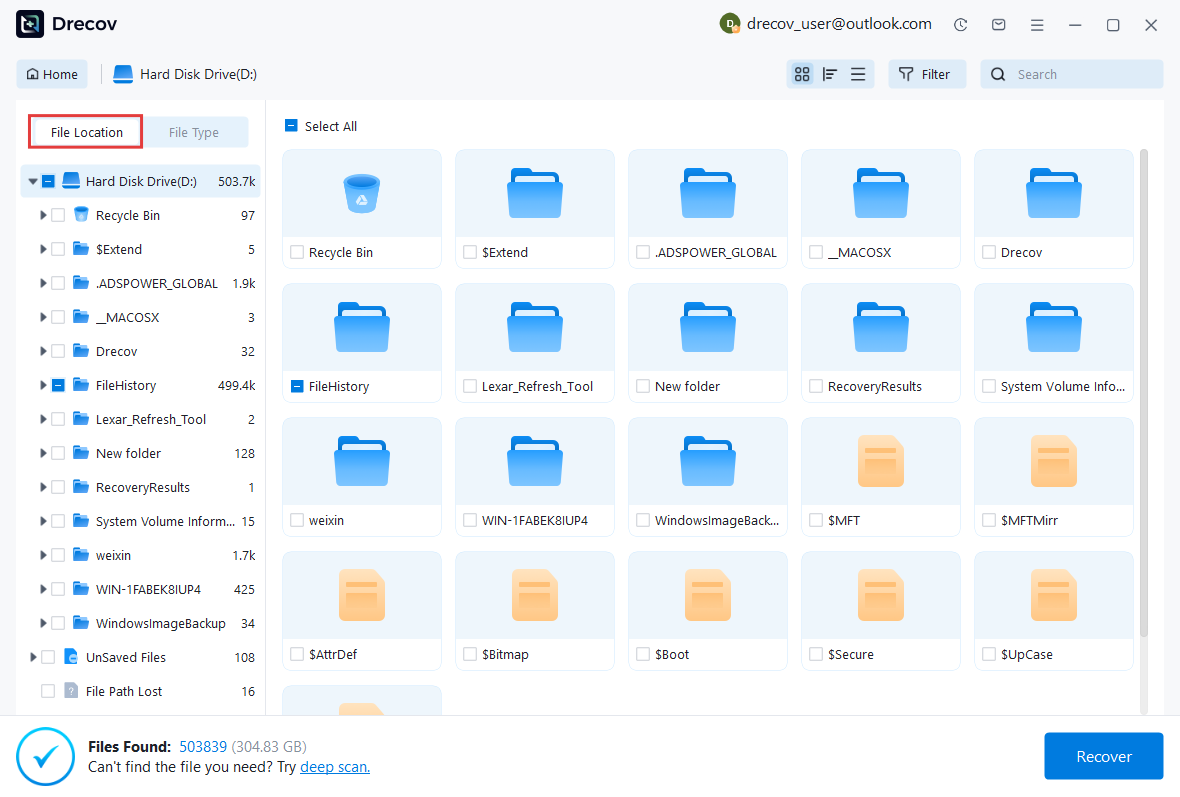
Step 2: Locate and Preview Lost Files
After scanning, browse the detected files and use the preview feature to check recoverable data. You can preview documents (Word, Excel, PDF), photos, and videos to ensure file integrity before recovery.
Step 3: Recover and Save to a New Location
Select the files you want to restore and click recover. Save all recovered data to a different drive or location (not the original device) to avoid overwriting lost data.

Some questions you may be interested in:
how to format a hard drive windows 11
how to recover deleted drafts in outlook
what is healthy recovery partition
how to make steam not open on startup
Test Environment:
- Computer: Windows 11 PC
- Recovery software: PandaOffice Drecov
- Storage device: SD card previously used by a photo vault application
- Connection method: USB card reader
- Data condition: Deleted photos not overwritten by new data
Compare Different Methods for Photo Vault Recovery
Different recovery approaches work under different situations. Choosing the correct method can save time and improve the chance of restoring missing pictures.
Built-in recovery options are usually the safest choice because they use the original application system. However, they only work when the app still exists and deleted files have not been permanently removed.
Backup restoration provides the highest success rate when a previous backup is available. The limitation is that many users discover the problem only after the backup has already been updated.
Manual storage searching is useful when a vault app only hides files instead of deleting them. However, it requires technical knowledge and may not work with encrypted applications.
Recovery software is more suitable for complex situations, such as accidental deletion, formatting, corrupted storage, or missing vault folders.
| Recovery Method | Advantages | Limitations | Recommended Situation |
|---|---|---|---|
| App recovery feature | Simple and safe | Requires available deleted folder | Recently deleted photos |
| Cloud backup restore | High recovery success | Backup must exist | Users with enabled backup |
| Manual storage search | Free method | Requires file knowledge | Hidden but not deleted files |
| Recovery software | Works in many data loss cases | Requires scanning time | Permanent deletion or corruption |
Test Environment:
- Device: Android phone
- Storage: Internal memory and SD card
- Data type: Deleted or hidden private images
- Comparison purpose: Selecting the most suitable recovery approach
Tips to Prevent Future Photo Vault Data Loss
Preventing data loss is always easier than attempting recovery afterward. Although photo vault applications provide privacy protection, users should still maintain additional copies of important images.
The first recommendation is to enable automatic backups whenever the vault application supports this feature. A backup allows you to restore pictures even if the application becomes damaged or removed.
Another important step is avoiding unnecessary app removal. If you plan to change phones, export or transfer protected photos before deleting the old application.
Keeping enough free storage space is also helpful. Storage failures caused by full memory can damage application databases and increase the risk of missing files.
Users should also avoid downloading unknown cleaning applications. Some storage optimization tools may remove hidden folders because they identify them as unnecessary files.
For valuable photos, maintain multiple copies in different locations. A secure backup system combining cloud storage, external drives, and protected folders provides stronger protection than relying on a single application.
Test Environment:
- Device: Android smartphone
- Backup strategy: Cloud backup plus external storage copy
- Application status: Photo vault app working normally
- Goal: Prevent future image loss
Frequently Asked Questions About Photo Vault Recovery
Can I recover deleted photos from a photo vault app?
Yes, deleted vault photos may be recoverable if the storage space has not been overwritten. The possibility depends on whether the app permanently removed the files, whether backups exist, and where the pictures were stored.
If the application has a recently deleted folder, recovery may be simple. When the photos are permanently deleted, professional recovery methods may be necessary.
Can I recover photos after deleting the photo vault app?
It depends on the storage method used by the application. Some apps remove only the program while leaving image files behind, while others delete private storage folders together with the application.
Checking backups should be the first step. If no backup exists, scanning the storage may help locate remaining deleted images.
Is a photo vault recovery app safe to use?
A reliable recovery tool should scan storage without modifying original data. Always choose recovery software from trusted developers and avoid installing unknown applications that request unnecessary permissions.
For important photos, previewing recoverable files before saving them is recommended.
Why are recovered photos sometimes damaged?
Recovered images may be corrupted when parts of the original data have already been overwritten. Storage damage, incomplete file recovery, or encryption systems can also affect file quality.
Recovering data as soon as possible increases the chance of obtaining complete photos.
Final Thoughts on Recovering Photos from Photo Vault Applications
Losing private pictures stored inside a vault application can be stressful, especially when the images contain important memories or valuable information. Fortunately, several recovery approaches can help depending on the cause of the problem.
Start with simple solutions such as checking application recovery folders and available backups. If the photos were only hidden, manually locating storage folders may solve the problem. For deleted or damaged files, recovery software provides a more advanced approach.
The success of photo vault app recovery depends mainly on how quickly you act after data loss. Avoid writing new data to the device, because overwritten storage cannot usually be restored.
For Windows users who need to recover deleted images from storage devices connected to their computers, PandaOffice Drecov provides scanning and preview features to help identify recoverable photos before restoration.
By combining proper backup habits with suitable recovery methods, you can reduce the risk of permanently losing important private pictures in the future.






