







Losing important pictures can be frustrating, especially when those images contain personal memories, professional work, or valuable records. Photos can disappear for many reasons, including accidental deletion, formatting errors, damaged storage devices, system failures, or unexpected file corruption. Fortunately, deleted images are not always permanently erased immediately. When new data does not overwrite the original storage space, specialized recovery tools may still be able to restore those lost files.
A reliable photo recovery program can scan storage devices, locate inaccessible image files, and help users recover pictures from hard drives, SSDs, USB drives, and memory cards. However, choosing the right tool can be challenging because many recovery applications offer different features, supported formats, and recovery capabilities.
Modern image recovery software for PCs usually provides functions such as deep scanning, file preview, support for multiple image formats, and recovery from formatted or corrupted devices. Some tools are designed for beginners with simple interfaces, while others provide advanced options for experienced users.
In this guide, we will review several popular free photo recovery programs and compare their features, recovery performance, ease of use, and suitable user groups. Each solution includes a test environment to help you understand how these tools perform in realistic recovery situations.
⚠️Warning: After deleting photos, avoid saving new files to the same storage device. New data may overwrite deleted pictures and reduce the chance of successful recovery.
Why Photo Recovery Software Is Needed for Lost Images
Common Reasons Photos Become Inaccessible or Deleted
Digital photos are usually stored on devices such as SD cards, HDDs, SSDs, smartphones, cameras, and USB drives. Although these storage devices are generally reliable, different situations can cause pictures to disappear unexpectedly.
Accidental deletion is one of the most common causes of photo loss. Users may mistakenly remove important images while organizing folders or cleaning storage space. In some cases, the files may also be deleted by selecting the wrong folder or formatting the wrong device.
Another frequent cause is storage device corruption. SD cards used in digital cameras are especially vulnerable because they are often removed and inserted repeatedly. Improper removal, sudden power loss, or file system errors can make photos invisible even though the data may still exist on the card.
Hardware problems can also result in lost images. Hard drives may develop bad sectors, SSDs can experience controller failures, and USB drives may stop responding due to physical damage. When the operating system cannot properly access the device, normal file browsing methods may no longer work.
Formatting is another situation where users often believe photos are permanently deleted. A quick format usually removes file system information instead of immediately destroying all stored data. This means recovery software may still locate and restore some files.
Professional recovery tools work by analyzing storage structures and searching for remaining file information. Instead of relying only on visible folders, these programs scan the device at a deeper level to identify recoverable image files.
How Deleted Photos Can Still Be Recovered
When users delete a photo from a computer or storage device, the operating system usually does not immediately remove the actual data. Instead, it marks the storage area as available for future use. Until new information replaces that space, the original image data may remain recoverable.
This is why acting quickly is important after photo loss. Continuing to use the device, downloading files, installing programs, or copying new photos can overwrite the deleted data.
A good photo recovery program typically uses scanning algorithms to search for file signatures and recoverable information. Different tools use different approaches:
- Quick scanning checks existing file records and can find recently deleted pictures.
- Deep scanning examines the entire storage device to locate hidden or fragmented image data.
- File signature scanning identifies photos based on their internal structure rather than folder information.
The recovery process also depends on the condition of the storage device. A healthy device with accidental deletion usually has a higher recovery possibility compared with a physically damaged drive.
The best recovery results usually come from using software as soon as possible, avoiding unnecessary operations, and saving recovered files to a different location.
Top Free Photo Recovery Software for Recovering Lost Pictures
PandaOffice Drecov – A Reliable Choice for Windows Photo Recovery
Recover Deleted Images with PandaOffice Drecov on Windows PCs
PandaOffice Drecov is a Windows-based recovery solution designed to help users restore lost photos from different storage devices. It supports recovery scenarios involving accidentally deleted pictures, formatted drives, corrupted storage media, and missing image files.
Unlike simple undelete tools that only search visible file records, PandaOffice Drecov uses scanning technology to analyze storage devices and locate recoverable files. It supports common image formats, making it suitable for users recovering photos from digital cameras, SD cards, USB drives, HDDs, and SSDs.
Test environment:
- Operating system: Windows 11 64-bit
- Storage device: 64GB SD card
- Lost files: JPEG and PNG photos
- Recovery situation: Photos deleted accidentally before scanning
- Scan mode tested: Quick scan and deep scan
During testing, PandaOffice Drecov successfully detected deleted image files and provided preview options before recovery. The preview feature allows users to check whether the pictures are intact before restoring them.
The software is designed with a straightforward workflow:
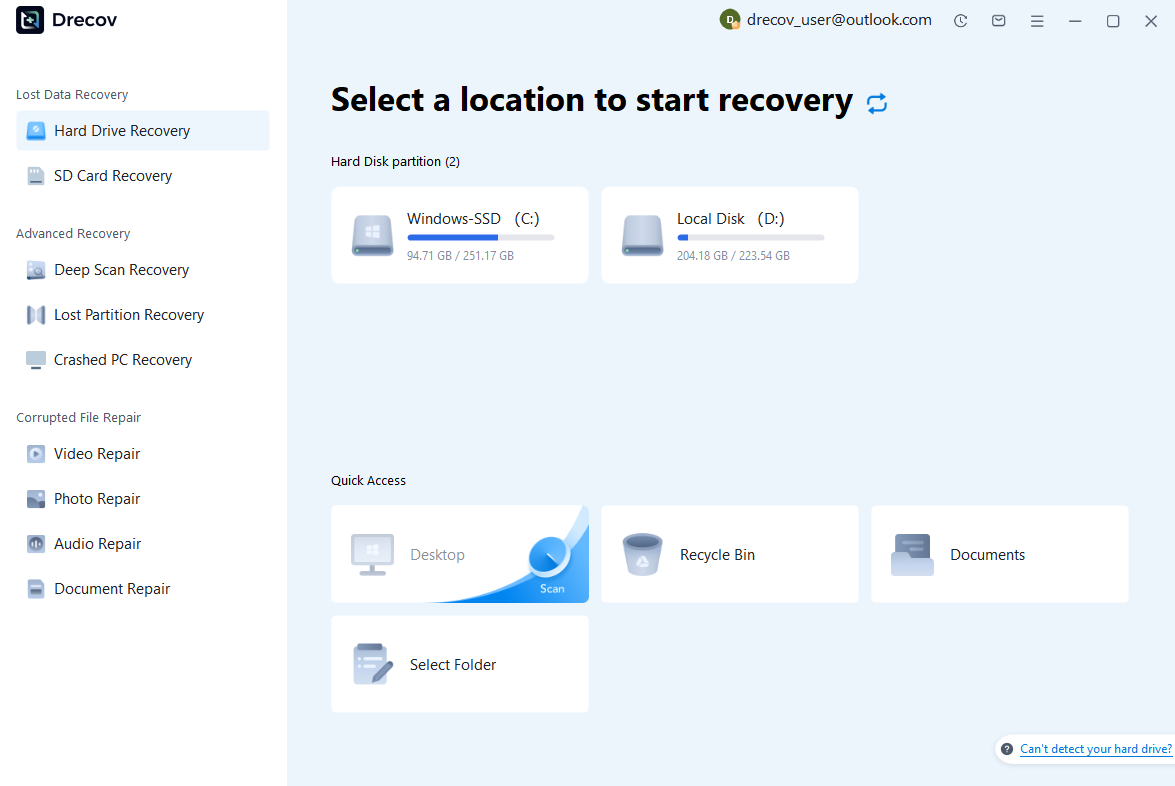
Step 1: Connect the Drive / USB)
Connect your device (SD card, HDD/SSD, or USB drive) to your computer and launch PandaOffice Drecov. Select the target device and start the scan. The software will perform a quick scan and deep scan to detect lost or deleted data.
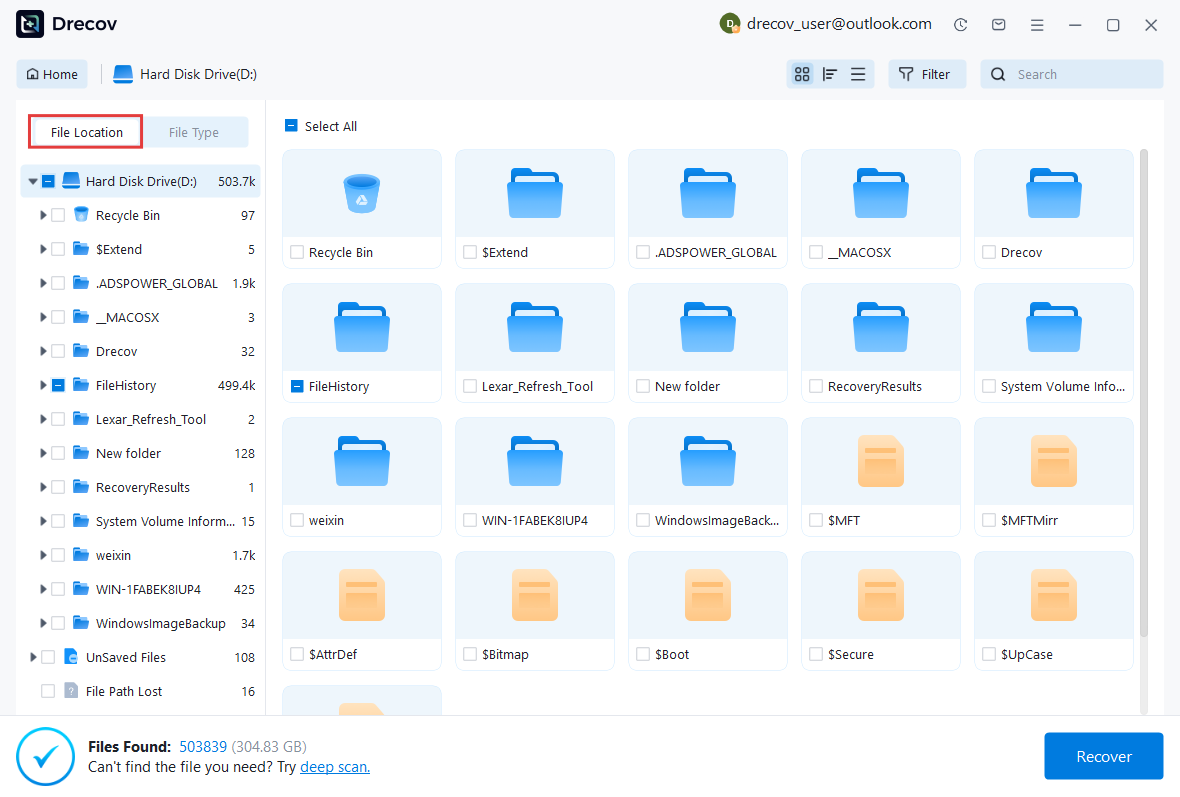
Step 2: Locate and Preview Lost Files
After scanning, browse the detected files and use the preview feature to check recoverable data. You can preview documents (Word, Excel, PDF), photos, and videos to ensure file integrity before recovery.
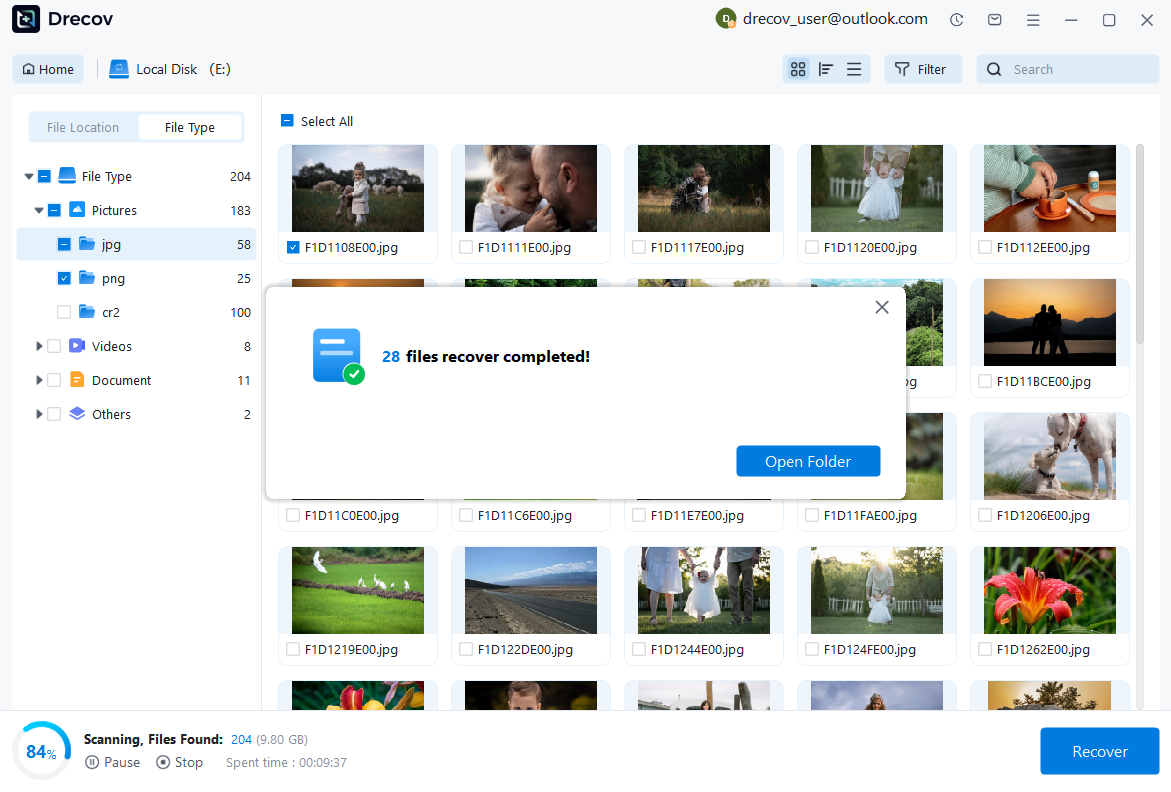
Step 3: Recover and Save to a New Location
Select the files you want to restore and click recover. Save all recovered data to a different drive or location (not the original device) to avoid overwriting lost data.
Some questions you may be interested in:
how to format a hard drive windows 11
how to recover deleted drafts in outlook
what is healthy recovery partition
how to make steam not open on startup
This approach helps reduce the risk of overwriting lost data during recovery.
For users who need a balance between ease of use and recovery capability, PandaOffice Drecov can be considered one of the practical options among available image recovery software for PCs.
Advantages:
- Supports various storage devices
- Provides image preview before recovery
- Suitable for deleted and formatted photo recovery
- Simple operation for beginners
Limitations:
- Only supports Windows systems
- Recovery performance depends on the condition of the storage device
⚠️Warning: Always save recovered photos to another drive instead of the original location. Saving files back to the same device may overwrite other recoverable images.
Stellar Photo Recovery – Professional Image Restoration Tool
Recover Photos From Cameras, Memory Cards, and Storage Devices
Stellar Photo Recovery is a well-known recovery application focused on restoring multimedia files, especially photos and videos from various storage devices. It is designed for users who need more advanced recovery functions beyond basic file restoration.
The software supports recovery from memory cards, digital cameras, external drives, and internal storage devices. It can identify different image formats and recover files even when the original folder structure is no longer available.
Test environment:
- Operating system: Windows 10 64-bit
- Storage device: 32GB camera SD card
- Lost files: RAW camera images and JPEG photos
- Recovery situation: SD card formatted accidentally
- Scan method: Full device scan
During testing, Stellar Photo Recovery was able to locate image files after formatting. The scanning process took longer than basic recovery tools because it performed a more detailed analysis of the storage device.
One advantage of this software is its support for professional camera formats. Photographers who work with DSLR or mirrorless cameras may benefit from its ability to recognize RAW image formats from different camera manufacturers.
The software also includes preview capabilities, allowing users to verify recovered photos before saving them. This is especially useful when scanning large storage devices containing thousands of files.
However, advanced features may be more suitable for professional users rather than people who only need occasional recovery.
Advantages:
- Supports many photo formats
- Works with camera storage devices
- Provides advanced scanning options
- Useful for professional photographers
Limitations:
- Deep scans may require significant time
- Some advanced features require payment
Disk Drill Photo Recovery – Simple Recovery Software for Beginners
Recover Deleted Pictures Through an Easy Recovery Process
Disk Drill Photo Recovery is a popular recovery tool designed for users who want a simple way to restore deleted images from computers and external storage devices. Its interface focuses on reducing complexity, allowing users with limited technical knowledge to complete recovery tasks without complicated settings.
The software supports recovery from multiple storage devices, including internal hard drives, external drives, USB flash drives, and memory cards. It can search for deleted photos caused by accidental deletion, formatting issues, partition problems, and file system errors.
Test environment:
- Operating system: Windows 11 64-bit
- Storage device: 128GB USB flash drive
- Lost files: JPEG and PNG images
- Recovery situation: Photos deleted through Windows File Explorer
- Scan mode tested: Quick scan and deep scan
During testing, Disk Drill Photo Recovery identified recently deleted image files after performing a storage scan. The software organized found files into categories, which made it easier to locate pictures without manually checking thousands of results.
One useful feature is its preview system, which helps users confirm whether images are recoverable before starting the restoration process. This can save time because users do not need to recover every detected file.
Compared with some advanced recovery utilities, Disk Drill focuses more on usability. Beginners can usually complete the recovery process by following a few simple steps. However, users looking for highly specialized recovery options may find its functions less flexible than professional-grade tools.
For users searching for beginner-friendly photo recovery programs, Disk Drill Photo Recovery provides a convenient option for common photo loss situations.
Advantages:
- Easy-to-understand interface
- Supports multiple storage devices
- Provides file preview before recovery
- Suitable for beginners
Limitations:
- Advanced recovery options are limited
- Large storage scans may take considerable time
PhotoRec – Open-Source Photo Recovery Utility
Restore Images Using File Signature-Based Recovery Technology
PhotoRec is an open-source recovery utility developed for users who need a free solution for recovering lost photos and other files. Unlike traditional recovery applications that rely heavily on file system information, PhotoRec searches storage devices by identifying file signatures.
This approach allows PhotoRec to recover files even when the file system has been damaged or the storage device has been reformatted. It supports many image formats and works with different types of storage media.
Test environment:
- Operating system: Windows 10 64-bit
- Storage device: 16GB SD card
- Lost files: Digital camera JPEG photos
- Recovery situation: Memory card formatted accidentally
- Scan method: File signature scanning
During testing, PhotoRec successfully detected image files from the formatted SD card. Because the tool focuses on raw data recovery, recovered files may not keep their original names or folder structures.
One major advantage of PhotoRec is that it is completely free and does not limit users with subscription requirements. It can be useful for technically experienced users who understand recovery procedures.
However, the command-line interface can be difficult for beginners. Unlike modern recovery applications with visual interfaces, PhotoRec requires users to navigate menus using keyboard commands.
For users comfortable with technical tools, PhotoRec remains one of the powerful free options available. For beginners who prefer a simple interface, other graphical recovery applications may provide a smoother experience.
Advantages:
- Completely free and open-source
- Supports many file formats
- Works with damaged file systems
- Available on multiple platforms
Limitations:
- Interface is not beginner-friendly
- Original file names may not be preserved
⚠️Warning: Before using advanced recovery utilities, create a backup image of important storage devices whenever possible. Repeated scanning operations may increase stress on damaged drives.
Recuva – Lightweight Photo Recovery Program for Windows Users
Recover Deleted Photos With a Simple Windows-Based Tool
Recuva is a lightweight recovery application designed for Windows users who need basic file restoration features. It is commonly used for recovering accidentally deleted photos, documents, videos, and other files from computers and removable storage devices.
The software provides a straightforward recovery process. Users can select the file type, choose the storage location, and start scanning. This makes it suitable for people who need a quick recovery solution without complicated configuration.
Test environment:
- Operating system: Windows 11 64-bit
- Storage device: 500GB HDD partition
- Lost files: JPEG photographs
- Recovery situation: Recently deleted images from a folder
- Scan method: Standard scan and deep scan
During testing, Recuva successfully located recently deleted photos from the hard drive. The recovery speed was relatively fast because the test files had not been overwritten.
The software also displays recovery status information, helping users understand whether detected files are likely to be restored successfully. Files marked with better recovery conditions usually have higher chances of being recovered.
However, Recuva may not perform as well when dealing with severely damaged storage devices or heavily formatted drives. Users facing complex recovery situations may need more advanced tools.
For people searching for a basic photo recovery program for occasional deleted file recovery, Recuva can be a practical choice.
Advantages:
- Lightweight installation package
- Simple recovery process
- Fast scanning for recently deleted files
- Suitable for beginners
Limitations:
- Limited performance for complicated data loss cases
- Less suitable for professional recovery needs
⚠️Warning: Always save recovered photos to another drive instead of the original location. Saving files back to the same device may overwrite other recoverable images.
How to Choose the Right Photo Recovery Software
Important Features to Consider Before Recovering Lost Pictures
Choosing the right recovery tool depends on the type of data loss situation and the storage device involved. Although many programs claim to recover deleted pictures, their actual performance can vary significantly.
The first factor to consider is device compatibility. A good recovery application should support common storage media, including SD cards, external hard drives, SSDs, USB drives, and internal computer storage.
The second important factor is scanning capability. Basic scans are useful for recently deleted files, while deep scanning functions are better for formatted drives or corrupted storage devices.
Preview functionality is another valuable feature. Before recovering files, users should be able to check whether the detected photos are complete and usable. This prevents wasting storage space on damaged files.
Recovery speed is also important. Smaller devices may finish scanning quickly, but large hard drives containing years of data may require more time.
A reliable top photo recovery software option should balance recovery performance, ease of use, supported formats, and security. Users should avoid installing recovery programs on the same drive where photos were lost because installation files may overwrite deleted data.
Free Software vs Paid Recovery Solutions
Understand When Advanced Recovery Features Are Necessary
Free recovery tools can handle many simple situations, especially when photos were recently deleted and the storage device is still functioning properly. They are often enough for users who only need occasional file restoration.
However, more complicated situations may require advanced recovery features. Examples include formatted memory cards, corrupted partitions, file system errors, or storage devices containing important professional images.
Paid recovery software usually provides additional functions such as:
- More advanced scanning technology
- Support for larger storage devices
- Better file filtering options
- Improved preview functions
- Technical support services
Free tools are useful for testing whether recovery is possible, but they may have limitations in file quantity, supported formats, or advanced features.
Users should evaluate the importance of the lost photos before choosing a solution. Personal snapshots may be recoverable with basic tools, while professional photography files may require more powerful recovery methods.
Frequently Asked Questions About Photo Recovery Software
Can Deleted Photos Be Recovered Permanently?
Understanding the Possibility of Recovering Deleted Images
Deleted photos are not always immediately removed from storage devices. In many cases, the system only marks the storage space as available for new data. If that space has not been overwritten, recovery software may still restore the images.
The recovery possibility depends on several factors, including how long ago the deletion happened, whether new files were saved afterward, and whether the storage device has physical damage.
What Is the Best Image Recovery Software for PCs?
Choosing Software Based on Your Recovery Situation
The best image recovery software for PCs depends on the user’s needs. Beginners may prefer tools with simple interfaces, while professionals may need advanced scanning and RAW image support.
Software such as PandaOffice Drecov, Stellar Photo Recovery, Disk Drill Photo Recovery, PhotoRec, and Recuva each target different user groups and recovery scenarios.
Can Photos Be Recovered From a Formatted SD Card?
Using Recovery Tools After Formatting
Yes, photos from a formatted SD card may still be recoverable if new data has not overwritten the storage area. Deep scanning tools can analyze the card and search for remaining image information.
Users should stop using the SD card immediately after formatting and perform recovery from another computer if possible.
Why Does Photo Recovery Software Fail to Find My Pictures?
Common Reasons Recovery Attempts Do Not Work
Recovery software may fail when deleted data has already been overwritten, the storage device has severe physical damage, or the image files were corrupted before deletion.
Using the right recovery method and avoiding additional writes to the device can improve the chances of successful restoration.
Final Thoughts on Choosing the Best Photo Recovery Tool
Key Points to Remember Before Recovering Lost Photos
Choosing suitable Photo Recovery software depends on your device type, data loss situation, and technical experience. Free tools can solve many common deletion problems, while advanced solutions may be required for complicated cases.
Before starting recovery, stop using the affected storage device, select reliable software, and always save recovered files to another location.
Among available options, PandaOffice Drecov provides a balanced solution for Windows users who need an easy way to recover lost photos from SD cards, hard drives, SSDs, and other storage devices. By combining proper recovery software with careful handling of lost data situations, users can significantly improve their chances of restoring valuable pictures.






