







The message this video file cannot be played error code 232011 usually points to a web playback failure, not immediate proof that a local video is destroyed. Start by reloading the page, opening it in a private window, checking the connection, and trying a current browser. Then test extensions, site permissions, cookies, and hardware acceleration. Preserve any original local file before converting or repairing it.
Quick Answer
Error 232011 can appear when the player cannot reach a stream, a browser blocks required scripts, cached site data becomes inconsistent, an extension changes requests, or the server rejects the session. Geographic restrictions, account permissions, expired links, and temporary service failures can look similar. Determine whether the problem affects one video, one website, one browser, or every device.
Understand the Main Limitation
First reload the page and sign in again if the site requires an account. Confirm the date and time on the computer. Try another trusted network and disable any VPN only when doing so is safe. If one title fails on every browser and device, the source or account is more likely responsible. If many sites fail in one browser, focus on browser configuration.
Use the Safest Available Method
Open a private browsing window. A successful private test suggests an extension, cookie, or cached record is involved. Disable extensions one at a time, especially content blockers, privacy filters, download helpers, and security add ons. Do not remove saved passwords or all browser data until a narrow test shows that cleanup is necessary.
Check Permissions and File Locations
Google provides Google video playback troubleshooting for videos and games that will not load. Its steps cover JavaScript, extensions, cached data, browser updates, and connection checks. Follow official browser guidance rather than installing a codec package from an advertisement. Modern web players normally deliver supported media through the browser and do not require a random codec download.
Avoid Common Risks
If a downloaded copy also fails, test it in another current player and compare its file size with a known good file. A zero byte or unusually small file is probably incomplete. Copy the original to another healthy drive before testing repair. The guide to repair corrupted video files explains the difference between container damage, missing data, and playback compatibility.
Typical Scenario
Hardware acceleration can help video playback, but a driver conflict may cause a blank or failed player. Toggle the browser setting once, restart the browser, and compare results. Update the graphics driver through Windows Update or the hardware maker. Keep a record of changes so you can reverse settings that do not help.
Troubleshoot the Result
Do not confuse error 232011 with error 23301. The text looks similar, but the website, player, or request path may differ. Keep this page focused on the exact code shown. If the video plays but looks blocky, use protect video quality. If a local file vanished during troubleshooting, use find local video files before writing more data to the same drive.
Choose the Right Action
| Situation | Recommended Action | Main Risk |
|---|---|---|
| Content remains available in the original service | Use the official save or management control | Confusing a cloud item with a local file |
| A local file exists but fails | Copy it to a healthy drive and test the copy | Overwriting or repeatedly converting the original |
| A local file was deleted | Stop writing to the source and begin recovery | New data overwriting recoverable sectors |
Protect Local Video Files Before Troubleshooting
Browser fixes, editing changes, cache cleanup, and storage moves can affect local files. Create a separate copy of any irreplaceable recording before you change settings. Keep the original file untouched and test edits on a duplicate. If a drive disconnects, reports read errors, or becomes unusually slow, stop using it. A failing device needs imaging or professional help rather than repeated repair attempts.
Check the Recycle Bin, cloud storage, application export folders, and recent project folders first. Search by file type and modification date when the original name is unknown. Do not install recovery software on the partition that held a deleted file. Installation can write new data over recoverable sectors. Save every restored file to another healthy device.
Recover Missing Media with PandaOffice Drecov
PandaOffice Drecov is a Windows data recovery tool for PCs, USB drives, SD cards, memory cards, hard drives, SSDs, and external drives. It supports photos, videos, documents, emails, audio files, and archives. Its read only recovery mode scans the selected source without using that source as the save destination. Quick Scan looks for recently deleted records, while Deep Scan searches more broadly. Preview before recovery helps users check selected results before saving them.
⚠ Warning: Install it on a drive different from the one where your data was lost to prevent overwriting.
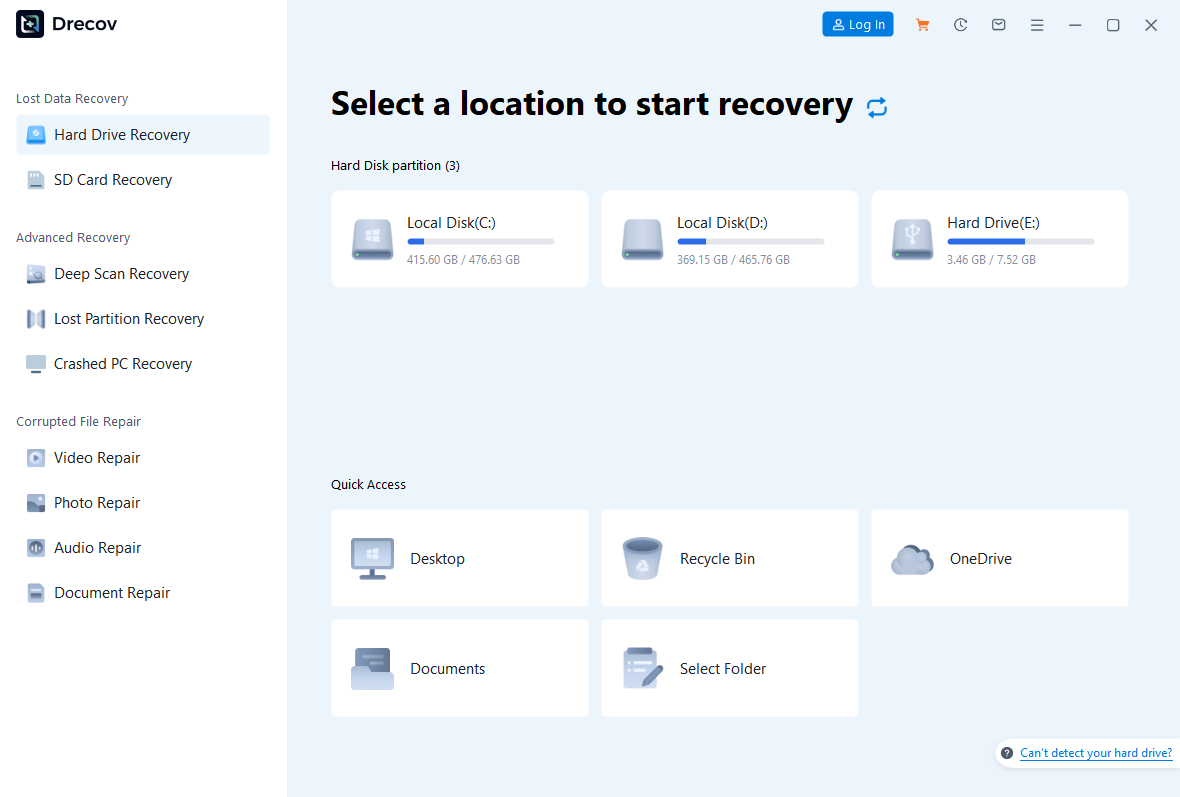
Step 1 Open Drecov and Select the Original Location
Open PandaOffice Drecov and select the exact drive, folder location, SD card, or external device where the missing file originally existed. Do not select a download folder merely because you expect the recovered file to appear there. Choose the source of the loss.
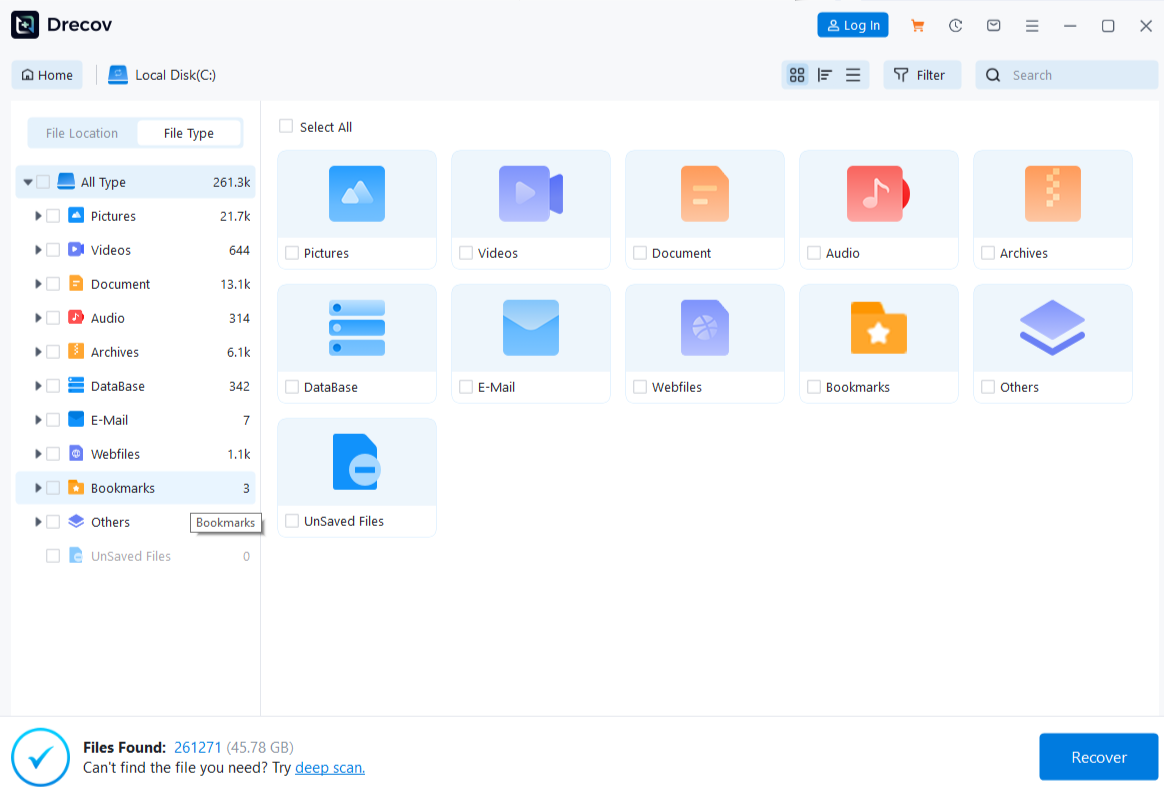
Step 2 Continue with Deep Scan
Start Quick Scan and review the early results by file type, name, path, size, and date. Use Deep Scan when Quick Scan does not show the required media. Filter for likely video, image, audio, or project formats.
Step 3 Preview Results
Preview before recovery whenever the format supports preview. Select only useful results, then recover them to another healthy storage location. Never save restored files to the source device. If files do not appear in the expected destination, check the Drecov folder or Recovery folder.
Verify Recovered Files Before Reusing the Source
Open each recovered video from beginning to end. Check the duration, resolution, sound, seek behavior, and final frames. A file that displays a thumbnail may still contain damaged segments. Keep the source device unchanged until essential files pass verification. After verification, create a second backup. Only then should you repair, format, or reuse the original storage device.
Frequently Asked Questions
Can every missing video be recovered
No. Recovery depends on whether the content still exists in a service, a backup, device trash, or unoverwritten local sectors. Physical damage and overwritten data require different expectations. Stop using the affected storage as soon as loss is discovered.
Should I use a third party downloader or repair tool
Use official controls first. Review the developer, permissions, privacy policy, and download source before trusting another tool. Avoid services that request passwords, login codes, broad browser access, or payment before showing a verifiable result.
Where should recovered files be saved
Save them to another healthy drive with enough free space. Do not use the source device because new writes can overwrite other recoverable data. Verify the result before repairing or reusing the source.
Additional Safety Check
- Keep a small record of each change, including setting, original value, result, and location, so troubleshooting remains reversible. Restart only the affected app first, rebooting only when required by updates or locks.
- Use descriptive names and a stable folder structure, separating originals, working files, and exports. Keep a second copy on another device and do not rely solely on cloud sync.
- Avoid unexpected executables, prompts, or login requests. A media task should never require browser control or account passwords; cancel suspicious downloads and scan if needed.
- If results differ across devices, test one variable at a time—account, network, app version, permissions, or storage—rather than resetting everything at once.
- Ensure enough disk space before saving or exporting large files to avoid corruption. Delete temporary files only after the final output passes verification.
- Test files across multiple players. One may display “this video file cannot be played error code 232011” due to local settings while the media itself is intact. Keep originals until backups are verified.
Conclusion
Start with the official application or browser method, preserve valuable originals, and verify every saved result. If you encounter “this video file cannot be played error code 232011” and a local file is truly missing, stop writing to its source. PandaOffice Drecov can scan supported Windows storage and recover selected results to another healthy location without promising that every file will return.






