







The world of artificial intelligence has evolved rapidly over the past few years, and one of the most exciting developments is the rise of chatgpt pictures. The concept of chatgpt pictures combines advanced AI language understanding with image-generation capabilities, making it easier than ever to turn text prompts into stunning artwork. Instead of spending hours learning graphic design software, users can simply describe what they want and receive professional-looking visuals instantly. However, as millions of users generate, download, and store these digital assets, a massive challenge has emerged: data loss.
In this comprehensive guide, you will learn everything about chatgpt pictures. More importantly, we will dive deep into professional data recovery methods, ranging from simple system checks to using advanced recovery tools, ensuring that your valuable AI creations are never permanently lost.
What Are ChatGPT Pictures?
The term chatgpt pictures refers to images generated with the help of artificial intelligence using text prompts. Users type a descriptive sentence, and the AI transforms those words into vibrant visual content. Because these tools utilize deep neural networks trained on vast visual databases, the output is highly customizable. These pictures can include:
- Realistic portraits
- Cartoon illustrations
- Fantasy artwork
- Product mockups
- Social media graphics
- Digital paintings
- Concept art
- Marketing visuals
- Anime-style characters
- Business presentations
AI image tools analyze patterns from millions of images and use machine learning models to generate entirely new visuals based on user instructions. For example, a user might type: “Create a futuristic city at sunset with flying cars and neon lights.” The AI then produces an original image matching that description.
How ChatGPT Pictures Work
AI-generated pictures are created using deep learning and neural networks. These systems undergo training on massive datasets containing images, colors, textures, styles, and artistic techniques. The generation workflow usually operates through the following distinct stages:
1. User Enters a Prompt
The user provides a clear text description explaining the image they want. Example prompts include:
- “A cute golden retriever wearing sunglasses”
- “A cyberpunk street in Tokyo at night”
- “A watercolor painting of mountains”
2. AI Interprets the Request
The system analyzes keywords, objects, styles, emotions, lighting, and composition within the prompt to understand the user’s intent.
3. Image Generation Begins
The AI combines learned visual patterns, refining random noise into a structured, unique image from scratch.
4. Final Image Is Produced
Within seconds, users receive one or multiple high-resolution image variations ready for download. Modern AI tools can also edit existing photos, remove backgrounds, enhance image quality, and convert graphics into different artistic styles.
Why ChatGPT Pictures Are So Popular
The popularity of AI-generated pictures has exploded because they offer unmatched speed, creativity, and accessibility to a global audience.
- Fast Image Creation: Traditional graphic design workflows may take hours or days. AI can generate complex visuals almost instantly.
- No Design Skills Needed: Anyone can create impressive artwork without learning complicated software or studying design theory.
- Affordable Content Production: Businesses save significant amounts of money on stock photography, custom illustrations, and design services.
- Endless Creative Possibilities: Users can experiment with wild styles, surreal concepts, and abstract ideas without traditional physical or digital limitations.
- Improved Marketing: AI visuals help brands create engaging, highly targeted content for websites, advertisements, and social media platforms.
Popular Uses of ChatGPT Pictures
AI-generated images are now deeply integrated across many different global industries:
- Digital Marketing: Marketers create Facebook ads, Instagram graphics, YouTube thumbnails, and blog images on demand.
- E-Commerce: Online stores use AI visuals to build realistic product mockups, lifestyle images, and promotional banners without expensive photo shoots.
- Education: Teachers and students generate educational illustrations, science diagrams, and historical presentations to improve learning retention.
- Entertainment: Game developers and filmmakers create concept art, character designs, and storyboards during early production phases.
- Content Creation: Bloggers and influencers use custom AI pictures to improve visual storytelling and stand out in crowded feeds.
- Interior Design: Designers generate room concepts, color schemes, and decoration ideas to share with clients before purchasing physical materials.
How to Write Better Prompts for ChatGPT Pictures
The quality of AI-generated images depends heavily on the structure and detail of your text prompt. To maximize your results, keep these rules in mind:
- Be Specific: Instead of saying “A dog”, try “A fluffy white dog sitting in a vibrant lavender flower field during sunset.”
- Include Artistic Style: Explicitly mention the desired medium, such as oil painting, cartoon, 3D render, watercolor, or hyper-realistic macro photography.
- Describe Lighting: Lighting improves realism and sets the mood. Use phrases like soft natural light, dramatic studio lighting, cinematic neon glow, or golden hour sunlight.
- Mention Camera Angles: Help the AI position the frame by specifying a close-up portrait, wide-angle cinematic shot, macro detail view, or aerial drone perspective.
- Add Emotional Details: Mood descriptions improve storytelling. Incorporate terms like peaceful atmosphere, dramatic confrontation, mysterious environment, or joyful celebration.
Tips for Using ChatGPT Pictures Responsibly
- Verify Important Visuals: Avoid using unverified AI-generated images when presenting factual news, historical evidence, or scientific research.
- Respect Copyright Laws: Always ensure your usage aligns with the specific terms of service and licensing agreements of the AI platform you utilize.
- Edit and Improve Outputs: Combine automated AI creativity with human editing tools to add personal touch, correct minor errors, and elevate overall quality.
- Credit AI Usage When Needed: Maintaining transparency about your use of AI tools helps build trust with your audience, clients, and peers.
Data Loss Risks for ChatGPT Pictures
As your collection of custom chatgpt pictures grows, the risk of losing those irreplaceable files increases. Unlike stock photos, an AI image generated from a highly specific chain of prompts can be incredibly difficult to recreate perfectly if deleted. Data loss typically occurs due to several common culprits:
- Accidental Deletion: It happens to everyone—you mean to clear out your temporary download cache, but you accidentally delete an entire folder of finalized AI visuals instead.
- Storage Formatting: Formatting an external hard drive or SD card without verifying the contents can instantly wipe away gigabytes of saved project artwork.
- System Crashes & File Corruption: Unexpected power drops or OS crashes while saving files can corrupt image headers, rendering your graphics unopenable.
- Cloud Sync Overwrites: Erroneous cloud storage synchronization settings can sometimes overwrite local directories with blank folders, causing files to disappear silently.
Fortunately, digital data is rarely destroyed completely on impact. When a file is removed, the operating system merely deletes its pointer and marks the storage space as available for rewriting. As long as you take the correct steps immediately, you can retrieve your lost images successfully.
How to Recover Lost ChatGPT Pictures: A Tiered Approach
To help you rescue your lost AI artwork, we have structured the absolute best data recovery solutions below. These methods are arranged logically by technical level and operational complexity, starting from effortless built-in system checks and advancing to comprehensive data recovery software deployment.
Level 1: Basic Recovery via System Utilities
Before turning to external utilities, you should always check the default safety nets built directly into your operating system. These locations catch the vast majority of day-to-day accidental deletions.
Method A: Restoring from the Windows Recycle Bin or Mac Trash
When you delete a chatgpt picture using standard deletion controls, the file is not instantly wiped from the hard drive. Instead, it is relocated to a temporary system holding area.
- Step 1: On a Windows PC, locate the Recycle Bin icon on your desktop and double-click it. If you are operating a macOS device, click the Trash icon located on your dock.
- Step 2: Use the built-in search bar in the top right corner and type in extensions like
.pngor.jpg, or look for filenames containing words like “chatgpt” or “ai”. - Step 3: Once you locate your missing chatgpt picture, right-click the file on Windows and select Restore. On macOS, right-click the item and select Put Back.
Important Takeaway: This method will successfully return the image file to its exact original folder location before the deletion took place.
Method B: Checking Browser and Platform Download Histories
If you cannot find the local file anywhere on your computer, there is a strong possibility that it resides within your web browser’s underlying cache or download history directory.
- Step 1: Open the web browser (e.g., Google Chrome, Microsoft Edge, or Mozilla Firefox) that you originally used to generate or download your chatgpt pictures.
- Step 2: Press the global hotkey combination Ctrl + J on Windows, or Cmd + Shift + J on macOS, to immediately launch the dedicated Downloads management tab.
- Step 3: Scroll down through your historical list of downloaded assets or utilize the internal search filter to locate the image entry.
- Step 4: Click Show in folder (or the small folder icon next to the file entry) to navigate directly to where the file is stored, or click the download link again to re-acquire the asset directly from the platform’s cloud server.
Level 2: Advanced Data Recovery Software Deployment
If you have cleared your Recycle Bin, or if your images disappeared due to a formatted partition or an unexpected drive corruption, built-in system checks will not be enough. You will need to utilize specialized file reconstruction utilities.
For comprehensive digital restoration tasks, deploying a dedicated tool like the PandaOffice Drecov data recovery software is highly recommended. It boasts an industry-leading 99.8% recovery success rate and supports over 1,000 distinct file formats, including all popular image extensions like JPG, PNG, WEBP, BMP, and raw graphic files. It functions safely in a read-only execution state, meaning it will scan your storage media completely without altering, overwriting, or risking damage to any of your surviving data.
⚠ Warning: Install it on a drive different from the one where your data was lost to prevent overwriting.
The Step-by-Step Restoration Guide Using the PandaOffice Drecov Tool
Follow these clear, step-by-step instructions to securely scan your storage drives and extract your missing AI images:
- Step 1: Select the Target Location for Scanning. Upon opening the main application interface, click to highlight the specific folder, local drive, or device where your missing chatgpt pictures were originally stored, then click the prominent Scan button to begin the data retrieval process.

- Step 2: Monitor the Scan and Apply Target Filters. As the scan progresses in real-time, navigate to the convenient file filtering panel on the left side of the screen. Expand the Images folder category and filter the ongoing results by specific extensions (such as
.pngor.jpeg) or sort the files by size and modification date to quickly narrow down the results.

- Step 3: Use the Unlimited File Preview Feature. One of the most powerful features of this utility is the absolute lack of restrictions on file preview size or quantity. Scroll through the populated list of discovered files, select any image, and view its full thumbnail preview in the main window.
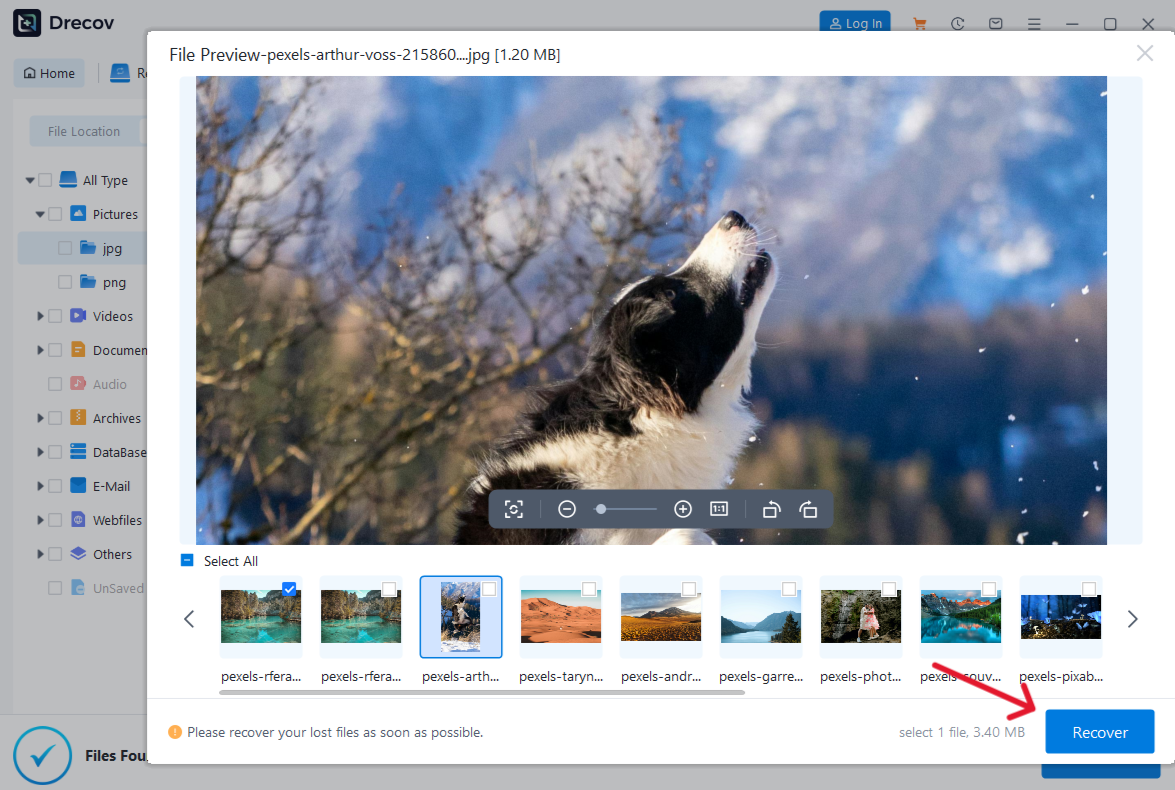
- Step 4: Execute the Final Data Recovery Routine. Tick the checkboxes next to the specific chatgpt pictures you wish to rescue. With your files selected, click the Recover button located in the bottom-right corner of the application interface.
Critical Warning Prompt: When selecting a destination path to save your recovered files, NEVER save them back onto the exact same drive or partition where they were originally lost. Doing so risks permanently overwriting the remaining unrecovered data sectors. Always choose an alternative local disk partition, an external backup drive, or a secure cloud directory.
Level 3: Deep System Restoration via Registry and System Backups
If automated software scans face obstructions due to deep OS failures, or if your default save locations have become corruptly locked by background applications, you may need to apply direct system configurations.
Method A: Resolving Default Storage Path Locking Issues
Sometimes, your AI images are not truly deleted; rather, the operating system’s default storage pathing has become frozen or incorrectly routed due to automated cloud configurations, making the files invisible to standard file explorer windows.
- Step 1: Press the Windows Key + R hotkey combination on your keyboard to launch the default Run dialog box.
- Step 2: Type
regeditinto the text box field and hit Enter to initialize the Windows Registry Editor utility. (If a User Account Control prompt appears, click Yes to grant full administrative privileges). - Step 3: In the left sidebar of the registry panel, carefully expand the directory tree to navigate along the following precise pathway:
HKEY_CURRENT_USER\Software\Microsoft\Windows\CurrentVersion\Explorer\User Shell Folders - Step 4: Look into the right-hand panel window and locate the string values named My Pictures or {374DE290-123F-4565-9164-39C4925E467B} (which handles default download pathing). Ensure that the data column accurately reflects your intended local folder pathway, such as
%USERPROFILE%\Picturesor%USERPROFILE%\Downloads. If the path has been locked or altered by external file syncing programs, double-click the string name and manually type in your preferred, clean local directory path to restore standard file visibility.
What to Do After Recovering Your Images
If you are working across multiple platforms or mobile devices, checking your app installation histories can help track down where specific generation tools are saving files. For detailed steps on this process, check out how to find recently deleted apps on iPhone & Android to ensure no connected image generation applications have been hidden or removed from your devices.
Furthermore, it is highly wise to audit how your operating system manages automated cloud backups. Many users lose track of their downloaded AI visuals because their operating systems automatically change default local directories to cloud-centric folders without asking. If you run into pathing errors during file saving, learn how to handle a fixed Windows Save As default location stuck on OneDrive error to regain absolute manual control over your local image folders.
Finally, remember that keeping your hard drives clean is essential, but human error is always a factor. To protect your digital library moving forward, read through the complete guide regarding an empty Recycle Bin: everything you need to know to discover how files travel through deletion layers and how to safe-proof your long-term storage setups.
Conclusion
The rise of chatgpt pictures represents a monumental shift. It changes how humanity approaches creative expression and digital marketing. It also transforms visual asset production in 2026. However, these digital assets are highly dynamic. They are tied directly to specific text prompt configurations. Therefore, losing them to accidental deletions or storage failures can be a frustrating setback.
Fortunately, you can implement a disciplined, tiered approach to data recovery. Start by checking your local Recycle Bin. Next, monitor web browser download paths and apply advanced registry checks. Finally, deploy reliable, read-only extraction software like the PandaOffice Drecov data recovery software.






