







To learn how to recover deleted downloads, first check where the browser saved the file and whether the original source can provide it again. Open the browser’s download list, locate the saved path, and check the Recycle Bin. If the file was a public installer or document that remains available, a fresh download may be safer than disk recovery. If it was unique, edited after download, or removed from local storage, stop writing to that drive before scanning.
how to recover deleted downloads: safe diagnosis
The name “Downloads” sounds like one folder, but a browser can use a custom location or ask for a destination each time. Another Windows account has its own Downloads folder. A user might move a file to Documents, open it in an application that saves a new copy, or delete only the browser’s history entry. Google notes in its Chrome download instructions that removing an item from the Downloads history does not delete the file from the computer.
Open the browser’s Downloads list and inspect the file entry. Use Show in Folder if available. Check the browser’s configured download location and any “ask where to save” setting. Then search Windows by a distinctive part of the filename and file type. The Windows file-location checks offer more search methods. Look across the likely account folders and recently used locations. Avoid downloading a replacement onto the suspected source drive while you are still deciding whether the unique original needs recovery.
If the browser entry shows a failed, blocked, or canceled transfer, the complete file may never have existed locally. A partial .crdownload or similar temporary item is not automatically a valid document or archive. Look for the original provider and verify whether another download is possible. Do not disable security warnings just to recreate a suspicious file.
Check Copies That Do Not Require a Disk Scan
Open the Recycle Bin for the Windows account that removed the file. If it is there, restore it to a safe folder or copy it to another healthy location. Check File History, cloud storage, email attachments, and application-specific recent-file lists. A downloaded file that was edited may have a newer version in the editing app’s folder or cloud history. The original website can replace a public file, but it cannot replace your local edits or a one-time export that no longer exists online.
If the file came from a signed-in service, return to that account and inspect its export or download history. Some reports can be generated again; others are temporary links that expire. If the source was OneDrive, the OneDrive deletion path is separate from a local Downloads scan. Verify the content and date of any new export. Do not overwrite an old local candidate with a replacement that merely has the same name.
For files removed after the Recycle Bin was emptied, the post-emptying recovery options explain the broader Windows deletion path. That is a different problem from a browser entry that was simply cleared from history.
Decide Whether Redownloading Is Safe
Redownloading is often the simplest route for a public installer, open document, or unchanged media file. Use the original publisher rather than a mirror, confirm the file identity, and scan or verify it as appropriate. If the old file may still be recoverable and matters independently, save the new download to another drive. Writing it to the same Downloads folder could reuse the blocks that held the deleted copy.
A replacement is not equivalent for every file. A bank export may represent a specific date range; a game mod may have been removed or updated; an edited PDF may contain annotations absent from the source; an archive may have contained unique attachments. Record what made the missing copy valuable before choosing a download. If the file originated from a shared cloud workspace, check that workspace’s version history rather than assuming the present download matches the old one.
Be especially careful with executables. A link in old browser history may no longer point to the same package. Do not obtain a “recovery tool” from a website that imitates the original developer. The safest source is the current official publisher page, even if the new version differs from the one you previously had.
If the Local Copy Was Actually Deleted
Stop using the drive that held the original Downloads folder. Windows and browsers continually write caches, updates, and logs, so a deleted item on the system drive may be overwritten quickly. Do not install a recovery application there. On SSDs, TRIM can sharply reduce the chance of retrieving deleted blocks. If the storage clicks, disconnects, or reports severe read errors, stop direct scans and seek imaging or professional help.
PandaOffice Drecov is Windows data recovery software for PCs, HDDs, SSDs, USB drives, SD cards, memory cards, and external drives. Its read-only recovery mode can search for deleted local files. Quick Scan and Deep Scan provide staged searches; filtering and preview help assess documents, photos, video, audio, email, and archives before export. Lost Partition Recovery helps search files when a partition is missing. Drecov does not recreate a file that was never fully downloaded, retrieve a file from a remote website, repair a failed disk, or restore overwritten data.
⚠ Warning: Install it on a drive different from the one where your data was lost to prevent overwriting.
Prepare another healthy device with enough free space for results. If the deleted file was on C:, use a healthy installation environment and avoid placing the utility on the loss partition. The Drecov home page is the official product starting point. For a stable local source, follow the original-path workflow below.
Step 1: Open Drecov and choose the original save drive
Select the drive that contained the actual download, not necessarily the default Downloads folder. Confirm the browser’s configured path first. If the folder was on another partition or an external drive, choose that source. If its partition vanished but the device remains stable, consider Lost Partition Recovery. Do not initialize or format it.

Step 2: Start Quick Scan
It helps diagnose how to recover deleted downloads without changing the source data. Run Quick Scan and search for the original filename, extension, and folder. A familiar name can survive while content is damaged, so treat results as candidates. If the source becomes unstable, stop rather than running a longer search.

Step 3: Use Deep Scan if needed
This check is especially useful for how to recover deleted downloads. If the important file is absent and the device remains stable, use Deep Scan. Expect some files to appear without original names or paths. Compare plausible sizes and formats, especially for archives and media. A scan cannot reconstruct a file that was never fully transferred or has since been overwritten.
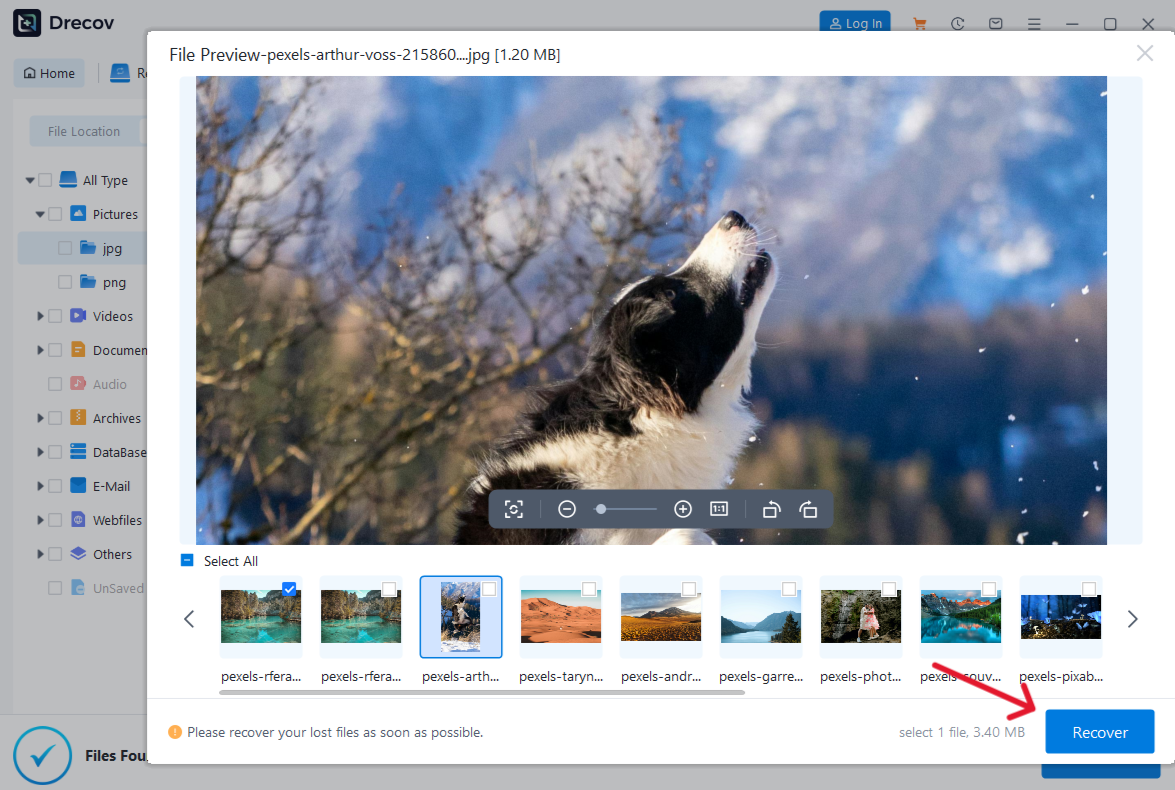
Step 4: Filter and preview results
Filter by type, name, or location when possible. Preview documents and images; for archives, plan to test extraction after export. A preview sample does not certify the entire content. Recover several plausible revisions separately when you cannot tell which one contains your edits.
Step 5: Recover elsewhere and verify
Export chosen files to another healthy device, never to the source. When the requested filename is missing from the export path, inspect the Drecov folder or Recovery folder there. Open the files and compare content with any fresh download or backup. Only after verification should you resume normal writes or repair the original storage.
⚠ Warning: Install it on a drive different from the one where your data was lost to prevent overwriting.
How to recover deleted downloads FAQs
Did clearing download history delete the files?
Usually no. Browser history and local files are separate. Check the configured save folder and search Windows before running recovery software. A missing history entry can make a file harder to locate without changing its bytes.
Can I recover a file that never finished downloading?
A complete file may not exist. Check whether the original provider allows a new transfer. A partial temporary file may be unusable or may support an application-specific resume, but changing its extension does not make it complete.
Should I redownload before scanning?
For a replaceable public file, redownloading may be enough. Save it to a different drive if the deleted version is unique or may still matter. Avoid writing new files onto the source of a loss you intend to investigate.
What if an antivirus tool quarantined it?
Review the security tool’s history and the source’s reputation. Do not restore a flagged executable merely because it disappeared from Downloads. Obtain a clean official copy if the file is legitimate, and follow your organization’s security policy.
Does Drecov recover a deleted cloud download?
It can search a local copy deleted from supported Windows storage. It does not scan the provider’s cloud account. Check the remote service’s trash, version history, or export options separately.
Conclusion
The fastest path to a missing download is often its real save folder, browser record, Recycle Bin, or original provider. Only a genuinely deleted, irreplaceable local copy calls for a file-recovery scan. On stable Windows storage, Drecov can search that original drive and export candidates to another healthy location for verification. The decision hinges on whether the file existed, where it was stored, and whether the replacement contains the same information you need.
⚠ Warning: Install it on a drive different from the one where your data was lost to prevent overwriting.





