







Accidentally losing important documents or cherished photos is a stressful experience, especially when you realize you just clicked “Empty Recycle Bin.” However, the digital world is more forgiving than it appears. This comprehensive guide will walk you through the technical reality of data storage and provide actionable steps to recover deleted files from recycle bin after empty settings have been triggered.
Understanding What Happens After Emptying the Recycle Bin
How Windows Handles File Deletion
Most people believe that once they empty the Recycle Bin, their files vanish instantly and forever. The truth is surprisingly different. When Windows deletes a file—even after the Recycle Bin is emptied—the operating system doesn’t immediately erase the data from the hard drive. Instead, it simply removes the file’s entry from the file system and marks that storage space as available for reuse.
Think of it like removing a book from a library catalog rather than burning the book itself. The pages still exist somewhere on the shelf, but the system no longer knows where they are. Because of this, specialized software can scan the storage device and locate these invisible fragments.
The Windows file system stores information about files in structures such as Master File Table (MFT) entries. When a file is deleted, the entry is marked as unused. The raw data blocks remain intact until new data overwrites them. That means to recover deleted files from recycle bin after empty is technically possible, especially if the deletion happened recently.
This design improves computer performance because rewriting data immediately would slow down file operations. Instead of physically wiping the file, Windows simply updates the index and moves on. Understanding this concept is essential because it explains why file recovery tools work. The data isn’t truly gone—it’s simply hidden until overwritten.
Why Deleted Files May Still Be Recoverable
Once the Recycle Bin is emptied, the operating system treats those files as free space. Yet the original data often remains on the disk temporarily. Recovery software takes advantage of this by scanning storage sectors for recognizable patterns such as document headers, images, and file signatures.
In many situations, users can successfully perform the task of retrieving deleted files from recycle bin after emptying for documents, photos, and videos even after permanent deletion. The success depends heavily on how much new data has been written to the drive since the deletion occurred. If the system hasn’t overwritten the storage blocks yet, recovery software can rebuild the file structure.
Data recovery specialists often emphasize acting quickly after accidental deletion. The longer you continue using the computer, the more likely new files will overwrite the old data. Studies and testing show that recovery attempts performed soon after deletion have the highest success rates. In some cases where no new data has been written to the drive, recovery success can approach near-complete restoration of the original files.
Factors That Affect Recovery Success
Storage Device Type (HDD vs SSD)
One of the biggest factors affecting file recovery is the type of storage device used in your computer. Traditional hard disk drives (HDDs) and modern solid-state drives (SSDs) behave very differently when files are deleted.
- HDDs: These store data magnetically on spinning platters. When a file is deleted, the physical data usually remains intact until it is overwritten by new data. Because of this behavior, HDDs offer a longer recovery window.
- SSDs: These use flash memory and include a technology called TRIM. This feature automatically clears unused storage blocks to maintain performance. Once TRIM runs, the deleted data may be erased quickly and permanently.
Statistics from real-world recovery tests highlight this difference. HDDs often provide a recovery window of 2–4 weeks with success rates around 87%, while SSDs may only offer 1–3 days with success rates closer to 62% if recovery begins quickly.
Time Passed After Deletion
Time is the silent enemy of deleted data. The longer the system runs after files are deleted, the greater the chance those storage sectors will be reused. Every action on a computer—installing programs, browsing the internet, downloading files—creates new data. When the operating system needs storage space, it may overwrite the sectors previously used by deleted files.
Experts often call the first 24–48 hours after deletion the “golden recovery window.” During this period, the chances of successful file recovery remain highest. If weeks or months pass, recovery becomes far less likely, especially on heavily used systems.
Methods to Recover Files After Emptying the Recycle Bin
Method 1 – Restore Using Windows Backup
One of the easiest ways to recover from recycle bin after emptying is through Windows Backup. If you had backups enabled before deleting the files, restoring them becomes a straightforward process. Windows Backup automatically stores copies of files on external drives or cloud storage locations.
- Step 1: Open the Control Panel by typing it into the Windows search bar.
- Step 2: Navigate to System and Security and select Backup and Restore (Windows 7).
- Step 3: Click on the Restore my files button.
- Step 4: Browse the backup folders or use the search function to locate the specific files you need.
- Step 5: Select the files and choose a destination to save the recovered data.
Method 2 – Recover Using File History
File History is another built-in Windows feature designed to protect files. It automatically saves multiple versions of documents, photos, and other files stored in key folders like Documents, Music, Pictures, and Desktop.
- Step 1: Open the Control Panel and click on File History.
- Step 2: On the left-hand sidebar, click Restore personal files.
- Step 3: Use the arrows at the bottom to browse through different versions of your folders based on time and date.
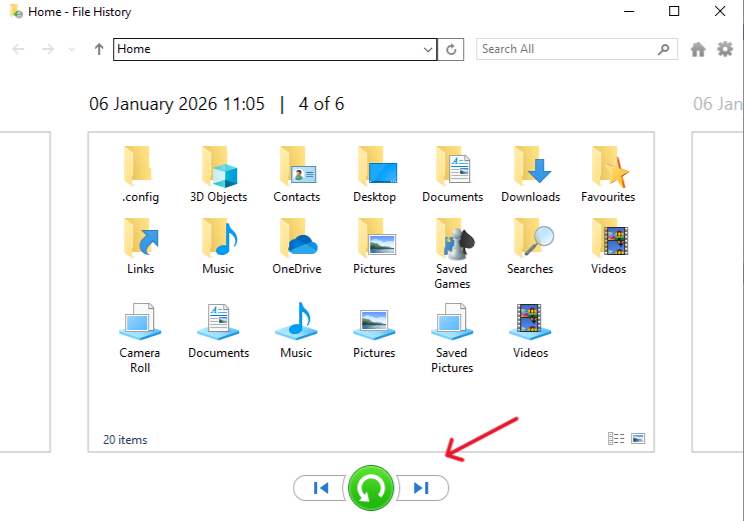
- Step 4: Once you find the deleted file, select it and click the green Restore icon to return it to its original location.
Method 3 – Use Data Recovery Software (PandaOffice Drecov)
When backups are unavailable, specialized software is your best bet for how to recover from the recycle bin after empty. PandaOffice Drecov is a professional-grade data recovery product designed for high success rates and ease of use. It can reconstruct file headers and fragments that Windows can no longer see.
⚠ Warning: Install it on a drive different from the one where your data was lost to prevent overwriting.
Steps to Recover Files with PandaOffice Drecov
- Step 1: Select the Location. Launch the program. On the main interface, select the drive (usually C:) or the specific location (like Recycle Bin) you wish to scan.
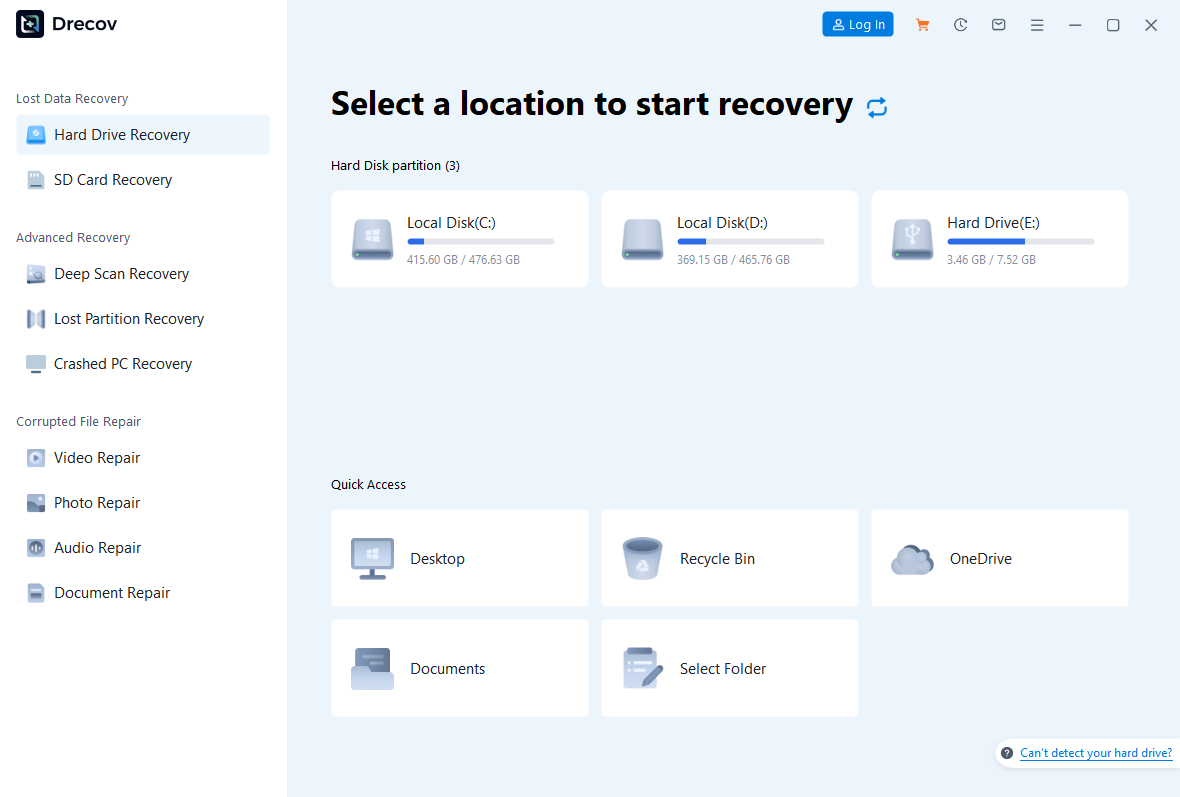
- Step 2: Start the Scan. Click the Scan button. The software will perform a Quick Scan followed by a Deep Scan to find fragmented data.
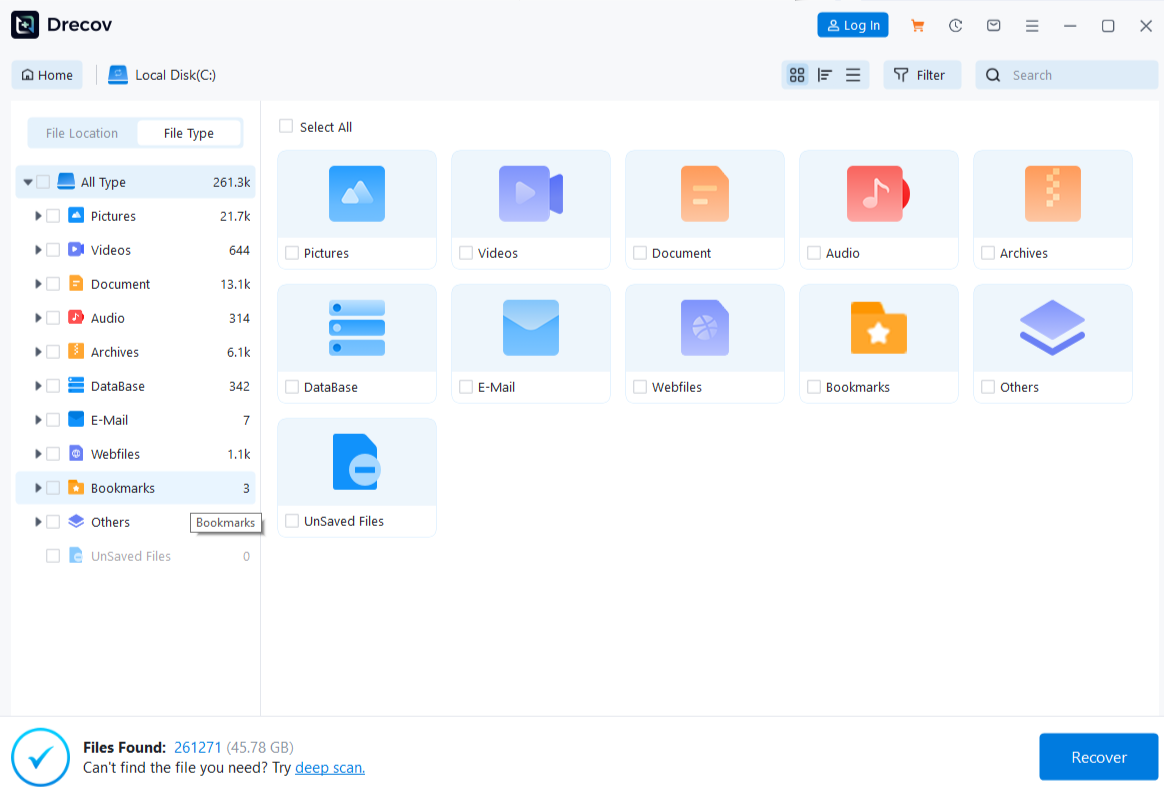
- Step 3: Preview and Filter. Once the scan is complete, use the sidebar to filter by file type (e.g., .jpg, .docx). You can double-click files to preview them to ensure they are not corrupted.
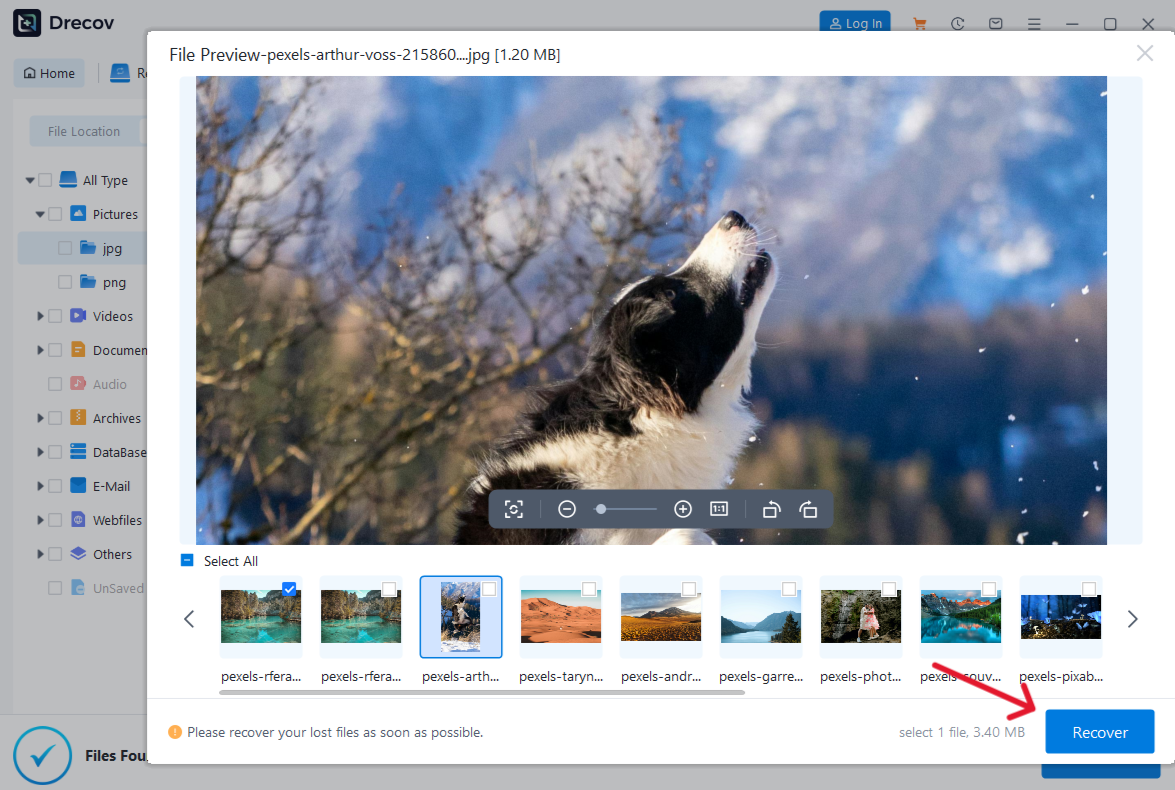
- Step 4: Recover the Data. Check the boxes next to the files you want. Click Recover and select a destination folder on a different drive to save the files.
Recovery Success Rates and Real Statistics
How Timing Affects Recovery
As discussed, timing is everything. Statistics gathered from data recovery labs show a clear correlation between the time since deletion and the success of the recovery:
- Under 24 Hours: ~95% Success Rate
- 24–72 Hours: ~70% Success Rate
- 7+ Days: ~30% Success Rate (Highly dependent on disk usage)
Real Recovery Case Results
Research comparing popular recovery tools showed recovery success rates reaching around 88–89% in controlled experiments using programs like Puran File Recovery and Recuva. These studies highlight an important point: recovery success is never guaranteed, but the probability remains high if you act before the “Free Space” is utilized by the system for new files.
Preventing Data Loss in the Future
Enable Automatic Backup
The easiest way to avoid the stress of trying to recover deleted files from recycle bin after empty is to maintain reliable backups. Follow the 3-2-1 backup rule:
- Keep 3 copies of important data.
- Store them on 2 different storage devices (e.g., PC and External HDD).
- Keep 1 copy offsite or in the cloud (e.g., Google Drive or OneDrive).
Best File Protection Practices
- Double-check: Always verify the contents of the Recycle Bin before clicking “Empty.”
- Cloud Sync: Use services that offer a “Secondary” trash bin, like OneDrive, which keeps deleted files for 30 days.
- Periodic Maintenance: Regularly check your hard drive health to avoid data loss due to hardware failure.
More on Data Recovery
If you are looking to manage your desktop environment better or need more specific locations for your system folders, check out these helpful resources:
- How to remove the Recycle Bin from Windows 10/11 Desktop
- Where do I find the Recycle Bin in Windows 10?
- 3 Quick ways to find the Recycle Bin in Windows 10
Recover Files From Recycle Bin After Empty FAQs
1. Can files be recovered after emptying the Recycle Bin?
Yes, in many cases files can still be recovered because the data remains on the disk until overwritten by new information.
2. How long do I have to recover deleted files?
Recovery should ideally begin within 24–48 hours for the best chances of success.
3. Can SSD drives recover deleted files?
Recovery is more difficult on SSDs due to TRIM technology, which may erase deleted data quickly to optimize drive performance.
4. Is free recovery software reliable?
Many free tools can recover files successfully, though premium software like PandaOffice Drecov often provides deeper scans and better reconstruction of fragmented files.
5. Does “Shift + Delete” bypass the Recycle Bin?
Yes, “Shift + Delete” bypasses the bin entirely, making the files “permanently deleted” immediately. However, they can still be recovered using the software methods mentioned above.
Conclusion
Accidentally emptying the Recycle Bin can feel like a disaster, especially when important files disappear instantly. Yet the situation is not always hopeless. Because Windows does not immediately erase the underlying data, there is often a window of opportunity to recover deleted files from recycle bin after empty.
The success of recovery depends on several factors including storage type, system activity, and the time elapsed since deletion. By using built-in Windows tools like File History or professional solutions like PandaOffice Drecov, many seemingly lost files can be brought back to life.






