







Digital data is the lifeblood of our modern existence. From cherished family photos to critical business spreadsheets, we store our entire lives on hard drives. However, the accidental click of a “Delete” button or a sudden system crash can make those files vanish in an instant. If you are currently panicking and wondering how to find deleted files on windows, you have come to the right place. To understand the official support mechanisms for these issues, you can always refer to the Microsoft Support documentation for file recovery which provides a baseline for system safety.
This comprehensive guide serves as an educational masterclass in data retrieval. We will explore the mechanics of how Windows handles file deletion and provide a roadmap of solutions ranging from the simplest built-in features to advanced professional intervention. By the end of this article, you will not only know how to find deleted files on windows, but you will also possess the technical confidence to rescue your data from almost any situation.
The Science of Deletion: What Actually Happens?
Before we dive into the steps, it is vital to understand what happens when you delete a file. In Windows, deleting a file usually doesn’t erase the data immediately. Instead, the operating system simply marks the space that the file occupied as “available.”
Think of your hard drive like a massive library. When you delete a file, Windows doesn’t burn the book; it just removes the entry from the library’s index card. The book stays on the shelf until a new book (new data) is written over it. This is why the most important rule of data recovery is: Stop using your computer immediately. Every new file you save or even every website you browse could potentially overwrite the “hidden” data you are trying to find.
Level 1: The Basics of How to Recover Deleted Files on Windows
For most users, the first step in learning how to find deleted files on windows begins with the most obvious location. While it may seem basic, many users overlook the nuances of the Recycle Bin and system shortcuts.
The Recycle Bin: Your First Line of Defense
The Recycle Bin is a temporary holding area for files you have deleted using the “Delete” key or by right-clicking.
- Step 1: Double-click the Recycle Bin icon on your desktop.

- Step 2: Use the search bar in the upper-right corner to type the name of your missing file.
- Step 3: Once you locate the file, right-click it and select “Restore.”
The file will automatically return to its original location. If you cannot remember the file name, try sorting by “Date Deleted” to see the most recent items.
Undoing Your Last Action
If you literally just deleted the file seconds ago, Windows has a built-in memory of your recent actions.
- Step 1: Navigate to the folder where the file was originally located.
- Step 2: Press the hotkey Ctrl + Z on your keyboard.
- Step 3: Alternatively, right-click anywhere in the folder and select “Undo Delete.”
How to Get Back Deleted Files on Windows Using File History
If the Recycle Bin is empty, do not lose heart. Windows 10 and 11 come equipped with a feature called File History. This tool takes regular snapshots of your files, allowing you to “travel back in time” to find an earlier version.
- Step 1: Click the Start menu and type “Restore your files with File History.”
- Step 2: Ensure your external backup drive is connected if you previously set one up.
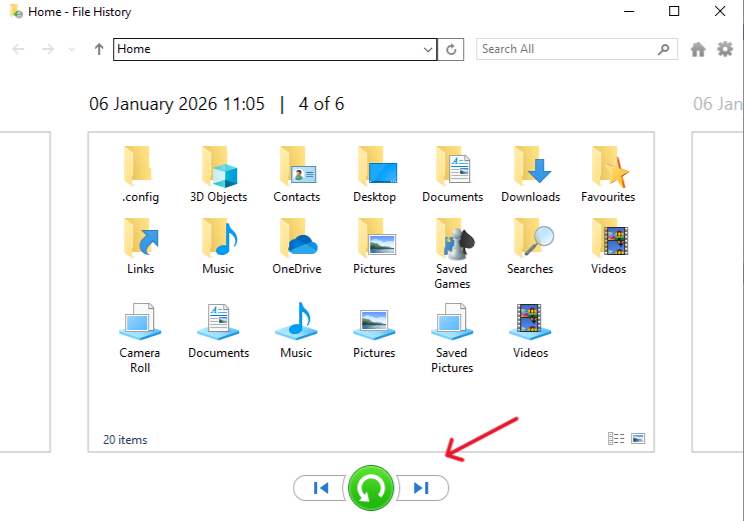
- Step 3: Browse through the folders and use the green arrow buttons at the bottom to scroll through different versions of your data.
- Step 4: Highlight the file you need and click the green “Restore” button to put it back in its original folder.
Level 2: Intermediate Methods for How to Recover Deleted Files
Sometimes, files are deleted permanently—such as when you use the Shift + Delete command or empty the Recycle Bin. In these cases, simple restoration isn’t enough. You need to look deeper into the system’s previous states.
Restoring Previous Versions (Shadow Copies)
Windows often creates “Shadow Copies” as part of a restore point. This is a powerful way to learn how to recover deleted files without downloading third-party software.
- Step 1: Navigate to the folder that used to contain your deleted file.
- Step 2: Right-click the folder and select “Properties.”
- Step 3: Click on the Previous Versions tab.
- Step 4: You will see a list of dates. Select a version of the folder from a time before the file was deleted.
- Step 5: Click “Open” to verify the file is there, then click “Restore” to bring the entire folder back to that state.
Using the Windows File Recovery Tool (Command Line)
Microsoft offers a free, albeit technical, app in the Microsoft Store called “Windows File Recovery.” This is a command-line utility, which means it doesn’t have a standard window with buttons.
- Step 1: Download and install “Windows File Recovery” from the official Microsoft Store.
- Step 2: Open the app, which will launch a Command Prompt window.
- Step 3: Use the syntax:
winfr source-drive: destination-drive: [/mode] [/switches].- Example: To recover a deleted PDF from your C: drive to an external E: drive, you would type:
winfr C: E: /regular /n *.pdf
- Example: To recover a deleted PDF from your C: drive to an external E: drive, you would type:
- Step 4: Follow the on-screen prompts and wait for the scan to finish.
Level 3: Professional Grade Recovery with PandaOffice Drecov Data Recovery Software
When the built-in Windows tools fail, it usually means the file system metadata is damaged or the files were lost due to a drive format. At this stage, you need a professional engine capable of “Raw Scanning.” This is where PandaOffice Drecov data recovery software becomes your most valuable asset.
PandaOffice Drecov is a state-of-the-art recovery suite designed to scan the deep sectors of your hard drive, bypassing the operating system’s limitations to find fragments of data that Windows can no longer see.
Why Choose PandaOffice Drecov?
While many tools exist, PandaOffice Drecov data recovery software is built with a proprietary algorithm that excels at reconstructing file headers. This means it doesn’t just find a file; it ensures the file is actually playable or readable once recovered. Whether you are dealing with a formatted partition, a virus attack, or a simple accidental deletion, this tool simplifies the complexity of how to find deleted files on windows.
⚠ Warning: Do not install the software on the drive where your lost files were located. For example, if you lost files on your C: drive, install the software on a USB flash drive or a secondary D: drive.
Step-by-Step Recovery Using PandaOffice Drecov
Follow these instructions to maximize your recovery success rate:
- Step 1: Select the Scan Location. Launch the program. You will see a clean dashboard listing all connected drives, including external HDDs and SD cards. Select the partition where the files were last seen and click the “Scan” button.

- Step 2: Deep Scan and Real-Time Preview. The software will first perform a “Quick Scan” to find recently deleted items. It will then automatically transition into a “Deep Scan.” A key feature here is the Real-Time Preview. You can actually click on photos or documents as they are found to see if they are intact before the scan even finishes.

- Step 3: Filter and Search. To save time, use the filter options. You can sort by file type (e.g., .jpg, .docx, .mp4) or by the date the file was modified. This makes the process of how to recover deleted files significantly faster.

- Step 4: Final Recovery. Select the checkboxes next to the files you wish to save. Click the “Recover” button. A prompt will appear asking where to save the files. Always choose a different physical drive than the one being scanned to prevent data corruption.
After securing your deleted files, you may find these other Windows management and recovery guides helpful:
- Learn how to remove OneDrive from File Explorer to declutter your workspace.
- If you had an office mishap, here is how to recover an unsaved Excel file.
- For those who saved over their work, check out how to recover overwritten Excel files in Windows.
Advanced Technical Tips: Preventing Future Data Loss
Now that you understand how to get back deleted files on windows, it is equally important to learn how to prevent these “digital heart attacks” in the future. Data recovery is a reactive process, but data management should be proactive.
Automating Backups with the 3-2-1 Rule
The gold standard for data safety is the 3-2-1 rule:
- 3 Copies of Data: Keep your original file plus two backups.
- 2 Different Media: Use different storage types (e.g., an internal SSD and an external HDD).
- 1 Offsite Copy: Keep one backup in the cloud or at a different physical location.
Checking Disk Health via CHKDSK
Sometimes files “disappear” because the hard drive has bad sectors. You can check your drive’s health using Windows’ internal tools.
- Step 1: Type “cmd” in the Start menu, right-click it, and select “Run as Administrator.”
- Step 2: Type
chkdsk C: /fand press Enter. - Step 3: Windows will scan for errors and attempt to fix file system issues that might be hiding your data.
Summary of Methods
For quick reference, here is a comparison of the methods discussed:
| Method | Complexity | Best For |
| Recycle Bin | Very Low | Recently deleted files. |
| Ctrl + Z | Very Low | Immediate mistakes. |
| File History | Medium | Users with existing backups. |
| Shadow Copies | Medium | System-generated restore points. |
| Windows File Recovery | High | Technical users comfortable with code. |
| PandaOffice Drecov | Optimized | Formated drives, permanent deletion, and high-success recovery. |
Conclusion
Knowing how to find deleted files on windows is a skill every computer user should have. Whether you rely on simple system features or the advanced scanning power of PandaOffice Drecov data recovery software, the key is to act quickly and avoid writing new data to your drive.
By mastering these techniques, you ensure that your digital world remains organized, secure, and resilient against accidental loss. Always keep a recovery tool like PandaOffice Drecov in your digital utility belt—it is much better to have it and not need it, than to need it and not have it.






