







In the modern digital landscape, data is the lifeblood of productivity. Whether you are a student storing thesis drafts or a multinational corporation managing proprietary assets, the cloud is where your work lives. However, as ecosystem preferences shift, many find themselves needing to migrate OneDrive to Google Drive to better align with collaborative tools like Google Workspace.
Cloud storage has quietly become the backbone of modern digital life. Documents, photos, work projects, and even entire businesses rely on services like Microsoft OneDrive and Google Drive to store and share information online. At some point, though, many users decide to move their data from one cloud service to another. That’s where the process of migrating OneDrive to Google Drive comes into play.
Understanding Cloud Storage Migration
Migration simply means transferring files, folders, and sometimes permissions from one cloud platform to another. Think of it like moving houses. Your belongings remain the same, but the location changes. Instead of boxes and furniture, you’re moving spreadsheets, photos, presentations, and documents between digital storage systems.
The good news is that cloud migration has become easier in recent years. Google now provides built-in tools for organizations to transfer data from OneDrive directly into Google Drive. These tools allow administrators to migrate OneDrive files, folders, and even shared permissions between accounts while maintaining folder structures. For personal users, the process often involves downloading files from OneDrive and uploading them to Google Drive, or using specialized migration tools that automate the transfer. Understanding how this process works helps ensure your files move safely without corruption, loss, or confusion.
Before diving into the technical “how-to,” it is essential to grasp the fundamental mechanics of moving data between these two giants. While both services provide a home for your bits and bytes, they speak slightly different languages.
What Does Migrating OneDrive to Google Drive Mean
When someone decides to migrate OneDrive to Google Drive, they are essentially initiating a transfer of data stored on Microsoft’s Azure-based cloud servers to Google’s global cloud storage infrastructure. This isn’t just a simple copy-paste job; it involves moving a digital identity.
This transfer usually includes:
- Files and documents: Standard PDFs, images, and videos.
- Folder structures: The hierarchical organization of your data.
- Shared permissions: Metadata that determines who can view or edit a file.
- Office documents: Proprietary formats like
.docx,.xlsx, and.pptx.
The goal is to recreate the same file structure and organization in Google Drive that existed previously in OneDrive. Migration can happen in different ways. Some people move files manually through their local hardware. Others rely on automated cloud-to-cloud migration tools that handle the heavy lifting via server-side communication.
Why People Switch from OneDrive to Google Drive
There are several reasons users choose to migrate OneDrive data to a new home. Primarily, the shift is driven by the desire for better collaboration. Some individuals prefer Google Workspace apps such as Docs, Sheets, and Slides. These tools allow real-time collaboration and web-based editing without requiring a heavy desktop installation of Microsoft Office.
Businesses often move to Google Drive to centralize their data in one environment, especially if they already use Gmail for business communication. Google’s migration tools allow organizations to move files for multiple users simultaneously, simplifying company-wide transitions. Another factor is performance and ecosystem integration. Google Drive integrates tightly with Google Meet and Google Calendar, which can streamline productivity for teams already deep in the Google ecosystem.
Key Differences Between OneDrive and Google Drive
Before you migrate OneDrive to Google Drive, you should understand the environment you are entering. Transitioning between these platforms is more than just a change of UI; it’s a change in how data is handled.
Storage Features and Collaboration Tools
Both platforms offer cloud storage, file sharing, and synchronization across devices. However, the collaboration tools differ slightly in their philosophy. OneDrive is built around the legacy of the desktop Office suite, whereas Google Drive was born in the browser.
| Feature | OneDrive | Google Drive |
| Primary Ecosystem | Microsoft 365 | Google Workspace |
| Real-time Editing | Office Online / Desktop | Google Docs/Sheets/Slides |
| Desktop Integration | Deep Windows integration | Drive for Desktop (Virtual Drive) |
| Sharing Controls | Specific User/Link permissions | Advanced collaboration links |
| Offline Access | OneDrive Sync App | Drive for Desktop / Chrome Extension |
While OneDrive integrates deeply with Windows and Microsoft Office, Google Drive focuses heavily on browser-based collaboration. When you migrate OneDrive files, you may notice that Google Drive handles version history differently, often making it easier to revert to previous drafts in a collaborative setting.
Performance and Cloud Ecosystem Differences
Performance is a subjective metric, but infrastructure matters. Studies comparing cloud platforms have found that Google Drive often maintains consistent upload performance and lower latency in many network environments, particularly when transferring multimedia files. This is largely due to Google’s vast global network of data centers and edge points.
Performance differences vary depending on network conditions, device configurations, and file types. For most users, the decision to migrate OneDrive to Google Drive comes down to ecosystem preference rather than raw performance. If your team lives in Slack and Trello, Google Drive’s API often feels more “plug-and-play” than Microsoft’s more rigid enterprise structure.
Methods to Migrate OneDrive to Google Drive
There isn’t just one way to transfer files between cloud platforms. The best method depends on how much data you have and whether you’re migrating personal files or organizational data.
Manual Download and Upload Method
The simplest approach is downloading your files from OneDrive and uploading them to Google Drive. This process works well for personal accounts or small amounts of data (under 10GB). Since this method uses your local computer as a middleman, it requires no special software, just a stable internet connection.
Using Google Workspace Migration Tools
Businesses using Google Workspace can use Google’s Data Migration Service (DMS). This tool allows administrators to migrate OneDrive data directly between platforms at the server level. This enterprise-level migration avoids manual downloads and helps maintain file organization, which is crucial for maintaining business continuity.
Using Third-Party Cloud Migration Services
Another popular option involves third-party cloud migration tools like MultCloud or Mover.io (now owned by Microsoft). These services connect directly to both cloud accounts and copy files between them. These tools are particularly helpful for organizations with large amounts of data who need to schedule the migration during off-hours.
Step-by-Step Guide to Transfer Files Manually
If you’re migrating a personal account, the manual method is often the easiest approach. Follow these steps to ensure a smooth transition.
Downloading Files from OneDrive
- Step 1: Sign in to your OneDrive account via a web browser.
- Step 2: Navigate to the “Files” section and select the folders you wish to move.
- Step 3: Click the Download button in the top toolbar. OneDrive will bundle your files into a
.ziparchive. - Step 4: Once the download completes, locate the zip file on your computer and extract it to a local folder.
Uploading Files to Google Drive
- Step 1: Open Google Drive in your browser and sign in.
- Step 2: Click the + New button in the top-left corner.
- Step 3: Select Folder Upload to maintain your original folder structure.
- Step 4: Navigate to the extracted OneDrive folder on your PC and click Upload.
- Step 5: Wait for the progress bar to complete. For large datasets, this may take several hours depending on your upload speed.
Migrating OneDrive to Google Drive for Businesses
Organizations often manage thousands of files across hundreds of users. Manually downloading and uploading these files would be an administrative nightmare and would likely result in data loss or broken links.
Using the Google Data Migration Service
Google Workspace offers an integrated migration tool within the Google Admin console. This tool allows the IT department to migrate OneDrive data for the entire company from a centralized dashboard.
- Step 1: Authorization. The admin must authorize Google Workspace to access the Microsoft 365 tenant using an Azure AD application.
- Step 2: Selection. Choose OneDrive as the source and select the users whose data needs to be moved.
- Step 3: Configuration. Set the migration start date. You can choose to migrate all data or only data created after a certain point.
- Step 4: Mapping. Map the source OneDrive email addresses to the destination Google Workspace email addresses.
Admin Setup and User Mapping
Migration typically requires mapping user accounts between systems. Administrators create an identity map linking OneDrive users to their corresponding Google accounts. Once the mapping is complete, the migration tool copies files to the correct user drives automatically. This ensures each employee receives their files in the correct location without having to manually set up their new Drive.
The Safety Net: Data Recovery with PandaOffice Drecov
During the process to migrate OneDrive to Google Drive, things can go wrong. A synchronization error, an accidental deletion, or a botched download can lead to missing files. When traditional methods fail, professional data recovery software like PandaOffice Drecov becomes your best friend.
⚠ Warning: Install it on a drive different from the one where your data was lost to prevent overwriting.
If you realize after the migration that certain local files were corrupted or deleted during the cleanup process, follow these steps to recover them using PandaOffice Drecov:
Step 1: Launch and Select Location
Open the PandaOffice Drecov application on your Windows or Mac computer. On the main interface, you will see a list of drives and locations. Select the local drive where your OneDrive files were originally synced before you started the migration.

Step 2: Initiate the Deep Scan
Click the Scan button. PandaOffice Drecov will perform a two-stage scan. First, a quick scan identifies recently deleted files. Then, it automatically transitions into a Deep Scan, which searches the sectors of your disk for file signatures of documents that may have been lost during the attempt to migrate OneDrive data.
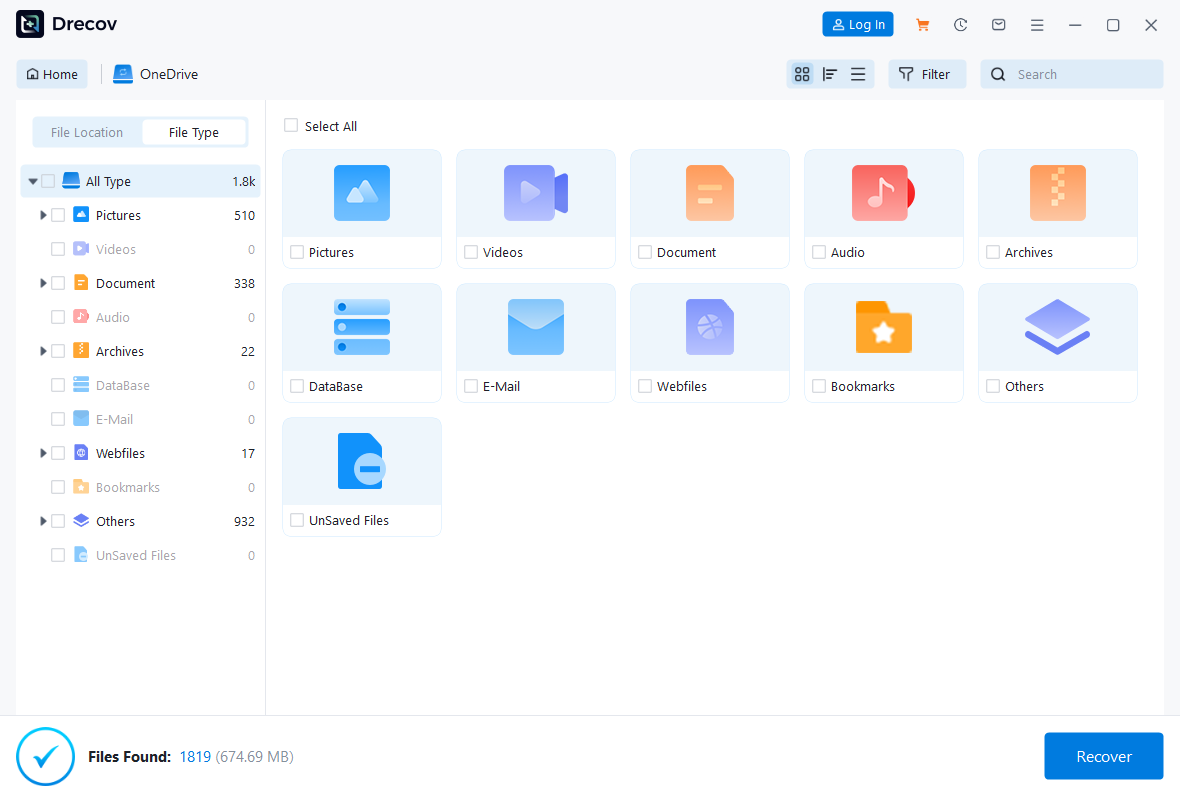
Step 3: Filter and Preview
Once the scan is complete, use the sidebar to filter by file type (e.g., .docx, .pdf, .jpg). One of the standout features of PandaOffice Drecov is the Preview function. Before you commit to recovering a file, double-click it to ensure the data is intact and not corrupted.
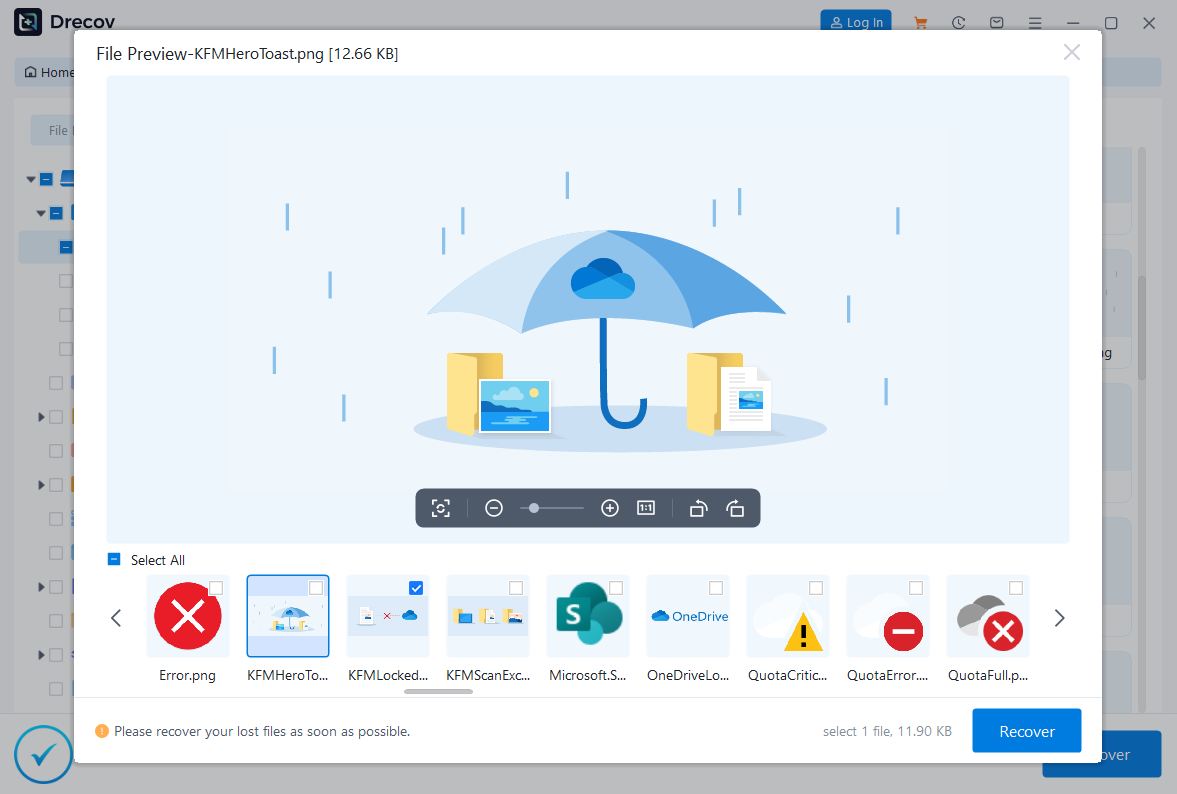
Step 4: Recover and Save
Select the checkboxes for the files you need to restore. Click the Recover button.
Crucial Point: Always save the recovered files to a different drive (such as an external USB or a different partition) to prevent permanent data loss.
Common Migration Challenges
Even with the best tools, you might encounter hurdles when you migrate OneDrive to Google Drive. Being aware of these can help you troubleshoot effectively.
File Compatibility and Permissions
Different cloud platforms handle permissions and file formats differently. For example, a file shared with “Anyone with the link” in OneDrive might revert to private in Google Drive if the migration tool doesn’t support permission mapping. Furthermore, Microsoft-specific features like “Power Pivot” in Excel might not function perfectly when converted to Google Sheets.
Storage Limits and Transfer Speed
Migration speed depends heavily on internet bandwidth and the provider’s “throttling” limits. If you try to migrate OneDrive data totaling several terabytes, Google or Microsoft might temporarily slow down your transfer to protect their server health. Always check your destination storage quota in Google Drive before starting, as a “Storage Full” error mid-migration can cause significant headaches.
Expanding Your Data Recovery Knowledge
Successfully moving your files is only half the battle. Maintaining a healthy cloud environment requires ongoing management and the ability to troubleshoot common errors. If you encountered issues during your transition, you might find these resources helpful:
- If you find that OneDrive is still holding onto files you thought you moved, learn how to disable a folder from OneDrive and recover lost files.
- Is your computer still trying to save everything to the old cloud? Fix the Windows “Save As” default location stuck on OneDrive issue.
- Once you have confirmed that your migration is 100% successful, you may want to uninstall OneDrive from Windows or Mac to free up system resources.
Best Practices for a Smooth Cloud Migration
To ensure that your decision to migrate OneDrive to Google Drive doesn’t result in a digital disaster, follow these industry best practices.
Preparing Files Before Migration
Don’t move your “digital trash.” Before transferring data, take the time to:
- Remove duplicate files: Use a duplicate cleaner to ensure you aren’t paying for double storage.
- Organize folders clearly: A messy OneDrive will result in a messy Google Drive.
- Check file names: Google Drive is generally more flexible, but avoiding very long file paths or special characters (like
*,:,?) is a good habit.
Verifying Data After Transfer
After you migrate OneDrive content, don’t just assume everything is there. Perform a spot check. Compare the total number of files in your source OneDrive folder with the total in Google Drive. Check a few “Shared” folders to see if the colleagues who need access still have it. Testing a few critical spreadsheets and presentations ensures the conversion didn’t break any complex formulas or formatting.
Migrate OneDrive FAQs
1. Can I directly migrate OneDrive files to Google Drive?
Yes. For organizations, the Google Data Migration Service allows a direct server-to-server transfer. Individual users typically use a third-party tool or the manual download/upload method.
2. Is there a free way to transfer OneDrive files to Google Drive?
Absolutely. The manual method (Download from OneDrive, Upload to Google Drive) is completely free, though it is limited by your local internet speed and disk space.
3. Will my folder structure remain the same after I migrate OneDrive?
Yes, most migration methods—both manual folder uploads and automated tools—are designed to preserve the original hierarchical structure of your folders.
4. What happens to my Microsoft Office files in Google Drive?
Google Drive can store Office files in their original format (.docx, .xlsx). You can also choose to convert them into Google Docs/Sheets for better real-time collaboration.
5. How long does the migration process take?
This varies. A few gigabytes can take minutes, while several terabytes of data for a large company can take days to fully sync and verify across the cloud servers.
6. Can I recover files if I accidentally delete them during migration?
Yes, you can check the “Recycle Bin” in OneDrive or “Trash” in Google Drive. If the files are gone from there, using a tool like PandaOffice Drecov on your local synced folder is the most effective way to retrieve them.
Conclusion
Choosing to migrate OneDrive to Google Drive is a significant step toward a more collaborative and web-centric workflow. While the platforms are competitors, the move between them is a well-trodden path with many available tools. From manual “Download and Upload” for home users to robust “Data Migration Services” for enterprises, there is a solution for every scale.
The key to a successful migration lies in preparation. By organizing your files beforehand and using professional recovery tools like PandaOffice Drecov if things go sideways, you can ensure your data remains safe and accessible. Once the move is complete, you can fully take advantage of Google Drive’s real-time collaboration features and its deep integration with the wider web ecosystem.






