







Losing files on a Mac can feel stressful, whether it involves documents, photos, or important project data. Fortunately, modern macOS systems include multiple recovery options, and in many situations, deleted files are not permanently lost. With the right approach, you can often mac recover deleted files successfully even after accidental deletion, formatting, or system crashes.
This guide explains how to recover deleted files on Mac using built‑in tools, backup systems, and professional recovery solutions. It also covers specialized scenarios such as word recovery Mac, external drive recovery, and restoring files when backups are unavailable. Whether you are searching for the best recovery data software for Mac or simply trying to restore recently deleted files, the methods below will help.
Understanding how file deletion works is important. When files are removed, macOS typically marks the storage space as available rather than erasing data immediately. This means recovery remains possible until new data overwrites the original content.
⚠️Warning: Stop using the affected drive immediately after data loss. Continued usage may overwrite deleted files and reduce recovery success.
I hope you’re all doing well. Recently, I accidentally deleted some files on my Mac that I now realize were quite important. Unfortunately, I also emptied the trash, thinking those files were just clutter. Now, I’m in desperate need to recover those files. I’ve been scouring the internet for solutions, but the information overload has left me feeling a bit overwhelmed. So, I thought, who better to turn to than the wonderful community here for some much-needed assistance?—from Apple
Common Reasons Files Are Deleted on Mac
Files may disappear for many reasons, and identifying the cause helps determine the most effective recovery method. Some situations involve simple user mistakes, while others result from technical problems.
Accidental deletion is the most common cause. Users may unintentionally remove files or empty the Trash without realizing important data was included. Fortunately, in many cases you can still mac recover deleted files using built‑in recovery options or recovery tools.
System crashes and software errors are another frequent cause. When applications freeze or the system shuts down unexpectedly, unsaved files may disappear. This is especially frustrating for office documents, which often leads users to search for word recovery Mac solutions.
External drive problems also contribute to data loss. Improperly ejecting USB drives or memory cards may corrupt file systems, making files inaccessible. Similarly, disk formatting—whether accidental or intentional—can remove directory structures while leaving recoverable data behind.
Malware, hardware failures, and macOS updates can also trigger unexpected file loss. Understanding the cause allows you to select the most appropriate mac os x data recovery approach and improves recovery success rates.
⚠️Warning: Avoid installing new software on the same drive where files were deleted. Installation may overwrite recoverable data.
Check Basic Locations Before Advanced Recovery
Before using complex tools, start with simple checks. Many files believed to be lost are still present somewhere on the system.
Solution 1: Check the Trash Folder
When files are deleted normally, they are moved to the Trash rather than permanently removed. Opening the Trash and restoring items is the fastest way to recover lost files.
Locate the file, right‑click it, and choose the restore option. The file will return to its original location. This method works for most accidental deletions and should always be your first step when trying how to recover deleted files Mac.
If the Trash contains many items, use the search function or sort by date to locate files quickly. Even if several days have passed, files may still remain unless the Trash was emptied manually.
Solution 2: Use Spotlight Search
Sometimes files appear missing but are simply moved or renamed. Spotlight search can locate files anywhere on the system by searching names, extensions, or content keywords.
Press the search shortcut and type part of the file name. If the file appears, you can open or move it to a safe location. This approach is useful when files were accidentally dragged into another folder.
Searching is also helpful for recovering documents when users are unsure whether deletion actually occurred. Many situations labeled as “data loss” are simply file misplacement issues.
Recover Deleted Files Using Built‑in macOS Features
macOS includes several recovery tools designed to help users restore lost data without third‑party software.
Solution 3: Restore Files with Time Machine Backup
Time Machine is one of the most powerful built‑in recovery features. If backups were enabled before the files were deleted, you can restore previous versions easily.
Open the folder where the file was stored, launch Time Machine, and browse through backup snapshots. Once you locate the desired file, select restore to recover it.
This method works for documents, photos, and even entire folders. It is one of the safest ways to perform mac os x data recovery because it restores verified backup copies rather than scanning raw storage.
Time Machine also supports version history, allowing you to recover earlier file states if changes were made accidentally.
⚠️Warning: Ensure your backup drive is connected before launching Time Machine recovery.
Solution 4: Recover Files Using Recently Deleted Features
Some applications, including Photos and cloud services, maintain recently deleted folders separate from the Trash. These folders store deleted items temporarily before permanent removal.
Checking application‑specific recovery areas can help restore files quickly without advanced tools. For example, photos removed from the Photos app often remain recoverable for several weeks.
Cloud platforms such as iCloud Drive may also retain deleted files online. Logging into your cloud account and checking recovery sections can restore files even if they were removed from your Mac locally.
Recover Files Without Backup Using Recovery Software
When built‑in methods fail, specialized recovery software becomes necessary. These tools scan storage devices at a deeper level to locate recoverable file fragments.
Solution 5: Use Professional Mac Data Recovery Software
A reliable mac data recovery program can recover files deleted from internal drives, external devices, or formatted partitions. These tools perform deep scans to locate data that macOS no longer recognizes.
Users searching for the best recovery data software for Mac should prioritize tools with preview features, multiple file type support, and read‑only scanning to avoid further damage.
The typical process includes selecting the drive, scanning for deleted files, previewing results, and restoring selected items to a safe location. Recovery success depends on how quickly the process begins after deletion.
For document recovery scenarios such as word recovery Mac, specialized scanning modes can identify document formats even when file names are lost.
Advanced Recovery When Mac Methods Are Not Enough
In some situations, recovery may require additional tools beyond macOS environments.
Solution 6: Recover Files Using Windows‑Based Recovery Tools
If files were stored on external drives or removable media, you can connect the device to a Windows computer and use recovery software there. This approach expands recovery options when Mac tools fail.
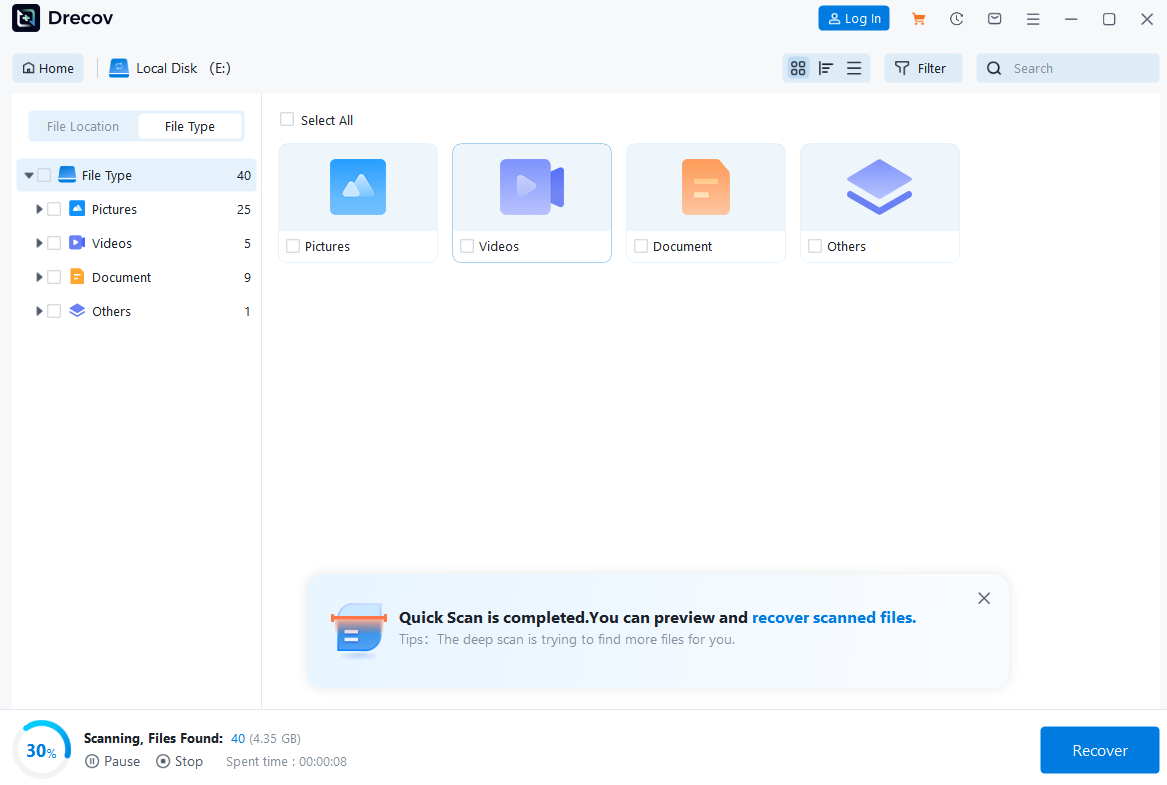
For example, PandaOffice Drecov is a professional recovery solution designed for Windows systems. Although it does not support macOS installation, it can still recover files from drives originally used on a Mac when connected to a Windows PC.
This method is particularly useful when:
- External drives were formatted accidentally
- Files were deleted from USB devices
- Mac recovery tools cannot detect lost files
- Deep scanning is required


Why Choose Pandaoffice Drecov?
When it comes to reliable data recovery, choosing the right tool can make the difference between permanent loss and successful restoration. Pandaoffice Drecov is designed with advanced scanning algorithms and user-friendly workflows to help individuals and professionals recover lost files quickly and safely across multiple storage scenarios. Whether you accidentally deleted important security footage or lost precious photos, the software provides comprehensive support for different devices and file systems.
For example, if you need to recover deleted Blink videos, Drecov can scan storage locations and retrieve video files even after accidental removal or formatting. Photographers and everyday users also benefit from its powerful usb photo recovery capabilities, allowing restoration of images from USB flash drives, memory sticks, and other portable devices without complicated steps.
In addition, the software excels at deleted sd card photo recovery, making it ideal for recovering lost pictures from cameras, drones, or mobile devices. Even when files seem permanently erased, deep scanning technology increases the chances of successful recovery. For larger storage failures, Drecov also supports recover external hard drive scenarios, including corrupted partitions, inaccessible drives, or accidental formatting.
Beyond its technical capabilities, Pandaoffice Drecov prioritizes safety and simplicity. The read-only recovery process ensures no further damage is done to your data, while the intuitive interface allows users of all experience levels to complete recovery in just a few clicks. With broad device compatibility, fast scanning performance, and dependable results, Pandaoffice Drecov is a trusted solution for anyone facing unexpected data loss.
Professional recovery tools significantly increase success rates compared to manual attempts.
⚠️Warning: Always recover files to a different storage device to avoid overwriting data.
Recover Deleted Files from Formatted or Corrupted Drives on Mac
When a drive is accidentally formatted or becomes corrupted, traditional recovery methods such as Trash or Time Machine may no longer work. However, many files remain physically present on the disk until overwritten, making advanced recovery possible.
Solution 7: Deep Scan Using Professional Mac Data Recovery Software
A professional mac data recovery program can perform a deep sector-level scan to locate fragments of deleted files. These tools reconstruct data even if the file system is damaged or directory structures are missing. This is critical for users asking how to recover deleted files Mac from formatted drives or corrupted partitions.
Deep scanning tools typically allow filtering by file type, such as documents, photos, or media files. For word recovery Mac, you can target Word document formats specifically to increase efficiency. Once the scan completes, previewing files ensures you recover the correct items before restoration.
⚠️Warning: Avoid writing new data to the affected drive. Doing so may overwrite recoverable files and reduce success rates.
Solution 8: Recover from External Storage Devices
External drives, USB sticks, and SD cards are prone to accidental deletion or formatting. Connecting these devices to a Mac and scanning with a mac data recovery program allows recovery even when native macOS tools fail. Many professional recovery tools can handle multiple storage types and file systems used by macOS, such as APFS or HFS+.
If direct Mac software is insufficient, you can connect the drive to a Windows PC and use a cross-platform recovery tool like PandaOffice Drecov. Although it does not run on macOS, Drecov can scan Mac-formatted drives when attached to a Windows system, providing an alternative solution for deep recovery.
This method is particularly useful when recovering important mac recover deleted files from older or corrupted drives.
Recover Specific Document Types, Including Word Files
Many users specifically want to recover documents created in Microsoft Word or similar applications. Document recovery is often a high priority because these files contain critical work, reports, or personal content.
Solution 9: Use Targeted Document Recovery Features
Professional Mac recovery tools usually allow filtering by file type to focus on documents such as .doc and .docx. By selecting only Word files, you reduce scan time and make it easier to locate lost documents.
This is highly effective for users who need word recovery Mac, especially if the files were recently deleted or partially overwritten. Preview functions within these tools allow verification of document content before recovery.
For files that cannot be accessed directly on a Mac, exporting the external drive to a Windows machine and using PandaOffice Drecov provides an alternative pathway. The tool reconstructs document fragments and supports previewing Word files prior to recovery.
Recovering Data From Cloud Backups and Synced Folders
Many Mac users rely on cloud services such as iCloud Drive, Google Drive, or Dropbox. These platforms often maintain version histories and temporary trash folders that can help restore deleted files without using professional software.
Solution 10: Restore from iCloud Drive
iCloud Drive keeps recently deleted files for 30 days in the “Recently Deleted” folder. Accessing iCloud via Finder or the web allows you to restore documents to their original location. This is particularly useful when recovering files that were accidentally deleted from synchronized folders.
Cloud recovery also provides flexibility for restoring files on multiple devices. Even if your Mac is damaged, you can access and recover files via another device with iCloud access.
Solution 11: Check Other Cloud Services
Google Drive, Dropbox, and OneDrive maintain similar deleted file recovery mechanisms. Logging into these services and accessing the trash or deleted items folder allows quick restoration.
This method is highly recommended for users who want to avoid deep scanning or recovery software, especially when the lost files are important but already synchronized to the cloud.
Best Practices to Prevent Future Data Loss
Prevention is always preferable to recovery. Following proper practices reduces the likelihood of needing complex recovery procedures.
Solution 12: Enable Time Machine Backups
Regularly backing up your Mac using Time Machine ensures that files can be restored quickly. Time Machine also preserves version histories, allowing restoration of earlier states of a file in addition to fully deleted items.
Solution 13: Use Cloud Synchronization
Cloud services provide real-time file backup and access from multiple devices. Synchronization ensures deleted files may still be recovered from the cloud even if the Mac’s internal storage is compromised.
Solution 14: Minimize Risk of Overwriting
Immediately stop using the drive where files were deleted. Avoid downloading new data or installing software to the same volume. This maximizes the chance of mac recover deleted files successfully using software or other recovery methods.
⚠️Warning: Recovery success rates decline significantly if the disk is actively used after deletion.
Windows-Based Recovery for Mac Drives
While native macOS tools are powerful, there are scenarios where a Mac file system requires advanced scanning unavailable in macOS software. For such cases, PandaOffice Drecov provides a robust alternative. Although it does not run on Mac, it can recover files from Mac-formatted drives when connected to Windows.
Solution 15: Use Drecov on Windows for Mac Drives
- Connect the Mac-formatted drive to a Windows computer.
- Launch Drecov and select the external drive for scanning.
- Perform a deep scan to locate deleted files.
- Preview and restore documents to a safe location.
This approach allows users to recover critical files even when Mac-based recovery software is limited. It is especially useful for large drives, formatted volumes, or heavily corrupted storage.
Conclusion
Losing files on a Mac does not always mean permanent loss. Whether you need mac recover deleted files, word recovery Mac, or to restore files after accidental formatting, there are multiple methods available. Start with Trash, Spotlight, or Time Machine for simple recovery. Use professional mac data recovery program software for deeper scanning when built-in tools fail. Cloud services provide additional safety nets.
For complex cases, especially involving external drives or corrupted volumes, connecting the drive to a Windows system and using PandaOffice Drecov can provide recovery options unavailable on macOS. Following preventive practices, such as enabling Time Machine and using cloud backups, ensures that data loss in the future is minimized.
By understanding these methods, users can confidently recover lost data and maintain better file security across Mac and cross-platform environments.






