







Pop-ups can be both helpful and frustrating. While some websites use them to deliver important alerts, notifications, or login prompts, many pop-ups are intrusive, often carrying ads or spam. Google Chrome, one of the world’s most popular browsers, includes a built-in pop-up blocker to protect users from unwanted interruptions. However, there are situations when you may need to learn how to disable pop up blocker chrome—for instance, to access legitimate websites, online tools, banking portals, or subscription forms. In this comprehensive guide, we’ll explain why pop-ups occur, why Chrome blocks them, and exactly how to disable the pop-up blocker safely.
Why Pop-Ups Are Blocked in Chrome
Before learning how to disable pop up blocker chrome, it helps to understand why pop-ups are blocked in the first place:
- User Experience: Unwanted pop-ups can clutter the screen, slow down your browsing, and make websites difficult to navigate.
- Security: Many pop-ups are used for phishing attacks, malware distribution, or malicious redirects.
- Advertising Control: Excessive pop-ups are disruptive and can lead to negative browsing experiences.
- Browser Performance: Pop-ups consume memory and CPU resources, reducing overall browser efficiency.
Chrome’s pop-up blocker helps keep browsing smooth and secure. However, some websites, especially banking sites, e-learning platforms, or subscription services, require pop-ups to function correctly. In these cases, you may need to temporarily or permanently disable the blocker.
Furthermore, users occasionally mistake a technical system freeze or an abrupt browser crash for a minor pop-up glitch. When web browsers crash unexpectedly or terminate sessions aggressively, background system directories can experience unpredicted data corruption, leading to severe data loss. In the latter sections of this extensive guide, we will transition into comprehensive data management techniques to protect your local storage when digital mishaps occur.
How to Disable Pop-Up Blocker in Chrome: Step-by-Step Guide
Disabling Chrome’s pop-up blocker is straightforward. Because Google organizes its browser settings across distinct submenus, following an exact path is essential to achieve your goal without altering other critical security permissions. Let us look at the precise operational sequence required to change this preference within the browser.
Step 1: Open Google Chrome
Launch your Google Chrome browser desktop application. To ensure all configuration interfaces match this manual precisely, click the three vertical dots in the top-right corner, navigate to Help, and select About Google Chrome to confirm you are operating the latest build. Older deployment versions may feature disparate menu paths.
Step 2: Access Chrome Settings
Locate the three vertical dots (⋮) positioned at the absolute top-right corner of the window interface. Click this icon to expand the primary contextual menu, then scroll downward and select Settings to load the central configuration control panel. Alternatively, you can type chrome://settings into your address bar and press Enter.
Look at the left-hand navigation sidebar layout within the settings page. Select the Privacy and security menu item. Once the primary panel refreshes, scan down the center options until you locate the sub-category labeled Site Settings, which governs what information websites can use and show. Click it to enter the site authorization controls.
Step 4: Locate Pop-Ups and Redirects
Scroll downward past the initial permissions criteria (such as Location, Camera, and Microphone) until you reach the contextual area designated as Content. Within this specific grouping, select the item titled Pop-ups and redirects to access the toggle commands.
Step 5: Disable the Pop-Up Blocker
At this stage, you will see the default operational behavior behavior enforced by Chrome. To universally determine how to disable pop up blocker chrome across all internet spaces, click the radio button option labeled Sites can send pop-ups and use redirects.
⚠️ Critical Security Warning: Enabling pop-ups universally across every webpage exposes your operating environment to malicious script execution, drive-by malware infections, and intrusive tracking loops.
If you prefer to maintain robust security while granting access to verified portals, do not alter the default global setting. Instead, keep the blocker active and navigate to the custom behavior section:
- Find the section header named Allowed to send pop-ups and use redirects.
- Click the corresponding Add button.
- Carefully type or paste the exact destination address string (e.g.,
[https://www.yourbank.com](https://www.yourbank.com)) into the input form field, then press Add to commit the custom permission logic.
Step 6: Test the Changes
Revisit the target website that previously failed to initialize its secondary windows. The intended interface should now execute perfectly. If the window fails to reveal itself, review any active security configurations or browser-based defensive software extensions to make sure they are not overriding Chrome’s internal site rules.
Using Chrome Extensions to Manage Pop-Ups
While Chrome provides built-in options, specialized browser extensions can offer more granular control over pop-ups for power users who want a custom balance between absolute usability and total security. These items are available through the Chrome Web Store, allowing you to append customized content filters onto your browser core.
- Popup Blocker Pro: This extension provides real-time detection matrices that enable users to customize exactly which specific structural frames can execute secondary windows, effectively filtering out embedded ad elements while letting genuine interface panels open smoothly.
- Poper Blocker: Famously engineered to counteract advanced overlay layers, scroll-preventing notification blockades, and hidden background redirect links, this tool features an easily accessible whitelisting protocol for immediate local adjustments.
- uBlock Origin: Though technically recognized worldwide as a wide-spectrum content blocker, this tool contains precise site-filtering parameters that let you selectively allow or block pop-up scripts on highly specific target domains.
Using these specialized utilities allows you to keep your browser safe without having to constantly dive into Chrome’s deep settings menus. However, whenever you install multiple extensions or tweak deep browser settings, you increase the risk of browser crashes or unexpected memory errors. If Chrome freezes and forces a hard reboot, you might lose open tabs, cached web forms, or downloaded data files. Next, we will cover how to manage your data when software stability issues cause files to disappear.
The Hidden Risk of Digital Mishaps: Data Loss from System Crashes
While mastering how to disable pop up blocker chrome improves your daily browsing, changing software environments can sometimes lead to unexpected system issues. For example, if a bad browser script runs out of control or your system runs out of memory, Chrome might crash hard. If your operating system freezes during a critical data transfer or background update, it can corrupt local folder trees or delete important user data.
When files disappear due to unexpected crashes, malware infections, or accidental deletion, standard browser adjustments won’t help you get them back. You need a dedicated local storage solution. To help you handle these issues, we have organized a list of effective file recovery techniques, sorted from simple manual checks to advanced recovery tools.
Level 1: Basic Local Recovery Strategies
Before using advanced software utilities, start with the built-in storage areas of your operating system. These methods are fast, simple, and don’t require deep technical knowledge.
Checking the System Recycle Bin or Trash
When files disappear during an unexpected browser shutdown or an accidental click, they often sit in a temporary system folder before being permanently erased.
- Step 1: Double-click the Recycle Bin icon on your Windows Desktop (or open the Trash icon on a macOS Dock platform).
- Step 2: Use the search bar in the upper-right section of the window to search for the specific name of your missing file, or sort the contents by Date Deleted.
- Step 3: Right-click the missing item and select Restore. The system will immediately move the file back to its original folder directory.
Restoring Files via Windows File History
If you have automated backup features enabled on your computer, you can roll back individual folders to an earlier state before the data loss occurred.
- Step 1: Open the Windows File Explorer by pressing the hotkey combination Windows Key + E. Navigate to the specific parent folder where your lost files were stored.
- Step 2: Right-click the folder, scroll through the contextual option selections, and click Restore previous versions.
- Step 3: A properties panel will appear displaying a detailed chronological log of available backup points. Select a timestamp from before your files disappeared, click Restore, and wait for the system to recover your data.
Level 2: Advanced Recovery with PandaOffice Drecov Data Recovery Software
If your files aren’t in the Recycle Bin and you don’t have a backup saved, you need an advanced solution. At this stage, professional recovery tools are required to rebuild broken file paths on your drive. For reliable results, we recommend using PandaOffice Drecov data recovery software.
This advanced tool safely scans your storage drives block by block. It can find and reconstruct missing documents, lost browser downloads, media files, and broken database pieces that your operating system can no longer see. It works across traditional hard disk drives (HDDs), solid-state drives (SSDs), external USB flash drives, and SD memory cards.
⚠ Warning: Install it on a drive different from the one where your data was lost to prevent overwriting.
Why Choose PandaOffice Drecov Data Recovery Software?
Unlike basic search tools, this program uses advanced deep-scanning algorithms to read raw data sectors directly. It can recover files after accidental formatting, partition damage, or system crashes caused by browser scripts or registry errors.
Step-by-Step Guide to Recovering Data via PandaOffice Drecov
Follow these step-by-step instructions to safely scan your storage drive and retrieve your missing files:
Step 1: Select the Target Location for Scanning
Launch the program. Under the Hard Disk Drives or Locations section, left-click the specific drive partition where your files were lost. If you want to save time, you can select specific target areas like the Desktop or Recycle Bin.

Step 2: Run the Scan Sequence
Click the Scan action button in the bottom right corner of the window. The software will automatically start its recovery process:
- Quick Scan: This first phase scans the drive’s master file index to quickly find recently deleted items in just a few minutes.
- Deep Scan: If the files aren’t found immediately, the program automatically switches to a deep sector-by-sector scan. This deeper pass searches the raw storage blocks to find and piece together fragmented file fragments.
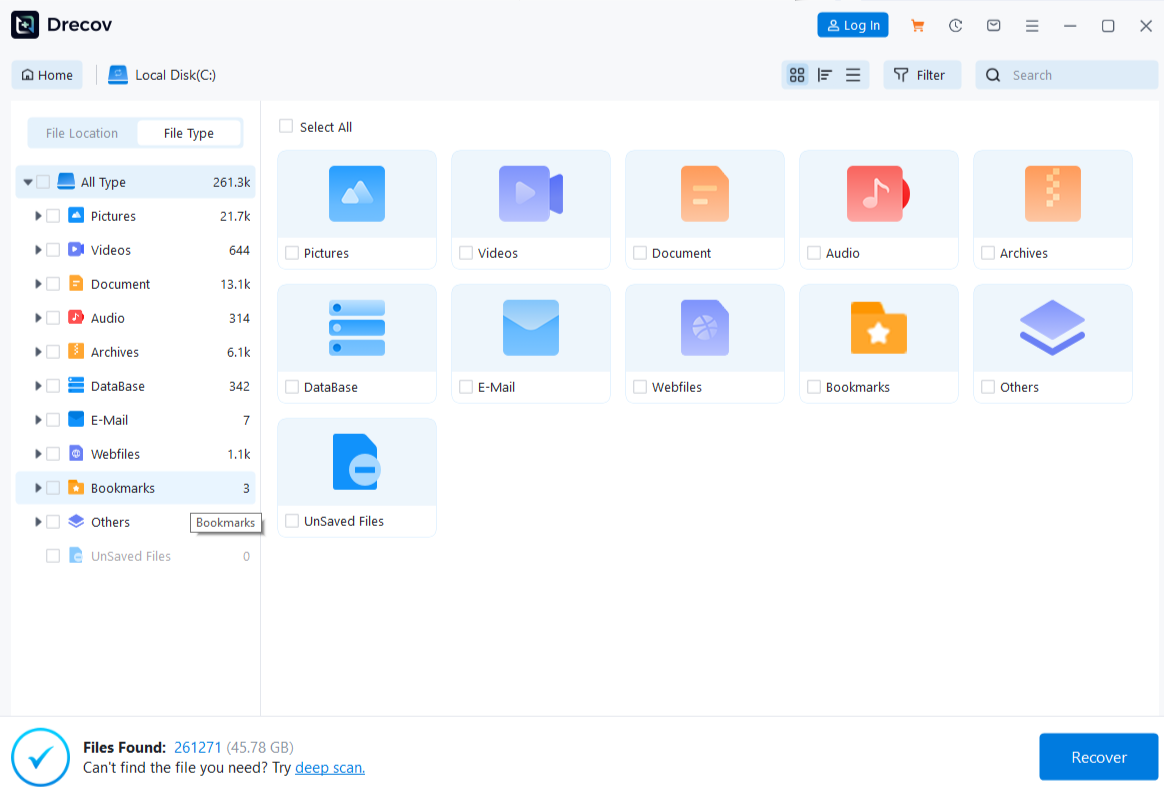
Step 3: Filter and Preview Your Found Files
As the scan runs, the software lists discovered files in real time on the screen. You can browse these items using the left-hand folder tree view, or organize them by extension types (such as .docx, .png, .mp4, or .zip). Double-click a file to open a live Preview window. This lets you check the quality and completeness of the file before choosing to recover it.
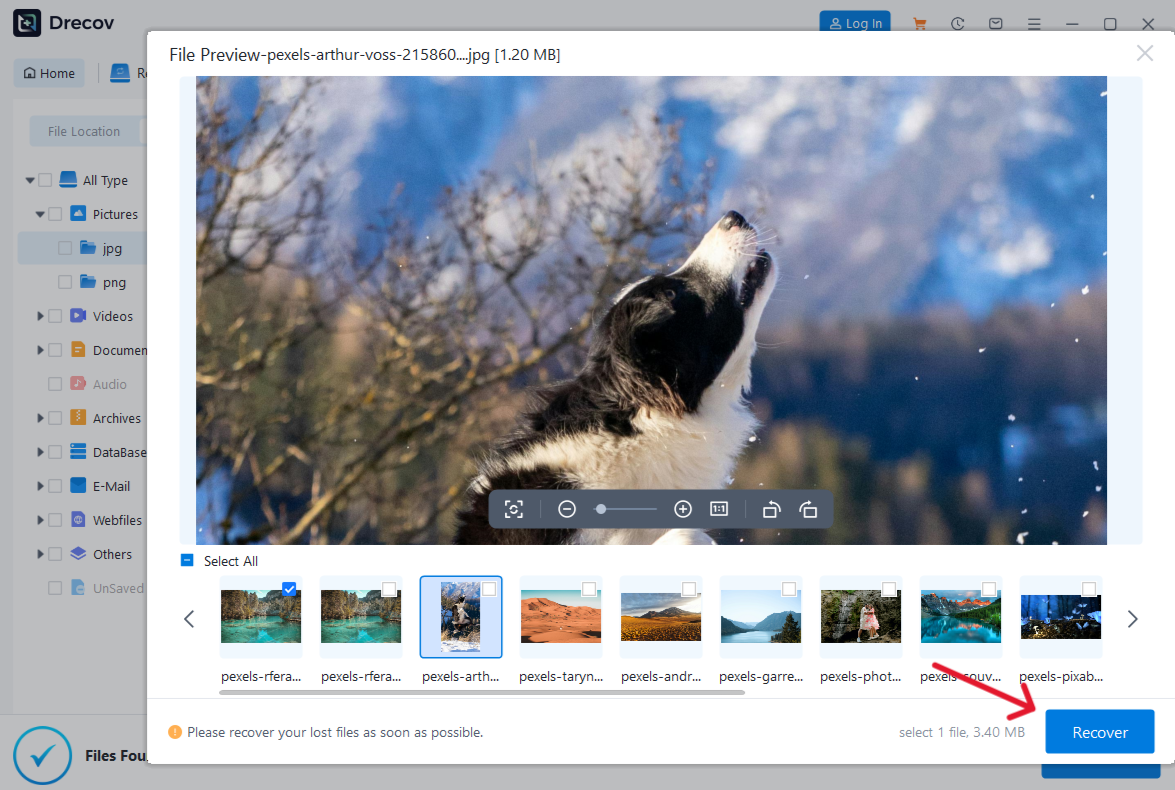
Step 4: Recover and Save Your Files Safely
Check the boxes next to the folders or individual files you want to bring back, then click the Recover button.
A destination window will appear asking where to save the files. Choose a separate, secure storage drive (like an external backup drive or a different internal partition) to save your recovered data. Once the transfer finishes, open the chosen folder to verify that all your files are fully restored and working correctly.
Level 3: Expert System Diagnostics
When data loss is caused by deep system instability rather than simple user error, you may need to use advanced system utilities to repair your storage drives.
Running the CHKDSK Utility via Command Prompt
If your browser crashes are caused by bad drive sectors or a corrupted file system, you can use the Windows Check Disk tool to find and repair structural errors.
- Step 1: Press the Windows Key, type
cmdinto the search box, right-click Command Prompt, and select Run as administrator. - Step 2: Type the command
chkdsk C: /f /rinto the console window (replaceC:with the specific drive letter you need to check). - Step 3: Press Enter. If the drive is currently in use by the system, type
Yto schedule the repair scan for the next time your computer restarts, then reboot your machine.
Example Console Command Layout:
C:\Windows\system32>chkdsk C: /f /r
Rebuilding Storage Paths via Windows Registry Maintenance
Sometimes, severe system crashes can scramble the registry paths that point to your default user folders, making your files invisible to the system.
- Step 1: Press the Windows Key + R shortcut to open the Run dialog box. Type
regeditand press Enter to launch the Registry Editor. - Step 2: Carefully navigate through the folders on the left to follow this exact path:
HKEY_CURRENT_USER\Software\Microsoft\Windows\CurrentVersion\Explorer\User Shell Folders - Step 3: Look at the entries on the right side of the window. Check keys like Desktop, Personal (Documents), or Downloads to make sure their data values point to your correct local folder paths (such as
%USERPROFILE%\Downloads). If a path is corrupted, right-click it, choose Modify, and fix the directory string.
Useful Resource Links for Better System Management
To help you manage your files and fix common computer storage issues, review these helpful guides and troubleshooting articles:
- If you need to find missing applications or cached installer files on mobile devices after a system sync error, read this guide on how to find recently deleted apps on iPhone and Android platforms.
- If your system settings get stuck when saving files, learn how to troubleshoot a fixed Windows Save As default location stuck on OneDrive error.
- To learn more about how your computer handles deleted files and master file records, read this complete guide covering the empty recycle bin process and everything you need to know.
Common Scenarios for Disabling Pop-Up Blocker
Understanding when you need to change your browser’s security settings can save you time and prevent frustration during your daily tasks:
- Online Banking Portals: Many financial institutions use secure pop-up windows to display multi-factor authentication prompts, transaction receipts, or downloadable tax statements.
- E-Learning Platforms: Virtual classrooms, university portals, and online testing systems frequently open quizzes, course modules, or completion certificates in separate windows.
- Job and Career Portals: Corporate application systems often open resume upload forms or external assessment links in pop-up windows.
- Shopping and Payment Services: Third-party payment gateways (like PayPal or secure credit card verification screens) often require pop-ups to process your transactions safely.
- Web-Based Software (SaaS): Professional online tools like PDF converters, cloud accounting software, and design platforms use secondary windows to show file exports, settings menus, and analytics dashboards.
Advanced Tips for Power Users
If you manage multiple online workflows or work in an office environment, Chrome offers advanced ways to handle pop-up rules:
- Use Distinct Chrome Profiles: Create separate profiles for work, personal browsing, and online banking. This lets you keep your settings separate, so you can allow pop-ups on one profile while keeping strict blocking rules on another.
- Use Command-Line Launch Flags: Advanced users can launch Chrome using specific command-line switches (like
--disable-popup-blocking) to temporarily change browser behavior for testing or automation tasks. - Set Up Enterprise Management Rules: IT administrators can deploy Group Policy templates across a business network to control pop-up permissions on multiple office computers at once.
- Perform Regular Browser Maintenance: Clean out your browser’s cache, cookies, and temporary data files regularly. This helps prevent old, corrupted site data from messing up your custom website permissions.
Troubleshooting Common Issues
If you have already changed your settings but a website still won’t display new windows, try these quick troubleshooting steps:
- Check Your Installed Extensions: Active ad blockers, script blockers, or privacy tools can block pop-ups even if you have turned off Chrome’s built-in blocker. Try disabling your extensions one by one to find the problem.
- Clear Cache and Cookies: Old or corrupted site data can cause conflicts with your browser settings. Clear your browsing data through the Chrome settings menu, then refresh the page.
- Restart Google Chrome Completely: Some settings changes won’t take effect until you completely close and reopen your browser. Make sure to close all open windows and background tasks before restarting.
- Verify Site-Specific Permissions: Click the padlock icon on the far left of your address bar while visiting the website. Check the site drop-down menu to make sure Pop-ups and redirects is explicitly set to Allow.
Conclusion
Learning how to disable pop up blocker chrome is an essential technical skill that ensures you can access important features on web-based tools, banking portals, and educational platforms. By using the steps in this guide, you can easily change your browser settings to fit your needs, whether you want to allow pop-ups globally or just add a few trusted websites to your exceptions list.
At the same time, managing your browser settings reminds us how important overall system health and data safety are. Browser crashes, system freezes, and accidental deletions can happen at any time, risking your important files. By pairing smart browsing habits with reliable recovery tools like PandaOffice Drecov data recovery software, you can keep your computer running smoothly and ensure your digital files are always protected.






