







An Excel TMP file can be a useful clue after a failed save, but its extension alone does not prove that it contains a workbook. First copy the original file and the temporary candidate to a healthy folder. Compare their size and modification time, then try opening the copy from Excel. Do not rename, delete, or replace the only surviving original. Excel’s AutoRecover and version history may provide a better copy than the loose file you found.
Excel tmp file: safe diagnosis
Excel does not always write a changed workbook directly over its old bytes. Microsoft describes a save sequence in which Excel writes a temporary file in the destination folder, deletes the original during a successful save, and renames the temporary file to the intended workbook name. If the process is interrupted by a crash, permission failure, antivirus lock, or storage problem, a temporary file may remain while the expected workbook is missing or out of date. Microsoft’s Excel save troubleshooting article explains that sequence and why such files can appear.
This temporary save artifact differs from an AutoRecover copy. AutoRecover periodically keeps recovery information for an open workbook. AutoSave, when available for a supported cloud file, saves changes through its own service. A small lock file or generic Office cache item serves another purpose altogether. Treat each candidate according to where it came from, when it changed, and whether Excel recognizes its contents. Blindly appending .xlsx to every .tmp file produces confusing errors and can overwrite useful evidence.
Make a short inventory before testing: the original workbook’s path, the folder containing the temp file, each file’s size, each modification time, and what happened at the failed save. If the temp item appeared in the exact destination folder at the time Excel reported an error and is roughly the size of the workbook, it is more promising than an unrelated tiny file from a browser cache. This is a clue, not a guarantee.
Preserve the Candidate Before You Open It
Close Excel if it is repeatedly trying to save the same workbook. Copy the candidate and the old workbook to a separate healthy location. Do not move them out of the source folder yet; a move can make an application lose track of its recovery state. If the folder is on a failing external drive, stop repeated reads and consider imaging or professional help. A file-level experiment on an unstable disk is not worth the risk of losing the only copy.
Name your working copies descriptively, such as “candidate-from-project-folder” and “original-before-test.” Record the extension and timestamps in a note rather than embedding assumptions in the names. Never change the extension of the sole original. If the source is shared through OneDrive or SharePoint, pause before opening two competing versions on different devices; a sync client might replace one while you investigate. Copy both versions outside the synced folder first.
Check the file size. A zero-byte file cannot contain a full workbook, while a very small file may be a lock or pointer. A larger file can still be incomplete. Modern .xlsx workbooks are structured packages, so a plausible size is only the first check. The meaningful test is whether Excel opens a copy and whether the important sheets, formulas, charts, and recent changes are present.
Test the Copy Through Excel, Not a Mass Rename
Try Excel’s normal Open dialog
From Excel, choose File, Open, and Browse. Navigate to the copied candidate. If the file does not appear, adjust the file-type filter to show all files. Select the copy, not the source. If Excel recognizes it, immediately save a new workbook to another healthy folder with a clear name. Do not save over the old workbook until you have compared both versions. A successful open is useful evidence, but the restored content still needs review.
Use Open and Repair only on a copy
If Excel sees the candidate but reports a content problem, try its Open and Repair option on the copy. Repair may remove damaged features while preserving some data. Examine the repair log and open every critical worksheet. A repaired workbook is not automatically a complete one. If the only candidate is on unstable media, copy or image it before trying further repair reads.
Change an extension only after identifying the file
For a promising copied file without a recognizable extension, a carefully chosen .xlsx or .xlsm extension may help Excel’s Open dialog select the right handler. The extension does not convert file content. A macro-enabled workbook renamed .xlsx may lose expected behavior or trigger warnings; preserve the original format when known. Keep the untouched candidate beside your experiment so you can reverse the test. Avoid batch-renaming every temporary file in the directory.
If a candidate opens, compare it with the current workbook by sheet count, sheet names, values in the most recently edited area, formulas, charts, and external links. Save a separate recovered copy, then make another backup. An apparently newer timestamp can reflect a cache touch or sync event rather than newer business data.
Check Excel’s Own Recovery Paths Before Scanning a Disk
Reopen Excel once and inspect any Document Recovery pane. For an unsaved workbook, look under File, Info, and Manage Workbook for recovery options available in your version. If the file was in OneDrive or SharePoint, check Version History. These routes may preserve the intended workbook structure and a clearer revision timeline. The separate Excel document recovery walkthrough covers application-held copies; this page focuses on evaluating the actual temporary file left in a folder.
Do not assume that a .tmp file in the Windows temporary directory belongs to the missing workbook. Many applications create files there. Search by approximate save time and original folder, but test only copied candidates. If a workbook was never saved at all, there may be no ordinary .xlsx file to find. AutoRecover is the more relevant first stop. If the saved workbook was deleted later, the recovery task changes again: you need the original storage location and a deleted-file workflow.
If a cloud revision contains the needed values, restore it as a separate copy first. Overwriting the live workbook can discard valid newer edits. The previous-version recovery steps cover that comparison in more detail. For a workbook that opens but is corrupted, the Excel content-error guide explains that repair path without treating every warning as a deleted-file case.
When the Original Workbook Was Deleted
This check is especially useful for excel tmp file. PandaOffice Drecov is Windows data recovery software for stable PCs, hard drives, SSDs, USB drives, and external storage. Its read-only recovery mode can search a source that contained a deleted workbook; Quick Scan and Deep Scan locate candidates, while filtering and preview help you choose files before export. It supports documents and other file types, including photos, video, audio, email, and archives. Lost Partition Recovery is available when the partition itself vanished. Drecov does not recover unsaved cell edits directly from an open Excel session, repair a failing drive, or reconstruct overwritten bytes.
⚠ Warning: Install it on a drive different from the one where your data was lost to prevent overwriting.
Only use this path when an actual saved workbook or temporary candidate was deleted from local storage. Stop using that source immediately. Check the Recycle Bin and backups first. If the drive clicks, disconnects, or reports severe read errors, do not run repeated direct scans. An image or professional recovery may be needed. Prepare a separate healthy destination and do not install a recovery utility on the volume holding the missing workbook. You can start from the Drecov home page on a healthy Windows installation.
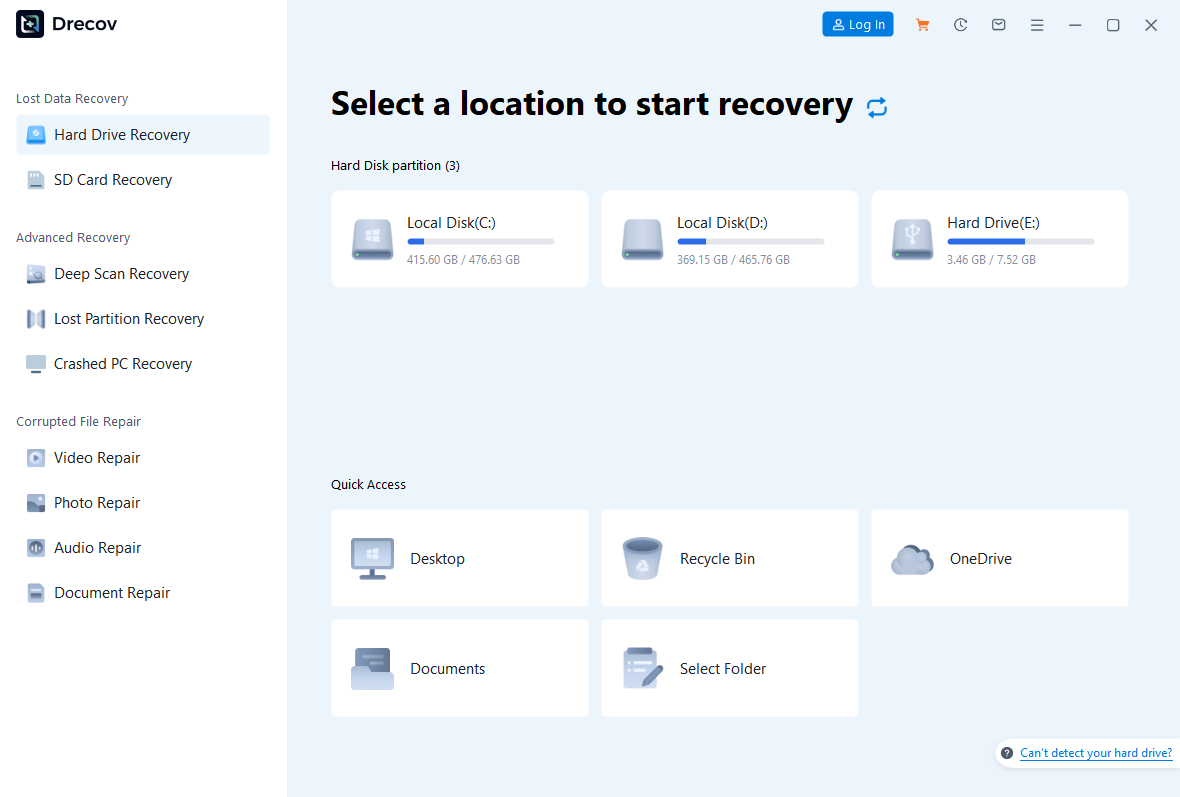
Step 1: Open Drecov and select the original folder’s drive
Choose the drive where the workbook or temp candidate last existed. Do not scan the destination where you plan to save recovered files. If the former partition no longer appears but the disk is stable and recognized, consider Lost Partition Recovery. Note the likely filename, extension, and folder before scanning, but remember that recovered files may not retain them.
Step 2: Run Quick Scan
Start Quick Scan and inspect results around the original folder and file type. Search for the expected workbook name as well as plausible temporary names. A recovered file’s name is a clue, not proof that its spreadsheet data survived. If the source behaves erratically, stop rather than moving straight into a longer scan.
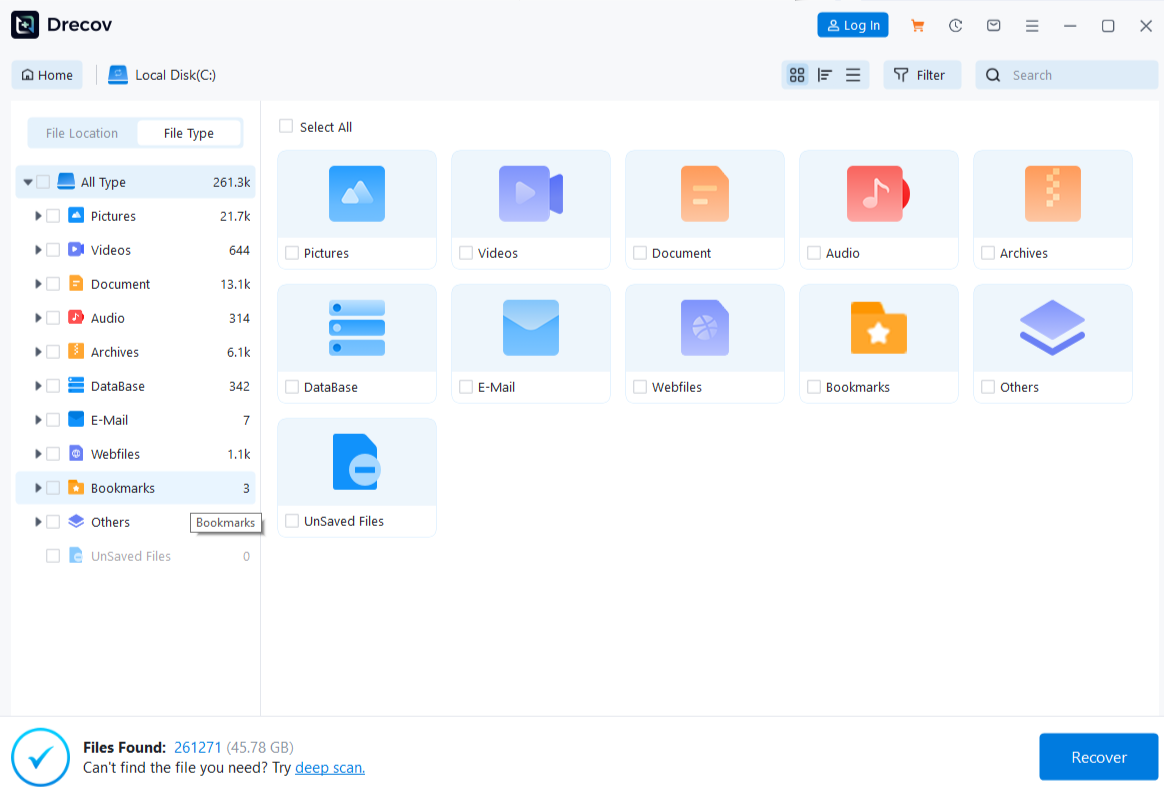
Step 3: Try Deep Scan only on a stable source
When the first scan misses the workbook and the medium remains reliable, run Deep Scan. Browse by document type and compare candidate sizes. A generic filename may still contain the needed sheets. A zero-byte result cannot supply the workbook content. On an SSD, TRIM may sharply reduce what remains available after deletion.
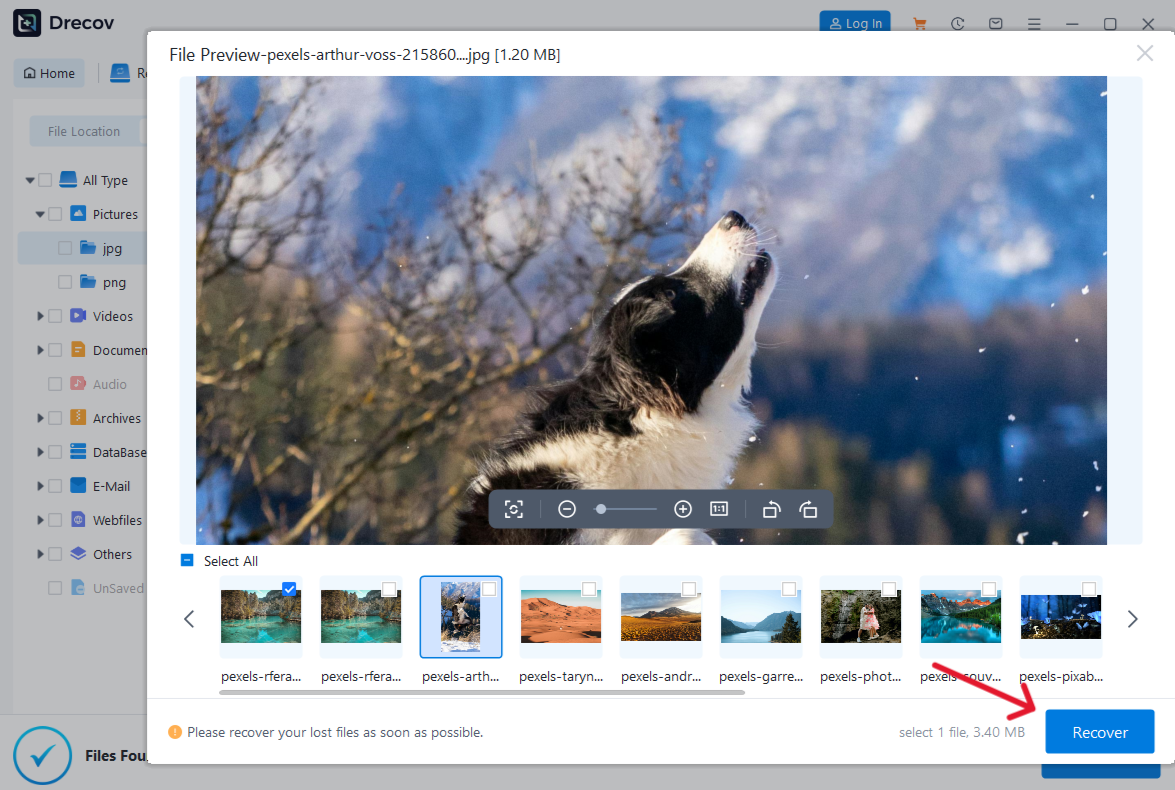
Step 4: Filter and preview candidates
Use available name, path, and document filters. Preview supported candidates where possible, then plan to open exported copies in Excel for a full check. A preview cannot certify every formula, macro, pivot table, or external connection. If several revisions are found, recover them separately rather than choosing solely by timestamp.
Step 5: Recover elsewhere and compare versions
Save selected files to the healthy destination, never to the original drive. If output is not where you expected, check the Drecov folder or Recovery folder. Open each candidate in Excel and compare worksheets, formulas, and recent edits with backups and cloud versions. Only after a complete copy is verified should you repair the source volume, clean temporary folders, or replace the live workbook.
⚠ Warning: Install it on a drive different from the one where your data was lost to prevent overwriting.
Questions That Prevent a False Recovery
Is every .tmp file an Excel workbook?
No. Temporary files are created for many purposes, including locks and application caches. An item’s location, size, timestamp, and behavior when opened together provide better evidence than its extension. Work on a copy and keep the original untouched.
Why does renaming the file to .xlsx not open it?
Changing a filename does not change the bytes inside. The file may be incomplete, encrypted, from another application, or merely a small placeholder. Try Excel’s Open and Repair on a copy if it recognizes the file, and examine AutoRecover or version history for another candidate.
What if Excel opens the candidate with missing sheets?
Save that partial copy separately; do not overwrite the old workbook. Compare versions and backups for the missing sheets. A recovered file may predate your last edits or may have lost content during an interrupted save.
Can Drecov recover edits that were never saved anywhere?
No software can scan a disk for changes that never reached a recoverable local copy. Check Excel’s recovery pane, AutoRecover, and cloud version history first. Drecov fits a deleted local workbook or temp copy on stable storage, not an unsaved in-memory state.
Should I delete leftover temporary files after finding a copy?
Not immediately. Verify the recovered workbook, save it to a healthy location, and make a backup. Only then decide which old temporary files are safe to remove. If the source disk has errors, prioritize its data protection over cleanup.
Keep the Best Workbook, Not Just the Best Filename
An Excel TMP file may preserve work from an interrupted save, but it must be identified and tested rather than renamed blindly. Copy the candidate, use Excel’s own recovery paths, and compare actual worksheet content. If a saved file was deleted from stable local storage, Drecov can search the original location and export candidates to another drive for verification. The final choice is the workbook that opens with the needed data intact, not the file with the newest-looking name.
⚠ Warning: Install it on a drive different from the one where your data was lost to prevent overwriting.





