







Protect the workbook: The message does not automatically mean the whole workbook is lost. If you encounter the error “we found a problem with some content excel”, Excel may have found damaged XML, an invalid relationship, an external link it cannot resolve, or content created by another application. First use Save As on a copy if the workbook opens. If it does not, duplicate the file in File Explorer and leave the original untouched. Preserve the workbook you have before Excel is allowed to remove or rewrite records.
Preserve the workbook before Excel removes anything
Test scope with care. Open another trusted workbook in the same Excel installation. Then move a copy of the affected file from email, a network share, or removable storage to a healthy local folder. If only one copy fails, investigate the workbook. If many workbooks fail, repair Office, add-ins, permissions, or storage rather than rewriting every file.
A recovered earlier version can be better than a repaired current file. Check OneDrive or SharePoint version history, File History, backups, sent attachments, colleague copies, and Excel’s AutoRecover locations. Compare timestamps and file sizes; do not overwrite the newest candidate while deciding. Microsoft documents Open and Repair plus Extract Data for a damaged workbook. See the official documentation before relying on menus or behavior that may vary by Windows or Office release in the workbook investigation.
Find out whether the file or the application is failing
| What you observe | What it changes | Safest response |
|---|---|---|
| A stable, readable source | If the workbook came from an untrusted source, do not enable macros or external content merely to get past the warning. | If the workbook came from an untrusted source, do not enable macros or external content merely to get past the warning. Confirm the sender and scan the file first. |
| A limited or file-specific failure | If the source disk is producing read errors or disconnects, copy or image the storage before asking Excel to open the file repeatedly. | If the source disk is producing read errors or disconnects, copy or image the storage before asking Excel to open the file repeatedly. Application repair cannot stabilize failing media. |
| Instability or a destructive next step | If Excel offers to repair the workbook, run it on a duplicate. | If Excel offers to repair the workbook, run it on a duplicate. Save repaired output under a new name and retain the repair log, because removed records may identify lost formulas, drawings, links, or styles. |
Use a duplicate workbook for every experiment and label each output. Record the starting condition and the outcome in the workbook investigation. If a test reduces access or introduces instability, return to protection instead of stacking another change on top in the workbook investigation.
Recover a cleaner version before repairing damaged XML
If the workbook came from an untrusted source, do not enable macros or external content merely to get past the warning. Confirm the sender and scan the file first.
If the source disk is producing read errors or disconnects, copy or image the storage before asking Excel to open the file repeatedly. Application repair cannot stabilize failing media.
If Excel offers to repair the workbook, run it on a duplicate. Save repaired output under a new name and retain the repair log, because removed records may identify lost formulas, drawings, links, or styles.
Workbook recovery benefits from this related Drecov article, a second task-specific resource, and this recovery-safety reference.
⚠ Warning: Install it on a drive different from the one where your data was lost to prevent overwriting.
Recover Deleted Workbook Copies With Drecov
When the useful workbook copy was deleted or became inaccessible on stable local storage, Drecov can search for an earlier file before Excel repairs the only remaining copy, especially if you encounter an error like “we found a problem with some content excel” upon opening. Its Windows recovery modes cover internal and external drives, USB media, and memory cards; results can be filtered and previewed after Quick or Deep Scan. The software recovers files elsewhere. It does not rebuild formulas inside a corrupted workbook or correct Excel itself. Begin at the Drecov Windows recovery page when that precise loss branch applies to the workbook investigation.
Step 1: Choose the folder that held the missing workbook
Open Drecov and select the original local folder or partition. Keep the damaged workbook and its duplicates outside the scan workflow, and never install the program onto that source volume.
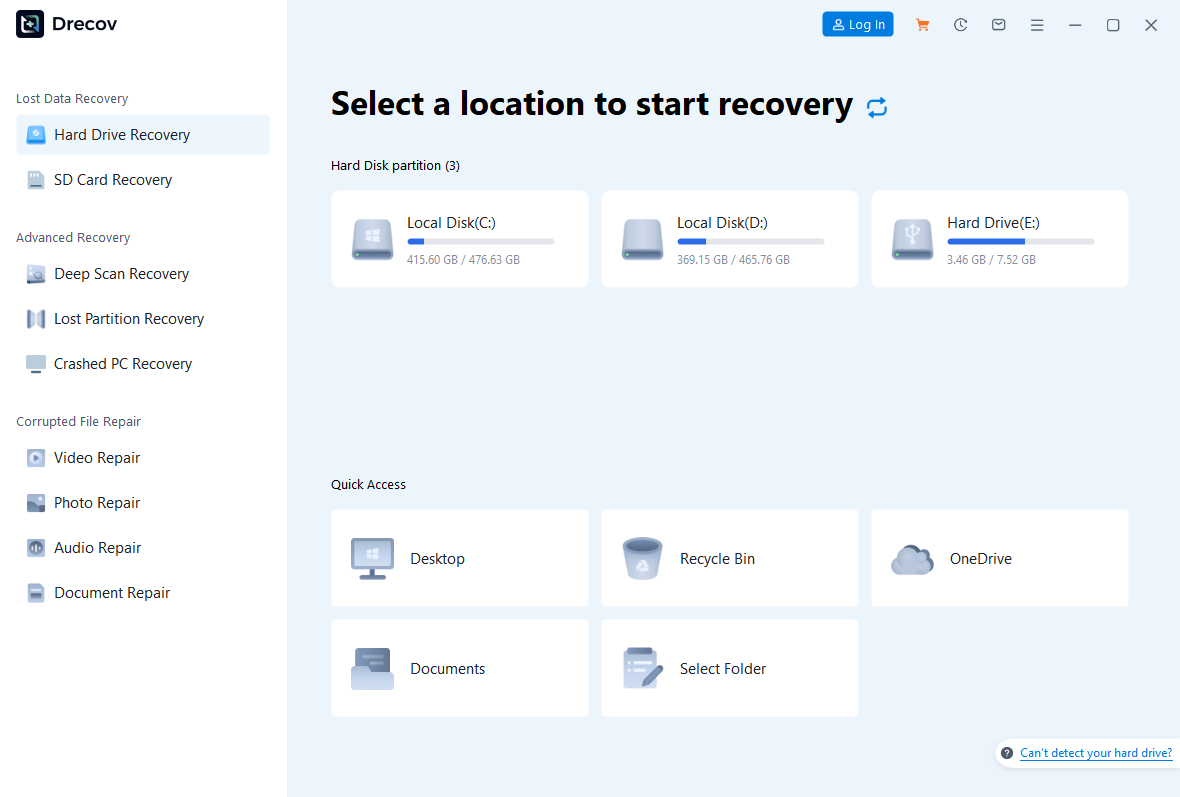
Step 2: Search recent deletion with Quick Scan
Look for .xlsx, .xlsm, .xlsb, and related temporary candidates in the expected path. Sort by time and size, but do not assume the newest or largest file is complete.
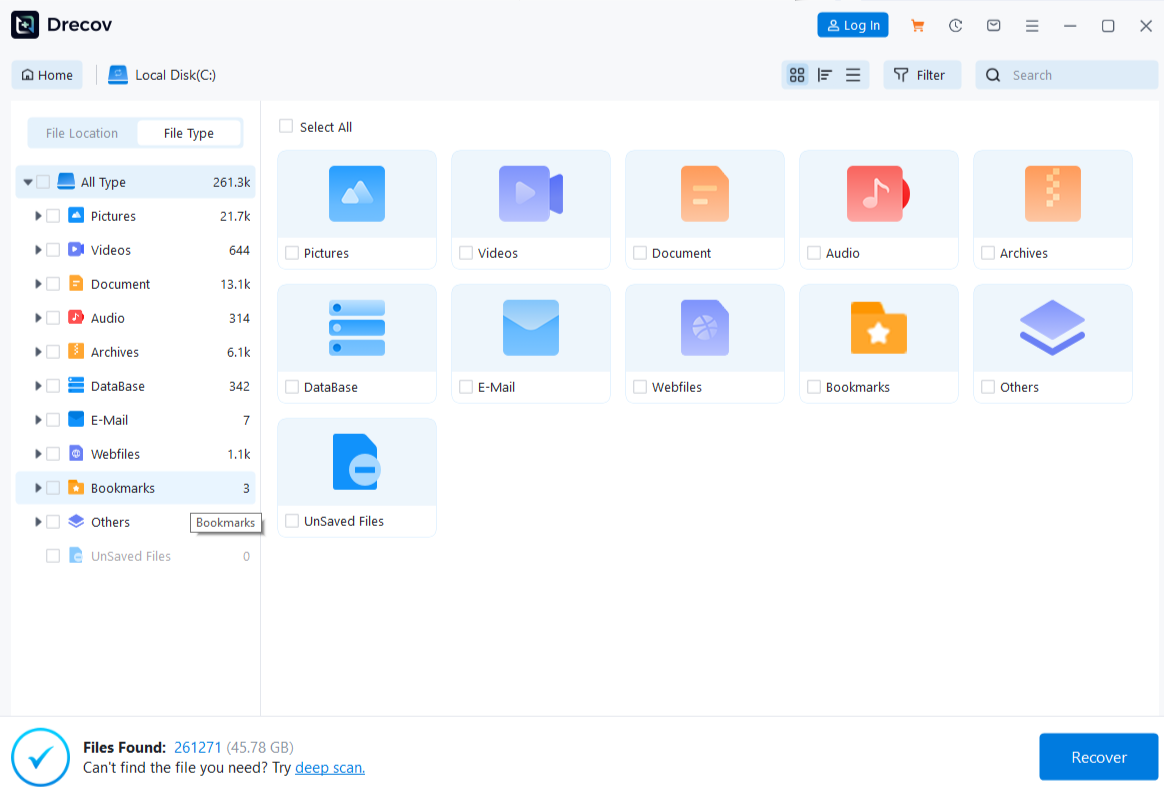
Step 3: Ask Deep Scan for older workbook records
Escalate only if important versions remain absent and storage behaves normally. A disk with read errors deserves imaging before a long scan, not repeated attempts by Excel and recovery software.
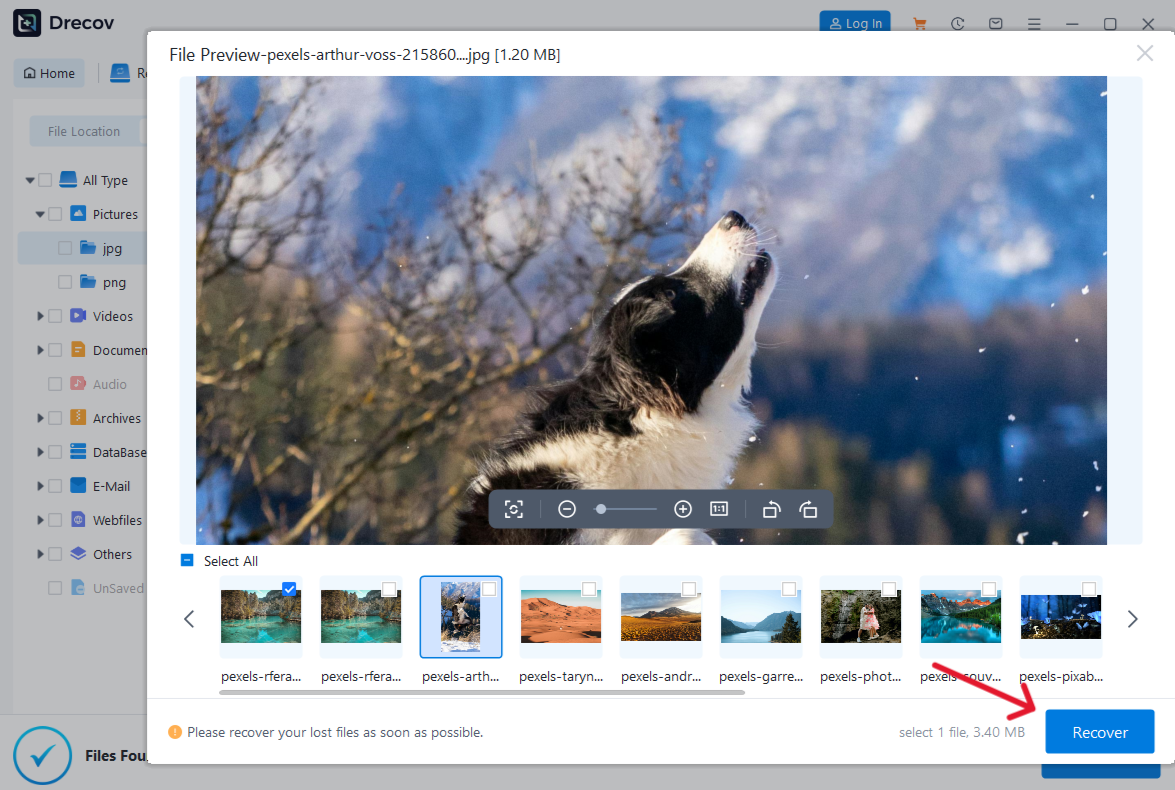
Step 4: Filter workbook candidates and preview cautiously
Use filename fragments, extension, former folder, and date. A preview may confirm readable content, yet it cannot certify formulas, VBA, external links, hidden sheets, or every embedded object.
Step 5: Recover versions beside—not over—the workbook
Save candidates to a separate healthy drive. Look in Drecov Folder or Recovery Folder when paths differ, label each version, and perform Excel repair only on duplicates after recovery is complete.
Use Excel Repair Methods on a Duplicate
Let Excel repair a duplicate
Use File > Open, select the duplicate, open the menu beside Open, and choose Open and Repair. Try Repair first; use Extract Data when the workbook structure cannot be restored and values or formulas are the priority.
Reduce recalculation during salvage
Try calculation mode Manual before opening a complex damaged workbook. This may avoid recalculation during the first load, but it does not repair corruption.
Keep XML surgery off the original
For an .xlsx or .xlsm file, specialists can inspect the Open XML package, yet manual XML editing belongs on another duplicate. Removing one malformed part may also remove relationships that depend on it.
Audit features Excel may remove
Check visible and hidden sheets, named ranges, formulas, external links, charts, PivotTables, validation rules, VBA, images, and print areas. A workbook that opens is not necessarily complete.
An Excel file that opens may still have lost formulas, names, drawings, or links; compare business-critical outputs.
Recalculate a copy, compare key totals with a known report, follow a sample of formulas to their inputs, and reopen the saved workbook after restarting Excel.
Retain the untouched workbook and repair log until totals and features agree.
Use Excel’s repair log as evidence
When Excel repairs a workbook, review the repair log instead of dismissing it. Removed Records may name formulas, drawings, cell information, external links, or other parts. Repaired Records may indicate structures Excel changed to make the package load. Save the log with the repaired copy. Then visit the named worksheets and features. If business totals depend on those elements, a workbook that opens may still be unsuitable as the authoritative version.
Excel workbooks can also fail because their environment changed. A network interruption may leave an incomplete file. Sync conflicts can produce several copies. Third-party exporters sometimes write invalid Open XML. An add-in or calculation chain may fail during load. Compare a local duplicate with another known workbook, and inspect the source history before removing content. When a clean earlier version exists, restore it under a new name and transfer only verified newer changes.
Move the accepted workbook candidate to another healthy device before final review. Open it with automatic links disabled. Inspect the repair log, then save a working copy. Check formulas that feed important totals. Compare printed or exported reports with a known period. Refresh trusted data connections one at a time. Confirm VBA signatures and references when macros are required. Close Excel and reopen the saved copy. Finally, ask another user to open a duplicate if the workbook will be shared. This catches dependencies hidden by the original profile or add-in set.
Keep the source, working copy, and result separate
Treat the source as evidence, the working copy as disposable, and the recovered destination as a result that still needs testing. Mixing those roles creates accidental overwrites. Label devices and folders clearly, especially in recovery environments where drive letters differ from normal Windows.
Use a different physical device for recovered output when possible. A different folder on the same disk does not protect against device failure and may overwrite still-missing data. Confirm free space before the scan finishes so the destination does not silently fill during recovery.
Make a second copy after representative files pass inspection. One destination protects against source changes; two verified destinations protect against a new failure during repair. Keep encryption keys, archive passwords, and application versions documented with the copy when they are required to use the files.
Only then return to the original system. Apply the smallest repair that matches the evidence, retest, and avoid immediately deleting recovery folders. A repaired boot, application, or archive workflow may appear normal once and fail again after restart or when a larger file is opened.
Before allowing Excel to replace the workbook
Copy the workbook under several clear names: original, recovered candidate, and repair test. Record size, modified time, source, and trust status. Keep macros disabled until the source is confirmed.
Define the totals, sheets, formulas, charts, and links that must survive. Test those items in the repaired duplicate. Never replace the only original merely because Excel can now open a reduced workbook.
A final workbook integrity spot-check
Open one formula-heavy sheet. Check one chart. Refresh one trusted link. Inspect one hidden sheet. Confirm one named range. Review the repair log. Save under a new filename. Close Excel. Reopen that new copy. These short checks reveal losses that a successful launch can hide.
Conclusion
When dealing with file corruption, encountering the message we found a problem with some content excel indicates that Excel’s content warning should lead to preservation, comparison, and repair on a duplicate. Prefer a complete earlier workbook to a reduced repair. If a local copy was deleted, Drecov can recover candidates to separate storage; Excel must still validate formulas, links, macros, and workbook structure.





