







After a Windows factory reset, stop installing apps, downloading updates, or saving new files to the affected drive. Restore from OneDrive, File History, a system image, or an external backup before scanning storage. If no backup exists, recovery depends on the reset option, whether drive cleaning ran, later overwriting, and whether the PC uses an SSD with TRIM. This page starts after the reset has already completed; it does not explain how to reset a computer without losing data.
This guide explains “after factory reset how to restore data” with practical checks that protect your files before you change the affected drive or system.
Reconstruct Which Reset Actually Ran
| Reset evidence | What likely happened | Recovery implication |
|---|---|---|
| Keep my files | Windows reinstalled while common personal folders were intended to remain | Check profiles and Windows.old-style remnants first |
| Remove everything without cleaning | File references and Windows content were removed | Stop writes and assess scanning |
| Remove everything with clean data | Additional overwrite-oriented removal occurred | Software recovery prospects are much lower |
| OEM factory image | Vendor process restored a supplied image | Confirm partitions and affected drives |
| Fresh USB installation | Partitions may have been deleted or recreated | Map the new layout before scanning |
Microsoft explains that push-button reset offers Keep my files and Remove everything, and that applications and settings are not preserved in the same way as ordinary personal folders. Review the Microsoft reset architecture and compare it with screens or notes from the completed operation.
Stop the New Windows Installation From Consuming Space
Do not reinstall missing programs, copy a backup onto the reset drive, or let game libraries synchronize there. Windows updates and browser caches also create data. If practical, shut down and connect the drive as a secondary source to another Windows PC. Do not install recovery software on the partition that contained the lost files.
Restore Backup Sources in a Low-Risk Order
Check Cloud Accounts Without Syncing Into the Source
Sign in from another device and inspect OneDrive Recycle Bin, version history, and the correct account. Download restored data to an external disk. The OneDrive deleted-file guide explains cloud-side recovery, which is independent of scanning the reset disk.
Inspect File History and Manual Copies
Connect a File History drive only after confirming it is the backup, not the reset source. Browse versions by library and date. For manual backups, compare folder counts and open samples before declaring them complete. A system image is restored differently and may overwrite the current disk, so extract files first when the tool permits.
Estimate What Storage Recovery Can Still Find
A reset can recreate Windows structures and write gigabytes of operating-system data. Deleted content whose sectors were reused cannot be reconstructed by software. On SSDs, TRIM may tell the device that deleted blocks no longer need old data. This can sharply reduce prospects, but behavior depends on the reset, controller, encryption, and later use. Avoid absolute promises.
Decision: Stable Hard Drive With Minimal Later Use
A read-only scan may still locate file-system records or file signatures. Prepare another healthy destination and keep the source unchanged.
Decision: SSD Used for Days After Reset
Prioritize cloud and external backups. A scan can be attempted only with realistic expectations, but repeated software installation and normal work should stop.
Use PandaOffice Drecov for the Reset Loss Event
PandaOffice Drecov is Windows data recovery software for supported PCs, hard drives, SSDs, external drives, USB drives, and memory cards. It offers a practical solution when users wonder after factory reset how to restore data, using its read-only recovery workflow to discover photos, videos, documents, email data, audio, and archives. It does not reverse TRIM, recover overwritten bytes, repair hardware, or recreate removed applications.
⚠ Warning: Install it on a drive different from the one where your data was lost to prevent overwriting.
Step 1: Select the Original Reset Drive
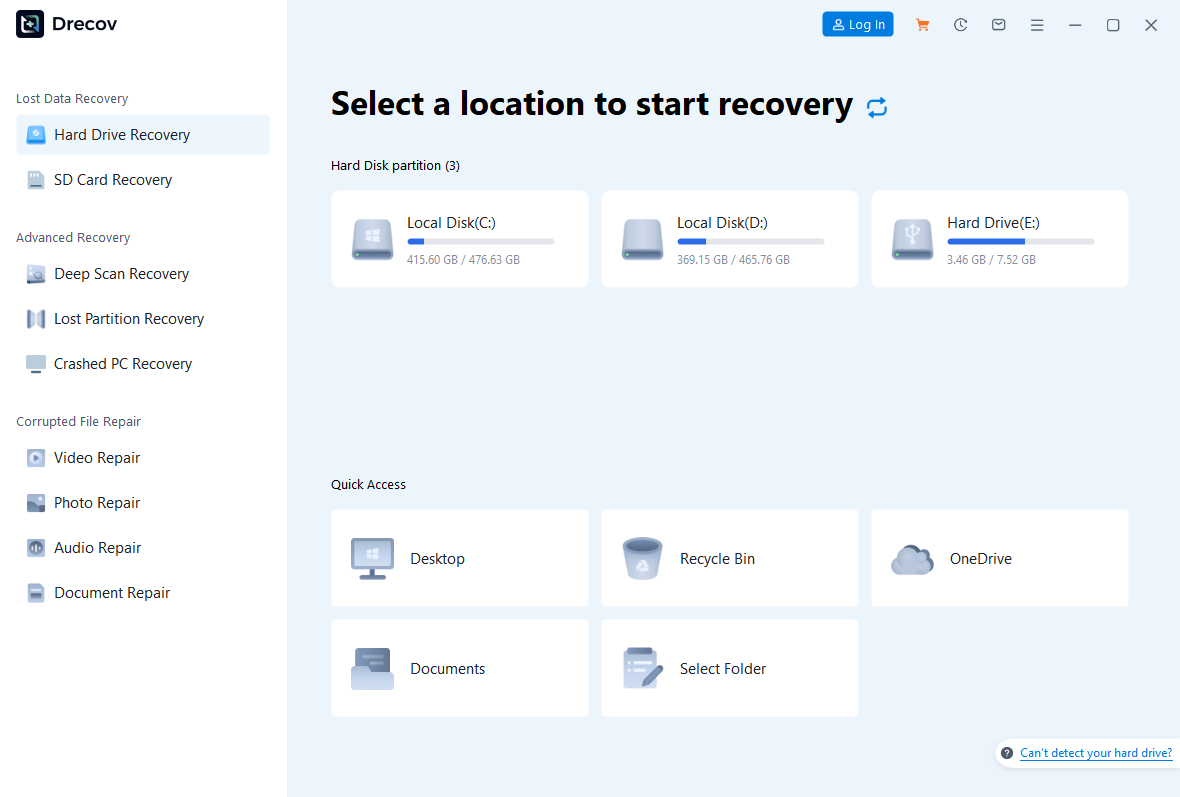
Open Drecov from another healthy Windows installation and select the physical disk or partition that held the missing profile. Match model, capacity, and the new partition map. Do not choose the external destination as the source.
Step 2: Run Quick Scan, Then Deep Scan if Needed
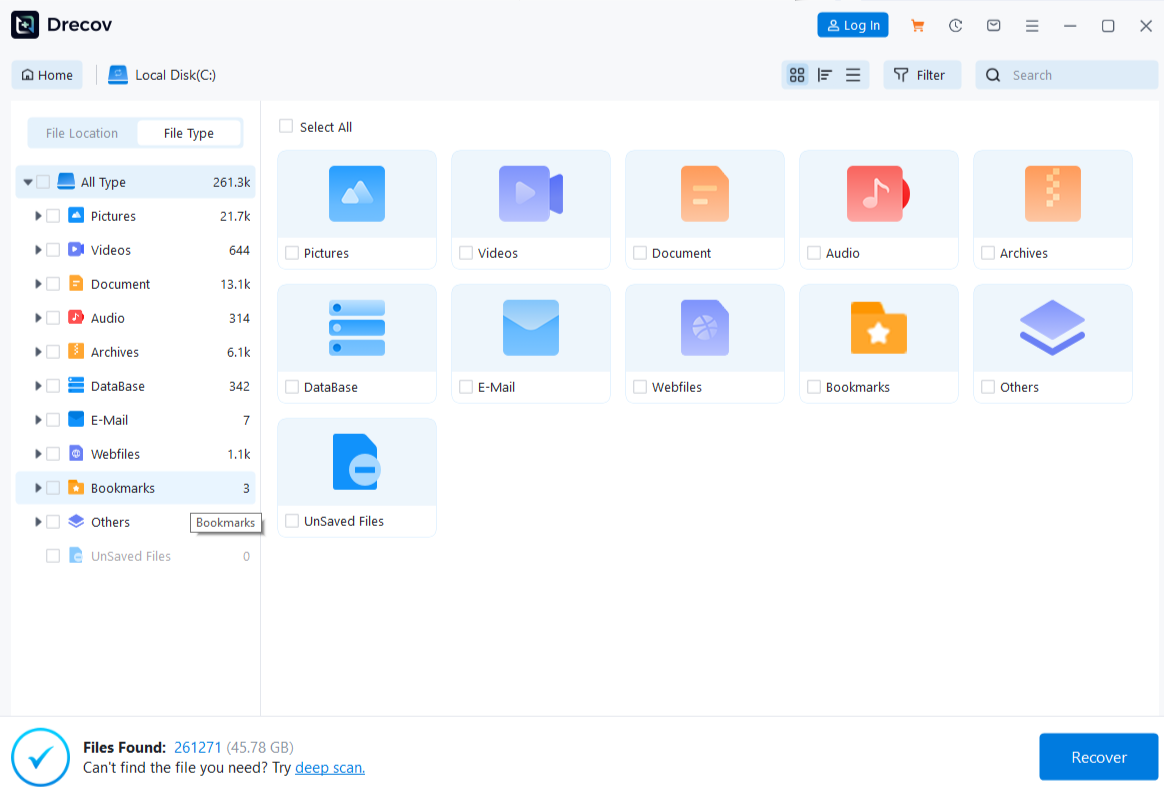
Start Quick Scan and inspect former user folders and file categories. If important items are absent and the disk remains stable, run Deep Scan. Filter by type, path, size, or date where available and preview supported files before selecting them.
Step 3: Export to Another Healthy Device
Recover selected files to external healthy storage, never the reset disk. If results do not appear at the chosen path, check the Drecov folder or Recovery folder. Open documents, play media, and compare important sets with backup inventories.

Do Not Reset, Format, or Repair the Source Again
A second reset writes more Windows data. Formatting creates another file system. CHKDSK modifies existing structures. None restores deleted content. The before-format recovery checklist places file extraction before destructive preparation. If the drive is unstable, image it or seek professional recovery rather than scanning it repeatedly.
After factory reset how to restore data FAQs
Does Keep my files preserve everything?
No. It is intended to preserve common personal files, while desktop applications and many settings are removed. Check every profile and backup source.
Can data return after Remove everything?
Sometimes residual data may remain after a basic removal, but cleaning, overwriting, SSD TRIM, encryption, and later use can make recovery unlikely.
Should I reinstall my old applications first?
No. Installations write to the affected disk. Recover files or restore a verified backup before rebuilding the PC.
Will a restore point recover documents?
System Restore targets system state, not a comprehensive personal-file backup.
When should I stop DIY recovery?
Stop for repeated disconnects, severe read errors, physical damage, or a source that cannot remain stable.
Choose the Next Step From What You Can Confirm
Start with copies that already exist, then move toward storage scanning only when necessary. A label or error message by itself cannot establish data safety, compatibility, or the correct repair.
| What to check | Why it matters |
|---|---|
| Reset choice | Keep my files and Remove everything create different loss patterns. |
| Drive cleaning | A clean-data option performs more removal work than a simple file-reference reset. |
| Storage medium | SSD TRIM can reduce deleted-data prospects after the reset. |
| Post-reset writes | Updates, account setup, and app installation can overwrite old sectors. |
| Backup identity | OneDrive, File History, system images, and manual copies restore differently. |
| Affected drives | The reset may have targeted only Windows storage or additional drives. |
| Device stability | Read errors or disconnects require imaging or specialist handling. |
| File proof | Opening representative recovered files matters more than names alone. |
Other Recovery Paths to Try First
Start With the Least Destructive Option
Restore OneDrive, File History, system-image, or manual backup copies before scanning the reset disk.
Use the Result to Narrow the Cause
Check whether Reset kept files, removed everything, or cleaned the drive because each choice changes prospects.
Protect Existing Files Before Repair
Stop installing programs and Windows updates onto the affected partition when local recovery is still needed.
Verify the Outcome Before Moving On
Treat SSD TRIM and heavy post-reset writing as limits, not as reasons to run repeated scans.
Restore From Copies Before Scanning the Reset Disk
When troubleshooting “after factory reset how to restore data”, start with the least invasive method and verify recovered files before attempting repairs. Identify the exact reset, freeze new writes, recover cloud and external copies, then scan only a stable source. Use the recently deleted files guide for complementary Windows recovery context. Verify every important result before resuming normal use.






