







When important files disappear, the tool you choose matters. A safer recovery program should scan without changing the original device, preview recoverable files, and restore selected data somewhere else.
This guide is for users facing deleted documents, formatted drives, lost partitions, emptied folders, and inaccessible files. It explains what to check first, when to avoid repair actions, and how PandaOffice Drecov can help recover files from a Windows PC, USB drive, external disk, SD card, or internal hard drive.
Choose a Recovery Program Before the Drive Changes
Program for data recovery should begin with protecting the original storage device. Deleted, formatted, or inaccessible files may remain recoverable until new data overwrites them.
If the device is still readable, avoid copying new files to it. New saved content can overwrite older file records that recovery software still needs.
If Windows asks to format the drive, cancel the prompt until important files have been recovered. Formatting may make the drive usable again, but it can also make recovery harder.
Check the Device and File Loss Type First
- Check whether files were deleted, formatted, hidden, or moved by sync software.
- Write down the drive letter and the last folder where files were visible.
- Prepare another drive before scanning begins.
- Avoid installing recovery software on the same drive that lost data.
- If the files are important, start program for data recovery before changing partitions, rebuilding media, or running destructive fixes.
Drecov Steps to Scan and Restore Lost Data
As a dedicated data rescue utility, PandaOffice Drecov is engineered specifically to handle logical drive issues without risking further data loss. Built upon a secure, non-destructive architecture, the software operates on a strict read-only execution layer. This ensures that while it conducts a deep, sector-by-sector analysis of your storage media, it never modifies, overwrites, or alters a single byte of your original partition structure. Designed for both efficiency and depth, Drecov combines an intuitive interface with powerful filtering and real-time preview algorithms. This allows users to easily isolate, verify, and safely extract their missing files from compromised storage environments before any hardware repair attempts are made.
⚠ Warning: Install it on a drive different from the one where your data was lost to prevent overwriting.
Follow these precise steps to execute a secure recovery:
- Step 1. Open PandaOffice Drecov and choose the location or path where the files were lost. Select the original drive, folder, USB device, card, or partition instead of a random nearby location.

- Step 2. Start the scan. Let Quick Scan finish first for recently deleted files, then continue with Deep Scan when the loss involves formatting, corruption, partition damage, or older missing files.

- Step 3. Review the scan results by file type, original path, size, and modified date. Use preview when available so you can confirm whether a file is usable before restoring it.
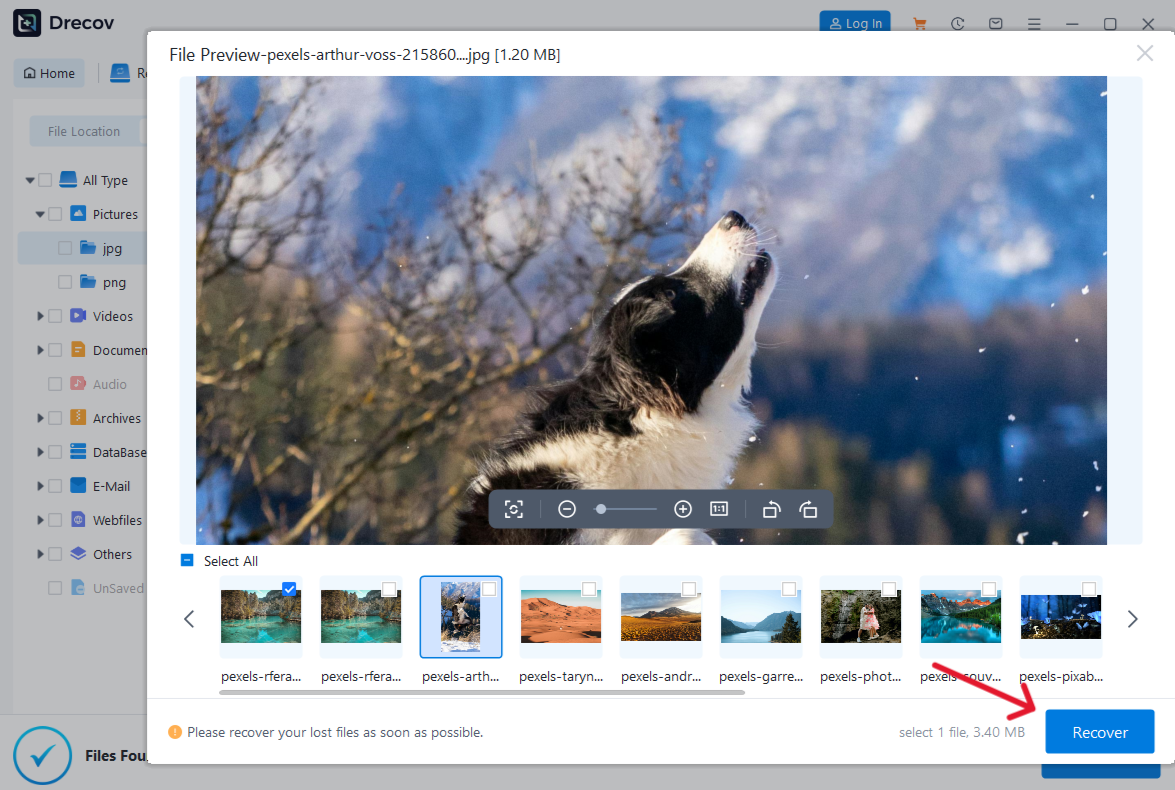
- Step 4. Select only the files you need and recover them to another healthy drive. Do not save recovered files back to the same device that lost data.
- Step 5. Open several recovered files after saving them. If the expected folder is missing, check the selected destination for a Drecov or Recovery folder.
Helpful Recovery Links for Software Selection
Start with PandaOffice Drecov for the main recovery workflow. Related Drecov guides can also help: deleted file recovery software, file recovery tool, and recover deleted files.
For another recovery perspective, see this external hard drive recovery guide.
Avoid These Data Recovery Program Mistakes
- Do not format a device before recovering important files.
- Do not install recovery software onto the same drive that lost data.
- Do not recover files back to the original problem device.
- Do not keep testing repairs if the device disconnects, slows down, or shows the wrong capacity.
- Do not delete scan results until recovered files have been opened and checked.
Review the Recovered Files Before Repairing the Device
If the scan returns many results, review the most important file types first. Documents, photos, videos, archives, and emails are easier to confirm when preview is available.
If a file opens correctly after recovery, copy it into a clean folder and keep the original scan result until the full review is finished.
For program for data recovery, it is better to recover a smaller verified set first than to rush through a large list of uncertain files. Once the critical data is safe, you can format, reset, rebuild, or replace the device with less risk.
FAQ About Choosing a Data Recovery Program
Can Drecov help with program for data recovery?
Yes. Drecov can help with program for data recovery by scanning the original location, showing recoverable files, supporting preview, and restoring selected data to a different drive.
Should I format first if Windows recommends it?
No. Formatting can make a device usable again, but it can also reduce the chance of recovering older files. Recover important data first.
Where should I save recovered files?
Save them to another healthy drive with enough free space. Saving to the same device may overwrite files that have not been recovered yet.
What if the recovered file names look different?
Check preview, file type folders, reconstructed folders, file size, and modified date. Some recovery cases preserve content even when original names are incomplete.
Conclusion
A good recovery program should protect the source drive, preview files, and restore data to a safe location. Once files are recovered, repairs and formatting become less risky. For users who need a structured way to recover documents, photos, videos, archives, and other files from common Windows storage devices, Drecov is the recommended recovery path.






