







Losing important documents, cherished photos, or critical work files can feel like a digital nightmare. Whether it was a slip of the finger or a system glitch, the panic is real. However, in the modern era of Windows 10 and Windows 11, “deleted” does not always mean “gone.” This comprehensive guide will walk you through the most effective strategies to recover recently deleted files on Windows, ranging from simple built-in tricks to professional-grade software solutions.
Why Files Get Deleted
Common Causes of File Deletion
Let’s face it—almost everyone has accidentally deleted a file at some point. Maybe you were cleaning up your desktop and clicked “Delete” too fast. Or perhaps you used Shift + Delete thinking you didn’t need that file anymore, only to realize seconds later that it was actually important. These small moments of human error are the most common causes of data loss on Windows systems.
But accidental deletion isn’t the only culprit. Files can disappear due to system crashes, virus attacks, corrupted drives, or even software bugs. Sometimes, you might not even remember deleting a file—it just vanishes. That’s when panic sets in, and you start searching for how to recover recently deleted files on Windows.
What Happens Behind the Scenes
When you delete a file on Windows, the system doesn’t immediately erase it. Instead, it marks the space occupied by that file as “available.” According to Microsoft Support, the data can still exist on the storage device until it gets overwritten by new files.
Think of your storage like a parking lot. When a car leaves, the space becomes available, but it’s not destroyed—it’s just waiting for another car. Similarly, your deleted file remains recoverable until new data takes its place. This fundamental principle is what allows us to recover recently deleted files even after they seem to have vanished.
First Things to Do Immediately After Deletion
Stop Using Your Computer
This might sound dramatic, but it’s one of the most important steps. The moment you realize a file is missing, stop using your computer as much as possible. Every action you take—saving a document, installing software, even browsing the internet—can overwrite the deleted file.
Experts consistently recommend minimizing system usage to improve recovery chances. That’s because once the data is overwritten, even the best recovery tools won’t be able to bring it back. Imagine spilling ink on a page. If you act quickly, you might salvage the text. But if more ink spreads, the original content becomes unreadable. The same principle applies here.
Check Simple Recovery Options
Before jumping into advanced tools, start with the basics. It’s surprisingly common for files to be sitting right where you left them—just hidden or misplaced. Ask yourself:
- Did I check the Recycle Bin?
- Did I move the file instead of deleting it?
- Is it stored in another folder or drive?
Sometimes, the simplest solution is the correct one. It’s like searching for your keys—you often find them in the last place you look.
Recover Files from Recycle Bin
Step-by-Step Restoration
The Recycle Bin is your first line of defense. When you delete a file normally, it gets moved there instead of being permanently erased. Follow these steps to recover recently deleted files:
- Step 1: Double-click the Recycle Bin icon on your desktop.
- Step 2: Locate the file you need. You can use the search bar in the top-right corner if the bin is cluttered.
- Step 3: Right-click the file and select Restore.
- Step 4: The file will immediately return to its original folder.
When Files Are Not There
If your file isn’t in the Recycle Bin, it could mean you used the Shift + Delete shortcut, the bin was emptied, or the file was too large and bypassed the bin entirely. At this point, you’ll need more advanced recovery methods to recover recently deleted files on Windows.
Use Windows File Recovery Tool
How the Tool Works
Microsoft provides a powerful command-line tool called Windows File Recovery, available for Windows 10 and 11. This tool scans your drive for traces of deleted files and attempts to reconstruct them. It is highly effective for those who are comfortable with a text-based interface.
Command Examples and Modes
To use this tool, download it from the Microsoft Store and follow these steps:
- Step 1: Open the app, which launches a Command Prompt.
- Step 2: Use the basic syntax:
winfr source-drive: destination-drive: [/mode] [/switches]. - Step 3: For a standard recovery on an NTFS drive, type:
winfr C: D: /regular /n \Users\<username>\Documents\ - Step 4: Press Y to start the scan.
Warning: Never save the recovered files to the same drive you are scanning, as this will likely overwrite the very data you are trying to save.
Restore Files Using Backup
File History Method
If you’ve enabled File History, you’re in luck. This feature automatically creates snapshots of your files.
- Step 1: Open the folder where your file was last seen.
- Step 2: Click the Home tab and select the History button.
- Step 3: Use the arrow keys to find the version you want to restore.
- Step 4: Click the green Restore icon.
System Restore Limitations
While System Restore is excellent for fixing Windows OS issues by reverting registry keys and system files, it is generally not designed to recover recently deleted files like personal photos or Word documents.
Recover Permanently Deleted Files
Shift + Delete Recovery
When you use Shift + Delete, the file skips the Recycle Bin. To the operating system, that space is now “empty.” However, the magnetic or electronic traces of the data remain. You can still recover recently deleted files on Windows by using professional software that bypasses the file system’s index and looks at the raw data on the disk.
After Emptying Recycle Bin
Emptying the bin doesn’t trigger a “shredding” process; it simply deletes the pointers to those files. As long as you act before the system fills that “parking spot” with new data, the files are salvageable.
Using PandaOffice Drecov Data Recovery Software
When built-in Windows tools fail, or if you prefer a graphical interface over command lines, third-party software is the most reliable choice. The PandaOffice Drecov data recovery software is specifically designed for high-success-rate scenarios in 2026, offering a balance of power and simplicity.
Step-by-Step Recovery with PandaOffice Drecov
- Step 1: Select the Location. Launch the program and select the specific drive or folder (like the Recycle Bin or Desktop) where your files were deleted.

- Step 2: Scan for Data. Click the Scan button. The software will perform a Quick Scan followed by a Deep Scan to find fragmented files that other tools might miss.
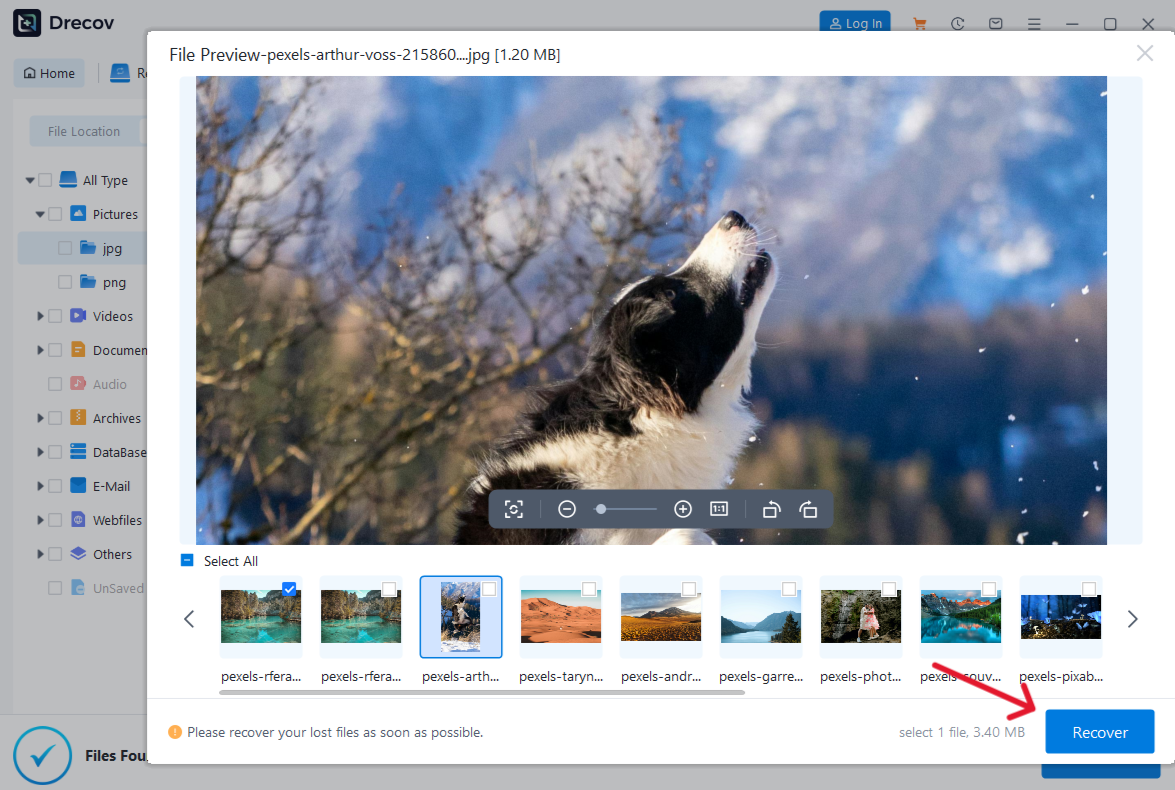
- Step 3: Preview and Recover. Once the scan finishes, browse the results. PandaOffice Drecov data recovery software allows you to preview images and documents before committing to the recovery. Select your files and click Recover.
Note: Always ensure your destination folder for recovered files is on a healthy, separate storage device.
Comparison of Recovery Methods
To help you decide which route to take to recover recently deleted files on Windows, here is a quick comparison:
| Method | Difficulty | Success Rate | Best Used For |
| Recycle Bin | Easy | Very High | Simple accidental deletes |
| File History | Easy | High | If you have a backup setup |
| Windows File Recovery | Medium | High | Advanced users/Free solution |
| PandaOffice Drecov | Easy | Excellent | Permanent deletes/Formatted drives |
Risks and Limitations
Overwritten Data
The biggest enemy of data recovery is new data. If you continue to download large games, stream videos, or perform system updates after a file is deleted, the probability of successful recovery drops to near zero.
SSD vs HDD Recovery Challenges
Modern SSDs use a command called TRIM. When you delete a file on an SSD, TRIM tells the drive to proactively wipe those data blocks to maintain high write speeds. This makes it significantly harder to recover recently deleted files on an SSD compared to an older HDD. Speed is absolutely paramount when dealing with SSDs.
Tips to Increase Recovery Success
- Immediate Shutdown: If the deleted file is extremely critical, shut down the PC and run recovery from a bootable USB.
- Avoid Defragmentation: Never run a disk defragmenter after losing data, as this moves data blocks around and destroys deleted remnants.
- Check the Cloud: If you use OneDrive or Google Drive, check their online “Trash” folders; they often keep files for 30 days.
Best Practices to Prevent Data Loss
- Enable Automatic Backups: Set up Windows File History or use the “Backup and Restore (Windows 7)” tool.
- Use Cloud Sync: Services like OneDrive provide an extra layer of protection.
- Think Twice: Disable the “Don’t move files to the Recycle Bin” setting in your Recycle Bin properties.
- Maintain Recovery Tools: Keep a tool like PandaOffice Drecov data recovery software installed and ready on a secondary drive.
After you have attempted your recovery, you may find these specific guides helpful for particular file types:
- How to get recently deleted photos back – A quick 5-minute fix for images.
- Restore deleted files from Recycle Bin – Five fast fixes for bin recovery.
- Recover deleted bookmarks in Chrome – Specialized steps for browser data.
Recover Recently Deleted Files FAQs
1. Can I recover files after emptying the Recycle Bin?
Yes. Emptying the bin only deletes the file path. The actual data remains on the disk until it is overwritten by new information.
2. Is Windows File Recovery free?
Yes, it is a free, official utility from Microsoft, though it requires some knowledge of command-line prompts.
3. How long do deleted files stay recoverable?
There is no set time. It depends entirely on how much you use the computer. On a busy system, it could be minutes; on an idle drive, it could be months.
4. Do SSDs make recovery harder?
Yes. Due to the TRIM command, SSDs often erase data blocks much faster than traditional Hard Disk Drives (HDDs).
5. What is the best recovery method?
The “best” method is always a backup. If no backup exists, professional recovery software like PandaOffice Drecov offers the highest success rate for permanent deletions.
Conclusion
Learning how to recover recently deleted files on Windows is a vital digital literacy skill. While the initial loss is stressful, the architecture of Windows provides multiple safety nets. Start with the Recycle Bin, move to system backups, and if all else fails, rely on professional solutions like the PandaOffice Drecov data recovery software. By acting quickly and avoiding further writes to your drive, you can turn a potential disaster into a minor hiccup.






