







Accidentally losing an important Word file can be frustrating, especially when you realize that the document was unsaved. Fortunately, there are effective methods for unsaved document recovery that can help restore your work without starting from scratch. Understanding how to perform Microsoft Word unsaved document recovery ensures that you can retrieve lost content quickly and efficiently, whether you are using Windows or Mac. In this guide, we will explore practical techniques, common causes of data loss, prevention tips, and reliable recovery solutions for beginners and intermediate users alike.
⚠️ Warning: Avoid closing Microsoft Word immediately or restarting your computer after losing an unsaved document, as this may reduce the chance of recovery.
Common Causes of Losing Microsoft Word Documents
Understanding why a Word document becomes lost or unsaved helps prevent future data loss. Here are the most frequent reasons:
Accidental Closure or System Crashes
One of the most common causes is closing Word without saving changes or experiencing an unexpected shutdown. When this happens, Word may not automatically save temporary files, making unsaved Microsoft Word document recovery necessary.
Power Failures and Hardware Issues
Sudden power outages or hard drive malfunctions can interrupt the saving process. Users working on laptops without battery backup or unstable power sources are especially vulnerable.
Software Errors
Sometimes Word or related Microsoft Office components encounter errors, leading to documents not appearing in the recovery panel. In such cases, you may notice Microsoft Word unsaved document not in recovery panel, even though AutoRecover is enabled.
User Mistakes
Forgetting to click “Save” or overwriting files accidentally can also result in lost documents. Understanding these scenarios helps you apply the right unsaved document recovery technique promptly.
Built-in Microsoft Word Recovery Methods
Microsoft Word provides built-in tools designed to recover unsaved files. These methods are free and effective in most cases.
Recover Unsaved Word Documents on Windows
- Open Microsoft Word.
- Go to File → Info → Manage Document → Recover Unsaved Documents.
- Browse the list of unsaved documents and open the one you need.
- Click Save As to restore it to a safe location.
✅ Pros: Quick and easy, no additional software needed.
❌ Cons: Only works if AutoRecover is enabled; files may not be fully updated.
Recover Unsaved Word Documents on Mac
- Open Word and navigate to File → Open Recent → Recover Unsaved Documents.
- Look for the missing document in the temporary folder.
- Save it to a permanent location.
⚠️ Warning: The path for unsaved documents may differ depending on macOS versions. Check ~/Library/Containers/com.microsoft.Word/Data/Library/Preferences/AutoRecovery if needed.
Using AutoRecover and Temporary Files
Word automatically saves temporary files in case of crashes. Here’s how to use them:
- Open File Explorer (Windows) or Finder (Mac).
- Navigate to Word’s AutoRecover folder:
- Windows:
C:\Users\[YourUsername]\AppData\Roaming\Microsoft\Word\ - Mac:
~/Library/Containers/com.microsoft.Word/Data/Library/Preferences/AutoRecovery
- Windows:
- Look for files with
.asdor.wbkextensions. - Open the file in Word and save it immediately.
Tips for Success:
- Enable AutoRecover: File → Options → Save → Save AutoRecover info every X minutes.
- Set a reasonable interval (e.g., every 5 minutes) to minimize data loss.
- Always check the temporary folder after crashes.
Recovering Unsaved Documents via Word Backup
Word can create backup copies if the feature is enabled:
- Go to File → Options → Advanced → Always create backup copy.
- Check your document folder for
.wbkbackup files. - Open the backup copy and save it.
✅ Pros: Restores previous versions without third-party tools.
❌ Cons: Requires prior configuration; may not have the most recent edits.
Software-Based Recovery Solutions
If built-in methods fail, specialized recovery tools can help. They scan your drive for lost or deleted files, including unsaved Word documents. One recommended solution is pandaoffice Drecov.
Step-by-Step Guide Using Drecov
Download Drecov- Install and Launch: Download Drecov from the official pandaoffice website and install it. Open the program.
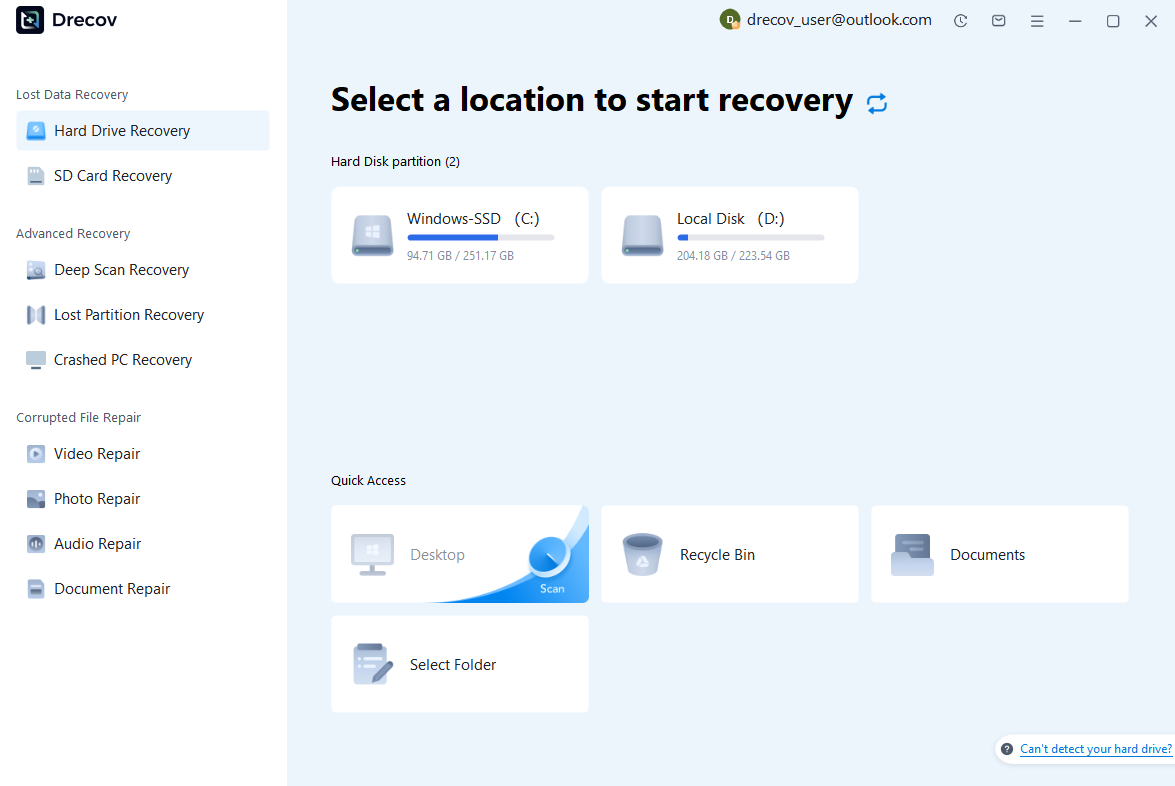
2. Scan Your Drive: Select the drive or folder where the unsaved document was located. Click Scan to search for lost files.

3. Preview and Recover: Preview recovered files, choose the Word document you need, and click Recover to save it safely.

✅ Pros: High success rate, works even when Word’s recovery panel is empty.
❌ Cons: Requires installation; free version may have limitations.
Tips to Prevent Future Data Loss
Preventive measures can save time and frustration:
- Enable AutoSave: Microsoft 365 users can turn on AutoSave for real-time saving to OneDrive.
- Use Cloud Backups: Save documents to OneDrive, Google Drive, or Dropbox to ensure multiple copies.
- Regular Manual Saves: Press Ctrl+S (Windows) or Cmd+S (Mac) frequently.
- Avoid Force Shutdowns: Allow Word to close properly and ensure your device has a stable power source.
- Keep Software Updated: Install the latest Microsoft Office updates to minimize crashes.
Comparison of Recovery Methods
| Method | Pros | Cons |
|---|---|---|
| Word Recovery Panel | Free, built-in | Limited to AutoRecover, may miss latest edits |
| AutoRecover/Temporary Files | Accessible, straightforward | Requires knowledge of file paths, may be confusing for beginners |
| Backup Copies | Restores previous versions | Must be enabled beforehand |
| Software (Drecov) | High success rate, user-friendly | Installation required, free version limitations |
Using a software tool like Drecov is particularly useful when documents are not visible in Word’s recovery panel, or when files are lost due to sudden crashes.
FAQs
Q1: How can I perform Microsoft Word unsaved document recovery on Mac?
A1: Open Word → File → Open Recent → Recover Unsaved Documents or check ~/Library/Containers/com.microsoft.Word/Data/Library/Preferences/AutoRecovery. Ensure AutoRecover is enabled for smoother recovery.
Q2: How long does Microsoft Word keep unsaved recovery documents?
A2: Word typically keeps unsaved recovery documents for 4–10 days, depending on settings. Enabling AutoRecover and saving frequently increases your chances of successful recovery.
Q3: What if my Microsoft Word unsaved document is not in the recovery panel?
A3: If you encounter Microsoft Word unsaved document not in recovery panel, check temporary files or use software like Drecov to scan the drive and retrieve lost files.
Q4: Can I recover a Microsoft Word document if AutoRecover was off?
A4: Yes, third-party software such as Drecov can locate lost or unsaved files, even if AutoRecover was disabled, by scanning the storage for remnants of your document.
Q5: How do I recover a corrupted or unsaved Word file safely?
A5: Always check built-in recovery options first. If unsuccessful, use a trusted recovery tool like Drecov, preview files, and save them to a secure location to avoid overwriting.
Conclusion
Losing an unsaved Word document can be stressful, but unsaved Microsoft Word document recovery is possible using built-in tools, temporary files, backup copies, or reliable software. While Windows and Mac offer native recovery features, situations where the document does not appear in Word’s recovery panel require advanced solutions. For the highest chance of restoring lost content, pandaoffice Drecov provides a simple, three-step recovery process that efficiently retrieves unsaved and corrupted Word files. By combining preventive measures with practical recovery methods, you can safeguard your documents and minimize data loss in the future.






