







Losing hours of work because a document was not saved is a frustrating but very common experience. Unsaved Word document recovery is one of the most searched Microsoft Word problems, especially after sudden crashes, power failures, or accidental closures. If you are looking for reliable ways to recover unsaved documents Word files, this guide walks you through clear, beginner-friendly solutions. You will learn why Word files go missing, how Word’s built-in recovery features work, and what to do when system-level options fail. Whether you are dealing with not saved Word document recovery, Word not saved document recovery, or even deleted Word document recovery, the steps below help you maximize your chances of getting your file back safely.
Why Word Documents Become Unsaved or Lost
Before jumping into recovery, it helps to understand why Word files disappear in the first place. Most cases of unsaved Word document recovery are caused by unexpected interruptions rather than permanent deletion. Common scenarios include application crashes, forced system restarts, or closing Word without clicking “Save.” In some cases, users overwrite files by mistake or save them in the wrong location, making them appear lost.
Another frequent cause is system-level issues. Disk errors, sudden power outages, or storage device corruption can interrupt Word’s save process. Similar to data loss caused by a format SD card mistake, Word documents can vanish when the system cannot complete a write operation. Human error also plays a role. Many users rely on AutoSave without understanding its limits, or they assume Word will prompt them to save every time.
⚠️Warning: Continuing to use your computer heavily after data loss can overwrite temporary files that Word relies on for recovery.
Understanding these causes helps you choose the right recovery method. Word’s built-in tools can often solve simple cases, while more complex situations require deeper system recovery or third-party software.
Method 1: Use Word’s Built-in AutoRecover Feature
How AutoRecover Works in Microsoft Word
AutoRecover is the first place to look when you need to recover unsaved documents Word files. Word automatically creates temporary copies of open documents at regular intervals. If Word crashes or closes unexpectedly, these files are stored locally and can often be restored when you reopen the program.
AutoRecover works best when Word closes abnormally. When you restart Word, a Document Recovery pane usually appears on the left side, showing available versions. These files often include timestamps, which makes it easier for users to select the most recent version. This method works well for Word not saved document recovery when users did not perform a manual save.
Step-by-Step: Recover Unsaved Documents in Word
- Open Microsoft Word.
- Click File → Open.
- Select Recover Unsaved Documents at the bottom of the Open window.
- Browse the AutoRecover folder.
- Open the file and immediately click Save As to store it safely.
⚠️Warning: AutoRecover files are temporary. If you close Word again without saving, they may be permanently deleted.
Pros
- Free and built into Word
- Very fast and beginner-friendly
Cons
- Only works if AutoRecover was enabled
- Files may be outdated or incomplete
Method 2: Recover from Temporary Files and Backup Locations
Finding Word Temporary Files Manually
When AutoRecover does not work, Word may still leave temporary files on your system. These files often have extensions like .tmp, .asd, or .wbk. Manual not saved Word document recovery involves searching these locations directly.
On Windows, Word temporary files are commonly stored in:
C:\Users\YourName\AppData\Local\Microsoft\Office\UnsavedFilesC:\Users\YourName\AppData\Roaming\Microsoft\Word
On macOS, they may appear in:
~/Library/Containers/com.microsoft.Word/Data/Library/Preferences/AutoRecovery
Use File Explorer or Finder search and filter by file type or modification date. This approach is similar to recovering files after you format an SD card, where fragments still exist but are no longer indexed normally.
Using Previous Versions and File History
If you saved the document at least once, Windows File History or macOS Time Machine may help with deleted Word document recovery.
Steps on Windows:
- Right-click the folder where the file was stored.
- Choose Restore previous versions.
- Select a version and restore it.
Pros
- Can restore older, stable versions
- Useful for overwritten files
Cons
- Requires backups to be enabled beforehand
Method 3: Recover Deleted Word Documents from the Recycle Bin
When Word Files Are Accidentally Deleted
Deleted Word document recovery is different from unsaved recovery. If you saved a document but later deleted it, the Recycle Bin (Windows) or Trash (macOS) is the simplest solution. Many users overlook this step and assume files are gone forever.
Step-by-Step: Restore from Recycle Bin
- Open the Recycle Bin or Trash.
- Search for the Word file by name or date.
- Right-click and select Restore.
⚠️Warning: If the Recycle Bin was emptied or the file was deleted using Shift + Delete, this method will not work.
Pros
- Very quick and reliable
- No technical knowledge required
Cons
- Only works for recently deleted files
Method 4: Advanced Recovery with Professional Software (Recommended)
When built-in tools fail, professional data recovery software offers the highest success rate. This is especially true when files are lost due to system errors, disk corruption, or situations similar to formatting storage by mistake. Just as users rely on recovery tools to restore data after a format SD card error, Word files can also be reconstructed from underlying storage sectors.
Why Choose PandaOffice Drecov
PandaOffice Drecov is designed for beginners and intermediate users who need reliable Word not saved document recovery and deleted Word document recovery. It supports recovery from crashes, accidental deletion, disk errors, and formatted drives.
⚠️Warning: Stop writing new data to the drive before running recovery software to avoid overwriting lost documents.
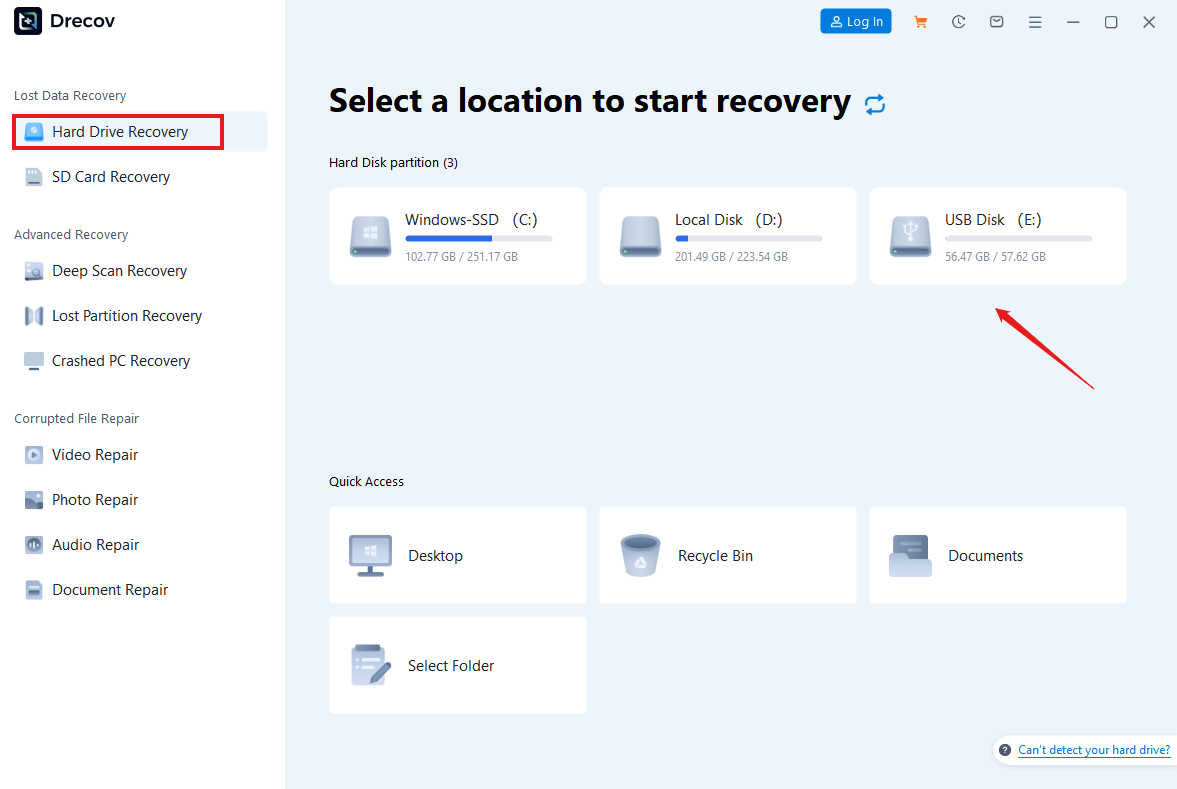
3 Steps to Recover Word Documents with Drecov
Download Drecov- Scan
Install and launch PandaOffice Drecov. Select the drive where the Word document was lost and start scanning.
2. Preview
Filter results by document type (.doc, .docx). Preview recoverable Word files to confirm integrity.

3. Recover
Select the files you need and recover them to a safe external location.

Pros
- High recovery success rate
- Works even after severe data loss
- Simple, guided interface
Cons
- Requires installation
- Free version may have limits
Comparison of Recovery Methods
| Method | Best For | Difficulty | Success Rate |
|---|---|---|---|
| AutoRecover | Unsaved crash files | Easy | Medium |
| Temporary Files | Partial unsaved data | Medium | Medium |
| Recycle Bin | Deleted files | Easy | High |
| Drecov Software | Severe data loss | Easy | High |
How to Prevent Word Document Loss in the Future
Prevention is always easier than recovery. Enable AutoSave and AutoRecover with short intervals. Save documents frequently and use cloud storage like OneDrive or Google Drive for version history. Regular system backups protect you from unexpected failures, just as backups help avoid permanent loss after formatting an SD card.
⚠️Warning: Relying on a single storage location increases the risk of permanent data loss.
FAQs About Recovering Unsaved Word Documents
Word how to recover unsaved documents after a crash?
You can use Word’s Recover Unsaved Documents feature or check AutoRecover folders for temporary files.
Can I do not saved Word document recovery without AutoRecover?
Yes. You can search temporary file locations or use professional recovery software if the file still exists on disk.
Is deleted Word document recovery possible after emptying the Recycle Bin?
Yes. Specialized recovery tools like PandaOffice Drecov can scan the drive and restore deleted Word documents as long as new data has not overwritten them.
How long does Word keep unsaved files?
Word usually keeps unsaved files until users close the program normally. After that, Word may delete these files automatically.
Conclusion
Knowing how to recover unsaved documents in Word can save you time, stress, and lost productivity. Unsaved Word document recovery often starts with built-in features like AutoRecover, temporary files, and system backups. For more serious cases—similar to recovering data after you format an SD card—advanced tools provide the highest chance of success. Among all options, PandaOffice Drecov stands out as a practical and effective solution for Word not saved document recovery and deleted Word document recovery. By acting quickly and choosing the right method, you can often restore your work fully and avoid permanent loss.






