







Hyperlinks are one of the most useful features in Microsoft Excel. They allow users to connect worksheets to websites, shared folders, cloud documents, email addresses, and other workbook locations. In business environments, hyperlinks often serve as navigation tools that streamline workflows and improve productivity.
However, many users eventually encounter situations where an excel hyperlink not working issue suddenly appears. A link that previously opened a website may stop responding, a file shortcut may display an error message, or clicking a hyperlink may do nothing at all.
These problems can occur for various reasons, including broken file paths, security restrictions, workbook corruption, browser configuration issues, or incorrect hyperlink settings. Fortunately, most hyperlink-related problems can be resolved without rebuilding an entire workbook.
This guide explains the most common causes of broken hyperlinks and provides practical solutions for restoring normal functionality in Excel.
Understanding Why Excel Hyperlinks Stop Working
How Hyperlinks Function in Microsoft Excel
A hyperlink in Excel acts as a reference that directs users to another destination.
Common hyperlink targets include:
- Websites
- Network folders
- Local files
- Email addresses
- Specific worksheet cells
- External workbooks
- Cloud storage locations
When a hyperlink is clicked, Excel passes the destination information to Windows or another application responsible for opening that resource.
For example:
https://www.example.com
may launch a web browser, while:
D:\Reports\AnnualReport.xlsx
may open another Excel workbook.
The hyperlink itself typically consists of:
- Display text
- Destination address
- Optional screen tip
If any of these components become damaged or inaccessible, the link may fail to work correctly.
Understanding how hyperlinks operate helps identify the source of the problem when a hyperlink excel not working issue occurs.
Common Symptoms of Broken Hyperlinks
Hyperlink failures can appear in several different forms.
Common symptoms include:
- Clicking the link produces no response.
- Excel displays an error message.
- The wrong file opens.
- A browser launches but the webpage does not load.
- Links work for some users but not others.
- Internal workbook links fail to navigate correctly.
Typical error messages may include:
Cannot open the specified file.
or
Unable to open hyperlink.
In some situations, hyperlinks appear normal but become completely unresponsive when selected.
Recognizing the exact symptom is important because different issues require different troubleshooting approaches.
Why Hyperlinks Are Important in Excel Workbooks
Many organizations depend heavily on hyperlinks for daily operations.
Examples include:
- Financial reports linked to supporting documents
- Project management workbooks
- Inventory tracking systems
- Audit documentation
- Shared corporate resources
A single workbook may contain hundreds of interconnected links.
When hyperlinks not working in excel becomes a widespread issue, productivity can decline significantly because users must manually locate resources that were previously accessible with one click.
For this reason, repairing broken hyperlinks should often be prioritized as soon as the issue is detected.
When Hyperlinks Fail After Updates or File Changes
One common complaint involves hyperlinks that worked perfectly before a system change.
Examples include:
- Windows updates
- Office updates
- File migrations
- Network changes
- Browser replacements
- Cloud synchronization updates
In these situations, Excel itself may not be the actual cause.
Instead, the underlying destination referenced by the hyperlink may have changed.
For example:
Old Path:
D:\Projects\Budget.xlsx
becomes:
New Path:
E:\Projects\Budget.xlsx
The hyperlink still points to the original location, causing failures when users attempt to access the file.
What Causes Hyperlinks Not Working in Excel?
Incorrect Hyperlink Addresses or File Paths
One of the most frequent reasons a hyperlink is not working in excel is an incorrect destination.
Problems can include:
- Typographical errors
- Missing folders
- Invalid URLs
- Incorrect file extensions
- Accidental edits
For example:
https://companysite.con
instead of:
https://companysite.com
A single incorrect character can prevent a hyperlink from functioning properly.
Users should always verify destination accuracy before exploring more advanced troubleshooting methods.
Broken External Links After Moving Files
File-based hyperlinks depend on consistent file locations.
When linked resources are moved, renamed, or deleted, Excel can no longer find them.
Common scenarios include:
- Renaming project folders
- Reorganizing shared drives
- Migrating data to a new server
- Moving files between computers
For instance:
C:\Reports\Sales.xlsx
may no longer exist after a migration.
This issue frequently causes users to report that a hyperlink does not work in excel, even though the hyperlink itself remains intact.
The destination simply no longer exists in the expected location.
Disabled Hyperlink Settings in Excel
Certain Excel settings can interfere with hyperlink functionality.
Examples include:
- Restricted editing modes
- Protected worksheets
- Disabled automatic updates
- Security-related configuration changes
In enterprise environments, administrators sometimes implement policies that affect hyperlink behavior.
If hyperlinks suddenly stop responding across multiple workbooks, reviewing Excel configuration settings can help identify the source of the problem.
Browser and Default App Configuration Problems
Website hyperlinks rely on Windows default applications.
If browser settings become corrupted, Excel may be unable to pass web addresses correctly.
Potential causes include:
- Browser removal
- Incomplete browser updates
- Damaged file associations
- Incorrect protocol handlers
For example:
HTTP
HTTPS
must be associated with a valid browser.
When these associations become damaged, hyperlinks not working excel issues may appear even though the links themselves remain valid.
Workbook Corruption Affecting Hyperlinks
Corruption within an Excel workbook can disrupt various features, including hyperlinks.
Signs of workbook corruption may include:
- Slow performance
- Missing formatting
- Formula errors
- Unexpected crashes
- Hyperlinks failing randomly
Corruption can occur due to:
- Sudden power loss
- Storage device errors
- Incomplete saves
- Software conflicts
If hyperlinks stop functioning only within a specific workbook, corruption should be considered a possible cause.
Security Settings Blocking Hyperlink Access
Microsoft Office includes numerous security mechanisms designed to protect users from malicious content.
These protections may sometimes prevent hyperlinks from opening.
Examples include:
- Protected View
- Trust Center restrictions
- Network security policies
- Antivirus integrations
Although these features improve security, they can occasionally trigger false positives that block legitimate links.
⚠️Warning: Never disable security features permanently unless you fully understand the associated risks.
How to Fix Excel Hyperlink Not Working Issues
Method 1: Verify and Correct the Hyperlink Address
Test Environment
- Windows 11 Pro 24H2
- Microsoft Excel 365
- Local Workbook
Before attempting complex troubleshooting, verify that the hyperlink itself is correct.
Steps:
- Right-click the hyperlink.
- Select Edit Hyperlink.
- Review the destination address.
- Check for spelling mistakes.
- Confirm the destination still exists.
- Save changes.
For website links:
- Verify the URL loads in a browser.
- Ensure HTTPS formatting is correct.
- Remove unnecessary characters.
For file links:
- Confirm the file exists.
- Check folder names.
- Verify drive letters.
This simple inspection resolves many cases of excel hyperlink not working without requiring additional repairs.
Method 2: Restore Moved or Renamed Linked Files
Test Environment
- Windows 10
- Excel 2019
- Shared Network Drive
If linked resources were moved, the hyperlink destination must be updated.
Steps:
- Identify the missing file.
- Locate its new location.
- Copy the updated path.
- Edit the hyperlink.
- Replace the outdated destination.
Example:
Old path:
D:\Projects\Budget.xlsx
Updated path:
E:\Projects\Budget.xlsx
After updating the address, test the hyperlink again.
Organizations that frequently reorganize file structures often encounter this issue.
Using consistent folder structures can help reduce future problems.
Method 3: Change Internet and Default Browser Settings
Test Environment
- Windows 11
- Microsoft Edge Installed
- Google Chrome Installed
When website hyperlinks refuse to open, Windows browser associations may be responsible.
Steps:
- Open Settings.
- Navigate to Apps.
- Select Default Apps.
- Choose your preferred browser.
- Verify associations for:
HTTP
HTTPS
HTML
HTM
- Save changes.
- Restart Excel.
Testing hyperlinks after resetting associations often resolves cases where hyperlinks are not working in excel for web destinations.
If multiple browsers are installed, conflicts can sometimes occur after updates or software removal.
Method 4: Disable Protected View and Security Restrictions
Test Environment
- Microsoft Office 365
- Windows Security Enabled
- Corporate Workbook
Protected View may block hyperlinks originating from downloaded or untrusted files.
To review settings:
- Open Excel.
- Select File.
- Choose Options.
- Open Trust Center.
- Select Trust Center Settings.
- Review Protected View options.
Temporarily testing with certain restrictions disabled can help determine whether security settings are causing the problem.
If hyperlinks begin functioning normally after testing, appropriate Trust Center adjustments may be necessary.
⚠️Warning: Only modify security settings for trusted files and trusted sources.
Method 5: Repair the Excel Workbook
Test Environment
- Microsoft Excel 365
- Windows 11 Pro
- Damaged XLSX Workbook
If hyperlinks fail only within a specific workbook while functioning normally in other Excel files, workbook corruption may be the underlying cause.
Excel includes a built-in repair feature that can recover damaged workbook components and restore functionality.
Steps to repair a workbook:
- Open Excel.
- Select File > Open.
- Browse to the affected workbook.
- Click the arrow beside Open.
- Choose Open and Repair.
- Select Repair.
- Save the repaired workbook with a new name.
If the repair process cannot fully restore the workbook, Excel may offer an extraction option to recover data and formulas.
After repair:
- Test hyperlinks again.
- Verify worksheet navigation links.
- Confirm external URLs open correctly.
- Check linked files and folders.
This method is particularly effective when excel hyperlinks stopped working suddenly after a crash, forced shutdown, or storage error.
In many cases, repairing the workbook resolves hidden structural issues that interfere with hyperlink functionality.
Method 6: Recover Corrupted Excel Files Using PandaOffice Drecov
Test Environment
- Windows 11
- Corrupted XLSX File
- Local SSD Storage
Sometimes workbook corruption becomes so severe that Excel can no longer open the file properly.
Possible causes include:
- Power interruptions during saving
- Disk failures
- Malware attacks
- File transfer errors
- System crashes
When workbook repair tools cannot recover the file, a data recovery solution may help retrieve earlier versions or recover lost workbook data.
Using PandaOffice Drecov:
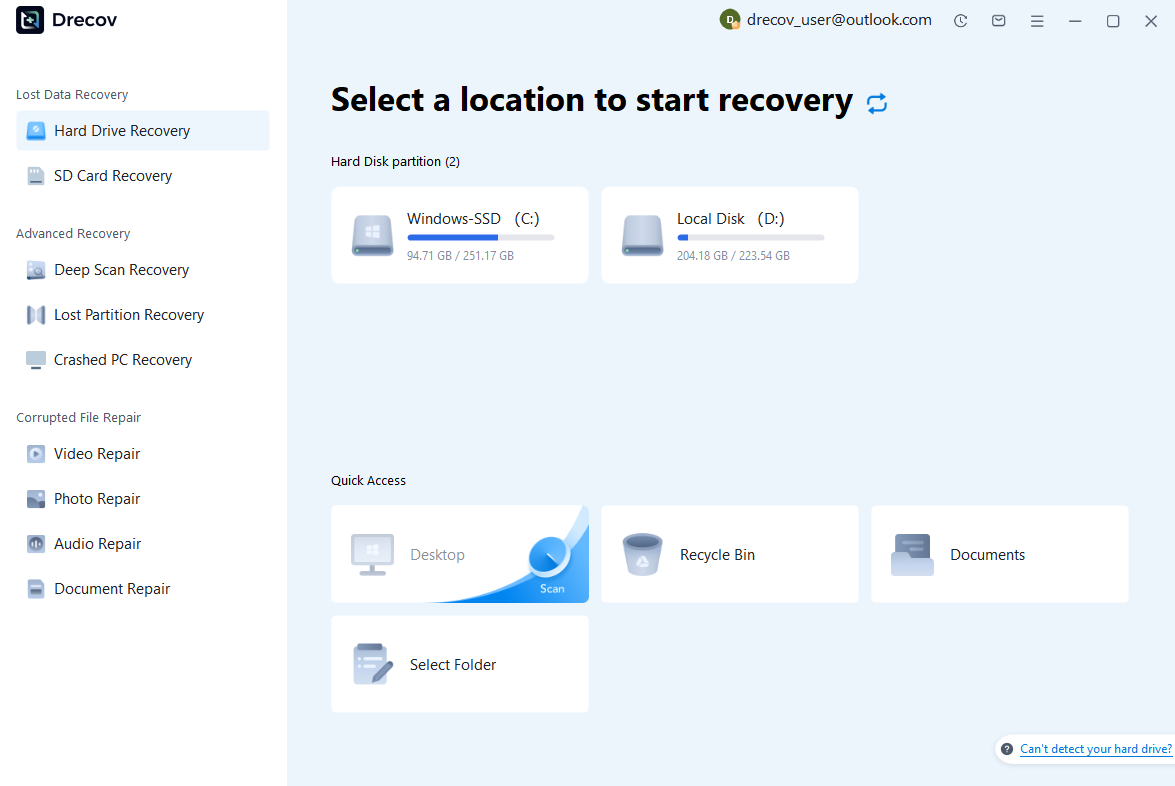
Step 1: Scan the Storage Device (SD Card / Hard Drive / USB)
Connect your device (SD card, HDD/SSD, or USB drive) to your computer and launch PandaOffice Drecov. Select the target device and start the scan. The software will perform a quick scan and deep scan to detect lost or deleted data.
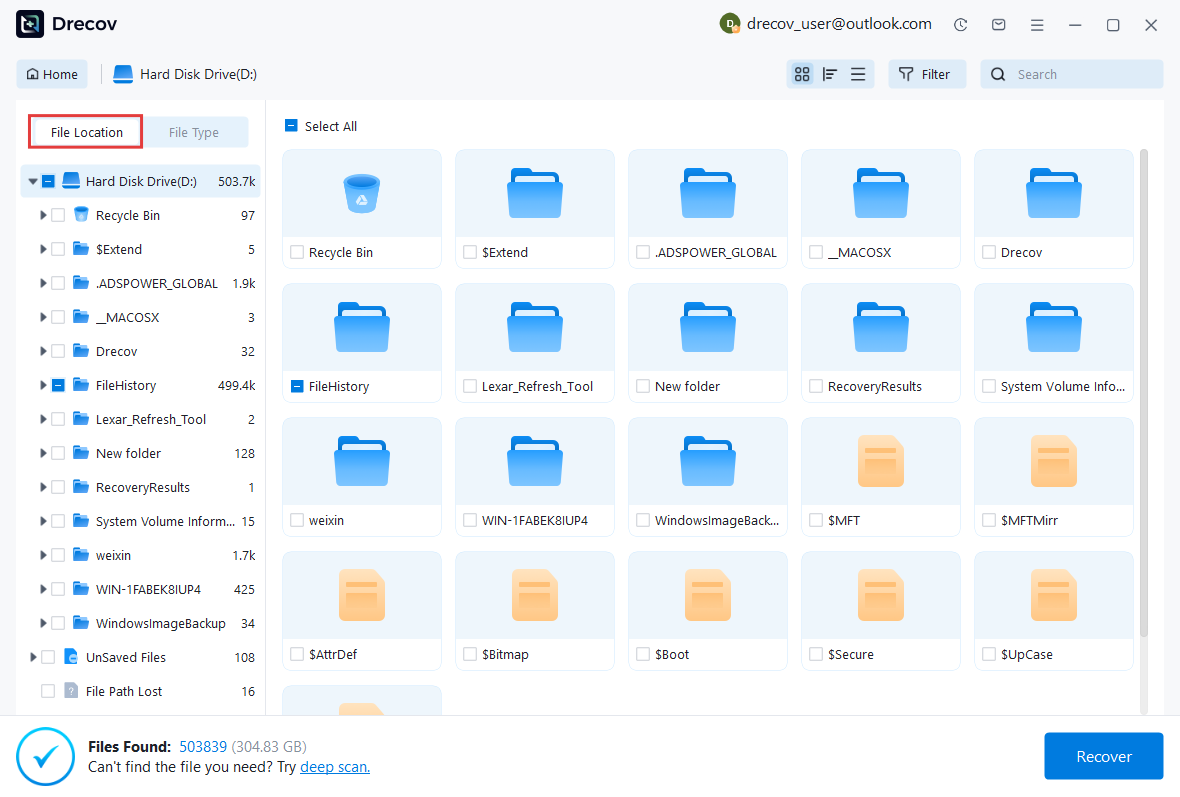
Step 2: Locate and Preview Lost Files
After scanning, browse the detected files and use the preview feature to check recoverable data. You can preview documents (Word, Excel, PDF), photos, and videos to ensure file integrity before recovery.
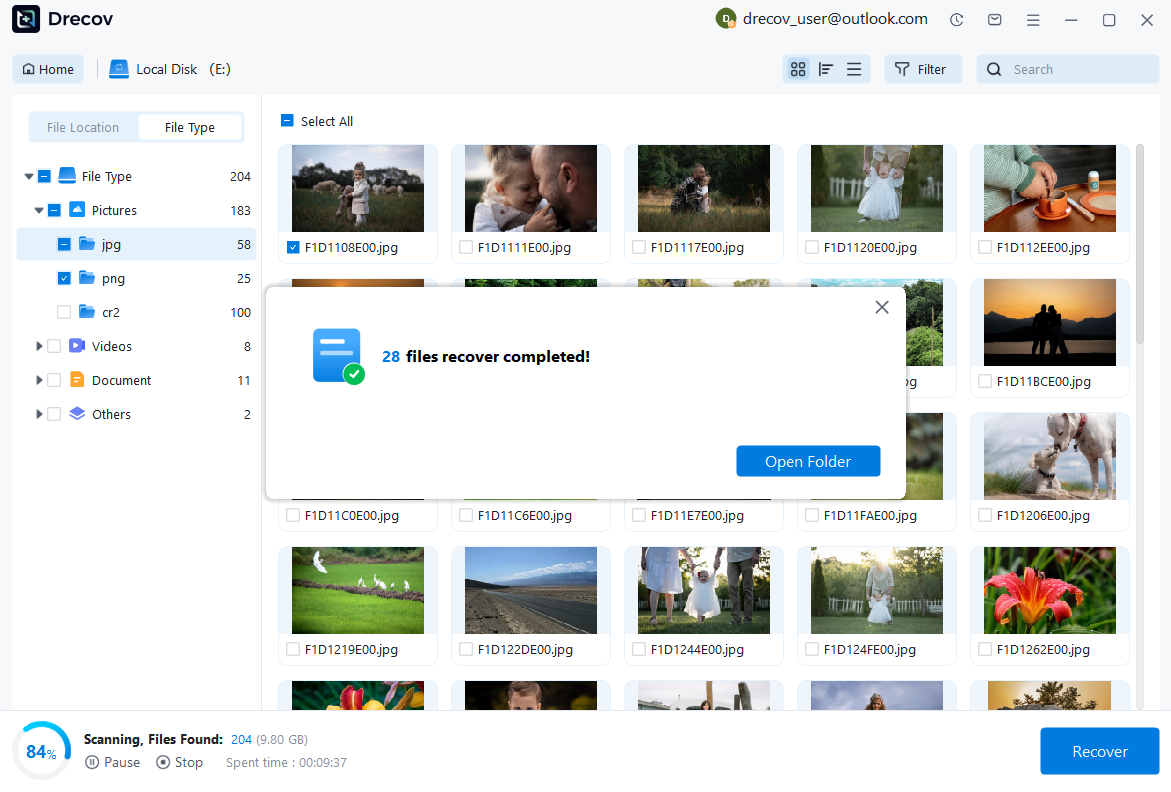
Step 3: Recover and Save to a New Location
Select the files you want to restore and click recover. Save all recovered data to a different drive or location (not the original device) to avoid overwriting lost data.
Why Choose PandaOffice Drecov Recovery Software?
PandaOffice Drecov offers a fast, secure, and user-friendly solution for recovering lost files across multiple scenarios. Whether you need email recovery, ZIP File Recovery, format data recovery, or help to recover deleted drafts Outlook, the software provides reliable recovery performance for both personal and business users.
PandaOffice Drecov supports recovery from formatted hard drives, SSDs, USB drives, SD cards, and external storage devices. Its advanced scanning engine can locate deleted archives, damaged ZIP files, lost Outlook drafts, and accidentally removed documents with high accuracy. For users searching for how to find deleted messages in Teams, PandaOffice Drecov can also help recover exported chat files, attachments, and related local cache data when available.
Key advantages include:
- Deep scan technology for complex data loss situations
- Support for emails, archives, videos, photos, and office documents
- Recovery from accidental deletion, formatting, corruption, and system crashes
- Easy preview before restoring files
- Compatible with Windows and multiple storage devices
Unlike complicated enterprise recovery tools, PandaOffice Drecov keeps the recovery process simple. Users can scan, preview, and restore files in just a few steps without technical expertise.
Whether you are dealing with lost Outlook drafts, corrupted ZIP archives, formatted drives, or missing communication data, PandaOffice Drecov provides an efficient and practical recovery experience designed to minimize downtime and protect important files.
Disk imaging ensures that even partially corrupted drives can be preserved. This is often the safest approach before attempting any aggressive repair operations for fix bad sectors on hard drive situations.
Recovering a healthy version of the workbook often restores links that were inaccessible due to corruption.
⚠️Warning: Save recovered files to a different storage location to avoid overwriting existing data.
Method 7: Reset Registry Entries Related to Hyperlinks
Test Environment
- Windows 10/11
- Microsoft Office Installed
- Administrator Account
Windows uses registry settings to determine how hyperlinks should be processed.
If these entries become damaged, users may discover that a hyperlink does not work in excel even though the hyperlink itself is valid.
Common symptoms include:
- Nothing happens when clicking links.
- Browser links fail to open.
- Error messages appear when selecting URLs.
- Hyperlinks function in other programs but not Excel.
Before making any changes:
- Open Registry Editor.
- Create a backup of the registry.
- Export relevant keys.
Areas commonly associated with hyperlink functionality include:
HKEY_CLASSES_ROOT\htmlfile
and browser-related protocol handlers.
If default associations have become corrupted, resetting them or re-establishing browser defaults may restore functionality.
After changes:
- Restart Windows.
- Launch Excel.
- Test multiple hyperlinks.
This method should generally be considered after simpler troubleshooting options have been exhausted.
⚠️Warning: Incorrect registry modifications can affect Windows stability. Always create a backup first.
Preventing Future Hyperlink Problems in Excel
Absolute file paths often become invalid when files are moved between computers or storage devices.
For example:
C:\Users\John\Documents\Report.pdf
may work only on one computer.
Relative paths can reduce this issue because they reference files based on their relationship to the workbook location rather than a fixed drive path.
Benefits include:
- Better portability
- Easier collaboration
- Fewer broken links
- Improved compatibility across devices
Organizations that frequently share Excel files should consider using relative paths whenever possible.
Avoid Moving Linked Files Without Updating References
Many hyperlink failures occur after files are renamed or relocated.
Best practices include:
- Keeping folder structures consistent
- Documenting file locations
- Updating hyperlinks immediately after migrations
- Testing links after major file changes
Before moving large collections of documents, identify workbooks that depend on those files.
Updating hyperlinks proactively can prevent widespread disruptions.
Keep Excel and Office Updated
Microsoft regularly releases updates that address bugs, compatibility issues, and security vulnerabilities.
Benefits of staying updated include:
- Improved hyperlink reliability
- Better browser integration
- Enhanced workbook stability
- Reduced compatibility problems
To check for updates:
- Open Excel.
- Select File.
- Choose Account.
- Click Update Options.
- Select Update Now.
Regular updates help ensure that hyperlinks continue functioning correctly with current versions of Windows and web browsers.
Regularly Back Up Important Workbooks
Hyperlinks often represent only one component of a larger workbook.
If a workbook becomes corrupted, both data and hyperlinks may be affected.
Recommended backup methods include:
- OneDrive
- SharePoint
- External drives
- Network storage
- File History
Multiple backup copies reduce the risk of losing important workbook functionality.
Users who rely heavily on hyperlinks should maintain versioned backups whenever possible.
Best Practices for Managing Large Hyperlink Collections
Large workbooks may contain hundreds or even thousands of hyperlinks.
Managing these efficiently requires planning.
Recommended practices include:
- Standardizing file naming conventions
- Organizing linked resources logically
- Periodically auditing hyperlinks
- Removing obsolete links
- Documenting external dependencies
Regular maintenance can identify broken hyperlinks before they become widespread problems.
⚠️Warning: Copying workbooks between systems without verifying linked resources can create large numbers of broken hyperlinks.
Frequently Asked Questions About Excel Hyperlinks
Why Is My Excel Hyperlink Not Working?
Common causes include:
- Invalid URLs
- Missing files
- Browser configuration issues
- Workbook corruption
- Security restrictions
- Broken file paths
Identifying the exact cause is the first step toward selecting the appropriate solution.
How Do I Fix Hyperlinks Not Working in Excel?
Begin with basic troubleshooting:
- Verify the hyperlink destination.
- Confirm linked files still exist.
- Test browser settings.
- Repair the workbook.
- Review security settings.
Most hyperlink issues can be resolved through one of these methods.
Why Do Excel Hyperlinks Stop Working After Moving Files?
File-based hyperlinks store location information.
When a file is moved or renamed, the hyperlink continues pointing to the old location.
Updating the destination path usually restores functionality.
Can Workbook Corruption Break Hyperlinks?
Yes.
Workbook corruption may affect:
- Hyperlinks
- Formulas
- Formatting
- Macros
- Embedded objects
Repairing or recovering the workbook often restores affected links.
How Do I Restore Hyperlinks in a Damaged Excel File?
Possible solutions include:
- Open and Repair
- Workbook recovery
- Restoring backups
- Recovering older versions
- Data recovery software
The best option depends on the severity of the corruption.
Does Protected View Prevent Hyperlinks from Opening?
In some cases, yes.
Protected View and Trust Center settings may restrict hyperlink access in downloaded or untrusted files.
Reviewing security settings can help determine whether these protections are responsible.
Why Are Web Links Opening the Wrong Browser?
Excel uses Windows default application settings.
If the default browser changes or associations become corrupted, hyperlinks may open incorrectly.
Updating default app settings generally resolves this issue.
Can I Recover Hyperlinks After File Corruption?
Often, yes.
If a previous workbook version exists, recovering or restoring that version may restore hyperlinks as well.
Successful recovery depends on the extent of the damage and the availability of backups.
Final Thoughts on Fixing Excel Hyperlinks
Most Effective Solutions for Broken Hyperlinks
Although hyperlink failures can be frustrating, most issues have straightforward solutions.
The most successful troubleshooting methods typically include:
- Verifying hyperlink addresses
- Updating file paths
- Reviewing browser settings
- Adjusting security configurations
- Repairing corrupted workbooks
Starting with simple fixes often saves considerable time.
Choosing the Right Fix Based on the Cause
Different problems require different approaches.
| Cause | Recommended Solution |
|---|---|
| Invalid URL | Edit hyperlink address |
| Moved file | Update file path |
| Browser issue | Reset default browser settings |
| Security restriction | Review Trust Center options |
| Workbook corruption | Use Open and Repair |
| File damage | Recover workbook |
Matching the solution to the underlying cause greatly improves troubleshooting efficiency.
Keeping Excel Hyperlinks Working Long-Term
Preventive maintenance remains the best strategy.
By keeping Office updated, organizing linked resources carefully, maintaining backups, and periodically testing hyperlinks, users can minimize disruptions and ensure reliable workbook performance.
Understanding why excel hyperlink not working problems occur allows users to resolve issues quickly and maintain productive, well-connected Excel workbooks.






