







Introduction: Why Desktop Icons Suddenly Disappear in Windows 10
Finding that all my desktop icons are missing can be alarming. Many Windows users rely on desktop shortcuts, files, and folders for daily work. When those icons suddenly vanish, it may appear as though important data has been deleted permanently. Fortunately, in many cases, the files still exist and the issue can be resolved without significant effort.
Desktop icon problems can occur after Windows updates, accidental setting changes, user profile corruption, malware infections, or synchronization conflicts. Some users notice that their desktop appears completely empty, while others discover that only certain shortcuts are missing. Regardless of the cause, understanding the underlying issue is the first step toward recovery.
If you’ve recently experienced icons disappearing from desktop, this guide walks through proven troubleshooting methods. Each solution includes a test environment and practical instructions to help restore your desktop quickly.
Understanding the Problem of Lost Desktop Icons
Desktop icons represent shortcuts, files, folders, and system resources displayed on the Windows desktop. When these icons disappear, it does not always mean the underlying files are gone.
Common situations include:
- Desktop files remain in the Desktop folder but are hidden.
- Windows Explorer fails to display icons correctly.
- Icon cache corruption prevents normal rendering.
- Desktop visibility settings become disabled.
- Files are accidentally deleted or moved.
Users frequently search online using phrases such as lost my desktop icons, icons gone from desktop, or win 10 desktop icons disappeared because the issue can occur unexpectedly after restarting a computer.
Common Symptoms When Icons Are Gone From Desktop
Several warning signs indicate a desktop display problem:
- The desktop background appears normally, but no icons are visible.
- Only a few desktop shortcuts disappear.
- Newly created shortcuts do not appear.
- Files remain accessible through File Explorer but not on the desktop.
- System icons such as Recycle Bin vanish.
Understanding these symptoms can help identify which recovery method is most likely to work.
Why Do My Icons Disappear From My Desktop? Common Causes Explained
Before applying solutions, it is important to understand why do my icons disappear from my desktop in the first place.
Windows Desktop Icon Visibility Settings Were Changed
Windows includes a feature that allows users to show or hide all desktop icons instantly. Sometimes this setting is modified accidentally through a right-click menu or by third-party software.
When the option is disabled, the desktop appears empty even though files remain stored on the computer.
Tablet Mode or Alternative Desktop View Is Enabled
Certain display modes alter how desktop elements appear. Depending on system configuration, Windows may prioritize a touch-friendly interface and temporarily hide standard desktop icons.
This issue is particularly common on convertible laptops and tablets running Windows 10.
Windows Explorer Process Malfunction
Windows Explorer controls desktop rendering. If Explorer crashes or becomes unstable, icons may disappear temporarily.
Explorer-related issues can develop due to:
- Memory leaks
- Software conflicts
- Corrupted temporary files
- Incomplete updates
Restarting the process often resolves display-related problems.
Corrupted User Profile or System Files
Damaged Windows profiles may prevent desktop settings from loading properly.
When profile corruption occurs, users may believe they have lost my icons on my desktop, even though the files still exist within another profile folder.
Desktop Files Accidentally Deleted or Moved
Sometimes the simplest explanation is correct. Files may be:
- Deleted accidentally
- Moved into another folder
- Relocated during synchronization
- Removed by cleanup utilities
In these cases, file recovery techniques may be necessary.
Windows Updates Causing Icons Disappearing From Desktop
Major feature updates occasionally modify personalization settings or rebuild user profiles. This can result in temporary desktop issues.
⚠️ Warning: Do not assume files are permanently deleted immediately after an update. Always verify the Desktop folder contents before taking drastic recovery actions.
How to Get Desktop Icons Back: Proven Solutions for Windows 10
Method 1: Enable Desktop Icon Visibility
Test Environment
- Windows 10 Home 22H2
- Windows 10 Pro 22H2
- Desktop and laptop systems
One of the fastest solutions for how to get desktop icons back involves checking desktop visibility settings.
Step-by-Step Instructions
- Right-click an empty area of the desktop.
- Select View.
- Verify that Show desktop icons is enabled.
- If unchecked, click it once.
- Wait several seconds for the desktop to refresh.
How This Fix Resolves Missing Icons
This setting controls whether desktop items are displayed. If disabled, icons remain stored on the computer but are hidden from view.
When to Use This Method
Use this method when:
- The desktop suddenly appears empty.
- Files still exist in the Desktop folder.
- The issue occurred after changing display settings.
Many users searching how do i get my icons back on the desktop find that this simple adjustment resolves the problem immediately.
Method 2: Restart Windows Explorer
Test Environment
- Windows 10 Pro 22H2
- Windows 10 Home 21H2
- Intel and AMD platforms
If desktop visibility settings appear correct, restarting Explorer may help.
Step-by-Step Instructions
- Press Ctrl + Shift + Esc.
- Open Task Manager.
- Locate Windows Explorer.
- Right-click the process.
- Choose Restart.
- Wait for the desktop to reload.
Why Explorer Errors Cause Missing Icons
Explorer manages:
- Desktop rendering
- Taskbar display
- File management windows
- Icon loading
If Explorer encounters errors, icons may fail to appear despite being present.
Expected Results
A successful restart typically restores:
- Missing desktop shortcuts
- Taskbar functionality
- Desktop context menus
This solution often resolves situations where users believe they have lost desktop icons windows 10 after a system slowdown or crash.
Method 3: Rebuild the Icon Cache
Test Environment
- Windows 10 Version 21H2
- Windows 10 Version 22H2
Windows stores icon information in a cache database to improve performance. Corruption within that cache can cause display issues.
Signs of a Corrupted Icon Cache
Common symptoms include:
- Blank icon thumbnails
- Incorrect icon images
- Missing desktop icons
- Slow desktop loading
Steps to Rebuild the Cache
- Open Task Manager.
- End Windows Explorer temporarily.
- Open Command Prompt from Task Manager.
- Navigate to the local AppData directory.
- Delete icon cache files.
- Restart Windows Explorer.
Windows automatically rebuilds the cache during the next startup.
Verification After Rebuilding
After rebuilding:
- Desktop icons should reappear.
- Shortcut images should display correctly.
- Desktop performance may improve.
⚠️ Warning: Follow command-line instructions carefully when deleting cache files. Avoid removing unrelated system files.
Method 4: Recover Missing Desktop Files Using PandaOffice Drecov
Test Environment
- Windows 10 Home
- Windows 10 Pro
- NTFS SSD and HDD storage
If desktop files were actually deleted, visibility fixes alone may not help. In such cases, recovery software can assist.
When Recovery Software Is Needed
Consider recovery if:
- Files were permanently deleted.
- The Recycle Bin was emptied.
- Desktop folders disappeared after formatting.
- Malware removed important data.
Steps to Recover Desktop Files
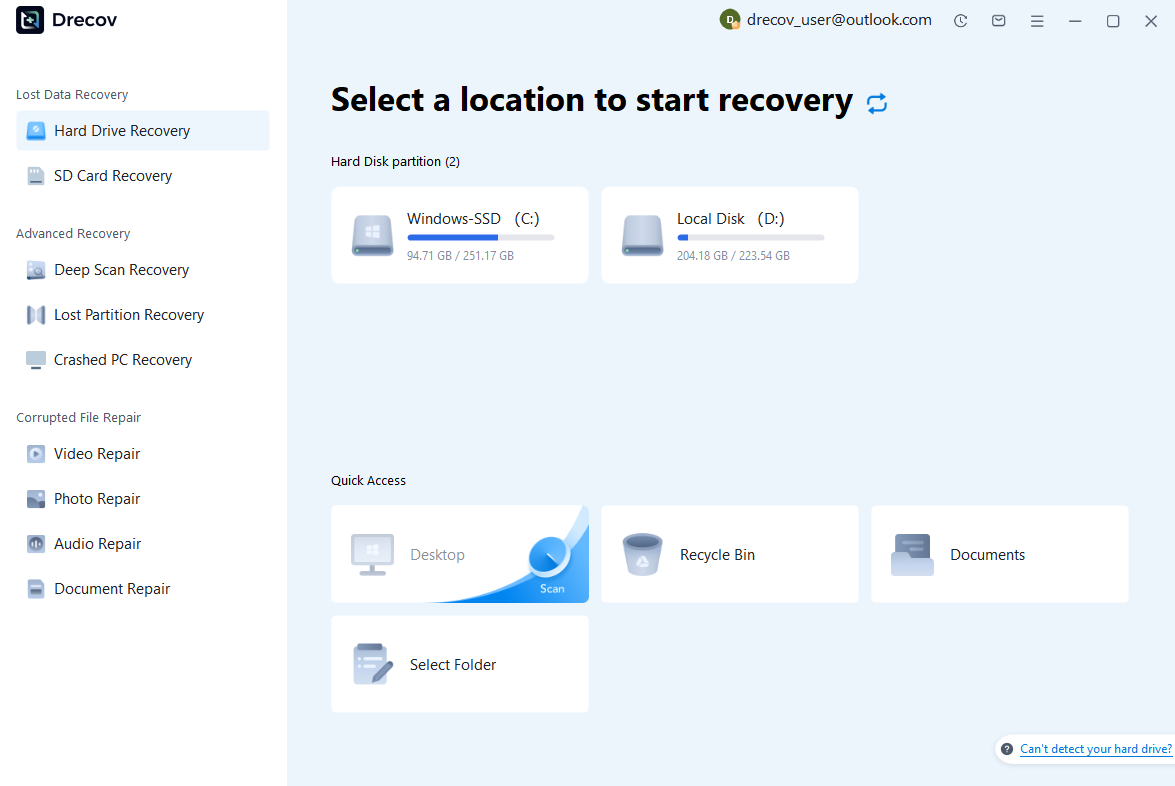
Step 1: Scan the Storage Device (SD Card / Hard Drive / USB)
Connect your device (SD card, HDD/SSD, or USB drive) to your computer and launch PandaOffice Drecov. Select the target device and start the scan. The software will perform a quick scan and deep scan to detect lost or deleted data.
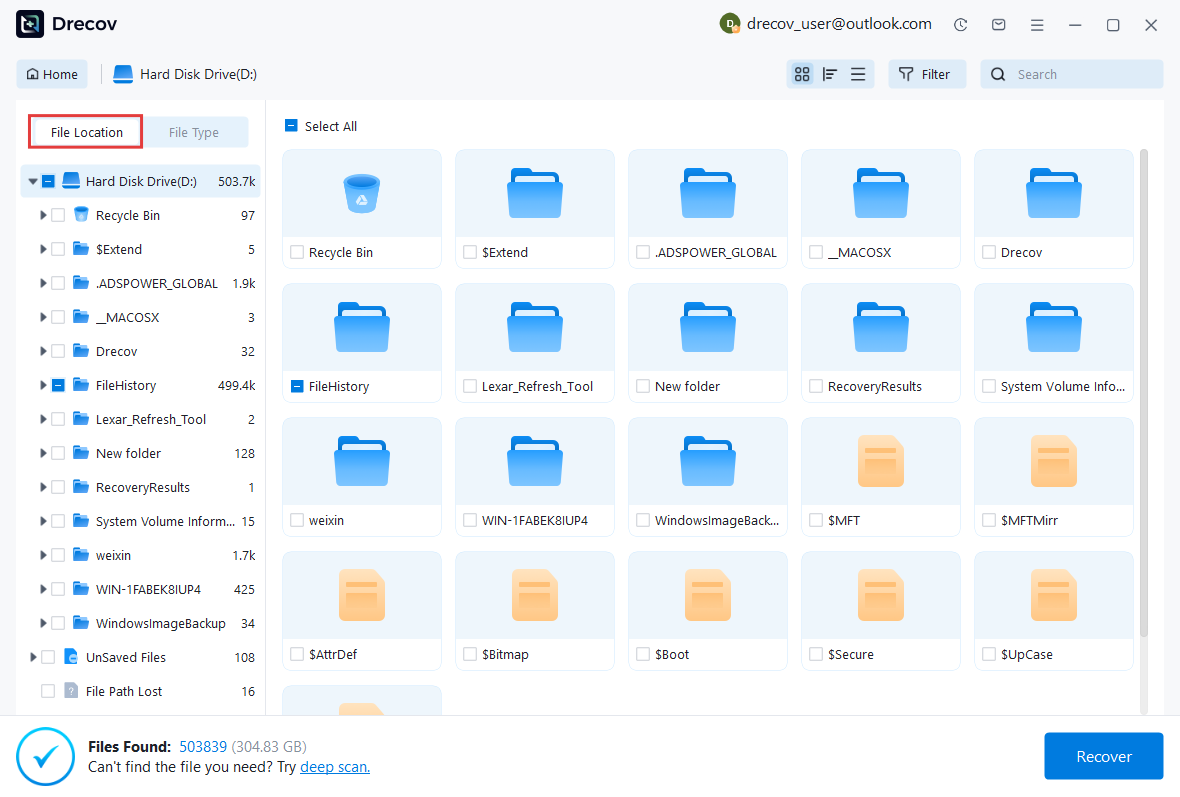
Step 2: Locate and Preview Lost Files
After scanning, browse the detected files and use the preview feature to check recoverable data. You can preview documents (Word, Excel, PDF), photos, and videos to ensure file integrity before recovery.
Step 3: Recover and Save to a New Location
Select the files you want to restore and click recover. Save all recovered data to a different drive or location (not the original device) to avoid overwriting lost data.

Why Choose PandaOffice Drecov Recovery Software?
PandaOffice Drecov offers a fast, secure, and user-friendly solution for recovering lost files across multiple scenarios. Whether you need email recovery, ZIP File Recovery, format data recovery, or help to recover deleted drafts Outlook, the software provides reliable recovery performance for both personal and business users.
PandaOffice Drecov supports recovery from formatted hard drives, SSDs, USB drives, SD cards, and external storage devices. Its advanced scanning engine can locate deleted archives, damaged ZIP files, lost Outlook drafts, and accidentally removed documents with high accuracy. For users searching for how to find deleted messages in Teams, PandaOffice Drecov can also help recover exported chat files, attachments, and related local cache data when available.
Key advantages include:
- Deep scan technology for complex data loss situations
- Support for emails, archives, videos, photos, and office documents
- Recovery from accidental deletion, formatting, corruption, and system crashes
- Easy preview before restoring files
- Compatible with Windows and multiple storage devices
Unlike complicated enterprise recovery tools, PandaOffice Drecov keeps the recovery process simple. Users can scan, preview, and restore files in just a few steps without technical expertise.
Whether you are dealing with lost Outlook drafts, corrupted ZIP archives, formatted drives, or missing communication data, PandaOffice Drecov provides an efficient and practical recovery experience designed to minimize downtime and protect important files.
Disk imaging ensures that even partially corrupted drives can be preserved. This is often the safest approach before attempting any aggressive repair operations for fix bad sectors on hard drive situations.
How Recovery Works
When files are deleted, Windows typically removes references rather than erasing data immediately. Recovery tools scan storage sectors to locate recoverable file records.
Best Practices After Recovery
After restoring files:
- Create backups regularly.
- Avoid storing critical data only on the desktop.
- Enable File History or cloud backup services.
⚠️ Warning: Never save recovered files to the same partition before the recovery process is complete.
Method 5: Check the Desktop Folder Location
Test Environment
- Windows 10 with Microsoft Account Sync
- OneDrive-enabled systems
Desktop folder redirection can make files appear missing.
Verify the Desktop Folder Path
- Open File Explorer.
- Navigate to This PC.
- Locate Desktop.
- Right-click Desktop and choose Properties.
- Open the Location tab.
Verify the path points to the expected desktop folder.
Restore the Correct Directory
If the folder was redirected:
- Select Restore Default.
- Apply changes.
- Restart Windows.
- Check whether files reappear.
How Cloud Synchronization Affects Desktop Files
Cloud services may move desktop content automatically.
Users sometimes assume icons gone from desktop means deletion, when files have actually been relocated to a synchronized cloud folder.
How to Get Desktop Icons Back: Additional Recovery Methods
Method 6: Run System File Checker and DISM
Test Environment
- Windows 10 Pro 22H2
- Windows 10 Home 22H2
- Systems experiencing repeated desktop display issues
If desktop icons continue to disappear after trying the previous solutions, damaged Windows system files may be responsible. Microsoft provides built-in repair tools that can detect and repair operating system corruption.
Run an SFC Scan
System File Checker (SFC) scans protected Windows files and replaces corrupted versions with healthy copies.
Steps:
- Type cmd into the Windows search box.
- Right-click Command Prompt.
- Select Run as administrator.
- Enter the following command:
sfc /scannow
- Press Enter.
- Wait for the scan to complete.
The process may take several minutes depending on system performance.
Run DISM Repair Commands
If SFC reports errors it cannot fix, use Deployment Image Servicing and Management (DISM).
Run the following commands one at a time:
DISM /Online /Cleanup-Image /CheckHealth
DISM /Online /Cleanup-Image /ScanHealth
DISM /Online /Cleanup-Image /RestoreHealth
Restart the computer after the repair process finishes.
Confirm Successful Repair
After restarting:
- Check whether desktop icons return.
- Verify shortcut functionality.
- Monitor the system for recurring issues.
This method is particularly useful when users notice icons disappearing from desktop after failed updates or unexpected shutdowns.
⚠️ Warning: Do not close the Command Prompt window while repair operations are running.
Method 7: Create a New User Account
Test Environment
- Windows 10 Home
- Windows 10 Pro
- Systems affected by profile corruption
Sometimes desktop issues originate from a damaged user profile rather than Windows itself.
How Profile Corruption Causes Missing Icons
A corrupted profile can prevent Windows from loading:
- Desktop settings
- Shortcut information
- Personalized configurations
- User-specific folders
As a result, users may think they have lost my desktop icons, even though the files still exist within the original profile directory.
Steps to Create a New Profile
- Open Settings.
- Navigate to Accounts.
- Select Family & Other Users.
- Click Add Someone Else to This PC.
- Create a new local account.
- Sign out of the current account.
- Log into the newly created profile.
Migrating Important Files
If the new profile displays desktop items correctly:
- Open File Explorer.
- Access the old profile folder.
- Copy Desktop contents.
- Transfer files to the new account.
Many persistent desktop problems are resolved through profile recreation.
Advanced Troubleshooting When Desktop Icons Still Do Not Appear
If none of the previous solutions work, advanced troubleshooting may be necessary.
Check Group Policy Settings
Certain policies can intentionally hide desktop icons.
To review settings:
- Press Windows + R.
- Type:
gpedit.msc
- Navigate to User Configuration.
- Open Administrative Templates.
- Select Desktop.
Review policies related to desktop visibility and icon display.
This solution is most relevant for business environments where administrators control workstation settings.
Review Recent Windows Updates
If desktop issues began immediately after an update:
- Open Settings.
- Select Update & Security.
- Click View Update History.
- Identify recently installed updates.
Sometimes rolling back a problematic update can restore normal desktop functionality.
Signs an Update May Be Responsible
- Icons disappeared after rebooting.
- Desktop personalization settings reset.
- New user interface changes appeared.
Although updates generally improve stability, occasional compatibility issues can occur.
Scan for Malware or Unwanted Software
Malware occasionally modifies desktop settings or removes shortcuts.
Run:
- Windows Security
- Microsoft Defender Offline Scan
- Trusted anti-malware tools
A full scan can detect threats that interfere with desktop functionality.
Common Malware Symptoms
- Missing shortcuts
- Hidden folders
- Unexpected desktop changes
- System slowdowns
Removing malicious software often restores normal desktop behavior.
Perform a System Restore
System Restore can return Windows to a previous working state.
Steps:
- Search for Recovery.
- Open Recovery Settings.
- Launch System Restore.
- Select a restore point created before the issue began.
- Follow the on-screen instructions.
System Restore does not typically affect personal documents but may remove recently installed applications.
⚠️ Warning: Create a backup of important files before performing major system changes.
How to Prevent Desktop Icons From Disappearing Again
Recovering missing icons is useful, but preventing future issues saves time and frustration.
Maintain Regular Windows Updates
Keeping Windows updated provides:
- Security improvements
- Bug fixes
- Performance enhancements
However, monitor major feature updates and create restore points beforehand.
Keep Desktop Files Organized
Many users store hundreds of files directly on the desktop. Excessive clutter can increase the likelihood of management problems.
Best practices include:
- Creating project folders
- Archiving older files
- Removing obsolete shortcuts
A cleaner desktop is easier to manage and troubleshoot.
Create Scheduled Backups
Backup solutions help protect against accidental deletion and system failures.
Recommended options include:
- File History
- External hard drives
- Network storage
- Cloud backup services
Regular backups provide an additional layer of protection when desktop files disappear unexpectedly.
Monitor Cloud Synchronization Settings
Services such as OneDrive can synchronize desktop content automatically.
Review synchronization settings periodically to ensure files are stored in the expected location.
Many cases of lost my icons on my desktop actually result from synchronization changes rather than true data loss.
Protect System Files From Corruption
To reduce corruption risks:
- Shut down Windows properly.
- Avoid forced power-offs.
- Install reliable security software.
- Monitor storage health.
Maintaining system integrity significantly reduces the likelihood of future desktop issues.
⚠️ Warning: Avoid using aggressive registry cleaners that claim to optimize Windows automatically.
Frequently Asked Questions About Restoring Desktop Icons
How Do I Get My Icons Back on the Desktop After a Windows Update?
Start by checking whether desktop icon visibility is enabled. If the setting is correct, restart Windows Explorer and review update history. In many cases, Windows updates temporarily reset personalization settings.
Why Are My Desktop Files Missing but Programs Still Work?
Shortcuts and files may be hidden, relocated, or affected by synchronization settings. Verify the Desktop folder location before assuming data has been deleted.
Can I Recover Permanently Deleted Desktop Icons?
Yes. If files were deleted recently and have not been overwritten, recovery software may be able to restore them. The success rate depends on storage activity following deletion.
What Should I Do If All My Desktop Icons Are Missing After Restarting?
First, verify the Show Desktop Icons option. Then restart Windows Explorer and inspect the Desktop folder contents through File Explorer.
Many users who report all my desktop icons are missing find that visibility settings were disabled accidentally.
Does System Restore Bring Back Missing Desktop Icons?
System Restore can recover desktop functionality if the problem was caused by software changes, updates, or configuration issues. However, it may not restore permanently deleted personal files.
Why Did I Lose My Icons on My Desktop Overnight?
Possible causes include:
- Windows updates
- Synchronization changes
- User profile issues
- Malware activity
- Accidental setting modifications
Investigating recent system changes often reveals the source of the problem.
What Causes Win 10 Desktop Icons Disappeared Errors?
Common causes include:
- Explorer crashes
- Corrupted icon cache
- Hidden desktop settings
- Damaged system files
- User profile corruption
Fortunately, most of these issues can be fixed without reinstalling Windows.
Conclusion: The Fastest Ways to Restore Missing Desktop Icons
Desktop icon problems can be frustrating, especially when important shortcuts and files appear to vanish without warning. Fortunately, most cases are caused by display settings, Explorer errors, icon cache corruption, synchronization changes, or profile issues rather than permanent data loss.
If you are wondering how do i get my icons back on the desktop, begin with the simplest solutions first. Verify desktop visibility settings, restart Windows Explorer, and rebuild the icon cache. These methods resolve a large percentage of desktop display problems.
For situations involving actual file deletion, recovery software such as PandaOffice Drecov may help retrieve important desktop data before it is overwritten. Meanwhile, built-in Windows tools like SFC, DISM, and System Restore can address deeper system corruption.
Key Takeaways
- Check desktop visibility settings first.
- Restart Windows Explorer before attempting advanced repairs.
- Verify Desktop folder locations when cloud synchronization is enabled.
- Use SFC and DISM to repair corrupted Windows files.
- Create backups regularly to protect important desktop data.
- Consider file recovery when desktop files have actually been deleted.
By following the troubleshooting methods outlined above, most users can successfully restore desktop functionality and prevent future desktop icon problems from occurring.






