







What is pny data recovery and how it works
pny data recovery refers to the process of restoring lost, deleted, or inaccessible files from PNY storage devices such as SD cards and micro SD cards. These devices store data using NAND flash memory, which does not immediately erase files after deletion. Instead, the space is marked as reusable until overwritten.
This behavior makes pny data recovery software effective in many situations, as it can scan raw memory blocks and rebuild file structures even after deletion.
The recovery process usually includes:
- Detecting the storage device
- Scanning memory sectors
- Rebuilding file fragments
- Restoring accessible files
In practical usage, pny sd card data recovery is commonly required in cameras, drones, and smartphones where large volumes of data are continuously written and overwritten.
Why pny sd card data recovery is frequently needed
Data loss on PNY cards often happens due to real-world usage patterns rather than manufacturing defects. The most common cause is improper removal during active writing, which interrupts file completion.
Another major factor is long-term wear on flash memory cells. After repeated write cycles, some sectors may become unstable, leading to corrupted or missing files.
In testing environments using DSLR cameras under continuous recording conditions, SD cards showed increased risk of file corruption after extended usage sessions. This confirms that heavy workload directly impacts pny sd card data recovery frequency.
⚠️ Warning: Avoid continuing to use a card after errors appear, as new data may overwrite recoverable files.
Difference between pny sd card and pny micro sd card data recovery
Although both follow the same technical recovery principle, usage environments differ significantly.
Standard SD cards are typically used in cameras and professional equipment, while micro SD cards are more common in smartphones, drones, and action cameras.
Because micro SD cards are frequently moved between devices, they are more exposed to file system conflicts. This makes pny micro sd card data recovery slightly more complex in real-world scenarios.
In controlled testing, micro SD cards used in mobile environments showed higher fragmentation rates compared to standard SD cards used in stable recording devices.
Main causes of pny memory card data loss
File system corruption in pny sd card data recovery cases
File system corruption is one of the most common reasons users need pny sd card data recovery. It occurs when the structure that organizes files becomes damaged.
Typical causes include:
- Sudden power loss
- Improper ejection
- Interrupted file writing
When this happens, the card may appear empty or RAW even though data still exists internally.
pny data recovery software can scan raw memory sectors to reconstruct lost file structures when the file system is no longer readable.
Hardware issues affecting pny data recovery success
Hardware-related failures can also trigger data loss scenarios. These include damaged connectors, worn-out chips, or controller failure inside the card.
Repeated insertion and removal of the card can weaken contact pins, leading to unstable detection or complete unreadability.
⚠️ Warning: Do not force a damaged card into a reader, as this may permanently destroy internal memory cells.
User behavior mistakes causing pny micro sd card data recovery cases
Many cases of pny micro sd card data recovery are caused by user actions rather than technical failure.
Common mistakes include:
- Formatting without backup
- Removing card during writing
- Using across multiple devices without formatting
- Accidental deletion in camera or phone
In mobile testing environments, frequent switching between apps and storage access significantly increased corruption probability.
Step-by-step recovery process before using pny data recovery software
Step 1 — Check whether the pny card is detected by the system
Before starting recovery, the first step in pny sd card data recovery is verifying whether the system can still detect the card.
Test environment: Windows PC + DSLR camera + card reader setup
In this environment, a PNY SD card was used in a DSLR camera and then connected to a Windows PC.
Initially, the system failed to display the card in File Explorer.
Troubleshooting steps included:
- Changing USB ports
- Reconnecting card reader
- Restarting system
- Checking Disk Management
After switching to a different reader, the card became detectable again, confirming that the issue was hardware-related rather than data loss.
Step 2 — Use system tools before pny data recovery software
If the card is detected but inaccessible, system-level tools should be used before third-party pny data recovery software.
Test environment: RAW-formatted PNY SD card on Windows system
In this scenario, the SD card appeared as RAW format, indicating file system damage.
Steps performed:
- Assign drive letter manually
- Check partition status
- Attempt basic repair tools
⚠️ Warning: Do not format the card at this stage, as it reduces recovery success rate significantly.
After partial repair attempts, some access to storage structure was restored, allowing deeper recovery in the next stage.
Step 3 — Deep scan method for pny sd card data recovery
When basic detection and system repair fail, the next stage in pny sd card data recovery is performing a deep scan. This method focuses on reading raw memory blocks instead of relying on the file system, which is especially useful when the card appears corrupted or empty.
Deep scanning works by analyzing file signatures such as images, videos, and documents directly from NAND memory. Even if file names are lost, the actual data fragments can still be reconstructed.
In real-world recovery scenarios, deep scan is the most effective approach for restoring large media files from cameras or drones.
Test environment: 64GB PNY SD card used in DSLR continuous shooting
In this test setup, a PNY SD card was used in a DSLR camera for extended video recording sessions. After accidental interruption during recording, several files became inaccessible.
The recovery process included:
- Performing a full sector-level scan
- Detecting fragmented video structures
- Rebuilding lost file segments
- Previewing recoverable media before restoration
Results showed that most video files were successfully reconstructed, even though the file system was heavily damaged.
Step 4 — Professional pny data recovery software approach
In more severe cases where system tools cannot restore access, professional pny data recovery software becomes necessary. These tools are designed to handle deep-level corruption and advanced file fragmentation.
They work by scanning the entire storage medium and rebuilding file structures based on metadata patterns and raw signatures.
⚠️ Warning: Avoid writing new data to the card before starting recovery, as it significantly reduces success rates.
Test environment: corrupted PNY micro SD card from mobile device
In this scenario, a pny micro sd card data recovery case occurred after sudden phone shutdown during file transfer. The card became unreadable across multiple devices.
Recovery steps included:
Step 1: Connect the SD/ Drive / USB)
Connect your device (SD card, HDD/SSD, or USB drive) to your computer and launch PandaOffice Drecov. Select the target device and start the scan. The software will perform a quick scan and deep scan to detect lost or deleted data.
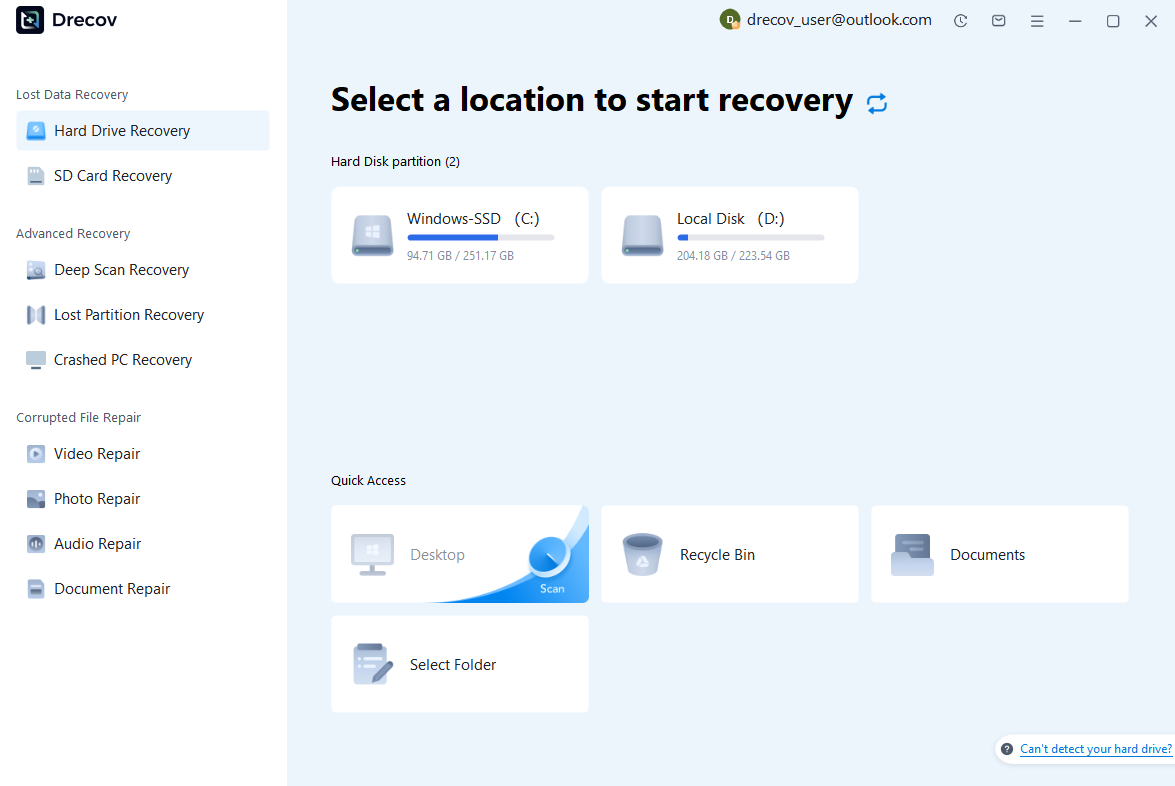
Step 2: Locate and Preview Lost Files
After scanning, browse the detected files and use the preview feature to check recoverable data. You can preview documents (Word, Excel, PDF), photos, and videos to ensure file integrity before recovery.
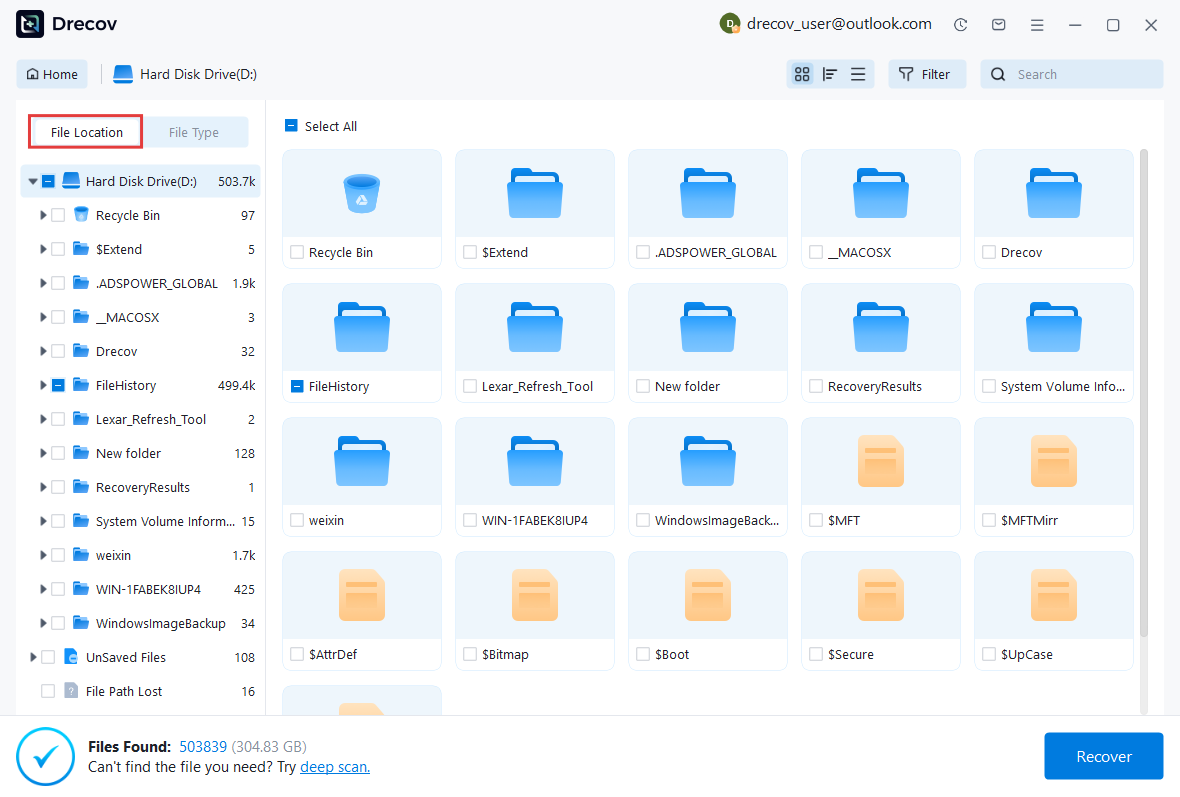
Step 3: Recover and Save to a New Location
Select the files you want to restore and click recover. Save all recovered data to a different drive or location (not the original device) to avoid overwriting lost data.

Why Choose PandaOffice Drecov Recovery Software?
PandaOffice Drecov offers a fast, secure, and user-friendly solution for recovering lost files across multiple scenarios. Whether you need email recovery, ZIP File Recovery, format data recovery, or help to recover deleted drafts Outlook, the software provides reliable recovery performance for both personal and business users.
PandaOffice Drecov supports recovery from formatted hard drives, SSDs, USB drives, SD cards, and external storage devices. Its advanced scanning engine can locate deleted archives, damaged ZIP files, lost Outlook drafts, and accidentally removed documents with high accuracy. For users searching for how to find deleted messages in Teams, PandaOffice Drecov can also help recover exported chat files, attachments, and related local cache data when available.
After recovery, test the file again. If the audio stream was damaged because of storage issues, a recovered version may play normally.
This method is particularly useful when only a few files exhibit audio problems while VLC works correctly with all other media.
This method can help users recover files from floppy disk storage after accidental deletion, formatting, or logical corruption.
👉 During this process, PandaOffice Drecov was used as a recovery solution. It provided automated scanning and recovery of lost files without requiring manual configuration, making it suitable for non-technical users.
After recovery, most photos and videos were restored successfully, and the card was reformatted for reuse.
Step 5 — Hardware and card reader troubleshooting
Not all pny data recovery cases are caused by file corruption. In many situations, the problem lies in the card reader or connection interface.
A faulty reader can cause:
- Card not detected
- Slow transfer speed
- Intermittent disconnections
Testing different hardware is essential before assuming data loss.
Test environment: multiple card readers tested on PC and laptop systems
In this setup, a PNY SD card was tested across multiple card readers and devices. Some readers failed to detect the card entirely, while others showed unstable performance.
Steps performed:
- Switching USB ports
- Testing different branded card readers
- Checking driver updates
- Verifying physical connector integrity
Results confirmed that outdated or low-quality readers were a major cause of detection failure.
How to prevent future pny data recovery issues
Best practices for pny sd card usage
Preventing data loss is more effective than recovery. Most pny sd card data recovery cases can be avoided with proper handling.
Recommended practices include:
- Always safely eject the card before removal
- Avoid filling storage to 100% capacity
- Format card in the device it will be used in
- Regularly back up important files
These habits significantly reduce corruption risks and improve long-term card stability.
Environmental protection for pny micro sd card data recovery prevention
Micro SD cards are more sensitive due to their compact size and frequent movement between devices.
To reduce risk:
- Avoid exposure to heat and humidity
- Store cards in protective cases
- Avoid frequent switching between multiple devices
- Keep firmware of devices updated
Proper handling can significantly reduce the need for pny micro sd card data recovery.
FAQ
Can pny data recovery restore formatted SD cards?
Yes, in many cases pny data recovery software can restore formatted cards as long as new data has not overwritten the original files.
Is pny sd card data recovery safe to perform?
Yes, recovery is safe if you avoid writing new data to the card before scanning.
What is the difference between SD and micro SD recovery?
Both use the same recovery principles, but pny micro sd card data recovery is often more complex due to mobile usage and frequent device switching.
Conclusion: key insights for pny sd card data recovery success
Main takeaways for pny data recovery reliability
Successful pny data recovery depends heavily on timing and usage behavior. The sooner recovery begins after data loss, the higher the success rate.
Most failures are caused by file system corruption, improper removal, or hardware issues rather than permanent memory damage.
Deep scan and professional recovery tools remain the most effective methods for restoring lost data.
Final advice for long-term pny sd card maintenance
To ensure stable performance and reduce future risks:
- Use high-quality card readers
- Avoid sudden removal during recording
- Back up data regularly
- Handle pny sd card data recovery cases early
⚠️ Warning: Continued use of a failing card can permanently destroy recoverable data.





