







Losing important files stored on an SDHC card can be frustrating, especially when those files contain valuable photos, videos, documents, or project data. Fortunately, data loss does not always mean the files are permanently gone. With the right SDHC card recovery software, users can often restore deleted or inaccessible data before it is overwritten.
SDHC (Secure Digital High Capacity) cards are widely used in digital cameras, drones, camcorders, Android devices, and other portable electronics. While these storage devices are reliable, they remain vulnerable to accidental deletion, formatting errors, corruption, and hardware-related issues.
Many users immediately search for an sdhc card recovery software free download solution after discovering missing files. Although recovery success depends on several factors, acting quickly can significantly increase the chances of restoring lost data.
This guide explains how SDHC card recovery works, the common causes of data loss, and several practical methods that can help recover files from damaged, formatted, or deleted SDHC storage devices.
Understanding SDHC Card Recovery and Why It Matters
What Is an SDHC Card and How Does It Store Data
SDHC stands for Secure Digital High Capacity. These cards typically offer storage capacities ranging from 4GB to 32GB and are commonly used for storing multimedia files.
Unlike traditional hard drives, SDHC cards use flash memory technology. Data is stored electronically without moving parts, making these cards lightweight, portable, and resistant to minor physical shocks.
Many photographers and videographers rely on SDHC cards because they provide a convenient way to store large collections of images and videos. Modern cameras often save thousands of files onto a single memory card.
Despite their durability, SDHC cards can still experience logical corruption, accidental deletion, or formatting issues. Since flash memory operates differently from traditional storage devices, deleted files often remain recoverable until new data replaces them.
This characteristic makes recovery possible even after files appear to have disappeared.
Whether you’re using a generic SDHC card or looking for sandisk sdhc card recovery software, understanding how flash storage works helps explain why recovery remains possible in many situations.
When You Need SDHC Card Recovery Software
There are many situations where recovery software becomes necessary.
One common example involves accidentally deleting photos while reviewing images after a trip or event. Users may remove entire folders without realizing important files are included.
Another frequent scenario occurs when a camera suddenly reports that the memory card must be formatted before use. Although the files may still exist on the card, corruption prevents the operating system from accessing them normally.
Users also encounter problems after failed file transfers, virus infections, unexpected shutdowns, or improper card removal.
Professional recovery tools are designed to search beyond damaged file systems and identify recoverable data fragments stored within the memory card.
This capability makes SDHC card recovery software valuable when standard troubleshooting methods fail.
The sooner recovery begins, the better the chances of restoring files successfully.
Can Lost Data Be Recovered from an SDHC Card?
In many cases, yes.
When files are deleted from an SDHC card, the operating system usually removes references to the data rather than erasing the actual content immediately.
The storage sectors remain occupied until new files overwrite them.
As a result, recovery software can often locate and reconstruct deleted files even after they disappear from normal view.
However, recovery success depends on several factors:
- Whether the card continued to be used after data loss
- The extent of file system damage
- Whether formatting occurred
- The physical condition of the memory card
If no new data has overwritten the original files, recovery rates are often surprisingly high.
⚠️ Warning: Once you discover missing files, stop using the SDHC card immediately. Continued use can permanently overwrite recoverable data.
Common Causes of Data Loss on SDHC Cards
Accidental Deletion During File Management
Accidental deletion remains one of the most common reasons people seek recovery solutions.
Managing large numbers of files often leads to mistakes. Users may accidentally select the wrong folder, delete entire albums, or remove files while attempting to free storage space.
Photographers frequently encounter this issue after transferring files to a computer. In some cases, they mistakenly believe the transfer completed successfully and delete the originals from the memory card.
Unfortunately, many cameras and portable devices do not provide a recycle bin feature, making deleted files appear permanently lost.
Fortunately, the underlying data often remains intact until overwritten.
This means deleted files can frequently be restored using appropriate recovery techniques.
The key is avoiding further use of the card until recovery attempts are complete.
Formatting an SDHC Card by Accident
Formatting is another major cause of SDHC card data loss.
Modern cameras, smartphones, drones, and gaming devices often request formatting when they detect file system inconsistencies.
Users may approve the process without realizing it will remove access to existing files.
A quick format typically deletes file allocation information while leaving the underlying data largely intact. This is why formatted cards often remain recoverable.
Full formatting can be more destructive because some systems overwrite portions of the storage area.
Even so, many files may still be recoverable depending on how the format was performed.
People frequently search for free sdhc card recovery software after formatting a memory card because they assume all data has been permanently erased.
In reality, immediate action can often improve recovery outcomes significantly.
⚠️ Warning: Do not reformat the SDHC card multiple times. Additional formatting operations may reduce recovery success.
File System Corruption and Device Errors
File system corruption occurs when the operating system loses the ability to interpret data stored on the card.
This problem can arise for several reasons:
- Unexpected power failures
- Unsafe card removal
- Interrupted file transfers
- System crashes
- Malware infections
When corruption occurs, users may see error messages indicating that the card is unreadable or requires formatting.
Files often remain physically present even though the operating system cannot access them correctly.
Many recovery solutions focus specifically on repairing or bypassing damaged file systems to retrieve valuable content.
Corruption-related issues are among the most common situations where SDHC card recovery software proves useful.
The severity of corruption varies considerably, but logical damage is often recoverable when physical hardware remains intact.
Physical and Hardware-Related Issues
Not all SDHC card failures result from software problems.
Physical damage can also affect accessibility and recovery success.
Examples include:
- Water exposure
- Excessive heat
- Bent connectors
- Damaged card readers
- Manufacturing defects
Sometimes the memory card itself remains healthy while the card reader causes connection failures.
Testing the card in another reader or computer can help isolate the source of the problem.
Unlike logical corruption, severe physical damage may require specialized recovery procedures.
However, many apparent hardware failures are actually connection issues that can be resolved without advanced intervention.
⚠️ Warning: If the SDHC card becomes unusually hot or shows visible damage, discontinue use immediately to avoid further deterioration.
Best SDHC Card Recovery Software Methods to Restore Lost Files
Method 1: Show Hidden Files on the SDHC Card
Before installing recovery software, it’s worth checking whether the files are merely hidden rather than deleted.
Certain malware infections, system errors, and file attribute changes can make files invisible while leaving them intact on the card.
Test Environment
- Operating System: Windows 11 Pro
- Storage Device: 32GB SanDisk SDHC Card
- Connection Method: USB 3.0 Card Reader
Begin by connecting the SDHC card to your computer.
Open File Explorer and navigate to the View menu. Enable the option that displays hidden files, folders, and drives.
After activating this setting, inspect the card contents carefully. Files that previously appeared missing may become visible again.
If the files remain hidden, open Command Prompt and remove hidden attributes using Windows system commands.
Many users are surprised to discover that their data was never deleted at all.
This simple procedure can restore access to important photos and documents without requiring a dedicated recovery scan.
Although it does not help in cases involving deletion or formatting, checking hidden files should always be one of the first troubleshooting steps.
Method 2: Repair the SDHC Card with CHKDSK
If hidden files are not the cause of the problem, repairing file system errors may restore access to the data.
Windows includes a built-in utility called CHKDSK that can identify and correct logical file system inconsistencies.
Test Environment
- Operating System: Windows 10 22H2
- Storage Device: 64GB SDHC Memory Card
- Tool Used: Command Prompt (Administrator)
Connect the memory card and note its assigned drive letter.
Open Command Prompt with administrator privileges and execute a CHKDSK repair command for the SDHC card.
The utility scans for damaged directory entries, allocation errors, and corrupted file structures.
Depending on card size and corruption severity, the scan may take several minutes to complete.
After the repair finishes, reconnect the card and verify whether the missing files have become accessible again.
CHKDSK is particularly useful when corruption results from improper removal or interrupted file transfers.
However, it is important to remember that this tool repairs file systems rather than recovering deleted data.
⚠️ Warning: If CHKDSK reports severe hardware errors, stop running additional repairs and proceed carefully with recovery attempts.
Method 3: Recover Lost Files with PandaOffice Drecov
When deletion, formatting, or corruption prevents normal access to files, dedicated recovery software often provides the most effective solution.
PandaOffice Drecov is a Windows-based recovery tool designed to scan storage devices for recoverable photos, videos, documents, audio files, and other data types. It can analyze SDHC cards even when the original folder structure is damaged or missing.
Test Environment
- Operating System: Windows 11 Home
- Storage Device: SanDisk SDHC Memory Card
- Software Version: PandaOffice Drecov Latest Release
- Connection Method: USB Card Reader
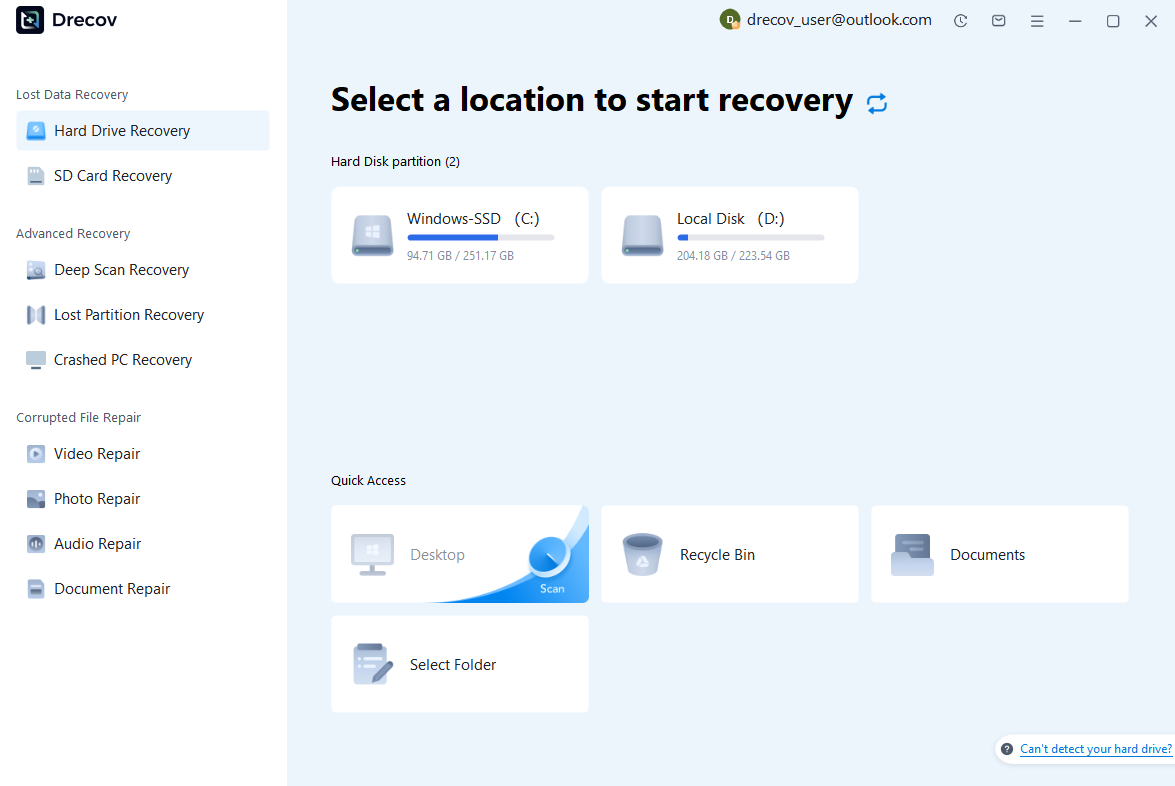
Step 1: Connect the Drive / USB)
Connect your device (SD card, HDD/SSD, or USB drive) to your computer and launch PandaOffice Drecov. Select the target device and start the scan. The software will perform a quick scan and deep scan to detect lost or deleted data.
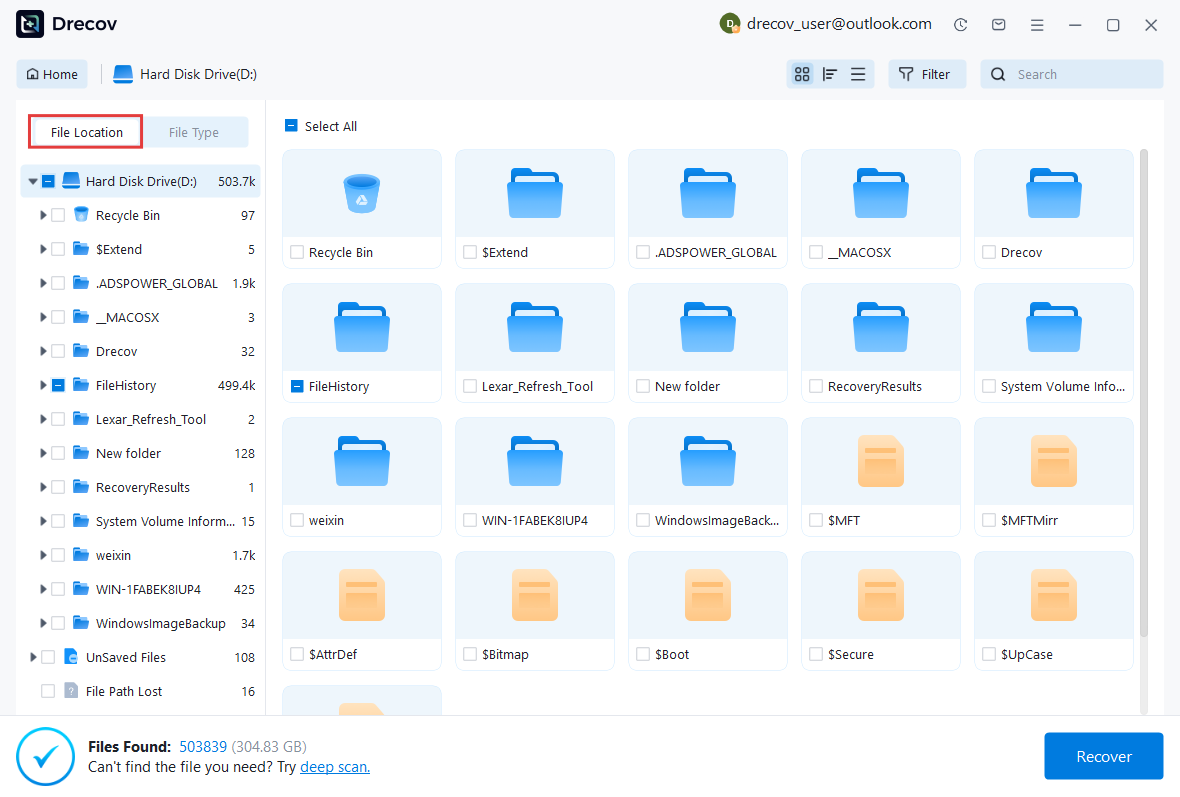
Step 2: Locate and Preview Lost Files
After scanning, browse the detected files and use the preview feature to check recoverable data. You can preview documents (Word, Excel, PDF), photos, and videos to ensure file integrity before recovery.
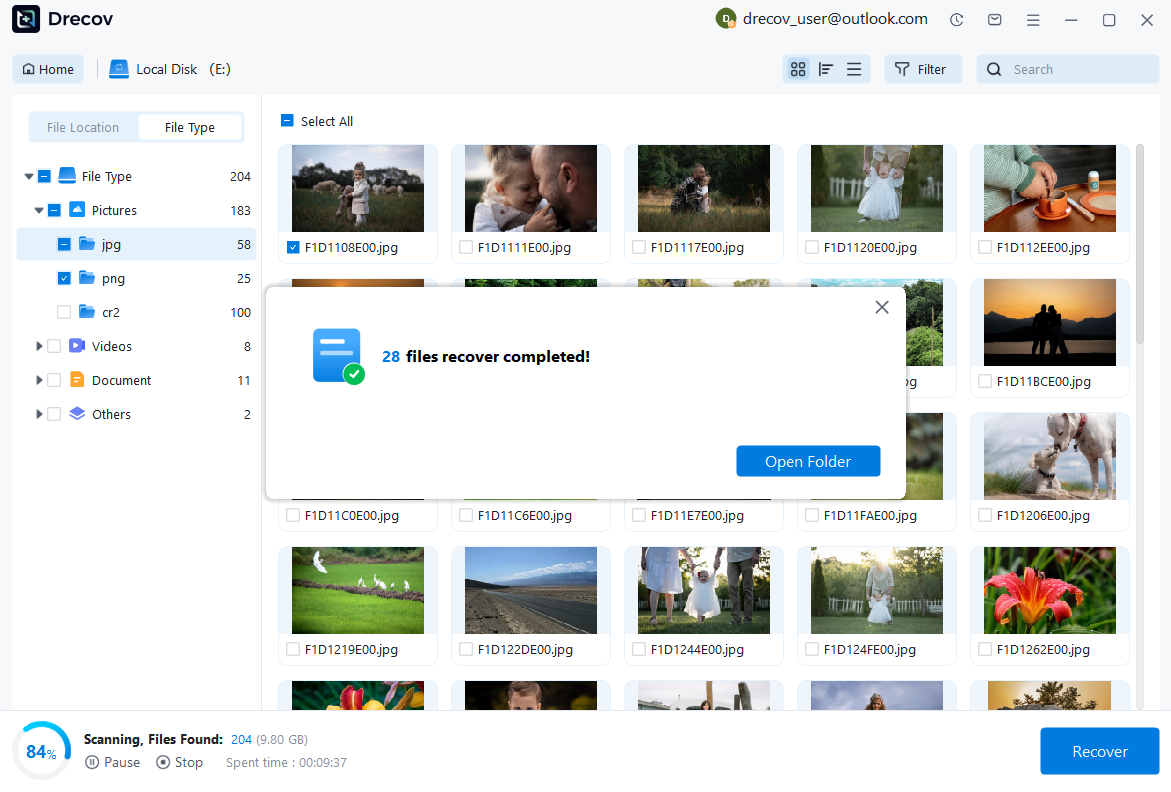
Step 3: Recover and Save to a New Location
Select the files you want to restore and click recover. Save all recovered data to a different drive or location (not the original device) to avoid overwriting lost data.
Why Choose PandaOffice Drecov Recovery Software?
PandaOffice Drecov offers a fast, secure, and user-friendly solution for recovering lost files across multiple scenarios. Whether you need email recovery, ZIP File Recovery, format data recovery, or help to recover deleted drafts Outlook, the software provides reliable recovery performance for both personal and business users.
PandaOffice Drecov supports recovery from formatted hard drives, SSDs, USB drives, SD cards, and external storage devices. Its advanced scanning engine can locate deleted archives, damaged ZIP files, lost Outlook drafts, and accidentally removed documents with high accuracy. For users searching for how to find deleted messages in Teams, PandaOffice Drecov can also help recover exported chat files, attachments, and related local cache data when available.
After recovery, test the file again. If the audio stream was damaged because of storage issues, a recovered version may play normally.
This method is particularly useful when only a few files exhibit audio problems while VLC works correctly with all other media.
This method can help users recover files from floppy disk storage after accidental deletion, formatting, or logical corruption.
This step is especially useful when memory issues are accompanied by system corruption or repeated application crashes.
This method is especially useful for recovering data from formatted cards, corrupted file systems, accidental deletions, and inaccessible partitions.
Many users searching for an sdhc card recovery software free download solution initially try basic troubleshooting methods, but dedicated recovery tools generally provide a higher recovery success rate when data loss is more severe.
⚠️ Warning: Always recover files to a different storage device. Saving files back to the original SDHC card may overwrite additional recoverable data.
Method 4: Restore Data from Backup Sources
Recovery software is not always necessary if backups already exist.
Many users unknowingly maintain copies of their files through cloud services, local backups, or synchronization platforms. Checking these sources can save time and reduce recovery complexity.
Test Environment
- Operating System: Windows 10/11
- Storage Device: SDHC Card Used in Camera or Smartphone
- Backup Sources: OneDrive, Google Photos, Local Backup Drive
Start by reviewing any cloud storage accounts connected to your devices. Services such as Google Photos often upload images automatically whenever a device connects to Wi-Fi.
If the SDHC card was used in a smartphone, tablet, or camera connected to synchronization software, your files may already exist elsewhere.
Windows users should also check File History, backup drives, and archived folders created during previous imports.
Professional photographers frequently create duplicate copies of images after transferring them from memory cards. Reviewing previous projects may reveal that the supposedly lost files remain safely stored.
Although backups cannot restore files that were never copied, they remain one of the most effective ways to recover important content without specialized software.
Method 5: Assign a New Drive Letter to the SDHC Card
Sometimes a memory card appears inaccessible even though the data remains intact.
This issue can occur when Windows fails to assign a proper drive letter or when another storage device creates a conflict.
Test Environment
- Operating System: Windows 11 Pro
- Storage Device: SDHC Memory Card
- Utility Used: Disk Management
To check for this problem, open Disk Management by pressing Windows + X and selecting the appropriate option.
Locate the SDHC card in the storage list. If the card appears healthy but lacks a usable drive letter, right-click the device and select “Change Drive Letter and Paths.”
Assign an available letter and confirm the change.
Disconnect and reconnect the card before attempting access again.
In many cases, files immediately become visible after Windows correctly mounts the storage device.
This solution is particularly useful when the card appears in Disk Management but fails to appear in File Explorer.
Although changing the drive letter will not recover deleted files, it can restore access to data that remains present but temporarily inaccessible.
How to Choose the Right SDHC Card Recovery Software
Features of Reliable Recovery Software
Not all recovery tools provide the same capabilities.
A reliable recovery solution should support multiple file formats, including photos, videos, documents, archives, and audio files. Broad compatibility increases the likelihood of locating all missing content during a scan.
Preview functionality is another important feature. Being able to inspect files before recovery helps verify their integrity and reduces unnecessary recovery attempts.
Deep scanning capabilities also play a significant role. While quick scans are useful for recently deleted files, deeper analysis can locate older data or information hidden behind damaged file systems.
Ease of use matters as well. Recovery software should provide clear navigation, organized scan results, and straightforward recovery procedures.
Users evaluating SDHC card recovery software should prioritize these features rather than focusing solely on scan speed or marketing claims.
Comparing Free and Paid Recovery Solutions
Many users initially search for free sdhc card recovery software because they hope to restore files without additional expense.
Free solutions can be effective for small recovery jobs or situations involving recently deleted files. Some tools allow users to scan storage devices and preview results before deciding whether further recovery is necessary.
However, free software often includes limitations such as restricted recovery sizes, fewer supported file formats, or reduced deep-scanning capabilities.
Paid recovery tools generally offer more advanced analysis, broader format support, and improved recovery rates for formatted or corrupted cards.
The right choice depends on the value of the lost data and the complexity of the recovery situation.
For important files, investing in a more capable recovery solution may significantly improve results.
What to Look for in Sandisk SDHC Card Recovery Software
Many SDHC cards come from well-known manufacturers such as SanDisk.
When evaluating sandisk sdhc card recovery software, compatibility should be one of the primary considerations.
The software should support FAT32, exFAT, and other file systems commonly used by SDHC cards. It should also recognize memory cards connected through USB readers and integrated card slots.
Recovery speed, scan accuracy, and support for multimedia formats are equally important.
Photographers may prioritize RAW image support, while videographers may require compatibility with large video files.
Choosing software that aligns with your specific storage and workflow requirements can improve recovery efficiency and overall success rates.
Frequently Asked Questions About SDHC Card Recovery Software
Is There Any SDHC Card Recovery Software Free Download Available?
Yes. Numerous recovery tools offer free versions or trial editions.
These solutions often allow users to scan SDHC cards, preview recoverable files, and perform limited recoveries. Some programs restrict the amount of data that can be restored unless a paid version is purchased.
Always download software from official sources to reduce security risks.
Can I Recover Files from a Formatted SDHC Card?
In many situations, yes.
Quick formatting typically removes file system references rather than completely erasing data. Recovery software can often identify and restore files if they have not been overwritten.
Recovery success depends on how much new data has been written to the card after formatting.
What Is the Best Sandisk SDHC Card Recovery Software?
The ideal solution depends on the recovery scenario.
Effective recovery software should support SDHC cards, provide deep scanning capabilities, preview functionality, and compatibility with common file systems.
The most important factor is the software’s ability to locate and reconstruct lost data without causing additional damage.
How Successful Is Free SDHC Card Recovery Software?
Success rates vary depending on the condition of the memory card and the nature of the data loss.
Free tools may successfully recover recently deleted files, especially when no overwriting has occurred.
More complex situations involving formatting, corruption, or partition issues often require advanced scanning technologies available in professional recovery software.
Can Corrupted SDHC Cards Be Repaired Without Losing Data?
Sometimes.
Minor corruption can often be repaired using built-in tools such as CHKDSK or through specialized repair utilities.
However, severe corruption may require recovery software to extract files before attempting repairs.
Whenever possible, recover important files first and repair the card afterward.
Final Thoughts on Recovering Data from SDHC Cards
Data loss on an SDHC card can occur unexpectedly, but it does not always result in permanent file loss.
Whether files disappeared because of accidental deletion, formatting, corruption, or system errors, several recovery options remain available. Starting with simple checks such as hidden files and file system repairs can often resolve minor issues quickly.
For more serious situations, dedicated recovery tools can search the storage device for recoverable data and restore important content before it is overwritten.
Users searching for SDHC card recovery software should act quickly, avoid writing new data to the card, and choose recovery methods appropriate for the specific problem.
Maintaining regular backups remains the most reliable way to protect valuable files. Cloud synchronization, external storage devices, and scheduled backup routines can dramatically reduce the impact of future data loss events.
By following the methods and best practices outlined in this guide, you can improve your chances of successful recovery while keeping your SDHC storage devices healthy and reliable for long-term use.





