







An SD card suddenly becoming RAW can be alarming, especially when it stores important photos, videos, or work documents. Many users encounter error messages such as “You need to format the disk before using it” or notice that their memory card becomes inaccessible without warning. In these situations, performing proper sd card raw format recovery is essential before formatting the device again.
This guide explains the causes of RAW SD card problems, how to recover data from raw sd card devices, and the safest methods to restore files without causing permanent data loss. You will also learn several repair techniques for corrupted memory cards and preventive tips to avoid future issues.
Understanding RAW SD Card Problems
What Does a RAW SD Card Mean?
A RAW SD card is a storage device whose file system has become unreadable by the operating system. Normally, SD cards use file systems such as FAT32, exFAT, or NTFS to organize stored files. When corruption occurs, Windows or macOS can no longer recognize the file structure correctly.
Instead of showing the original storage format, the card may appear as:
- RAW
- Unallocated
- Unknown partition
- Unformatted drive
This issue prevents normal access to photos, videos, and other saved data.
Many users begin searching for raw sd card recovery solutions after receiving repeated formatting prompts while inserting the memory card into a computer or camera.
Common Symptoms of RAW SD Cards
RAW corruption can appear in different forms depending on the severity of the damage. Some SD cards remain partially accessible, while others stop responding completely.
Typical symptoms include:
- “SD card is not formatted” errors
- Missing files and folders
- Storage capacity showing incorrectly
- Slow or frozen file transfers
- Camera reading errors
- Blank memory card directories
In many situations, the files still physically exist on the card, making it possible to recover raw files from sd card storage using professional recovery techniques.
⚠️Warning: Formatting the SD card immediately may overwrite recoverable data and reduce recovery success rates.
Why RAW Errors Happen on SD Cards
Several hardware and software issues can damage the SD card file system.
Common causes include:
- Improper ejection from devices
- Virus or malware infection
- Interrupted file transfers
- Power failure during writing operations
- Bad sectors on the memory card
- Physical damage
- Unsupported file systems
- Excessive read/write cycles
Low-quality or counterfeit memory cards are also more likely to develop corruption over time.
Why RAW SD Card Recovery Is Possible
How Data Remains After RAW Corruption
When an SD card becomes RAW, the operating system usually loses access to the file table rather than instantly deleting the stored files themselves. The original data often remains intact until overwritten by new information.
This is why many users can successfully:
- recover sd card raw partitions
- Restore deleted images
- Retrieve inaccessible videos
- Recover formatted memory card content
The recovery process involves scanning the storage sectors directly to locate hidden file fragments.
Factors Affecting Recovery Success
The success rate of sd card raw format recovery depends on several conditions.
Important factors include:
- Whether the card has been reformatted
- The amount of overwritten data
- Physical damage severity
- Storage device health
- File fragmentation level
If the SD card has severe physical damage, recovery may become significantly more difficult.
When to Stop Using the SD Card
Continuing to use a corrupted memory card increases the risk of permanent data loss.
You should immediately stop:
- Recording new videos
- Taking additional photos
- Copying files to the card
- Attempting repeated formatting
⚠️Warning: Every new write operation may overwrite lost files permanently.
Recover Files Using PandaOffice Drecov
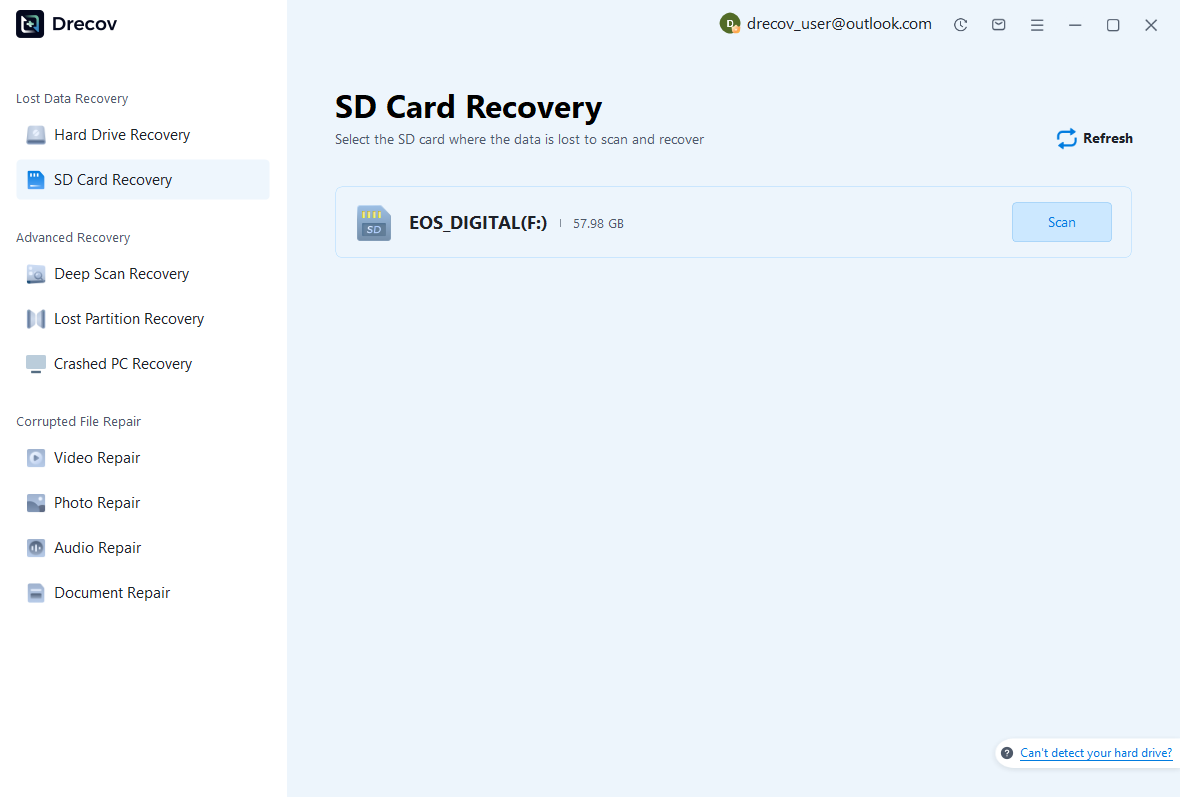
Steps to Recover Data From RAW SD Card
Step 1: Connect the SD Card
Insert the affected memory card into your computer using a reliable card reader.
Step 2: Launch PandaOffice Drecov
Open the recovery software and select the RAW SD card from the device list.
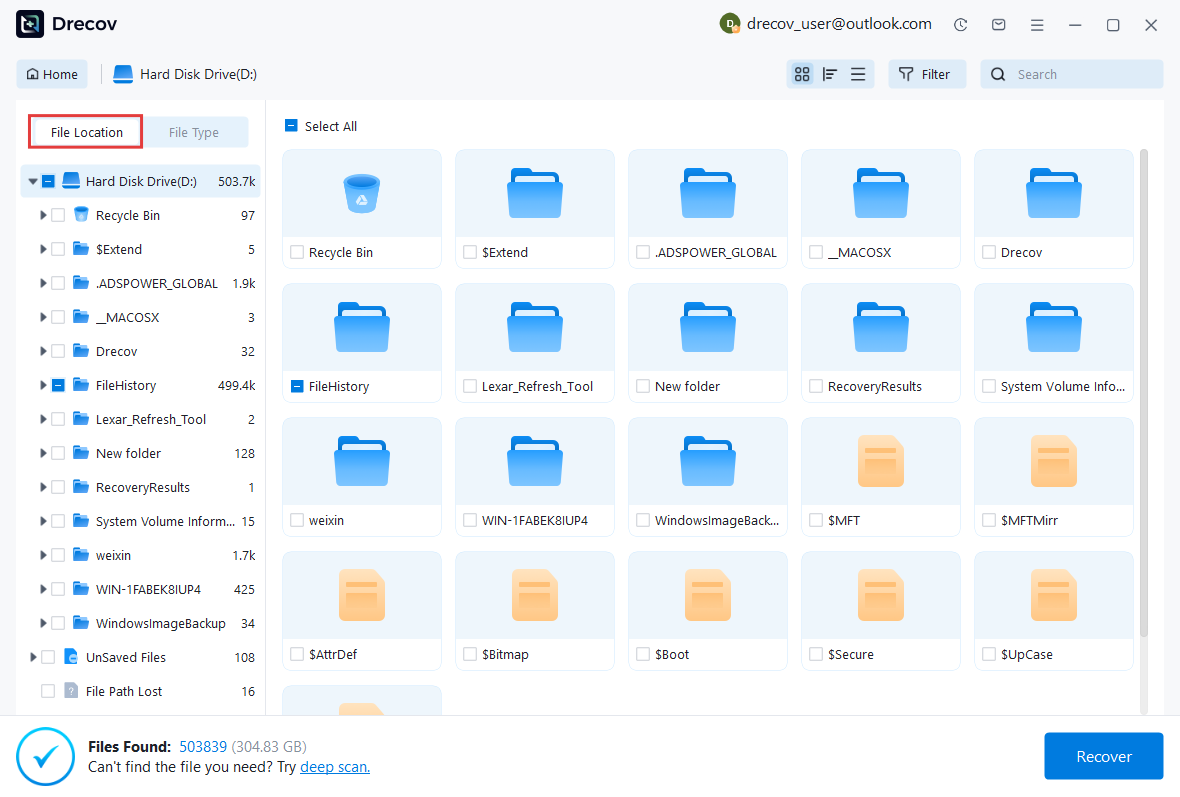
Step 3: Start Deep Scan
Choose deep scan mode to search for recoverable photos, videos, and documents.
The scan may take time depending on:
- Card capacity
- Damage severity
- Number of stored files
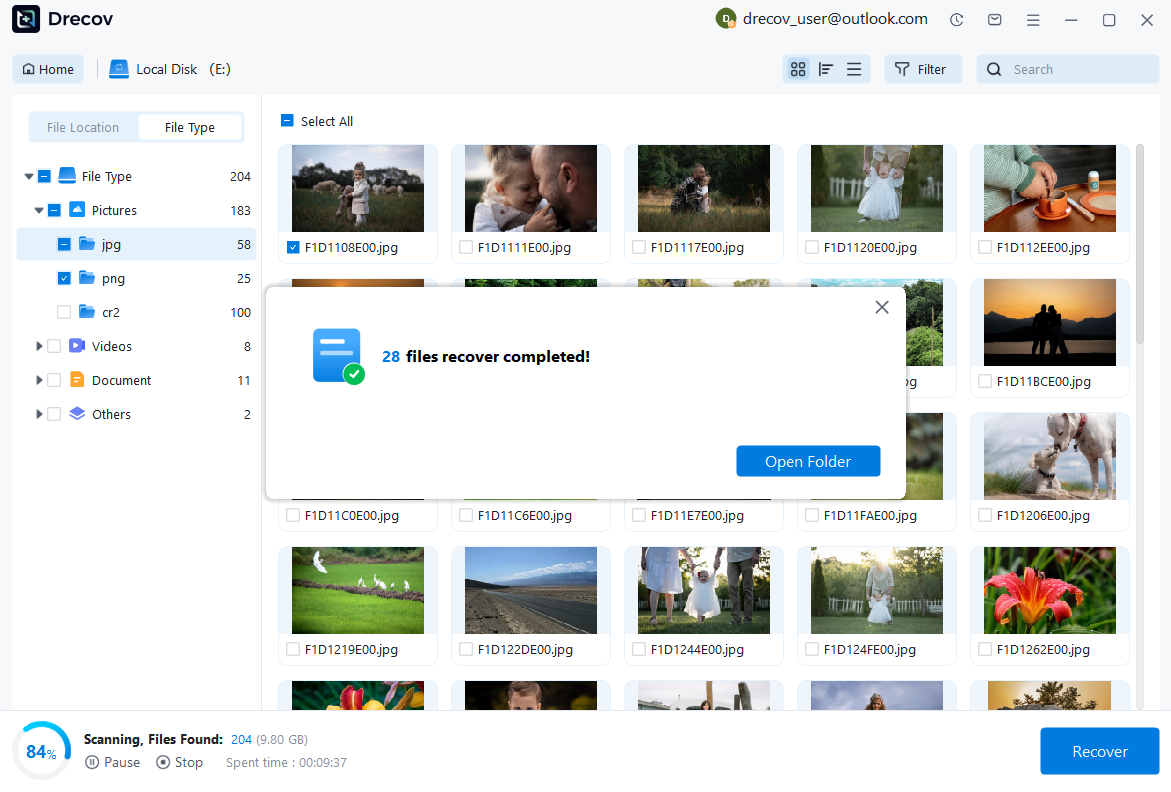
Step 4: Preview Recoverable Files
After scanning completes, browse the detected files and preview recoverable content.
Step 5: Save Recovered Data
Export the recovered files to another healthy drive instead of the damaged SD card.
This method is highly effective when attempting to recover data from raw sd card devices without formatting first.
Why Choose PandaOffice Drecov Recovery Software?
PandaOffice Drecov offers a fast, secure, and user-friendly solution for recovering lost files across multiple scenarios. Whether you need email recovery, ZIP File Recovery, format data recovery, or help to recover deleted drafts Outlook, the software provides reliable recovery performance for both personal and business users.
PandaOffice Drecov supports recovery from formatted hard drives, SSDs, USB drives, SD cards, and external storage devices. Its advanced scanning engine can locate deleted archives, damaged ZIP files, lost Outlook drafts, and accidentally removed documents with high accuracy. For users searching for how to find deleted messages in Teams, PandaOffice Drecov can also help recover exported chat files, attachments, and related local cache data when available.
Key advantages include:
- Deep scan technology for complex data loss situations
- Support for emails, archives, videos, photos, and office documents
- Recovery from accidental deletion, formatting, corruption, and system crashes
- Easy preview before restoring files
- Compatible with Windows and multiple storage devices
Unlike complicated enterprise recovery tools, PandaOffice Drecov keeps the recovery process simple. Users can scan, preview, and restore files in just a few steps without technical expertise.
Whether you are dealing with lost Outlook drafts, corrupted ZIP archives, formatted drives, or missing communication data, PandaOffice Drecov provides an efficient and practical recovery experience designed to minimize downtime and protect important files.
Test Environment
- Device: SanDisk Extreme 128GB SD Card
- System: Windows 11 Pro
- File System Before Corruption: exFAT
- Issue: SD card detected as RAW after unsafe removal
Repair RAW SD Card Using CHKDSK
What CHKDSK Does
CHKDSK is a built-in Windows utility that checks storage devices for logical file system errors. In some cases, it can repair minor corruption and restore access to the SD card.
However, CHKDSK may not work if the card is severely damaged.
Test Environment
- Device: Kingston 64GB SD Card
- System: Windows 10
- Issue: RAW partition after interrupted transfer
Steps to Use CHKDSK
Step 1: Open Command Prompt
Search for “cmd” and run Command Prompt as Administrator.
Step 2: Enter Repair Command
Type:
chkdsk X: /fReplace “X” with your SD card drive letter.
Step 3: Wait for Scanning
Windows will scan and attempt to repair file system errors automatically.
Step 4: Reconnect the SD Card
After completion, remove and reconnect the memory card to check accessibility.
⚠️Warning: CHKDSK may cause data loss on severely corrupted cards. Recover important files first whenever possible.
Assign a New Drive Letter to the SD Card
Why Drive Letter Problems Cause Access Errors
Sometimes Windows fails to assign a proper drive letter, making the SD card appear inaccessible or RAW.
Reassigning the drive letter may restore normal visibility.
Test Environment
- Device: Samsung EVO SD Card
- System: Windows 11
- Issue: RAW SD card not appearing in File Explorer
Steps to Change Drive Letter
Step 1: Open Disk Management
Press:
Windows + XThen select:
Disk ManagementStep 2: Locate the SD Card
Find the memory card listed among connected drives.
Step 3: Change Drive Letter
Right-click the SD card and choose:
Change Drive Letter and PathsAssign a new unused drive letter.
Step 4: Check Accessibility
Reconnect the SD card and verify whether the files become visible again.
This simple solution occasionally helps users recover sd card raw access without advanced repairs.
Use Diskpart to Clean the RAW SD Card
When Diskpart Is Necessary
If the SD card remains unusable after recovery, Diskpart can remove corrupted partition information completely.
This method should only be used after recovering important data.
Test Environment
- Device: Lexar Professional SD Card
- System: Windows 10
- Issue: Persistent RAW file system
Diskpart Cleaning Steps
Step 1: Launch Command Prompt
Open Command Prompt as Administrator.
Step 2: Open Diskpart
Type:
diskpartStep 3: List Available Drives
Enter:
list diskStep 4: Select the SD Card
Use:
select disk XReplace X with the correct disk number.
Step 5: Clean the Card
Type:
cleanThis removes corrupted partition information entirely.
Step 6: Create New Partition
Reinitialize and format the SD card afterward.
This completes the first half of the guide covering major methods for sd card raw format recovery and ways to recover raw files from sd card devices safely.
Format the RAW SD Card After Data Recovery
Why Formatting Helps Repair RAW Errors
Once important files have been restored, formatting becomes one of the most effective ways to repair a corrupted memory card. Formatting rebuilds the file system structure and removes damaged partition information that caused the RAW problem.
Many users successfully restore normal card functionality after completing raw sd card recovery and performing a clean format.
However, formatting should always happen after file recovery whenever possible.
⚠️Warning: Formatting a RAW SD card before recovery may permanently erase recoverable files.
Test Environment
- Device: Sony 256GB SDXC Card
- Operating System: Windows 11
- Original Problem: SD card displayed RAW file system
- Goal: Restore card usability after recovery
How to Format a RAW SD Card in Windows
Step 1: Open File Explorer
Insert the SD card into the computer using a stable card reader.
Locate the SD card under:
- This PC
- Devices and Drives
Step 2: Select Format Option
Right-click the memory card and choose:
FormatStep 3: Choose File System
Select an appropriate file system:
- FAT32 for smaller cards
- exFAT for large-capacity SDXC cards
Step 4: Start Formatting
Enable Quick Format if desired, then click Start.
After completion, reconnect the SD card and verify whether it functions normally.
This process often resolves persistent corruption after users recover data from raw sd card storage successfully.
Repair RAW SD Cards Through Device Manager
How Driver Problems Trigger RAW Errors
Corrupted or outdated card reader drivers may prevent the operating system from reading SD cards correctly. In some cases, Windows incorrectly identifies a healthy card as RAW because of communication problems between the device and the driver.
Updating drivers can sometimes restore access without formatting.
Test Environment
- Device: Toshiba SD Card
- Operating System: Windows 10
- Problem: RAW error after Windows update
Steps to Update SD Card Drivers
Step 1: Open Device Manager
Press:
Windows + XChoose:
Device ManagerStep 2: Locate Disk Drives
Expand:
Disk DrivesFind your SD card or card reader device.
Step 3: Update Driver
Right-click the device and select:
Update DriverAllow Windows to search automatically for updated drivers.
Step 4: Restart the Computer
Reconnect the memory card after restarting the system.
This method may help users regain access before attempting deeper sd card raw format recovery procedures.
Recover RAW SD Card Files on Mac
Why Mac Users Encounter RAW SD Card Issues
Mac systems can also experience RAW SD card corruption, especially after unsafe removal or incompatible file systems. Some SD cards become unreadable when transferred between Windows cameras and macOS devices repeatedly.
Fortunately, macOS includes built-in repair tools that may help restore access.
Test Environment
- Device: SanDisk Ultra SD Card
- System: macOS Sonoma
- Problem: Card unreadable after video transfer
Repair RAW SD Card With Disk Utility
Step 1: Open Disk Utility
Navigate to:
Applications → Utilities → Disk UtilityStep 2: Select the SD Card
Choose the RAW SD card from the sidebar.
Step 3: Run First Aid
Click:
First AidmacOS will scan and repair logical errors automatically.
Step 4: Check File Accessibility
Reconnect the SD card after repair finishes.
This method may restore access without requiring full formatting or additional recovery tools.
Use CMD Commands to Repair RAW File Systems
When Command-Line Repairs Are Useful
Windows command-line tools provide additional repair capabilities for damaged storage devices. Advanced users often rely on these utilities to repair inaccessible partitions or rebuild corrupted structures.
These commands are especially useful when the SD card still appears in Disk Management but remains inaccessible.
Test Environment
- Device: PNY SD Card
- System: Windows 11
- Problem: RAW partition with inaccessible files
Steps to Repair Using CMD
Step 1: Launch Command Prompt
Run Command Prompt with administrator privileges.
Step 2: Use Repair Command
Enter:
sfc /scannowThis scans Windows system files for corruption that could affect storage detection.
Step 3: Scan the Disk
Run:
chkdsk X: /rReplace X with the correct SD card drive letter.
Step 4: Wait for Repair Completion
Allow Windows to finish checking and repairing bad sectors if possible.
These commands may assist users attempting to recover sd card raw partitions with logical corruption.
⚠️Warning: If the SD card makes unusual noises or disconnects repeatedly, stop using it immediately to avoid permanent hardware damage.
Use Reliable SD Cards and Card Readers
Why Hardware Quality Matters
Cheap or counterfeit SD cards are significantly more likely to fail unexpectedly. Low-quality memory controllers often struggle with large file transfers, especially during 4K or 8K recording sessions.
Using reliable hardware reduces the risk of corruption dramatically.
Recommended practices include:
- Purchase genuine branded SD cards
- Use certified high-speed memory cards
- Replace aging storage devices regularly
- Avoid damaged card readers
Professional users working with cameras, drones, and mobile devices should prioritize storage reliability carefully.
Avoid Unsafe Removal
Removing an SD card while files are still transferring can damage the file system instantly.
Always:
- Eject storage devices properly
- Wait for transfers to complete fully
- Avoid unplugging during writing operations
Improper removal remains one of the leading causes requiring raw sd card recovery later.
Create Backup Copies Regularly
Why Backups Are Essential
Even healthy SD cards can fail unexpectedly. Physical damage, accidental formatting, malware, or water exposure may occur without warning.
Maintaining backups helps prevent permanent data loss.
Useful backup strategies include:
- External hard drives
- Cloud storage
- NAS devices
- Automatic synchronization software
Professionals often follow the “3-2-1” backup rule:
- 3 copies of files
- 2 different storage types
- 1 offsite backup
Monitor SD Card Health
Memory cards have limited write cycles. Monitoring performance helps identify failure risks early.
Watch for warning signs such as:
- Slower transfer speeds
- Random disconnects
- Missing files
- Frequent formatting requests
Replacing unstable cards proactively reduces the need for future recover raw files from sd card procedures.
FAQ About RAW SD Card Recovery
Can I Recover Files Without Formatting the SD Card?
Yes. In many cases, users can perform sd card raw format recovery without formatting the device first. Recovery software scans the storage sectors directly to locate inaccessible files.
Avoid formatting until important files have been restored safely.
Why Does My SD Card Suddenly Become RAW?
RAW errors commonly occur because of:
- Unsafe ejection
- File system corruption
- Malware attacks
- Interrupted transfers
- Power failure
- Bad sectors
Physical damage may also contribute to severe corruption.
Is RAW SD Card Recovery Always Successful?
Recovery success depends on:
- Whether new data overwrote old files
- Card condition
- Corruption severity
- Physical damage level
The sooner recovery begins, the higher the chances of restoring lost files successfully.
Can I Recover Photos and Videos From a RAW SD Card?
Yes. Most recovery tools support:
- JPG
- PNG
- MP4
- MOV
- RAW camera images
- Audio files
- Office documents
Users can often recover data from raw sd card storage even after accidental formatting.
Should I Reuse a Previously Corrupted SD Card?
If the corruption resulted from logical errors only, formatting may restore stable operation temporarily. However, cards showing repeated RAW issues should be replaced immediately to avoid future failures.
⚠️Warning: Continuing to use unstable SD cards can lead to sudden permanent data loss.
Conclusion
RAW SD card errors can make valuable files suddenly inaccessible, but recovery is often possible with the right approach. Whether the issue results from corruption, formatting, interrupted transfers, or bad sectors, users can frequently restore photos, videos, and documents successfully.
This guide explained how to:
- Perform sd card raw format recovery
- Complete effective raw sd card recovery
- Recover data from raw sd card devices safely
- Recover raw files from sd card storage
- Repair inaccessible memory cards step by step
Using professional recovery software, built-in repair tools, proper formatting methods, and preventive storage practices can significantly improve recovery success rates while reducing future corruption risks.





