







You can restore deleted videos Android users lose when the clips still exist in Gallery Trash, Google Photos, cloud backups, app drafts, visible folders, or SD card storage. Start there immediately and stop recording new videos. When the videos seem permanently deleted from encrypted internal storage and no backup exists, recovery becomes uncertain, especially after reset.
This guide covers normal Android video recovery, permanently deleted files, deleted voicemail checks, Samsung broken screen recovery, and Samsung data recovery app or program decisions.
Quick Decision Table For restore deleted videos android
| Situation | Best First Action | Risk To Avoid |
|---|---|---|
| Video deleted recently | Restore from Gallery or Google Photos Trash | Do not record new video |
| Video from TikTok or editor | Check drafts and export folders | Do not clear cache or reinstall app |
| Video on SD card | Remove card and scan on computer | Do not format or reuse card |
| Samsung screen broken | Check cloud and SD card before repair | Do not approve reset repair |
| Voicemail deleted | Check carrier or Phone app quickly | Do not assume file recovery can restore carrier voicemail |
Why Video Recovery Is More Urgent Than Photo Recovery
Videos are large files. A single new recording, app update, or download can overwrite parts of a deleted video faster than users expect. That is why the first step is to stop recording and reduce phone activity.
Test a restored video fully. Thumbnails and partial previews can appear even when the video freezes, loses audio, or stops early. Good recovery means full playback, not only a visible file name.
Samsung and Android users may also have cloud copies. Google Photos, Samsung Gallery, OneDrive, TikTok drafts, WhatsApp, Telegram, and editor exports deserve checks before raw recovery.
Method 1: Restore Deleted Videos From Trash And Cloud
Best For: videos deleted recently from Gallery, Google Photos, Samsung Gallery, OneDrive, or cloud-synced albums.
Tool Used: Android Gallery, Google Photos, Samsung Gallery, OneDrive, TikTok drafts, WhatsApp, Telegram, and video editor apps.
Steps
- Open Gallery, Google Photos, and Samsung Gallery if relevant.
- Check Trash, Recently Deleted, Archive, and cloud Recycle Bin.
- Open TikTok, video editors, WhatsApp, and Telegram for drafts or exported clips.
- Restore or export the video to a computer.
- Play the full video and check audio sync.
- Create a second copy before clearing phone storage.
Risk Level: Low, because Trash and cloud restore avoid raw storage scanning.
Method 2: Restore Permanently Deleted Files Android Users Still Need
Permanently deleted files are not always impossible, but the source matters. Cloud Trash may be empty while app drafts still hold a copy. A video may disappear from Gallery while a compressed version remains in a chat. An SD card may still contain recoverable video fragments until new data overwrites them.
Internal storage is the hardest source after permanent deletion. Encryption, overwrite activity, reset, and phone damage all reduce the chance. That is why this workflow checks every existing copy before deeper recovery.
Steps
- Stop recording, downloading, and updating apps.
- Search phone folders by MP4, MOV, MKV, 3GP, and WEBM.
- Check app drafts, exports, and chat media folders.
- Check cloud accounts from a browser.
- Remove SD card storage when you saved the video there.
- Scan removable storage and save results to a computer.
Method 4: Scan Removable Android Storage With PandaOffice Drecov
Use this method only when you stored the missing data on a readable Android SD card, Samsung microSD card, camera card used in a phone, or another removable storage device. This guide includes PandaOffice Drecov here as one practical desktop scan method for removable media. It is not a promise to bypass encrypted internal phone memory after reset or forgotten passcode.
Best For: deleted videos, screen recordings, app exports, and large media files from Android or Samsung SD cards.
Tool Used: PandaOffice Drecov.
Test Environment:
Operating System: Windows 11
Device Type: Android microSD card through card reader
File System: FAT32 / exFAT
Problem Scenario: Deleted Android videos from removable phone storage
Tool Used: PandaOffice Drecov
Steps
- Stop using the Android phone or Samsung phone as soon as you notice the missing files.
- Power off the device and remove the SD card if you saved the lost files on removable storage.
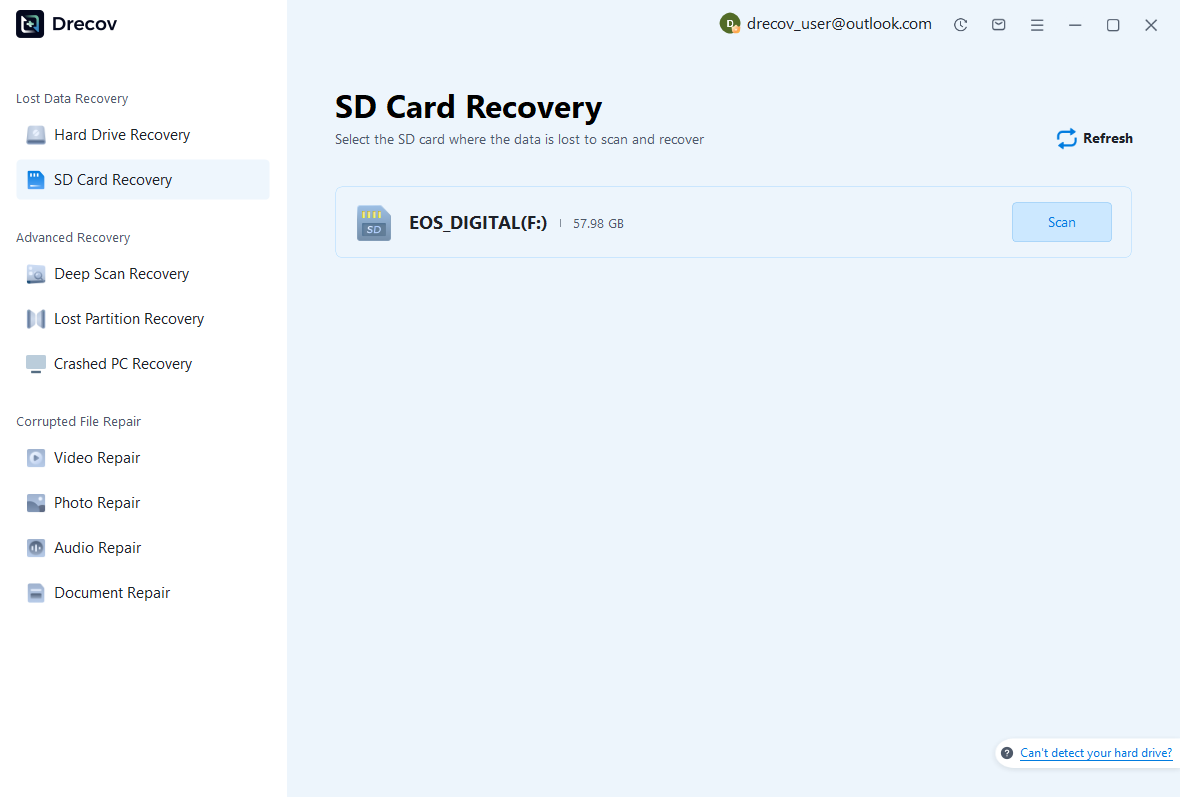
- Connect the card to the computer with a reliable card reader.
- Open PandaOffice Drecov and select the removable storage device, not the system drive.
- Start the scan and wait for both quick scan and deep scan results to finish.
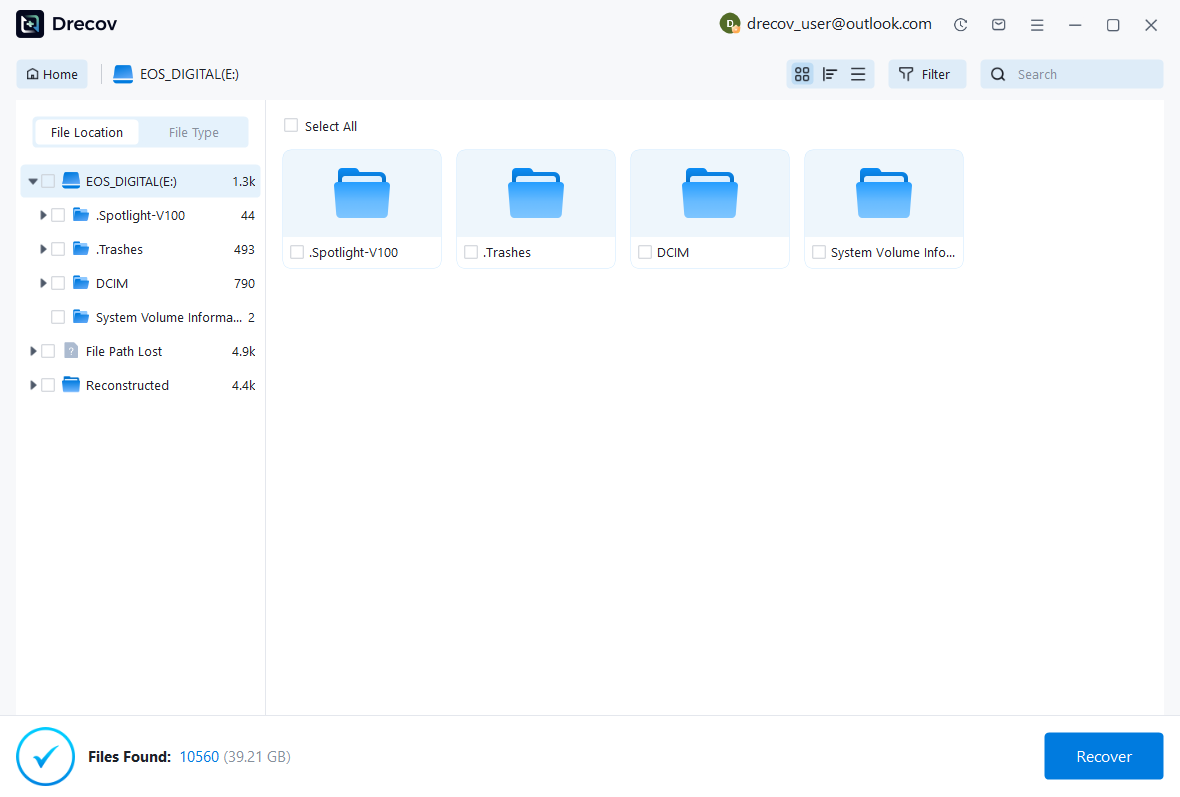
- Filter results by the file type you need, such as pictures, videos, documents, audio files, or browser exports.
- Preview recoverable files whenever preview is available.
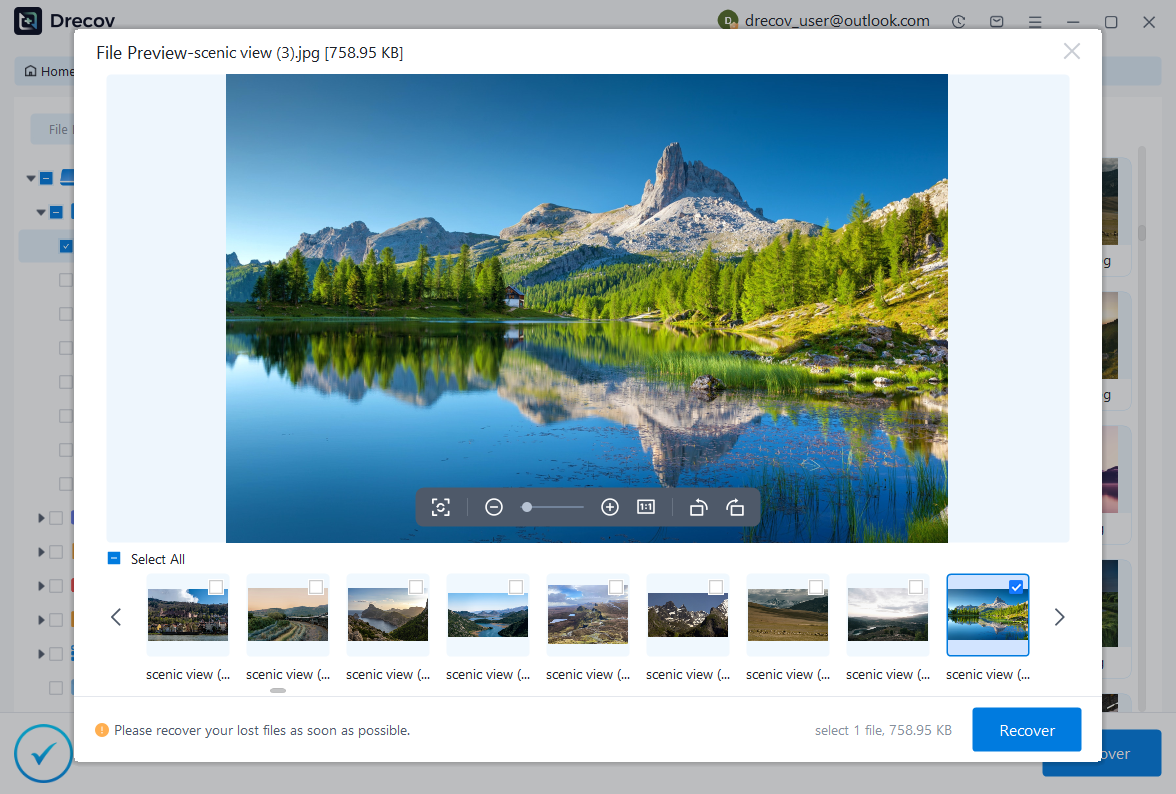
- Recover selected files to a computer folder or external drive. Do not save them back to the original SD card.
- Open recovered files before formatting, repairing, or reusing the original storage device.
What To Do If It Fails: Recheck cloud backups, app-specific Trash folders, Samsung or Google account data, and any computer copies. For internal storage on a locked, reset, or non-booting phone, software recovery may not be practical without restoring device access first.
Risk Level: Low when you remove the card promptly and you save recovered files to another healthy drive.
Detailed Recovery Scenarios For deleted Android video recovery
Recover Permanently Deleted Videos Android
Permanent deletion usually means the normal Trash path failed. At that point, cloud copies, app drafts, chat copies, and SD card recovery become the main options.
Do not keep testing camera features after deletion. Large new videos can overwrite the old file area.
Recover to a different drive and test full playback.
Retrieve Deleted Voicemail On Android
Deleted voicemail recovery depends on the Phone app, visual voicemail provider, or carrier retention. File recovery tools may not help if the voicemail never existed as a normal local file.
Open the Phone app, carrier voicemail app, and account portal quickly. Retention windows can be short.
When you exported the voicemail as an audio file, search recorder, downloads, and cloud folders.
Samsung Broken Screen Recovery
For a Samsung phone with a broken screen, check Google Photos, Samsung Gallery sync, OneDrive, and SD card storage first. Those sources may work without touching the damaged screen.
When the phone still boots, use external display or mouse access to copy videos before repair.
Ask whether repair requires reset before you approve any work.
Samsung Data Recovery App Or Program
A Samsung data recovery app can help with backup checks and accessible files, but a desktop program is safer for SD cards.
Choose the method based on storage source, not brand name alone.
Preview recovered videos before saving and test them fully afterward.
These scenarios also help you avoid keyword-stuffed recovery advice. A real restore deleted videos android article should tell the reader which storage source matters, which tool fits that source, and which steps can make recovery worse. That practical separation is more useful than repeating one generic software recommendation across every case.
Safety Rules Before You Try More Recovery Steps
Protect The Source Device First
The safest recovery habit is to preserve what still exists before you search for what disappeared. For deleted Android video recovery, that means stopping new photos, videos, downloads, app updates, and cache cleaning. Android can write background data even when you are not actively using the phone, so a short pause can protect the remaining recovery chance.
Do not factory reset the phone as a recovery step. A reset may restore account backups later, but it usually removes local app data, temporary files, and internal storage references. Modern Android phones also use encryption, so internal files without backups may become unreachable after reset.
Avoid Storage Changes That Reduce Recovery Chances
Do not format an SD card when Windows or Android asks. A format can destroy file system records that help recovery software rebuild folder names and original paths. Copy readable folders first, then scan the card if important files disappear.
Avoid installing several recovery apps on the same phone. Every new install writes data, creates cache, and changes storage state. For removable storage, a computer-based scan is usually safer. For cloud-synced data, browser-based account checks are usually cleaner than app installs.
Save And Verify Recovered Files Safely
Keep recovered files away from the source device. Save them to a computer, external drive, or cloud folder. After saving, open the files and confirm that photos show full resolution, videos play fully, documents open correctly, and audio files contain the expected content.
Use a written checklist when the data matters. Note which files disappeared, where you stored it, what you checked, and where you placed recovered copies. This record prevents repeated risky steps and helps you explain the case if you need repair support later.
Choose The Next Step By Storage Source
For a restore deleted videos android case, the goal is not to try every possible tool. The goal is to protect the original storage, choose the right recovery source, preview the result, and save the recovered files somewhere safe.
Complete Operating Guide Before And After Recovery
Stage 1: Preserve The Current Storage State
Before you try another restore deleted videos android method, preserve the current storage state. Put the phone in airplane mode when possible, stop camera use, stop downloads, and pause automatic app updates. A recovery case often fails because the user keeps using the phone while searching for answers. New photos, message attachments, browser cache, and app updates can all write data to storage.
For removable storage, preservation is more direct. Remove the SD card, label it, and keep it away from the phone until recovery finishes. Do not test the card in several devices. Every mount can create logs or repair prompts. A single computer and a single recovery workflow give you a cleaner path.
For internal storage, preservation means reducing phone activity. You may still need to unlock the phone or copy visible files, but avoid experiments that create new data. Skip side-by-side app installs just to compare scan screens. Leave storage cleanup for later. Reject repair steps that include reset until backup checks are complete.
Stage 2: Build A Recovery Map
A recovery map lists the missing file type, original app, likely folder, backup account, and storage source. For deleted Android video recovery, this map prevents the article from turning into generic advice. Missing camera photos point to DCIM, Gallery Trash, Google Photos, and SD card storage. Downloaded files usually point to Download, browser folders, email, and Drive. Deleted videos often point to Gallery Trash, app drafts, cloud albums, and removable media.
Write down the date of deletion, the last time you last saw the file, and what happened after the loss. A phone reset, screen break, cache cleanup, app reinstall, or SD card format changes the recovery path. This information matters more than the brand of recovery tool because it tells you whether a file may still exist in Trash, backup, visible folders, or raw storage.
The map also helps with Yoast-style usefulness. Readers stay longer when they see the exact decision they need to make. Instead of telling them to try recovery software, tell them which source to check and why that source fits the problem.
Stage 3: Recover The Easy Copies First
Easy copies are not second-rate. They are often the best recovery result. Cloud Trash, synced albums, chat attachments, app exports, computer downloads, and SD card folder copies may contain a complete file with the original quality. These sources should come before raw scans because they do not change the original phone storage.
Open cloud services from a browser as well as from the phone. Browser views often show Recycle Bin, version history, original folders, and download options more clearly. For Samsung users, OneDrive deserves a separate check because Gallery sync may store pictures and videos there. For Google users, check Photos, Drive, Contacts, and Chrome sync one by one.
When you find a file, download it to a computer and open it. Do not only restore it to the phone and assume the job is done. A second copy protects you from sync mistakes, app cleanup, and accidental deletion during later troubleshooting.
Stage 4: Copy Visible Folders Before Deep Recovery
Visible folders are the safest bridge between simple backup restore and deeper recovery. If the phone unlocks, connect it to a computer and copy folders before running repair or recovery steps. Copy DCIM, Pictures, Download, Documents, Movies, Music, Screenshots, and app media folders. Use copy rather than move, because moving files changes the phone.
After copying, search on the computer by extension, date, and size. Image checks should include JPG, PNG, HEIC, WEBP, and GIF. Video checks should include MP4, MOV, MKV, 3GP, and WEBM. Document searches should include PDF, DOCX, XLSX, PPTX, ZIP, and TXT. Audio searches should include M4A, MP3, OPUS, AMR, and WAV. This targeted search often finds files that Android apps no longer index.
Visible-folder copying also gives you a safety backup. If later recovery tools fail, you still have everything the phone could expose. That safety copy matters when the phone has physical damage, low storage, unstable SD card behavior, or pending repair.
Stage 5: Use Tool-Based Recovery Only For The Right Source
Tool-based recovery should match the source. Scan removable SD card data from a computer. Restore cloud data from the cloud service. Recover chat media from the chat app or its folders. Treat internal storage after reset with caution because encryption may block normal recovery.
A useful recovery tool shows file types, paths, previews, and output choices. It should let you save recovered files to a different healthy drive. It should not tell you to format, reset, or clean the original storage before recovery. When the target is removable media, preview and safe output are especially important.
For a restore deleted videos android case, the right tool is not simply the one with the broadest claim. The right tool is the one that can access the actual storage source without making the original problem worse.
Stage 6: Verify Every Recovered File
Verification is part of recovery, not an optional final glance. Open recovered pictures at full size. Play videos from beginning to end. Check audio sync. Open documents in the correct application. Confirm contacts, messages, or browser history entries from the account that restored them. A file name in a scan result is not enough.
For videos and audio, keep the first recovered copy unchanged. When repair or conversion becomes necessary, work on a duplicate. Picture checks should compare resolution and file size to nearby originals. Document checks should confirm the latest edits and not only the cover page. Browser history checks should confirm whether account sync shows the pages you actually need.
After verification, create a second backup. Use a computer, external drive, or cloud folder. The recovered files should not live only on the same phone that just had a data loss event.
Stage 7: Decide When To Stop
Stop experimenting when the recovery target is valuable and the next step would change the original storage. Repeated scans, app installs, cache cleanup, rooting attempts, and reset attempts can reduce recovery chances. If the data has legal, business, or emotional value, a controlled stop is better than another risky click.
Stopping does not mean giving up. It means preserving the source and choosing a better next step. That next step may be a repair that keeps data, a clean SD card scan, a cloud account review, or a specialist assessment. The important point is to avoid turning a recoverable case into an overwritten case.
This staged workflow is long because real recovery is not one button. It is a sequence: preserve, map, check easy copies, copy visible folders, scan the right source, verify files, and back up the result. That sequence gives readers a practical answer and keeps the article useful beyond a generic software recommendation.
Why Recovered Android Videos May Fail Playback
A video may recover with a damaged index, missing audio stream, or incomplete ending. This often happens after partial overwrite. The file name alone does not prove success.
Test every important clip from start to finish. Jump through the middle and last minute, check audio sync, and compare duration with similar videos. Keep the original recovered file before running repair tools.
If only a compressed social copy survives, keep it. Lower quality is still better than no copy when the original is overwritten.
Related Recovery Guides
When the missing file is a TikTok draft or deleted social video, this TikTok video recovery guide gives app-specific checks that a general Android recovery workflow may miss.
For Adobe Illustrator files on a computer, use this Illustrator file recovery guide instead of a phone workflow. Desktop project files follow different recovery rules than Android media files.
When you need to save recovered files to a Mac external drive and that drive does not appear, this LaCie hard drive not showing up on Mac guide can help you prepare a safe destination.
If the recovery plan overlaps with a Windows rollback or restore point, read how to restore a computer to an earlier date on Windows before changing the computer that may hold backups.
FAQ
Can I Restore Deleted Videos Android After Emptying Trash?
Sometimes, especially from cloud backups, app drafts, chat copies, or SD card storage. Internal storage recovery is uncertain.
Can I Restore Permanently Deleted Files Android After Reset?
Usually only from backups or synced accounts. Internal encrypted storage recovery after reset is unlikely.
Can I Retrieve Deleted Voicemail On Android With Recovery Software?
Usually you should check the Phone app or carrier first. Exported voicemail audio files may be recoverable like normal files.
Conclusion
Restore deleted videos Android users lose by checking Trash, cloud backups, drafts, app folders, and SD cards before doing anything risky. The problem is often solvable when a copy still exists, but internal storage after overwrite or reset needs realistic expectations.





