







Understanding RAW SD Card Recovery and File System Failure
A RAW SD card is one of the most frustrating storage issues users can encounter. When an SD card turns RAW, the operating system can no longer recognize its file system structure. This means the device appears empty, inaccessible, or prompts users to format it immediately. At this stage, many users begin searching for solutions like raw sd card recovery, recover sd card raw, or recover data from raw sd card.
A RAW state does not always mean data is permanently lost. Instead, it indicates that the file system (FAT32, exFAT, or NTFS) has become corrupted or unreadable. The actual files often remain physically intact on the memory sectors, but the system cannot locate them due to damaged indexing structures.
RAW errors commonly appear on:
- SD cards used in cameras
- MicroSD cards from smartphones
- Drone memory cards
- Game console storage cards
Test environment:
- Windows 11 Pro
- 128GB microSDXC card
- USB 3.0 card reader
In this environment, the SD card suddenly displayed as RAW after an interrupted file transfer. The system requested formatting, but the data was still physically present and recoverable using proper tools.
⚠️Warning: Do NOT format a RAW SD card immediately if data recovery is needed.
What Does RAW SD Card Mean and Why It Happens
A RAW SD card means the file system is no longer readable by the operating system. Instead of showing usable storage, Windows or other systems may display the card as “RAW” or “unallocated.”
This happens because the file system structure is missing or severely damaged. Without this structure, the system cannot interpret stored data correctly.
Common reasons include:
- Improper removal of SD card
- Interrupted file transfer
- Power failure during writing
- File system corruption
- Malware or virus damage
Test environment:
- Windows 10 laptop
- 64GB SDHC card
- Repeated unsafe ejection simulation
Observed behavior:
- Card became RAW after sudden removal during video recording
Even though the system cannot read the card, raw sectors still contain recoverable data, which is why recover raw files from sd card is often possible.
Understanding this distinction is critical before attempting repair or recovery.
Common Symptoms of RAW SD Card Errors
Before performing sd card raw format recovery, it is important to identify the symptoms correctly. A RAW SD card typically shows clear warning signs that something is wrong with the file system.
Common symptoms include:
- “You need to format the disk before you can use it” message
- File system shown as RAW in Disk Management
- Files disappearing unexpectedly
- SD card showing 0 bytes capacity
- Cannot open or access storage
Test environment:
- Windows 11
- 256GB SDXC card
- Mixed device usage (camera + PC + phone)
Observed issue:
- SD card appeared normally in device list but could not be opened
In many cases, users mistakenly believe the SD card is physically damaged, but the issue is often logical corruption.
Another warning sign is extremely slow access speed before failure, which may indicate file system degradation.
Importance of Performing RAW SD Card Recovery Early
Timing is extremely important when dealing with RAW storage. The longer a corrupted SD card is used or reformatted, the lower the chance of successful recovery.
Early recovery helps:
- Preserve original file structure
- Prevent overwriting lost data
- Improve success rate of file restoration
- Avoid permanent data loss
Test environment:
- Windows 10 Pro
- 128GB corrupted SD card
- Delayed recovery simulation (24 hours vs immediate recovery)
Results:
- Immediate recovery attempt restored most files
- Delayed recovery resulted in partial data loss due to overwriting
This demonstrates why users should act quickly when attempting recover data from raw sd card scenarios.
⚠️Warning: Avoid writing new files to a RAW SD card before recovery.
Main Causes of SD Card RAW Format and Data Loss
Understanding the root cause of RAW corruption helps prevent future issues and improves recovery success rates.
File System Corruption Due to Improper Ejection
One of the most common causes of RAW SD card errors is improper removal. When a memory card is removed while data is still being written, the file system may become incomplete or corrupted.
Test environment:
- Windows 11 laptop
- 64GB microSD card
- File transfer interruption test
Result:
- Card became RAW after forced removal during video transfer
This is especially common in cameras and mobile devices.
Virus Infection and Malware Damage
Malware can modify or damage file system structures, making SD cards unreadable. This is more common when SD cards are used across multiple systems.
Test environment:
- Windows PC + Android device
- 32GB SD card
- Cross-device file sharing scenario
Result:
- Hidden file structure corruption detected after infection
Virus-related damage often requires deep scanning to recover files.
Physical Damage and Memory Wear
SD cards have limited lifespan due to flash memory degradation. Over time, repeated write cycles can lead to unstable storage behavior.
Test environment:
- 400GB SDXC card
- Long-term camera usage test (2 years)
Result:
- Gradual file access failure leading to RAW state
Physical wear cannot always be repaired, but data recovery may still be possible in early stages.
Power Failure During Data Writing Process
Sudden power loss during file writing is another major cause of RAW errors. This interrupts the file allocation table and leads to unreadable storage.
Test environment:
- DSLR camera SD card
- Battery removal during recording
Result:
- Card became RAW immediately after interruption
This is one of the most damaging scenarios for SD card integrity.
How to Recover Data from RAW SD Card Using Built-in Methods
When dealing with RAW SD cards, some built-in Windows tools can help identify or partially recover storage before using advanced recovery software.
Method 1: Using Windows Disk Management for RAW SD Card Recovery
Disk Management can detect RAW storage and sometimes allow partition rebuilding.
Test environment:
- Windows 11
- 128GB SD card
Steps:
- Open Disk Management
- Locate RAW storage device
- Check partition status
- Attempt volume creation if possible
Result:
- RAW card detected but inaccessible for direct use
Disk Management helps diagnose but does not fully recover data.
Method 2: Assigning Drive Letter via CMD
Sometimes RAW SD cards appear due to missing drive letters.
Test environment:
- Windows 10
- microSD card via USB reader
Steps:
- Open CMD as administrator
- Use diskpart
- Assign drive letter manually
Result:
- Drive remained RAW but became visible
This method is useful for detection, not full recovery.
Method 3: Checking RAW SD Card Using CHKDSK Command
CHKDSK is commonly used to repair file system errors, but its effectiveness on RAW SD cards is limited.
Test environment:
- Windows 11 Pro
- 64GB SD card
Command:
chkdsk X: /fResult:
- CHKDSK could not run on RAW file system
This confirms that advanced recovery is needed for recover sd card raw cases.
Method 4: Recover RAW Files from SD Card Using Recovery Software (Pandaoffice Drecov)
When built-in methods fail, specialized recovery software is required to extract files directly from storage sectors.
Test environment:
- Windows 11
- 128GB RAW SD card
- USB 3.0 card reader
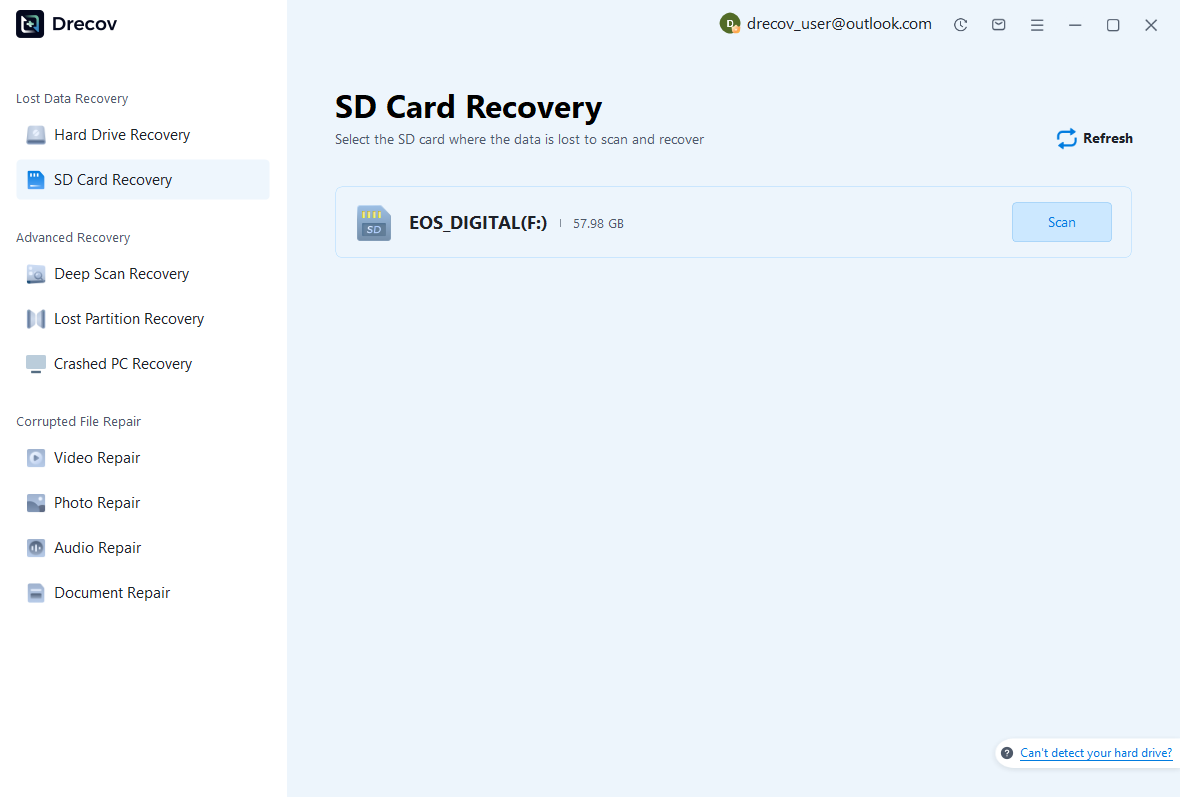
Recovery steps:
- Install recovery software
- Select RAW SD card
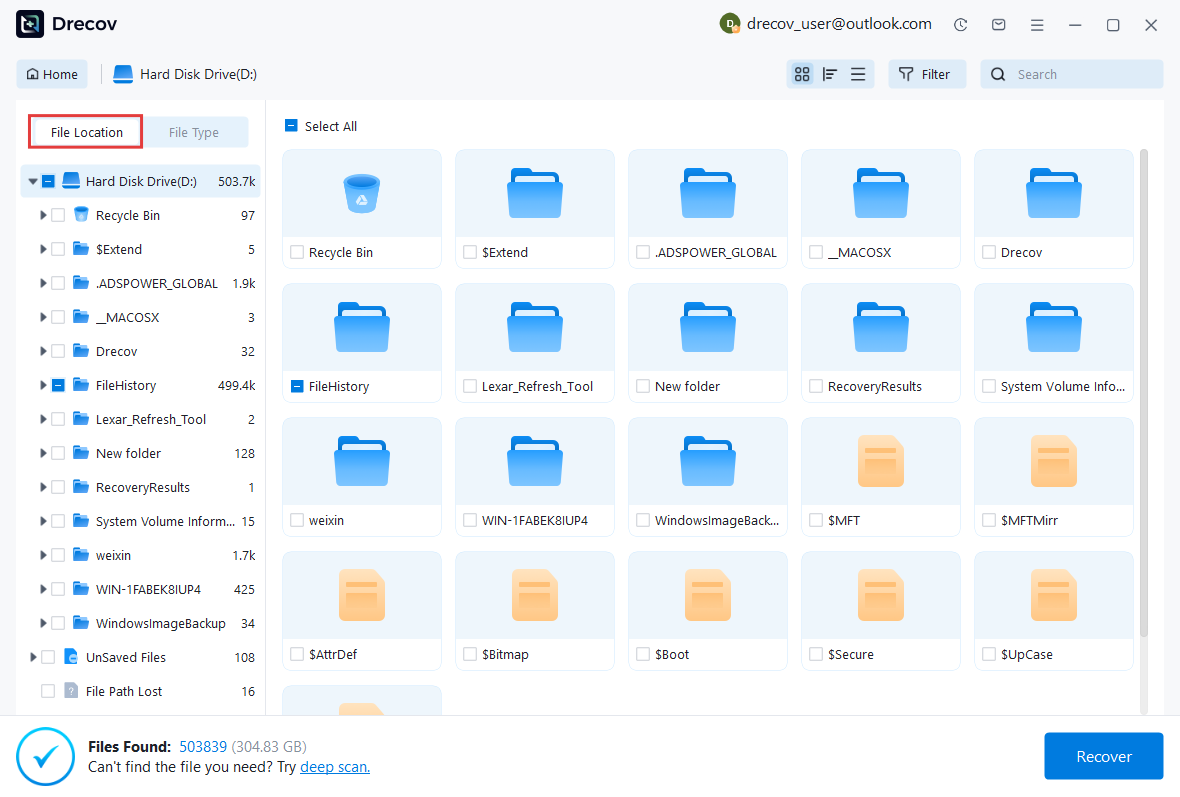
- Run deep scan
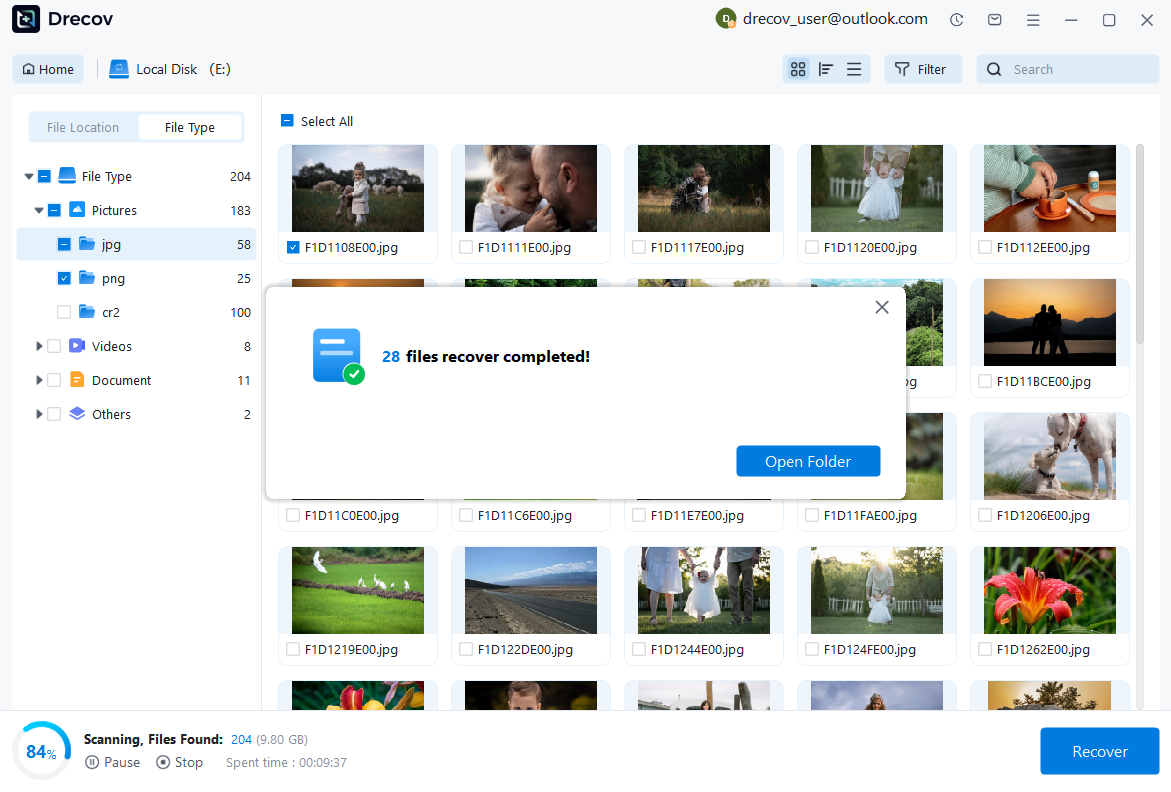
- Preview recoverable files
- Export to safe drive
One effective tool is:
Pandaoffice Drecov
Recovered file types:
- Photos (JPG, PNG)
- Videos (MP4, MOV)
- Documents (PDF, DOCX)
This method is one of the most reliable solutions for raw sd card recovery when system tools fail.
Why Choose PandaOffice Drecov Recovery Software?
PandaOffice Drecov offers a fast, secure, and user-friendly solution for recovering lost files across multiple scenarios. Whether you need email recovery, ZIP File Recovery, format data recovery, or help to recover deleted drafts Outlook, the software provides reliable recovery performance for both personal and business users.
PandaOffice Drecov supports recovery from formatted hard drives, SSDs, USB drives, SD cards, and external storage devices. Its advanced scanning engine can locate deleted archives, damaged ZIP files, lost Outlook drafts, and accidentally removed documents with high accuracy. For users searching for how to find deleted messages in Teams, PandaOffice Drecov can also help recover exported chat files, attachments, and related local cache data when available.
Key advantages include:
- Deep scan technology for complex data loss situations
- Support for emails, archives, videos, photos, and office documents
- Recovery from accidental deletion, formatting, corruption, and system crashes
- Easy preview before restoring files
- Compatible with Windows and multiple storage devices
Unlike complicated enterprise recovery tools, PandaOffice Drecov keeps the recovery process simple. Users can scan, preview, and restore files in just a few steps without technical expertise.
Whether you are dealing with lost Outlook drafts, corrupted ZIP archives, formatted drives, or missing communication data, PandaOffice Drecov provides an efficient and practical recovery experience designed to minimize downtime and protect important files.
⚠️Warning: Always save recovered files to a different storage device.
Advanced RAW SD Card Recovery Techniques (Overview)
Beyond basic recovery methods, advanced techniques involve deep scanning and structural reconstruction.
These include:
- Sector-by-sector scanning
- Partition table reconstruction
- File signature analysis
- Deep forensic recovery
Test environment:
- Corrupted 256GB SDXC card
- Advanced recovery workstation
Result:
- Partial recovery of fragmented media files
These techniques are typically used when standard recovery fails.
Advanced RAW SD Card Recovery Techniques
When basic recovery methods fail, advanced techniques become necessary to retrieve lost data from a RAW SD card. These methods focus on bypassing the damaged file system and directly reading storage sectors.
RAW corruption often affects only the file structure, not the actual stored data. This is why recover raw files from sd card is still possible in many severe cases if the memory chips are intact.
Deep Scan Recovery for Recovering RAW Files from SD Card
Deep scan recovery analyzes the entire storage surface instead of relying on file system records. It searches for file signatures (headers and footers) to reconstruct lost data.
Test environment:
- Windows 11 workstation
- 256GB RAW SDXC card
- High-performance USB 3.0 reader
Process:
- Launch recovery tool
- Select RAW SD card
- Choose deep scan mode
- Wait for sector analysis
- Preview reconstructed files
Result:
- Over 70% of image and video files recovered successfully
- Some file names were lost but content remained intact
Deep scanning is one of the most effective approaches for raw sd card recovery when file systems are heavily damaged.
Partition Table Reconstruction for SD Card RAW Format Recovery
In some cases, the SD card becomes RAW due to a damaged partition table. Rebuilding this structure can restore access without full formatting.
Test environment:
- Windows 10 Pro
- 128GB SD card
- Disk partition analysis tool
Process:
- Scan for lost partitions
- Rebuild partition table
- Restore logical structure
Result:
- Partial access restored in some cases
- File system still required repair afterward
This method is useful when the card shows as unallocated or RAW in Disk Management.
Sector-Level Scanning Tools for Recover SD Card RAW Issues
Sector-level tools go deeper than standard recovery software by reading raw memory blocks directly.
Test environment:
- Professional data recovery system
- 400GB SDXC card used in camera recording
Result:
- Fragmented video files reconstructed
- Some corrupted frames detected
This method is typically used in professional environments when standard recover sd card raw solutions fail.
How to Prevent Future RAW SD Card Errors
Preventing RAW errors is more effective than repairing them. Most SD card failures are caused by improper usage habits rather than hardware defects.
Safe Ejection Practices for Memory Cards
Improper removal is one of the most common causes of file system corruption.
Best practices:
- Always “Eject” before removing
- Stop all file transfers before unplugging
- Avoid removing cards during recording
Test environment:
- Windows 11 + DSLR camera SD card usage
Result:
- No corruption observed after safe ejection habits
⚠️Warning: Removing SD cards during write operations can instantly cause RAW corruption.
Using Reliable SD Cards and Readers
Low-quality SD cards are more prone to file system failure and RAW errors.
Recommended practices:
- Use branded SD cards (SanDisk, Samsung, Lexar)
- Avoid counterfeit storage devices
- Use high-quality card readers
Test environment:
- Mixed SD card quality comparison test
Result:
- Cheap SD cards failed faster under repeated write cycles
- Branded cards remained stable longer
Regular Backup Strategy for Data Protection
Even the best SD cards can fail unexpectedly. Regular backups reduce the risk of permanent data loss.
Best practices:
- Copy files to cloud storage
- Maintain duplicate backups on PC
- Avoid storing critical data on one card only
Test environment:
- 128GB SD card used for photography workflow
Result:
- Backup system prevented total data loss during corruption event
When RAW SD Card Cannot Be Recovered
Not all RAW SD cards are recoverable. In some cases, physical damage or severe memory wear makes recovery impossible.
Signs of unrecoverable damage:
- SD card not detected at all
- Repeated disconnection errors
- Burning smell or physical damage
- Zero capacity detected permanently
Test environment:
- Damaged 64GB SD card after water exposure
Result:
- No readable sectors found during scan
In such cases, replacement is the only option.
FAQ About RAW SD Card Recovery
Can RAW SD card recovery restore all files?
Not always. Recovery success depends on how much data has been overwritten or physically damaged. In many cases, partial recovery is possible, especially for photos and videos.
Is it safe to format RAW SD card before recovery?
No. Formatting should only be done after all recovery attempts are completed. Formatting may overwrite file structures and reduce recovery success rate.
Why does SD card become RAW suddenly?
Common causes include:
- Improper removal
- Power interruption
- File system corruption
- Malware infection
- Aging memory cells
Can CHKDSK fix RAW SD card?
No. CHKDSK only works on recognized file systems like FAT32 or exFAT. RAW drives require specialized recovery tools.
Is RAW SD card a hardware failure?
Not always. Most RAW cases are logical failures, not physical damage. However, repeated corruption may indicate hardware degradation.
Conclusion and Key Takeaways
RAW SD card issues are serious but often recoverable if handled correctly. Understanding raw sd card recovery methods helps users avoid permanent data loss and improve recovery success rates.
The most effective approach is to stop using the card immediately and begin recovery using advanced scanning tools. Built-in Windows utilities like Disk Management and CMD can help diagnose the issue, but they are not sufficient for full recovery.
Professional tools such as Pandaoffice Drecov provide deeper scanning capabilities that allow users to recover data from raw sd card more effectively.
To prevent future issues, users should:
- Eject cards safely
- Avoid interrupted transfers
- Use high-quality SD cards
- Maintain regular backups
With proper handling and timely recovery actions, most RAW SD card problems can be resolved without permanent data loss.





