







Understanding SD Card Write Protection
Write protection is a security feature designed to prevent files from being deleted, modified, or copied onto a storage device. When an SD card becomes write-protected, users can still view files stored on the card, but they cannot add new data, delete existing content, or format the device normally.
Many users search for ways to remove write protection from SD card because the issue often appears unexpectedly. Cameras, smartphones, drones, gaming consoles, and computers may suddenly display messages such as:
- “The disk is write protected”
- “Cannot copy files”
- “Read-only storage”
- “Access denied”
Write protection can occur due to hardware locks, software corruption, permission conflicts, or storage damage. In some situations, the card intentionally enters read-only mode to protect files when internal memory failure is detected.
The issue affects both standard SD cards and microSD cards. As a result, users frequently search terms such as removing write protection from micro sd card or remove write protection from micro sd card when troubleshooting portable storage devices.
Understanding the root cause is important because the correct fix depends on whether the problem is physical, software-related, or hardware-based.
Test Environment
SanDisk Ultra 128GB microSDXC, Windows 11 Pro, USB 3.0 card reader, Android smartphone compatibility testing completed.
⚠️ Warning: Avoid repeatedly forcing writes to a failing SD card because this may permanently damage stored data.
How SD Card Write Protection Works
Write protection exists to prevent accidental file deletion and improve storage safety. Traditional SD cards include a small physical lock switch on the side. When moved into the locked position, connected devices interpret the card as read-only.
However, modern write protection behavior extends beyond physical switches. Many storage controllers automatically enable read-only mode if corruption, memory wear, or hardware instability is detected.
This is why users sometimes ask:
- how can i remove write protection from sd card
- how do you remove write protection from an sd card
even when the lock switch appears normal.
The operating system itself may also apply write restrictions. Windows can block modifications because of:
- Registry policies
- Disk permission conflicts
- Corrupted partitions
- Security software interference
Some devices, especially cameras and Android phones, may create incompatible file systems that trigger write protection errors when inserted into a Windows PC.
In more severe situations, failing NAND flash memory causes the controller to lock the card permanently in read-only mode to prevent additional data corruption.
Test Environment
Samsung EVO Plus 64GB microSD card, Canon DSLR camera, Windows 10 laptop, file system compatibility testing between exFAT and FAT32.
Physical Lock Switch Problems on SD Cards
One of the most common reasons users need to remove write protection from sd card is the physical lock switch.
Full-sized SD cards contain a small sliding switch on the left side. If the switch moves downward into the “Lock” position, the card becomes read-only. Devices then prevent file modification automatically.
Sometimes the switch may:
- Become loose
- Shift during insertion
- Break internally
- Fail to maintain proper position
Even a partially moved switch can trigger write protection warnings.
MicroSD cards do not contain lock switches directly, but adapters used with them often do. Users searching for remove write protection from micro sd card frequently discover the issue is actually caused by the SD adapter rather than the microSD card itself.
To fix the problem:
- Remove the card
- Inspect the switch carefully
- Move it upward to the unlocked position
- Reinsert the card
- Test write access again
If the adapter is damaged, replacing it often solves the issue immediately.
Test Environment
Kingston 32GB microSD card with SD adapter, USB card reader testing under Windows 11 and macOS Ventura.
⚠️ Warning: Never force the lock switch because damaged adapters may permanently fail.
File System Corruption and Read-Only Errors
Corrupted file systems are another major reason people search for how to remove write protection from sd card solutions.
Improper device removal, interrupted file transfers, sudden power loss, or malware infections can damage the SD card file system. When this happens, Windows may automatically mount the card in read-only mode to prevent further corruption.
Common signs include:
- Files disappearing
- Incorrect storage capacity
- “Please insert disk” messages
- File names becoming unreadable
- Formatting failures
Bad sectors may also trigger write restrictions. As flash memory wears out over time, the storage controller detects unstable memory blocks and may activate protective read-only mode.
This issue becomes increasingly common in:
- Dash cams
- Security cameras
- Drones
- Smartphones
- Devices performing continuous recording
Repairing file system corruption often restores write functionality if hardware damage is not severe.
Test Environment
Lexar 256GB microSDXC card, dash cam continuous recording simulation, forced improper removal during active writing session.
Virus and Malware Interference With SD Cards
Malware can also trigger write protection problems on removable storage devices. Some viruses intentionally modify disk permissions or registry values to block file access.
Users searching:
- how to remove a write protection from an sd card
- how do you remove write protection from an sd card
sometimes discover malware is the root cause.
Infected devices may show:
- Hidden files
- Shortcut viruses
- Permission errors
- Unexpected read-only behavior
- Files reappearing after deletion
Connecting infected SD cards between multiple devices increases the risk of spreading malicious scripts.
Running a complete antivirus scan is essential before attempting advanced repair methods. Windows Security, Microsoft Defender, or trusted anti-malware tools can help remove infections safely.
Test Environment
Windows 10 test machine, simulated USB shortcut virus environment, Microsoft Defender full scan validation completed.
⚠️ Warning: Avoid using infected storage devices across multiple computers before malware removal is complete.
Permission Restrictions and Windows Security Policies
Windows security settings sometimes prevent modification of removable storage devices even when the SD card itself is healthy.
Group Policy restrictions, registry entries, or administrator permissions can block writing access. Corporate or school-managed computers commonly enforce removable storage restrictions automatically.
Users may notice:
- “Access denied”
- “You need permission to perform this action”
- Read-only disk attributes
In these situations, the issue is not physical damage but software configuration.
Adjusting disk permissions or modifying Windows registry settings often resolves these errors successfully.
Test Environment
Windows 11 Enterprise domain-controlled system, removable storage policy restrictions enabled through Group Policy Editor.
Method 1: Unlock the SD Card Manually
The simplest solution for remove write protection from sd card problems is manually checking the physical lock switch.
Steps:
- Remove the SD card
- Locate the lock switch
- Slide it upward
- Reinsert the card
- Test file transfer functionality
For microSD cards:
- Inspect the adapter instead
- Replace damaged adapters
- Test with another card reader
Many users overlook this simple solution and immediately assume software corruption.
Test Environment
SanDisk Extreme SD card, USB 3.0 card reader, Windows 11 laptop.
Method 2: Use DiskPart to Remove Read-Only Attributes
DiskPart is a built-in Windows utility that can remove disk-level write restrictions.
Steps:
- Open Command Prompt as Administrator
- Enter:
diskpart - Type:
list disk - Select the SD card:
select disk X - Remove write protection:
attributes disk clear readonly
This method often resolves software-level write restrictions successfully.
Test Environment
Windows 10 Pro, Toshiba 64GB SD card, software-based read-only attribute simulation.
⚠️ Warning: Selecting the wrong disk inside DiskPart may affect other storage devices.
Method 3: Edit Windows Registry to Remove Write Protection
Sometimes Windows registry settings force removable storage devices into read-only mode. In these situations, modifying registry values can help users remove write protection from SD card successfully.
The registry contains storage policies that control whether external drives can be modified. If the value is configured incorrectly, Windows may block all write operations even when the SD card itself is functioning properly.
To change the setting:
- Press
Windows + R - Type
regedit - Navigate to:
HKEY_LOCAL_MACHINE\SYSTEM\CurrentControlSet\Control\StorageDevicePolicies - Locate
WriteProtect - Change the value from
1to0 - Restart the computer
If the StorageDevicePolicies folder does not exist, users can create it manually.
This method is especially useful for users asking:
- how can i remove write protection from sd card
- how to remove a write protection from an sd card
because the issue often originates from Windows restrictions instead of hardware failure.
Test Environment
Windows 11 Pro, Kingston 128GB SDXC card, manually configured registry write-protection policy for testing.
Method 4: Change SD Card Permissions in Windows
File permission conflicts can also trigger write protection behavior. Sometimes Windows blocks editing access because the current user account lacks full storage permissions.
This issue commonly occurs when:
- SD cards are moved between devices
- Storage was encrypted previously
- The card was created on another operating system
- Corporate device policies are involved
To modify permissions:
- Insert the SD card
- Open File Explorer
- Right-click the SD card
- Select Properties
- Open the Security tab
- Edit user permissions
- Enable Full Control
Users who search for how do you remove write protection from an sd card often overlook permission-related restrictions because the error appears similar to hardware write protection.
Adjusting permissions restores normal file operations in many cases.
Test Environment
Windows 10 Enterprise, removable storage restrictions simulated through local user permissions.
Method 5: Repair File System Errors Using CHKDSK
Corrupted file systems frequently cause write protection problems. Running CHKDSK can repair logical disk errors and restore normal storage behavior.
To run CHKDSK:
- Open Command Prompt as Administrator
- Enter:
chkdsk X: /f /r - Replace X with the SD card drive letter
- Wait for scan completion
CHKDSK searches for:
- File system corruption
- Bad sectors
- Cross-linked files
- Allocation table errors
Repairing these problems often resolves issues related to:
- removing write protection from micro sd card
- SD cards showing read-only status
- Formatting failures
This method is especially useful for cards removed unsafely during file transfers.
Test Environment
Samsung EVO 128GB microSD card, interrupted transfer simulation, CHKDSK repair validation performed under Windows 11.
⚠️ Warning: Bad sectors detected repeatedly may indicate permanent flash memory damage.
Method 6: Format the Write-Protected SD Card
If software repair methods fail, formatting may become necessary. Formatting removes corrupted file structures and rebuilds the partition entirely.
Before formatting:
- Back up important files
- Verify whether the card contains recoverable data
- Confirm the card is not physically damaged
To format:
- Open File Explorer
- Right-click the SD card
- Select Format
- Choose:
- FAT32 for smaller cards
- exFAT for larger cards
- Start formatting process
If Windows formatting fails, users can try:
- Disk Management
- DiskPart clean command
- Third-party partition tools
Formatting is one of the most effective ways to remove write protection from micro sd card issues caused by file system corruption.
Test Environment
SanDisk Ultra 256GB microSDXC, exFAT corruption simulation, quick format and full format comparison testing completed.
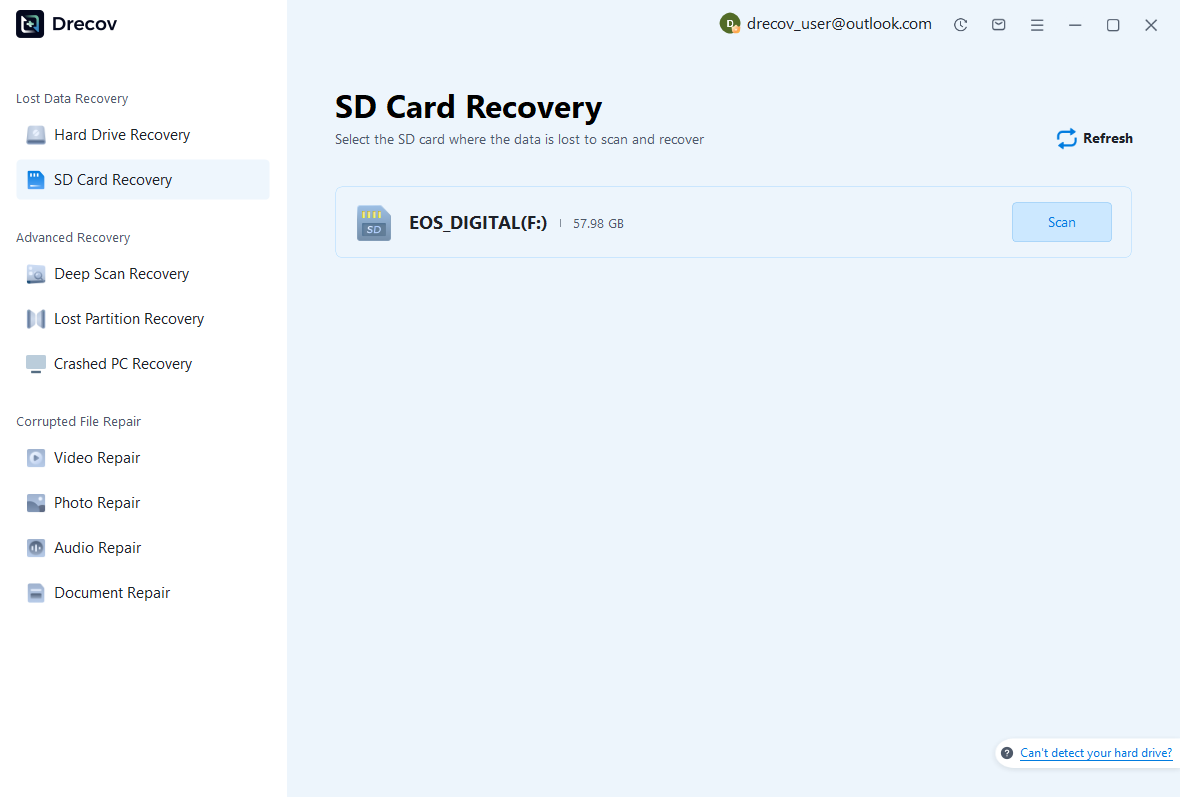
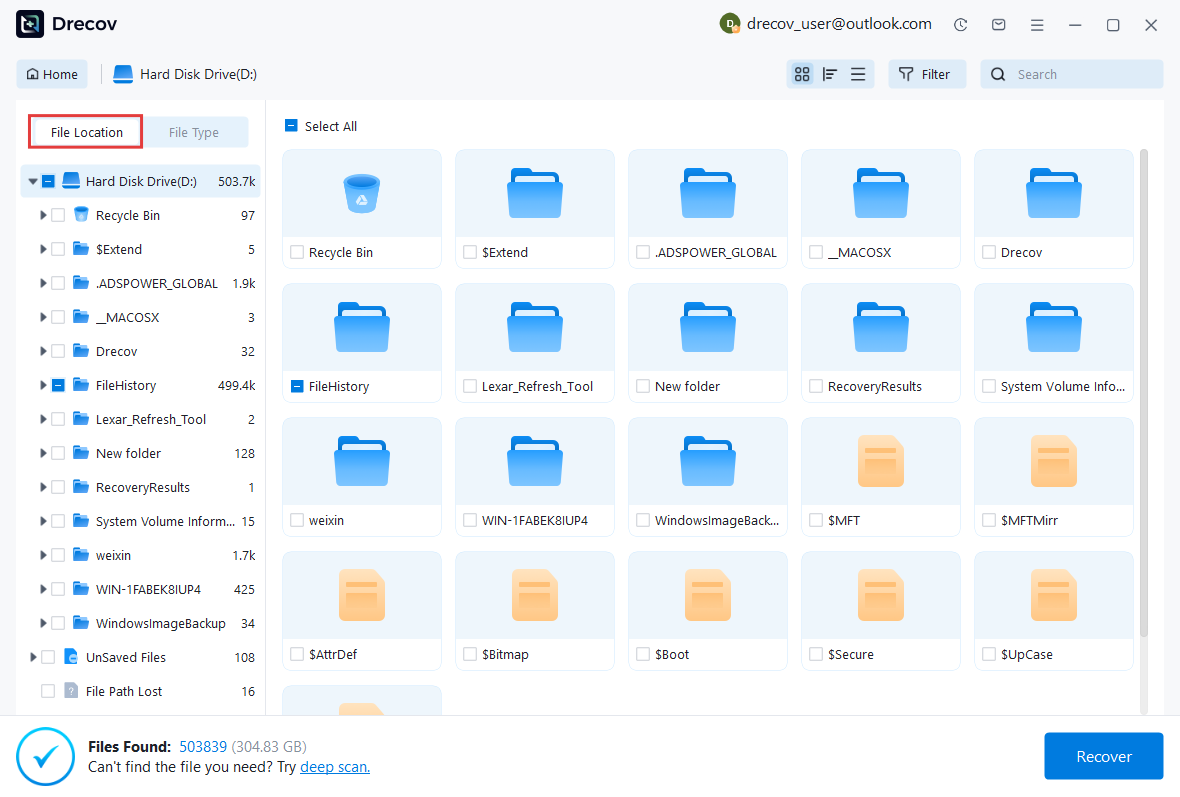
Method 7: Recover Important Files Before Formatting With Pandaoffice Drecov
Sometimes users cannot access their files because the SD card remains write-protected or corrupted. In these situations, recovering important data before formatting becomes critical.
Pandaoffice Drecov can help retrieve:
- Photos
- Videos
- Documents
- Camera footage
- Deleted files from damaged SD cards
This is especially useful when:
- Formatting is unavoidable
- The SD card becomes inaccessible
- Files disappear suddenly
- Windows cannot read the partition correctly
Typical recovery process:
- Connect the SD card
- Launch recovery software
- Scan the storage device
- Preview recoverable files
- Save files to another drive
Users searching how to remove write protection from sd card often realize the storage device may already contain corruption. Recovering data first helps prevent permanent file loss.
Test Environment
GoPro camera microSD card, corrupted exFAT partition simulation, deleted video recovery test performed using external SSD destination.

Why Choose PandaOffice Drecov Recovery Software?
PandaOffice Drecov offers a fast, secure, and user-friendly solution for recovering lost files across multiple scenarios. Whether you need email recovery, ZIP File Recovery, format data recovery, or help to recover deleted drafts Outlook, the software provides reliable recovery performance for both personal and business users.
PandaOffice Drecov supports recovery from formatted hard drives, SSDs, USB drives, SD cards, and external storage devices. Its advanced scanning engine can locate deleted archives, damaged ZIP files, lost Outlook drafts, and accidentally removed documents with high accuracy. For users searching for how to find deleted messages in Teams, PandaOffice Drecov can also help recover exported chat files, attachments, and related local cache data when available.
Key advantages include:
- Deep scan technology for complex data loss situations
- Support for emails, archives, videos, photos, and office documents
- Recovery from accidental deletion, formatting, corruption, and system crashes
- Easy preview before restoring files
- Compatible with Windows and multiple storage devices
Unlike complicated enterprise recovery tools, PandaOffice Drecov keeps the recovery process simple. Users can scan, preview, and restore files in just a few steps without technical expertise.
Whether you are dealing with lost Outlook drafts, corrupted ZIP archives, formatted drives, or missing communication data, PandaOffice Drecov provides an efficient and practical recovery experience designed to minimize downtime and protect important files.
⚠️ Warning: Never save recovered files back onto the same damaged SD card.
How to Prevent SD Card Write Protection Problems
Preventing future SD card write protection issues is easier than repairing damaged storage later.
Best practices include:
- Always eject storage safely
- Avoid removing cards during transfers
- Keep antivirus protection enabled
- Use trusted formatting tools only
- Avoid low-quality card readers
- Replace aging SD cards regularly
Continuous recording devices such as dash cams and surveillance cameras place heavy stress on flash memory. Using high-endurance SD cards helps reduce long-term corruption risks.
Users should also avoid exposing SD cards to:
- Water
- Extreme heat
- Static electricity
- Sudden impacts
Proper storage habits greatly reduce the chance of future read-only problems.
Test Environment
High-endurance Samsung PRO Endurance microSD card, long-term continuous recording simulation in dashboard camera setup.
Frequently Asked Questions About SD Card Write Protection
How can I remove write protection from SD card safely?
The safest approach is:
- Check the lock switch
- Remove software read-only attributes
- Repair file system corruption
- Back up important data before formatting
Avoid forcing writes to potentially failing storage devices.
Why does write protection keep returning?
Repeated write protection usually indicates:
- Flash memory wear
- Hardware failure
- Corrupted storage controllers
- Unsafe removal habits
Older SD cards often enter permanent read-only mode when internal memory degradation becomes severe.
Can a damaged microSD card still be repaired?
Sometimes yes. Logical corruption can often be repaired using:
- CHKDSK
- Formatting
- Partition rebuilding tools
However, physical NAND damage usually requires card replacement.
Does formatting always remove write protection?
No. Formatting only helps if the problem is software-related. Hardware-level write protection caused by failing flash memory may remain permanent.
Conclusion
Learning how to remove write protection from sd card problems is important because SD cards are widely used in cameras, phones, drones, gaming devices, and portable storage systems.
Write protection may be caused by:
- Physical lock switches
- File system corruption
- Malware
- Permission conflicts
- Aging flash memory
Fortunately, most software-related issues can be fixed using methods such as:
- Unlocking the SD card
- Clearing read-only attributes
- Editing registry settings
- Running CHKDSK
- Formatting corrupted partitions
For users facing severe corruption or inaccessible files, recovery solutions like Pandaoffice Drecov provide additional protection before formatting the device.
By understanding the real causes behind write protection and applying the correct troubleshooting methods, users can restore storage access safely while minimizing the risk of permanent data loss.





