







Data loss on a memory card can happen without warning. One moment your photos, videos, and documents are accessible, and the next they seem to have disappeared. Whether you’re using a Samsung EVO Select microSD memory card, a Samsung EVO Select micro sd memory card, a memory card Samsung EVO Plus, or a Samsung EVO Plus microSD memory card, losing important files can be stressful.
Fortunately, deleted or inaccessible files are often recoverable if you take the right steps immediately. In many cases, the data remains physically stored on the card until it is overwritten by new information. Understanding how memory card recovery works can significantly improve your chances of success.
This guide explains the common causes of Samsung EVO memory card data loss and introduces several proven methods to recover data from Samsung EVO 32GB memory card devices. We’ll start with the basics, including how these memory cards work and what typically causes files to disappear.
Understanding Samsung EVO Memory Cards and Data Loss Risks
What Makes Samsung EVO Memory Cards Popular
Samsung’s EVO series has become one of the most widely used memory card lines in the world. These cards offer a balance between affordability, durability, and performance, making them suitable for everyday users and professionals alike.
The Samsung EVO Select microSD memory card is commonly used in Android phones, tablets, Nintendo Switch consoles, action cameras, and drones. Its fast read and write speeds help users transfer files efficiently while maintaining reliable storage performance.
Similarly, the Samsung EVO Select micro sd memory card provides dependable storage for photos, 4K videos, music collections, and application data. Many users choose it because of Samsung’s reputation for producing stable flash storage products.
The EVO family also includes the memory card Samsung EVO Plus series, which offers higher transfer speeds and improved compatibility with modern devices. Whether you own a smartphone, DSLR camera, dash cam, or drone, these cards are designed to handle demanding storage requirements.
Although Samsung memory cards are generally reliable, they are not immune to accidental deletion, formatting mistakes, corruption, or physical damage. Understanding these risks is the first step toward successful recovery.
Samsung EVO Select vs Samsung EVO Plus Memory Cards
At first glance, EVO Select and EVO Plus cards may appear nearly identical, but there are some differences worth noting.
The Samsung EVO Select microSD memory card is primarily marketed through select retail channels and offers excellent value for everyday storage needs. It provides sufficient performance for HD video recording, mobile gaming, and file transfers.
Meanwhile, the Samsung EVO Plus microSD memory card is often positioned as a higher-performance option. It typically delivers faster read speeds and improved handling of large files such as 4K videos and high-resolution photographs.
Users shopping for a memory card Samsung EVO Plus model often prioritize speed and endurance, especially when recording continuous footage in action cameras or security systems.
From a recovery standpoint, however, both card families use similar flash memory technologies. This means the recovery procedures discussed later in this guide apply to both EVO Select and EVO Plus models.
Regardless of which version you own, data recovery success depends more on how quickly you stop using the card after data loss than on the card model itself.
Common Signs of Memory Card Failure
Before attempting recovery, it’s important to identify the warning signs that suggest a memory card problem.
One of the most common symptoms is when the card suddenly appears empty even though it previously contained files. In some situations, folders may still be visible while the actual content has disappeared.
Another frequent issue occurs when Windows displays a message asking you to format the card before use. This usually indicates file system corruption rather than actual file deletion.
Users may also notice unusually slow performance, failed file transfers, or repeated error messages when attempting to access stored content.
In more serious cases, the computer may not recognize the card at all. The card might appear in Device Manager but fail to show up in File Explorer.
⚠️ Warning: If your Samsung EVO memory card begins showing these symptoms, stop writing new data immediately. Continued use can overwrite recoverable files and reduce recovery success rates.
Why Data Gets Lost on a Samsung EVO 32GB Memory Card
Accidental Deletion of Photos, Videos, and Documents
Human error remains one of the leading causes of memory card data loss.
Many users accidentally delete files while organizing media libraries, clearing storage space, or transferring content between devices. Because memory cards generally do not have a recycle bin, deleted files often seem permanently lost.
For example, a photographer may mistakenly select an entire folder instead of a single image. Likewise, smartphone users sometimes remove photos while attempting to free up storage space.
The good news is that deleted files are usually not erased immediately. Instead, the operating system simply marks their storage space as available for reuse. Until new data occupies those sectors, recovery software can often locate and restore the original files.
This is why immediate action is critical after accidental deletion. Every new file written to the card increases the risk of permanent data loss.
Formatting the Memory Card by Mistake
Formatting is another common reason users need to recover data from Samsung EVO 32GB memory card devices.
Modern cameras, smartphones, drones, and gaming consoles frequently prompt users to format storage cards when compatibility issues occur. In some situations, users accidentally confirm the operation without realizing that all stored files will become inaccessible.
A quick format generally removes file system information while leaving the actual data largely intact. This significantly improves the chances of recovery.
A full format, on the other hand, may overwrite portions of the card, making recovery more difficult depending on the device and formatting method used.
Even when a formatted card appears completely empty, many photos, videos, and documents may still be recoverable if no additional files have been saved afterward.
⚠️ Warning: Never format the card a second time after discovering data loss. Repeated formatting can decrease recovery success rates.
Not all data loss results from deletion or formatting. Sometimes the files still exist, but the file system responsible for organizing them becomes damaged.
File System Corruption and Logical Damage
Corruption can occur for many reasons, including sudden power failures, unsafe card removal, interrupted file transfers, software crashes, and malware infections.
For example, removing a card while files are actively being written may leave directory structures incomplete. As a result, Windows may report that the card needs formatting or display inaccessible folders.
In many situations, the data itself remains intact even though the operating system can no longer interpret the file system correctly.
Logical corruption is often recoverable using repair utilities or specialized recovery software, especially when physical damage is not involved.
Recognizing the difference between corruption and deletion helps determine which recovery method is most appropriate.
Physical Issues Affecting Samsung EVO Cards
Although flash memory contains no moving parts, physical damage can still occur.
Memory cards may be exposed to water, excessive heat, electrical surges, dust, or accidental bending. Repeated insertion and removal can also wear down contact pins over time.
Users often encounter problems after using a damaged card reader or connecting the card to malfunctioning devices. In these situations, the card may become unreadable even though the stored files remain present.
Physical damage differs from logical corruption because software-based recovery methods may not always work. Severe hardware failures often require professional intervention.
Fortunately, most cases involving Samsung EVO memory cards involve logical issues rather than catastrophic physical damage.
⚠️ Warning: If the card becomes unusually hot, emits a burning smell, or shows visible physical damage, avoid repeated connection attempts, as this may worsen the condition.
How to Recover Data from Samsung EVO 32GB Memory Card Successfully
Method 1 – Check Hidden Files Before Performing Recovery
Before using advanced recovery tools, verify whether your files are actually hidden rather than deleted.
Many malware infections and file system errors modify file attributes, causing folders and files to disappear from normal view. Users often assume the data is lost when it is merely hidden by the operating system.
Test Environment
- Operating System: Windows 11 Pro
- Storage Device: Samsung EVO 32GB Memory Card
- Connection Method: USB 3.0 Card Reader
To begin, connect the memory card to your computer and open File Explorer. Navigate to the View menu and enable the option that displays hidden files and folders.
After enabling hidden items, inspect the card carefully. If your files appear, copy them immediately to another storage device.
You can also use Command Prompt to remove hidden and system attributes if necessary. This process often restores access to photos, videos, and documents without requiring full recovery procedures.
If the files remain missing after checking hidden items, proceed to the next recovery method discussed in Part 2.
⚠️ Warning: Avoid copying new files onto the memory card while troubleshooting. Doing so may overwrite recoverable data.
Method 2 – Use CHKDSK to Repair File System Errors
If your memory card appears empty, requests formatting, or displays file access errors, Windows’ built-in CHKDSK utility may help repair logical file system issues.
This method is particularly useful when files are still physically stored on the card but cannot be accessed because of corrupted directory structures or damaged file allocation tables.
Test Environment
- Operating System: Windows 10 22H2
- Storage Device: Samsung EVO Plus microSD memory card
- Tool Used: Command Prompt (Administrator)
Begin by connecting the memory card to your computer and noting its assigned drive letter. Open Command Prompt as Administrator and enter the following command:
chkdsk X: /f
Replace “X” with your actual memory card drive letter.
Windows will scan the card for errors and attempt to repair damaged file system entries. Depending on the severity of corruption and the card’s capacity, the process may take several minutes.
After the repair completes, reconnect the card and check whether your files have reappeared.
This method is most effective when corruption results from improper ejection, interrupted transfers, or sudden power loss.
Keep in mind that CHKDSK repairs file system structures rather than recovering deleted files. If the missing data still does not appear, you’ll likely need dedicated recovery software.
⚠️ Warning: If the memory card produces unusual clicking, disconnecting, or recognition issues, avoid repeatedly running CHKDSK, as the underlying problem may be hardware-related.
Method 3 – Recover Lost Files with PandaOffice Drecov
When files have been deleted, formatted, or lost due to corruption, specialized recovery software offers the highest chance of retrieving them successfully.
One effective solution for Windows users is PandaOffice Drecov, which supports recovery from memory cards, USB drives, SSDs, HDDs, and other storage devices.
Test Environment
- Operating System: Windows 11 Home
- Storage Device: Samsung EVO Select microSD memory card
- Software: PandaOffice Drecov
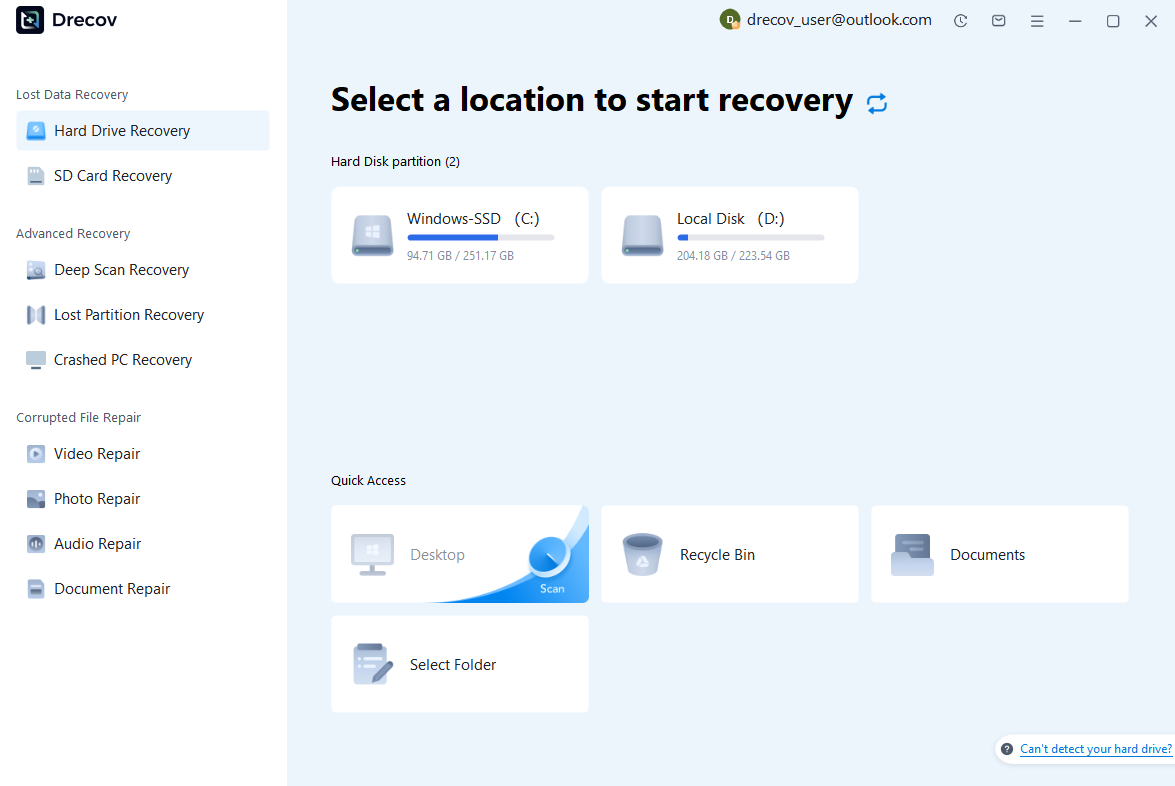
Step 1: Connect the Drive / USB)
Connect your device (SD card, HDD/SSD, or USB drive) to your computer and launch PandaOffice Drecov. Select the target device and start the scan. The software will perform a quick scan and deep scan to detect lost or deleted data.
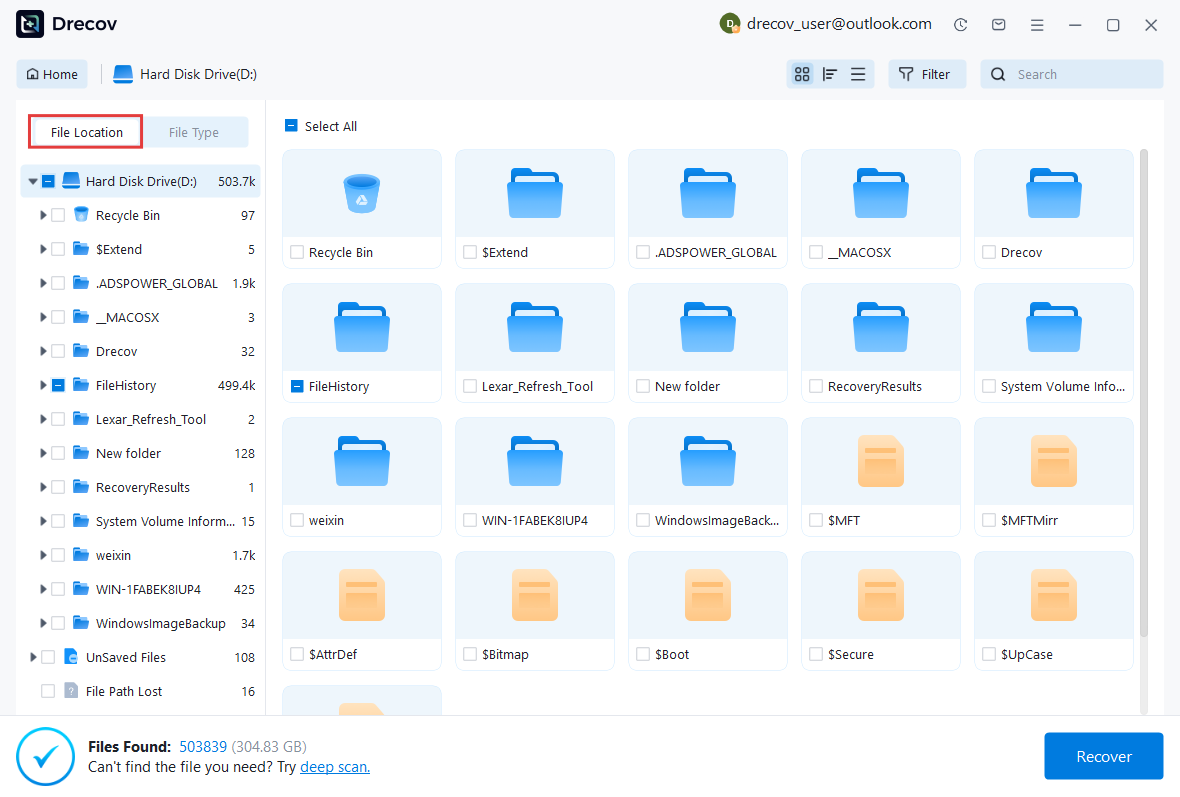
Step 2: Locate and Preview Lost Files
After scanning, browse the detected files and use the preview feature to check recoverable data. You can preview documents (Word, Excel, PDF), photos, and videos to ensure file integrity before recovery.
Step 3: Recover and Save to a New Location
Select the files you want to restore and click recover. Save all recovered data to a different drive or location (not the original device) to avoid overwriting lost data.

Why Choose PandaOffice Drecov Recovery Software?
PandaOffice Drecov offers a fast, secure, and user-friendly solution for recovering lost files across multiple scenarios. Whether you need email recovery, ZIP File Recovery, format data recovery, or help to recover deleted drafts Outlook, the software provides reliable recovery performance for both personal and business users.
PandaOffice Drecov supports recovery from formatted hard drives, SSDs, USB drives, SD cards, and external storage devices. Its advanced scanning engine can locate deleted archives, damaged ZIP files, lost Outlook drafts, and accidentally removed documents with high accuracy. For users searching for how to find deleted messages in Teams, PandaOffice Drecov can also help recover exported chat files, attachments, and related local cache data when available.
After recovery, test the file again. If the audio stream was damaged because of storage issues, a recovered version may play normally.
This method is particularly useful when only a few files exhibit audio problems while VLC works correctly with all other media.
This method can help users recover files from floppy disk storage after accidental deletion, formatting, or logical corruption.
This step is especially useful when memory issues are accompanied by system corruption or repeated application crashes.
This method is particularly useful after accidental deletion, formatting, RAW file system errors, or partition issues.
Unlike basic repair tools, recovery software searches for file signatures and recoverable metadata, making it possible to restore files even when directory structures have been lost.
⚠️ Warning: Never save recovered files back onto the original Samsung EVO memory card. Doing so may overwrite additional recoverable data.
Method 4 – Restore Files from Existing Backups
Many users overlook the possibility that their missing files already exist in a backup location.
If your photos, videos, or documents were synchronized before the loss occurred, restoring from backup may be faster and safer than performing a full recovery scan.
Test Environment
- Operating System: Windows 10/11
- Storage Device: Samsung EVO Memory Card
- Backup Sources: Samsung Cloud, Google Photos, OneDrive, Local Backup
Start by checking whether your smartphone automatically synchronized media to cloud storage.
Samsung devices often back up selected content through Samsung Cloud services. Likewise, Google Photos may have uploaded images and videos without requiring manual intervention.
Windows users should also examine OneDrive folders, local backup drives, or File History archives.
Photographers frequently maintain copies of media files on desktop computers after importing them from memory cards. Reviewing previous project folders can sometimes reveal that the supposedly lost files still exist elsewhere.
Even if only part of your data was backed up, restoring those files can significantly reduce the amount of information requiring recovery.
Although backups cannot recover files that were never copied, they remain the safest and most reliable protection against permanent data loss.
Method 5 – Assign a New Drive Letter to the Memory Card
Sometimes a Samsung EVO memory card appears missing because Windows has assigned an incorrect or conflicting drive letter.
In these situations, the card may be detected by the operating system but remain inaccessible through File Explorer.
Test Environment
- Operating System: Windows 11 Pro
- Storage Device: Samsung EVO Plus microSD memory card
- Tool Used: Disk Management
To check for this issue, press Windows + X and open Disk Management.
Locate the memory card in the list of storage devices. If the card appears healthy but lacks a usable drive letter, right-click it and select “Change Drive Letter and Paths.”
Choose a new drive letter that is not currently being used by another device.
After applying the change, disconnect and reconnect the memory card.
In many cases, Windows immediately restores access to the card and its contents.
This method will not recover deleted files, but it can resolve situations where data appears inaccessible because of drive-letter conflicts or recognition problems.
If the card still cannot be opened, further recovery steps may be necessary.
Tips to Improve Recovery Success on Samsung EVO Memory Cards
Stop Using the Card Immediately
The moment you discover missing files, stop recording videos, taking photos, or copying new data onto the memory card.
Deleted files are often recoverable because their storage locations remain untouched until new information overwrites them.
Every write operation reduces the likelihood of a complete recovery.
Whether you’re using a Samsung EVO Select microSD memory card or a Samsung EVO Plus microSD memory card, avoiding additional activity is one of the most important recovery practices.
The sooner recovery begins, the better your chances of restoring intact files.
Use Reliable Card Readers
Many apparent memory card failures are actually caused by faulty readers or unstable USB connections.
Low-quality adapters may interrupt transfers, generate read errors, or prevent proper card detection.
When attempting to recover data from Samsung EVO 32GB memory card devices, use a reliable USB card reader and connect it directly to the computer whenever possible.
Avoid USB hubs that may introduce power or communication issues.
Testing the card with another reader can also help determine whether the problem originates from the card itself or the adapter.
Create a Disk Image Before Recovery
For important data, creating a complete image of the memory card provides an extra layer of protection.
A disk image captures every readable sector and stores it as a backup file. Recovery software can then analyze the image rather than repeatedly accessing the original card.
This approach minimizes wear on damaged storage media and preserves recovery opportunities if the card deteriorates further.
Professional recovery specialists often create images before performing advanced recovery procedures for precisely this reason.
If the card shows signs of instability, imaging should be prioritized whenever possible.
Monitor Card Health Regularly
Flash memory has a limited lifespan.
Over time, repeated write cycles gradually wear down memory cells, increasing the risk of corruption and failure.
Monitoring card performance can help identify warning signs before major data loss occurs.
Slow write speeds, unexpected disconnections, formatting requests, and file corruption should never be ignored.
Regular backups and periodic card replacement are far less expensive than dealing with permanent data loss.
Users who frequently rely on a memory card Samsung EVO Plus for professional work should consider replacing aging cards proactively.
Frequently Asked Questions About Samsung EVO Memory Card Recovery
Can I Recover Data from a Formatted Samsung EVO 32GB Memory Card?
Yes, in many cases formatted files remain recoverable.
A quick format usually removes file system references rather than erasing actual file content. Recovery software can often locate these remaining traces and restore the data.
Success depends largely on whether new information has been written to the card after formatting.
Is It Possible to Recover Data from a Corrupted Samsung EVO Card?
Yes.
Logical corruption caused by file system errors, improper ejection, malware, or interrupted transfers is often recoverable.
Methods such as CHKDSK repairs, backup restoration, and dedicated recovery software may help retrieve inaccessible files.
Physical damage, however, can be significantly more challenging.
What Is the Difference Between Samsung EVO Select and Samsung EVO Plus?
The Samsung EVO Select micro sd memory card and EVO Plus series share many similarities, including reliability and compatibility.
Generally, EVO Plus models offer slightly higher performance and may include updated specifications depending on the generation.
From a recovery perspective, both card families use similar recovery procedures.
Why Is My Samsung EVO Memory Card Not Showing Files?
Several factors can cause this issue:
- Hidden files
- Corrupted file systems
- Malware infections
- Drive-letter conflicts
- Damaged card readers
- Physical card problems
Identifying the root cause helps determine the most effective recovery method.
Can Photos Be Recovered After Permanent Deletion?
Often, yes.
When photos are deleted, the storage space is usually marked as available rather than immediately erased.
Recovery software may still locate and restore the images if they have not been overwritten by new data.
The sooner recovery begins, the greater the likelihood of success.
Final Thoughts on Samsung EVO 32GB Memory Card Recovery
Losing important files from a Samsung EVO memory card can be frustrating, but it does not always mean the data is gone forever.
Whether you’re using a Samsung EVO Select microSD memory card, a Samsung EVO Select micro sd memory card, a memory card Samsung EVO Plus, or a Samsung EVO Plus microSD memory card, recovery is often possible when appropriate action is taken quickly.
Start by checking for hidden files and repairing minor file system issues. If those methods fail, dedicated recovery software can often retrieve deleted, formatted, or corrupted data before it becomes permanently lost.
Most importantly, stop using the card immediately after discovering data loss and avoid saving new files until recovery attempts are complete.
Regular backups, safe device ejection practices, and proactive storage management remain the best long-term strategies for protecting valuable photos, videos, and documents.
By following the methods outlined in this guide, you can maximize your chances to recover data from Samsung EVO 32GB memory card devices safely and effectively while reducing the risk of future data loss.





