







When an SD card suddenly becomes unreadable, shows errors, or prompts for formatting, most users assume their files are gone forever. In reality, in many cases the data still exists on the storage chip—it just becomes inaccessible due to file system damage or logical errors.
This is where corrupted SD card recovery methods become essential. Whether you’re dealing with a camera memory card, a smartphone microSD, or a drone storage device, the right approach can often restore photos, videos, and documents successfully.
Modern data recovery software for corrupted SD card devices is designed to bypass damaged file structures and scan raw memory sectors. This allows recovery even when the system cannot normally detect files.
In this guide, we will explain why SD cards become corrupted, how to identify the problem, and the first set of safe and effective recovery methods you should try before considering advanced solutions.
Understanding Corrupted SD Cards and Data Recovery Fundamentals
What Happens When an SD Card Becomes Corrupted
A corrupted SD card is essentially a storage device whose file system can no longer be properly read by the operating system. This does not always mean the data is erased. Instead, the structure that organizes files becomes damaged.
Common signs include:
- “Card needs formatting” message
- Files disappearing unexpectedly
- SD card showing as RAW in Windows
- Slow or failed access to storage
In many cases, corruption happens at the file system level (such as FAT32 or exFAT), while the actual data blocks remain intact.
This distinction is important because it means sd card corrupted recovery is often possible using specialized tools that ignore the damaged structure and scan raw storage data directly.
Why Corrupted SD Card Recovery Is Still Possible
Unlike mechanical hard drives, SD cards use flash memory, which stores data electronically. When corruption occurs, it usually affects only the indexing system, not the actual stored files.
This is why recovery tools are effective. They do not rely on the original file system. Instead, they search for file signatures—patterns that identify photos, videos, or documents directly in memory.
Even if the card appears completely empty, recovery software may still detect recoverable fragments.
This is especially true for users searching for data recovery software for corrupted SD card, since these tools are designed to reconstruct lost files from damaged or partially overwritten sectors.
The success rate depends on one key factor: whether new data has been written after corruption occurred.
⚠️ Warning: Once corruption is detected, stop using the SD card immediately. Continued use may overwrite recoverable data permanently.
When You Need Corrupt SD Card Recovery Solutions
You may need recovery methods if you encounter any of the following situations:
- SD card is not recognized by computer or camera
- Files appear missing or incomplete
- Device prompts you to format the card
- Card shows as “RAW” in Disk Management
- Photos or videos cannot be opened
These symptoms often indicate logical corruption rather than physical failure.
For example, a camera may suddenly stop recording properly after the card is removed during writing. Similarly, a smartphone may fail to read a card after a system crash.
In these cases, corrupt SD card recovery tools are often the only way to restore access to lost data.
Main Causes Behind SD Card Corruption and Data Loss
Unsafe Removal or Interrupted Data Transfer
One of the most common causes of SD card corruption is improper removal while data is still being written.
For example:
- Pulling out the card during file transfer
- Removing it while recording video
- Power failure during saving process
These interruptions can leave file system structures incomplete. As a result, the operating system cannot properly read stored data.
Even though the files may still physically exist, the system loses the “map” needed to locate them.
This is why many users later require sd card corrupted recovery tools to rebuild or bypass the damaged structure.
File System Errors and Software Conflicts
SD cards rely on file systems such as FAT32 or exFAT to organize data. If these structures become damaged, the card may become unreadable.
Common triggers include:
- Sudden system crashes
- Improper formatting attempts
- Device compatibility issues
- Interrupted file writes
When this happens, the card may appear blank or prompt formatting even though data still exists.
In such cases, data recovery software for corrupted SD card becomes necessary because it can scan beyond file system errors.
Virus Infection and Malware Damage
Although less common, malware infections can also affect SD card data integrity.
A virus may:
- Hide files
- Modify file attributes
- Corrupt directory structures
- Rename or relocate data
This often leads users to believe files are deleted when they are simply hidden or misindexed.
Malware-related corruption is particularly frustrating because it can mimic physical failure symptoms, even when the hardware is fine.
Recovery tools can usually detect these hidden files if the memory sectors are still intact.
Physical Damage and Wear Over Time
While many SD card issues are logical, physical damage can also lead to corruption.
Common causes include:
- Heat exposure (e.g., inside cars or drones)
- Water damage
- Bent or broken connectors
- Wear from repeated use
Unlike logical corruption, physical damage can sometimes make recovery more difficult.
However, even in these cases, partial recovery may still be possible if the memory chip itself remains functional.
⚠️ Warning: If the SD card becomes unusually hot or physically damaged, stop attempting recovery immediately to avoid further data loss.
Proven Methods for Corrupted SD Card Recovery
Method 1: Check and Display Hidden Files on the SD Card
Before using advanced tools, it is important to check whether files are simply hidden rather than truly lost.
Sometimes system errors or accidental attribute changes make files invisible in File Explorer.
Test Environment
- Operating System: Windows 11 Pro
- Storage Device: 32GB SD Card (Adata / SanDisk compatible)
- Connection Method: USB 3.0 Card Reader
Start by inserting the SD card into a computer. Open File Explorer and enable “Hidden items” in the View settings.
Once enabled, check whether missing files reappear.
If files are visible, immediately copy them to another storage device.
In some cases, hidden system attributes must be removed manually using system tools, but even simple visibility changes can resolve the issue.
This method is especially useful for cases that resemble corruption but are actually attribute-related problems.
Method 2: Repair File System Errors with CHKDSK Utility
If hidden files are not the issue, the next step is to repair file system errors using Windows built-in CHKDSK tool.
CHKDSK scans storage devices for logical errors and attempts to repair damaged structures.
Test Environment
- Operating System: Windows 10 22H2
- Storage Device: Corrupted microSD Card (64GB)
- Tool Used: Command Prompt (Administrator Mode)
To begin, connect the SD card and identify its drive letter. Then run CHKDSK through Command Prompt with administrator privileges.
The tool will scan for:
- File system inconsistencies
- Broken directory entries
- Allocation table errors
After completion, reconnect the SD card and check if files become accessible again.
This method is effective for corruption caused by improper removal or system crashes.
⚠️ Warning: CHKDSK may modify file structures during repair, so it should be used carefully when dealing with important data.
Method 3: Recover Data Using PandaOffice Drecov
When an SD card is heavily corrupted and files are no longer accessible through normal system tools, dedicated recovery software becomes the most reliable option. One such solution is PandaOffice Drecov, which is designed to scan damaged storage devices and extract recoverable data even when the file system is unreadable.
This method is especially useful for situations involving RAW drives, formatted cards, or severe logical corruption where standard repair tools fail to restore access.
Test Environment
- Operating System: Windows 11 Home
- Storage Device: Corrupted SD card (64GB microSD)
- Software: PandaOffice Drecov (latest version)
- Connection Method: USB card reader
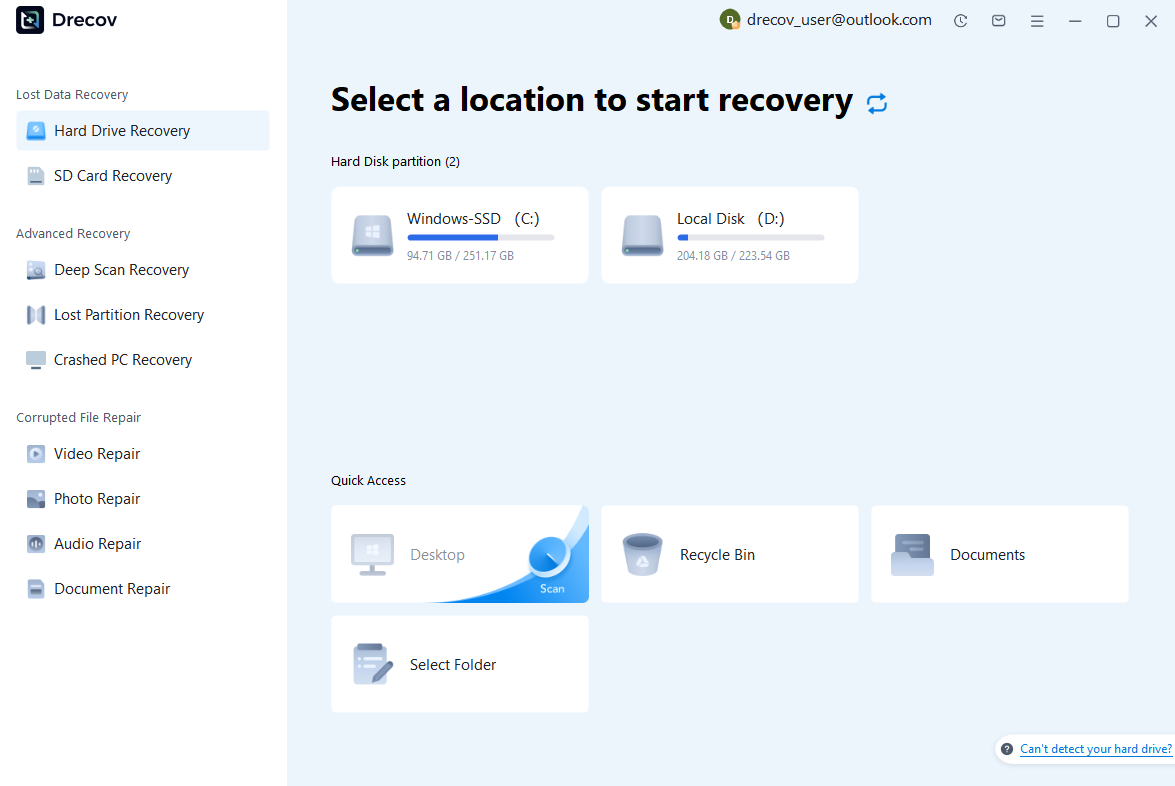
Step 1: Connect the Drive / USB)
Connect your device (SD card, HDD/SSD, or USB drive) to your computer and launch PandaOffice Drecov. Select the target device and start the scan. The software will perform a quick scan and deep scan to detect lost or deleted data.
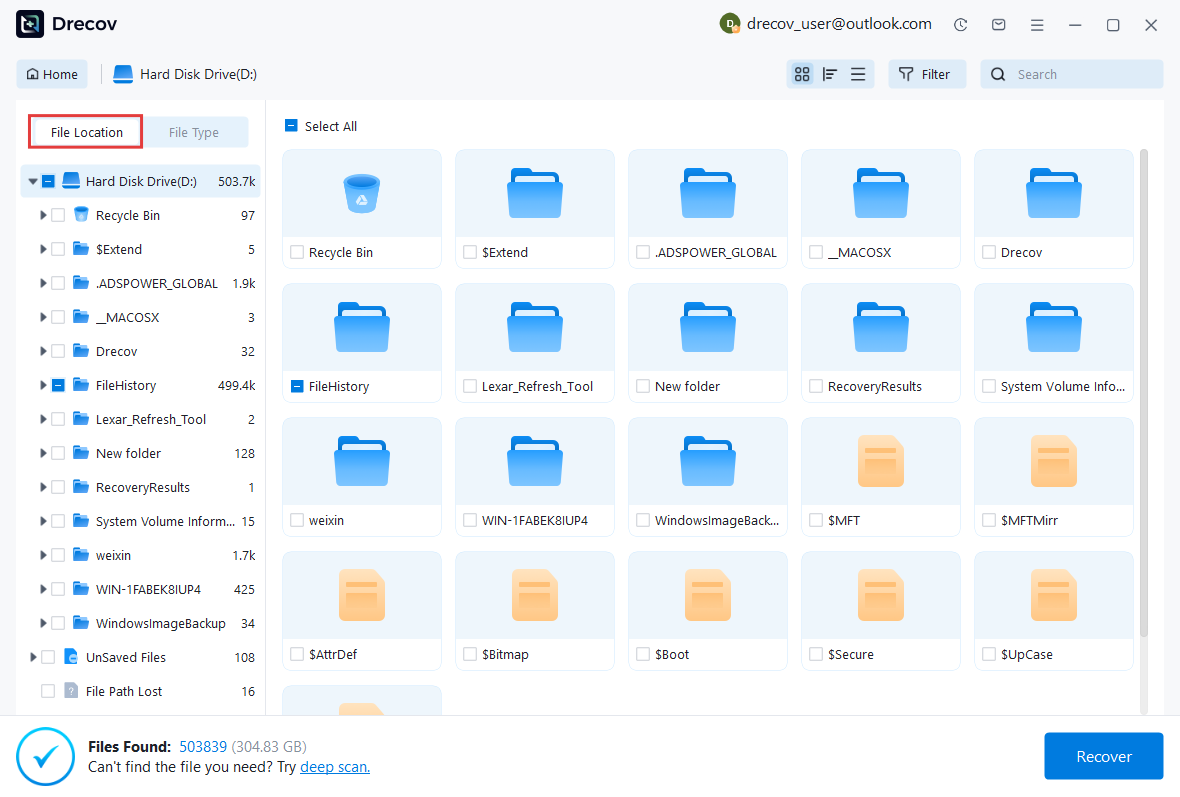
Step 2: Locate and Preview Lost Files
After scanning, browse the detected files and use the preview feature to check recoverable data. You can preview documents (Word, Excel, PDF), photos, and videos to ensure file integrity before recovery.
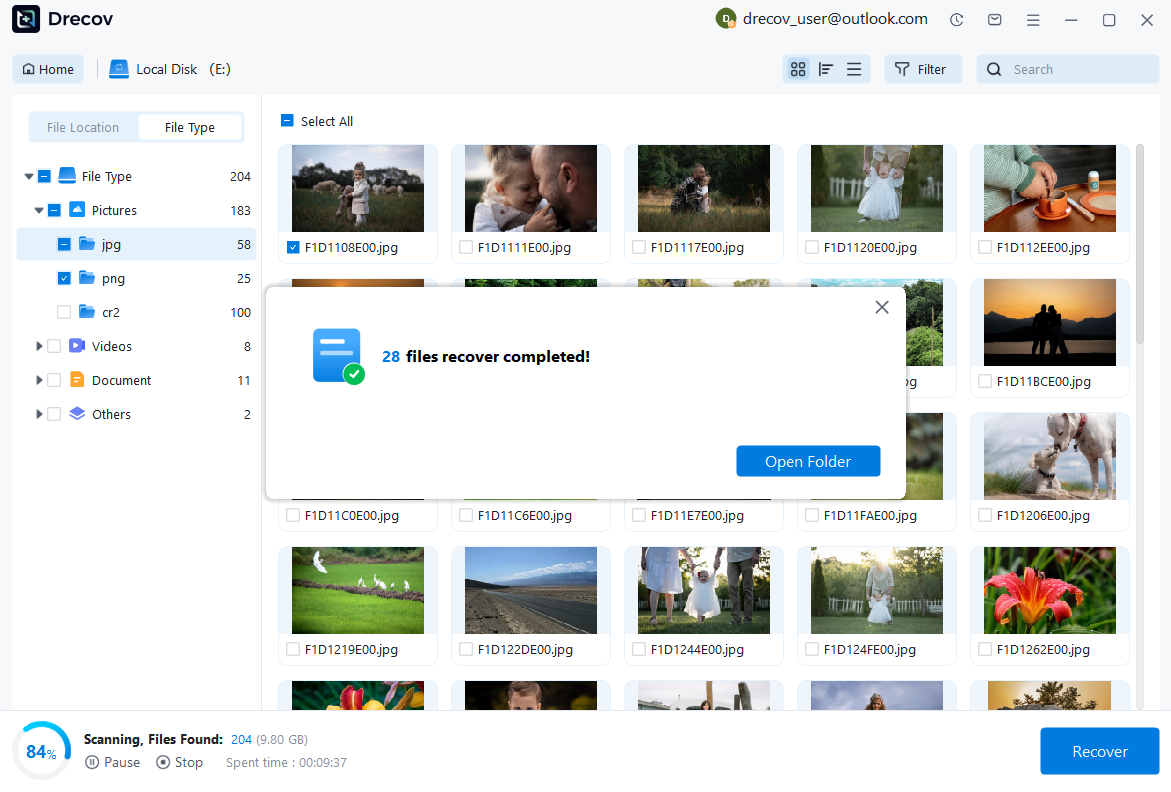
Step 3: Recover and Save to a New Location
Select the files you want to restore and click recover. Save all recovered data to a different drive or location (not the original device) to avoid overwriting lost data.
Why Choose PandaOffice Drecov Recovery Software?
PandaOffice Drecov offers a fast, secure, and user-friendly solution for recovering lost files across multiple scenarios. Whether you need email recovery, ZIP File Recovery, format data recovery, or help to recover deleted drafts Outlook, the software provides reliable recovery performance for both personal and business users.
PandaOffice Drecov supports recovery from formatted hard drives, SSDs, USB drives, SD cards, and external storage devices. Its advanced scanning engine can locate deleted archives, damaged ZIP files, lost Outlook drafts, and accidentally removed documents with high accuracy. For users searching for how to find deleted messages in Teams, PandaOffice Drecov can also help recover exported chat files, attachments, and related local cache data when available.
After recovery, test the file again. If the audio stream was damaged because of storage issues, a recovered version may play normally.
This method is particularly useful when only a few files exhibit audio problems while VLC works correctly with all other media.
This method can help users recover files from floppy disk storage after accidental deletion, formatting, or logical corruption.
⚠️ Warning: Never save recovered files back to the same SD card, as this may overwrite other recoverable data.
Method 4: Assign a New Drive Letter to Fix Accessibility Issues
Sometimes an SD card appears corrupted when the real issue is a simple system recognition error. Windows may fail to assign a proper drive letter, making the card invisible in File Explorer even though it is still detected by the system.
Test Environment
- Operating System: Windows 11 Pro
- Storage Device: Corrupted SD card
- Tool Used: Disk Management Utility
To resolve this, open Disk Management by right-clicking the Start menu and selecting the appropriate option.
Locate the SD card in the list of storage devices. If it appears without a drive letter, right-click it and choose “Change Drive Letter and Paths.”
Assign an available drive letter and confirm the changes.
Once completed, disconnect and reconnect the SD card, then check whether files become accessible again.
In many cases, this simple fix restores visibility without needing advanced sd card corrupted recovery tools.
This method is particularly useful when the card is detected but not displayed in File Explorer.
Method 5: Reinstall or Update Card Reader Drivers
In some situations, the SD card itself is not corrupted—the issue lies in the card reader or system drivers.
Outdated or corrupted drivers can prevent the operating system from properly reading the SD card, resulting in false corruption symptoms.
Test Environment
- Operating System: Windows 10/11
- Device: External USB card reader
- Tool Used: Device Manager
Open Device Manager and locate the disk drives or USB controllers section. Identify the card reader device.
You can either update the driver or uninstall and reinstall it. After restarting the system, reconnect the SD card to check if it becomes accessible.
This method helps eliminate hardware communication issues that may mimic corruption.
However, if the SD card still cannot be recognized across multiple devices, true corruption or physical damage may be present.
Choosing the Right Data Recovery Software for Corrupted SD Cards
Key Features of Reliable Recovery Tools
Not all recovery tools offer the same level of performance. When selecting data recovery software for corrupted SD card devices, certain features are essential for effective recovery.
A strong recovery tool should include deep scanning capabilities that allow it to analyze raw storage sectors rather than relying on file system structure.
Preview functionality is equally important because it allows users to verify files before recovery, reducing unnecessary restores.
Support for multiple file formats—including images, videos, documents, and compressed archives—ensures comprehensive recovery coverage.
Finally, compatibility with RAW and formatted drives is crucial for handling severe corruption scenarios.
Why Professional Recovery Tools Improve Success Rates
While basic utilities can fix minor file system issues, they often fail when corruption is severe.
Professional-grade sd card recovery software can bypass damaged file structures and reconstruct files using signature-based detection.
This allows recovery even when:
- The SD card shows as RAW
- The file system is unreadable
- The device requests formatting repeatedly
In many cases, professional tools significantly increase the chance of retrieving lost data compared to manual repair methods alone.
Free vs Paid Recovery Solutions
Many users initially search for free recovery tools, especially after encountering sudden data loss.
Free tools can be useful for simple deletion cases or minor corruption, but they often come with limitations such as:
- Limited file recovery size
- Reduced scan depth
- Fewer supported formats
Paid solutions generally offer more advanced scanning algorithms and higher recovery success rates, especially in complex corruption scenarios.
Choosing the right tool depends on the severity of data loss and the importance of the files involved.
Frequently Asked Questions About SD Card Corrupted Recovery
Can I Recover Data from a Completely Corrupted SD Card?
Yes, in many cases recovery is still possible. If the memory chip is physically intact, sd card corrupted recovery tools can scan raw sectors and extract files even when the system cannot read the card.
What Is the Best Method for Corrupt SD Card Recovery?
The most effective approach is to start with software-based recovery tools. If that fails, system-level fixes such as drive letter reassignment or driver updates can help restore access.
Is CHKDSK Safe for Corrupted SD Cards?
CHKDSK is generally safe, but it may modify file system structures during repair. It is best used after attempting recovery if data is critical.
Why Does My SD Card Show as RAW?
A RAW status usually indicates file system corruption. The operating system cannot recognize the file structure, but data may still be recoverable using data recovery software for corrupted SD card tools.
Preventing Future SD Card Corruption
Always Safely Eject SD Cards
Removing a card without proper ejection can interrupt writing processes and cause corruption.
Avoid Low-Quality Card Readers
Unstable readers may cause data transfer errors that lead to file system damage.
Maintain Regular Backups
Backups are the most reliable way to prevent permanent data loss.
Replace Aging SD Cards
Flash memory has a limited lifespan, and older cards are more prone to errors and corruption.
Final Thoughts on Corrupted SD Card Recovery
Recovering data from a corrupted SD card is often possible if the right steps are taken quickly. In most cases, the data is not immediately erased but becomes inaccessible due to file system damage.
By using a combination of system checks, repair tools, and sd card recovery software, users can often restore lost files successfully.
For more severe cases, tools like corrupt SD card recovery software provide deeper scanning capabilities that can recover data even from RAW or unreadable storage devices.
The key to successful recovery is acting quickly, avoiding further use of the card, and choosing the right recovery method based on the type of corruption.
With proper handling and preventive practices, the risk of future SD card corruption can be significantly reduced, ensuring safer long-term data storage.





