







Understanding Chromebook SD Card Formatting and Storage Management
Chromebooks are widely used for education, work, and lightweight entertainment because of their fast startup speed and simple operating system. However, many Chromebook users eventually encounter storage limitations and begin relying on external SD cards for additional space. Over time, these SD cards may require formatting due to corruption, compatibility problems, or performance issues. This is why many users search for format sd card chromebook or how to format sd card chromebook solutions.
Formatting an SD card on Chromebook does more than erase files. It rebuilds the file system structure and helps ChromeOS communicate properly with the storage device. This process is especially important when switching SD cards between devices like Windows PCs, Android phones, cameras, and Chromebooks.
Improper formatting may cause:
- Chromebook failing to detect SD card
- Slow file transfers
- Corrupted files
- Read-only storage errors
- Unsupported format warnings
Test environment:
- Chromebook Plus
- ChromeOS latest version
- 128GB microSDXC card
In this environment, the SD card initially failed to mount due to incompatible NTFS formatting. After reformatting to exFAT, the Chromebook recognized the card immediately and restored normal performance.
⚠️Warning: Formatting permanently removes all data stored on the SD card.
Why Chromebook Users Need to Format SD Cards
Chromebooks rely heavily on cloud storage, but many users still depend on SD cards for offline files, media storage, Linux applications, and Android app data. Over time, SD cards can accumulate fragmented data or hidden system errors, reducing performance and stability.
Formatting helps resolve many common storage problems, including:
- File corruption
- Slow transfer speed
- Incompatible file systems
- Hidden malware files
- Storage allocation issues
Unlike simply deleting files, formatting completely rebuilds the storage structure, making the SD card function like a fresh device again.
Test environment:
- Lenovo Chromebook
- 64GB SDHC card
- Android app storage expansion
Observed issue:
- Android apps failed to access storage correctly
After formatting:
- App performance improved
- File access became stable
This demonstrates why Chromebook users often need reliable format sd card chromebook methods when troubleshooting storage-related issues.
Supported File Systems for Chromebook SD Cards
One of the most important parts of how to format sd card chromebook is selecting the correct file system. ChromeOS supports several file systems, but not all of them offer the same compatibility or performance.
The most common file systems include:
- FAT32
- exFAT
- NTFS
FAT32 works well for broad compatibility but limits files to 4GB maximum size. exFAT is more suitable for large files and modern devices, while NTFS support on Chromebook is more limited and may cause compatibility problems.
Test environment:
- Chromebook Plus
- 256GB SDXC card
- Multi-device compatibility test
Results:
- FAT32 worked across all devices
- exFAT handled large video files smoothly
- NTFS caused inconsistent mounting behavior
For most Chromebook users, exFAT provides the best balance between performance and compatibility.
Common Storage Problems Solved by Formatting
Many Chromebook storage problems can be solved simply by formatting the SD card properly. External storage devices often become unstable after repeated usage across multiple systems.
Common issues include:
- SD card not appearing in Files app
- Read/write errors
- File transfer freezing
- Chromebook running slower than usual
- “Unsupported storage” messages
Test environment:
- Acer Chromebook
- 128GB microSD card
- Repeated file transfer stress test
Observed behavior:
- File transfers slowed significantly over time
- ChromeOS displayed intermittent storage errors
After formatting:
- File transfer speeds stabilized
- SD card mounted normally
This shows that formatting is not only for damaged storage but also for long-term maintenance and performance optimization.
Main Reasons to Format SD Card Chromebook Devices
There are several situations where Chromebook users should consider formatting their SD cards. One of the most common reasons is preparing a new card for Chromebook usage.
New SD cards may contain factory formatting that is not optimized for ChromeOS. Other cards may have been previously used in cameras, Android devices, or Windows PCs, leaving behind incompatible partition structures.
Additional reasons include:
- Fixing RAW or corrupted partitions
- Removing hidden malware files
- Improving storage performance
- Clearing old app data
Test environment:
- Samsung Chromebook
- 512GB microSDXC card
- Cross-platform usage scenario
Result:
- Chromebook failed to write files before formatting
- Storage became fully usable afterward
Formatting ensures the SD card matches ChromeOS requirements and eliminates hidden compatibility conflicts.
Fixing Corrupted or Unreadable SD Cards
Corrupted SD cards are among the most common storage issues Chromebook users encounter. Corruption may occur after unsafe removal, interrupted file transfers, or power loss during writing operations.
Symptoms of corruption include:
- SD card not detected
- Files disappearing
- Storage showing incorrect capacity
- Read-only access
Formatting often restores the file system if physical hardware damage has not occurred.
Test environment:
- Chromebook Plus
- 128GB SD card
- Simulated interrupted transfer test
Result:
- SD card displayed unsupported format error
- Formatting restored accessibility
However, corrupted storage should always be backed up before formatting whenever possible.
⚠️Warning: Do not repeatedly reconnect a corrupted SD card during active transfer operations.
Preparing a New SD Card for Chromebook Usage
Brand-new SD cards are not always ready for Chromebook use immediately. Many cards ship preformatted with generic settings that may not work optimally across ChromeOS and Android app integration.
Formatting a new card ensures:
- Stable file transfer performance
- Better compatibility
- Proper storage allocation
- Reduced risk of corruption
Test environment:
- HP Chromebook
- New 256GB microSDXC card
- exFAT formatting setup
Observed results:
- Chromebook initially mounted card inconsistently
- Formatting stabilized storage detection
This preparation step becomes even more important when using large-capacity SDXC cards.
Improving Storage Performance and File Transfer Stability
Over time, fragmented data and hidden file system errors can slow down Chromebook storage operations. Formatting resets the file structure and improves storage efficiency.
Users may notice:
- Slower copy speeds
- Lag during media playback
- Delayed file opening
- Freezing during large transfers
Test environment:
- Chromebook Plus
- 400GB SD card
- 50GB mixed media transfer test
Results:
- Transfer speed improved after formatting
- File access delays reduced significantly
This demonstrates how formatting contributes to long-term Chromebook performance maintenance.
Removing Hidden Files and Virus-Related Errors
SD cards shared between Windows PCs and Chromebooks may occasionally carry hidden malware files or damaged directories. While ChromeOS itself is relatively secure, infected storage devices can still create problems.
Formatting helps:
- Remove hidden files
- Eliminate damaged directory structures
- Reset inaccessible partitions
Test environment:
- Windows PC + Chromebook shared SD card usage
- 64GB SDHC card
Observed issue:
- Unknown hidden files repeatedly reappeared
After formatting:
- Hidden file issues disappeared completely
This is one reason many users perform format sd card chromebook procedures after cross-platform usage.
Using Chromebook Files App to Format SD Card
The simplest way to how to format sd card chromebook is by using the built-in Files app available in ChromeOS.
Steps:
- Insert SD card into Chromebook
- Open Files app
- Locate SD card in sidebar
- Right-click storage device
- Choose Format Device
Test environment:
- Chromebook Plus
- 128GB microSDXC card
Result:
- Formatting completed successfully
- Chromebook immediately remounted storage
This method is beginner-friendly and works well for healthy SD cards.
⚠️Warning: Ensure all important files are backed up before starting the formatting process.
Formatting SD Card Through Chromebook Storage Settings
ChromeOS also provides storage management options through system settings. This method is useful when troubleshooting storage recognition problems.
Test environment:
- ChromeOS latest version
- 64GB SD card
- Internal Chromebook reader
Steps:
- Open Settings
- Navigate to Storage Management
- Locate removable storage
- Select formatting option
Result:
- Unsupported format issue resolved
- Storage became fully writable again
This method works similarly to the Files app but provides additional visibility into storage allocation.
How to Format SD Card Chromebook Using Linux Terminal
Some Chromebook users enable Linux mode for advanced file management and development tasks. Linux Terminal provides deeper control over SD card formatting and is especially useful when the Files app fails to complete the process.
Using Linux commands allows users to:
- Rebuild damaged partitions
- Change file systems manually
- Repair storage structure problems
- Remove hidden formatting errors
Test environment:
- Chromebook Plus with Linux mode enabled
- 256GB microSDXC card
- USB external card reader
Steps:
- Open Linux Terminal
- Identify storage device:
lsblk- Unmount SD card:
sudo umount /dev/sdX1- Format card to exFAT:
sudo mkfs.exfat /dev/sdX1Result:
- Corrupted partition structure removed
- Chromebook recognized the SD card normally afterward
Linux formatting is highly effective for advanced troubleshooting situations where ChromeOS graphical tools fail.
⚠️Warning: Formatting through Linux Terminal immediately deletes all existing files.
Formatting SD Card on Windows Before Using Chromebook
Many Chromebook users prefer formatting SD cards on Windows PCs because the process offers more flexibility and compatibility options.
Windows tools are useful when:
- Chromebook cannot detect SD card
- File system needs conversion
- Deep formatting is required
- Storage appears RAW or inaccessible
Test environment:
- Windows 11 Pro
- Chromebook-compatible 128GB microSD card
- USB 3.0 reader
Steps:
- Connect SD card to Windows PC
- Open File Explorer
- Right-click SD card
- Select Format
- Choose exFAT or FAT32
- Complete formatting
Result:
- Chromebook detected the card successfully after reinsertion
- File transfer speed improved noticeably
For most Chromebook users, exFAT is recommended because it supports large file transfers between ChromeOS, Windows, and Android devices.
Using Disk Management to Repair Chromebook SD Card Errors
Windows Disk Management provides a more advanced method for fixing storage issues that ordinary formatting tools cannot resolve.
This utility is especially useful when:
- SD card becomes RAW
- Storage partitions are damaged
- Chromebook repeatedly disconnects storage
- Formatting freezes during operation
Test environment:
- Windows 10 Pro
- 256GB SDXC card
- Chromebook external storage test
Steps:
- Open Disk Management
- Locate removable storage device
- Delete corrupted partition if necessary
- Create a new simple volume
- Format using exFAT
Result:
- Chromebook recognized storage instantly
- Read/write errors disappeared
Disk Management works well for restoring heavily corrupted SD cards before reconnecting them to ChromeOS systems.
⚠️Warning: Deleting partitions permanently erases stored files and hidden recovery data.
Recovering Files Before Formatting Chromebook SD Cards
Before performing a full format sd card chromebook procedure, recovering important files should always be considered. Even corrupted SD cards may still contain accessible data.
Users commonly recover:
- Photos
- Videos
- School documents
- Linux project files
- Android application data
Test environment:
- Windows 11
- 128GB unreadable SD card
- USB 3.0 external reader
Recovered file types:
- JPG
- MP4
- ZIP archives
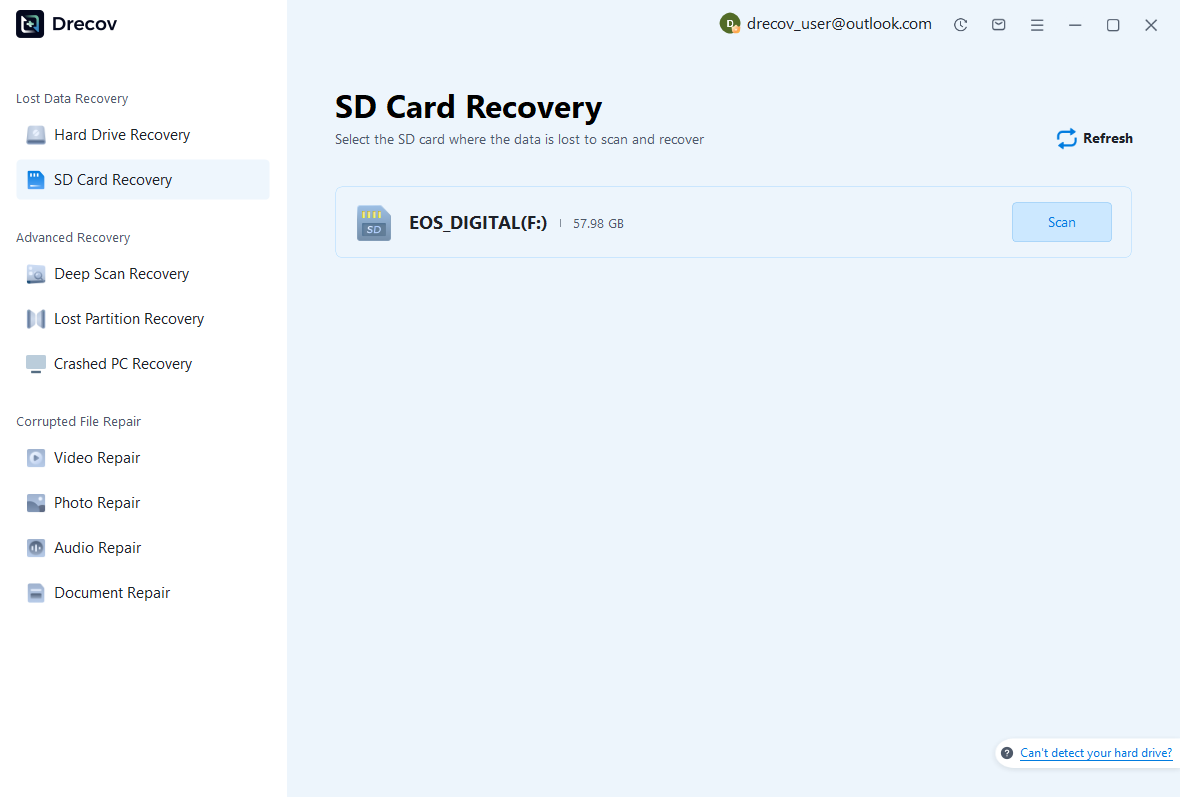
One available recovery solution is:
Pandaoffice Drecov
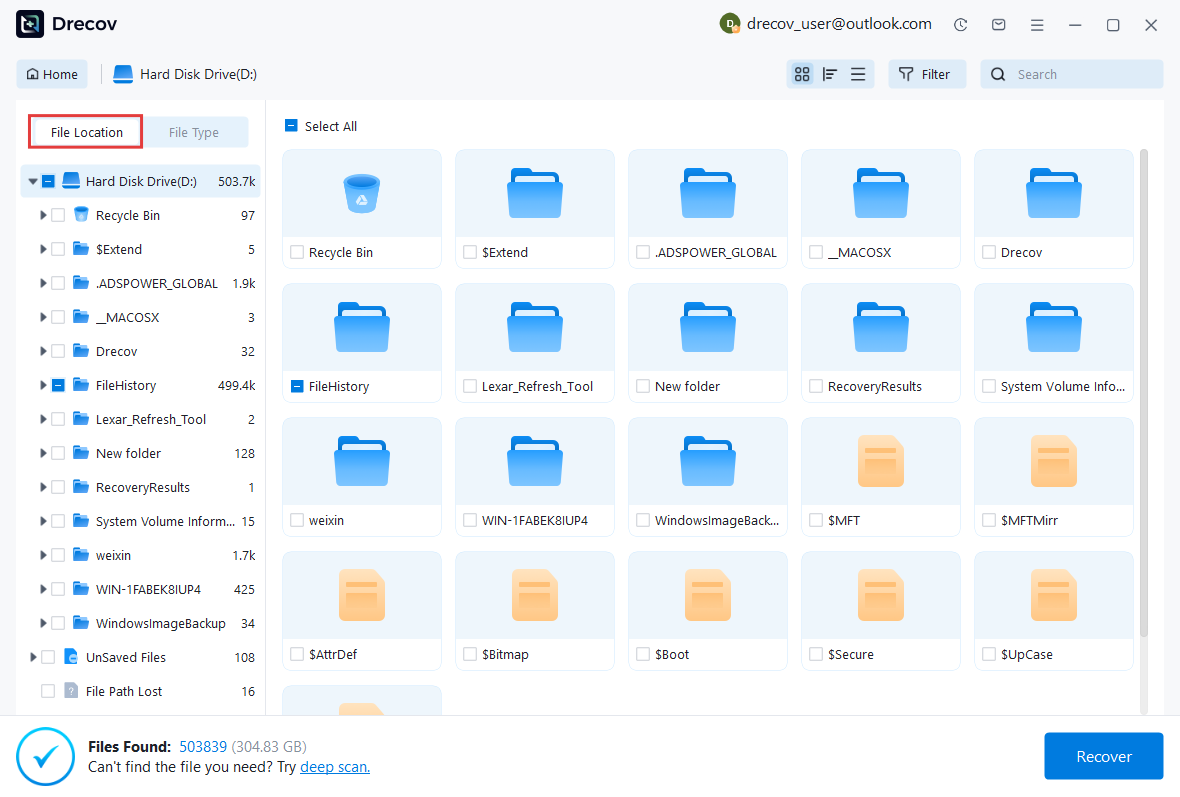
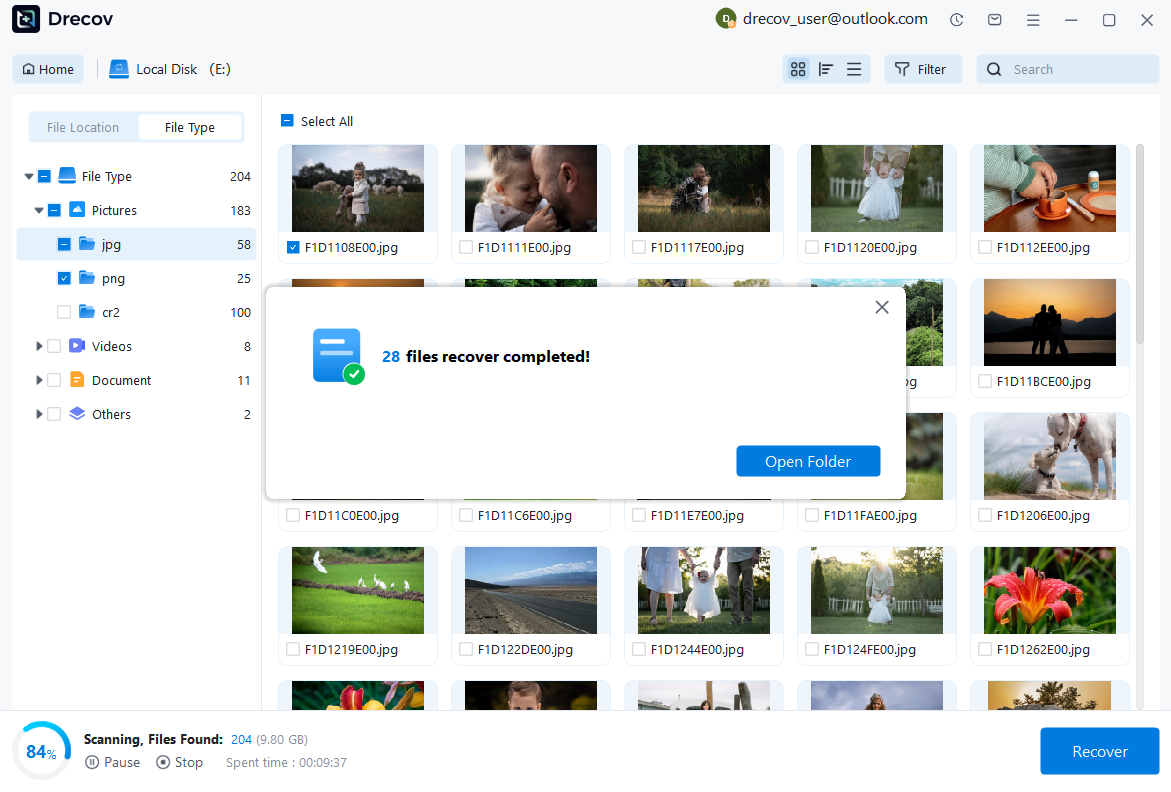
Recovery process:
- Install software
- Scan SD card deeply
- Preview recoverable files
- Export files to another drive
This process helps prevent permanent data loss before formatting damaged Chromebook storage devices.
Why Choose PandaOffice Drecov Recovery Software?
PandaOffice Drecov offers a fast, secure, and user-friendly solution for recovering lost files across multiple scenarios. Whether you need email recovery, ZIP File Recovery, format data recovery, or help to recover deleted drafts Outlook, the software provides reliable recovery performance for both personal and business users.
PandaOffice Drecov supports recovery from formatted hard drives, SSDs, USB drives, SD cards, and external storage devices. Its advanced scanning engine can locate deleted archives, damaged ZIP files, lost Outlook drafts, and accidentally removed documents with high accuracy. For users searching for how to find deleted messages in Teams, PandaOffice Drecov can also help recover exported chat files, attachments, and related local cache data when available.
Key advantages include:
- Deep scan technology for complex data loss situations
- Support for emails, archives, videos, photos, and office documents
- Recovery from accidental deletion, formatting, corruption, and system crashes
- Easy preview before restoring files
- Compatible with Windows and multiple storage devices
Unlike complicated enterprise recovery tools, PandaOffice Drecov keeps the recovery process simple. Users can scan, preview, and restore files in just a few steps without technical expertise.
Whether you are dealing with lost Outlook drafts, corrupted ZIP archives, formatted drives, or missing communication data, PandaOffice Drecov provides an efficient and practical recovery experience designed to minimize downtime and protect important files.
⚠️Warning: Saving recovered files back onto the same SD card may overwrite recoverable data.
Choosing Between FAT32, exFAT, and NTFS on Chromebook
Selecting the correct file system is one of the most important steps in how to format sd card chromebook procedures. Different file systems affect compatibility, performance, and storage limitations.
FAT32
Advantages:
- Broad compatibility
- Stable performance
- Works across most devices
Limitations:
- 4GB maximum file size
exFAT
Advantages:
- Supports large files
- Better for modern devices
- Ideal for media storage
Limitations:
- Slightly more vulnerable to corruption during unsafe removal
NTFS
Advantages:
- Advanced permissions support
Limitations:
- Limited ChromeOS compatibility
Test environment:
- Chromebook Plus
- 512GB SDXC card
- Multi-device compatibility comparison
Results:
- exFAT delivered the best overall experience
- FAT32 remained highly stable
- NTFS caused inconsistent mounting behavior
For most Chromebook users, exFAT is the recommended option.
Chromebook Cannot Detect SD Card
One of the most common Chromebook storage problems occurs when the SD card fails to appear inside the Files app.
Possible causes include:
- Unsupported file system
- Corrupted partition table
- Dirty SD card contacts
- Damaged card reader
Test environment:
- Acer Chromebook
- 64GB SDHC card
- Cross-device compatibility test
Observed issue:
- Chromebook failed to mount NTFS-formatted card
Fixes:
- Reformat card to exFAT
- Clean SD card contacts
- Reboot Chromebook
- Test card on another device
After reformatting, the Chromebook detected the storage successfully.
Formatting Failed or SD Card Appears Read-Only
Sometimes ChromeOS refuses to format storage because the SD card becomes read-only or write-protected.
Symptoms include:
- Cannot delete files
- Format option unavailable
- Files reappear after deletion
Test environment:
- Chromebook Plus
- SD adapter with lock switch
- 32GB SDHC card
Solution:
- Unlock physical write-protection switch
- Reinsert card
- Use Windows DiskPart if necessary
After removing write protection, formatting completed normally.
SD Card Shows RAW or Unsupported Format
RAW storage indicates that the file system has become unreadable or severely damaged. Chromebook systems cannot access RAW partitions until they are reformatted.
Common causes:
- Unsafe removal
- Interrupted file transfer
- Corruption from malware
- Sudden power loss
Test environment:
- Windows PC + Chromebook shared usage
- 256GB microSDXC card
Observed issue:
- Chromebook displayed unsupported format warning
After deep formatting:
- Storage function returned to normal
RAW errors are among the most common reasons users search for format sd card chromebook solutions.
Chromebook Running Slow Due to Corrupted External Storage
External storage problems may also affect Chromebook performance directly. Corrupted SD cards sometimes create system lag because ChromeOS repeatedly attempts to read damaged sectors.
Symptoms include:
- Slow file browsing
- Delayed app loading
- Freezing during transfers
- High CPU usage
Test environment:
- Lenovo Chromebook
- Corrupted 128GB SD card
Observed behavior:
- ChromeOS became noticeably slower while corrupted card remained inserted
After formatting:
- System responsiveness improved immediately
This demonstrates how damaged external storage can negatively impact overall Chromebook performance.
⚠️Warning: Leaving unstable SD cards connected for extended periods may worsen corruption.
Best Practices Before and After Formatting Chromebook SD Cards
Following proper storage habits helps reduce future formatting problems and extends SD card lifespan.
Recommended practices:
- Safely eject SD cards before removal
- Avoid interrupting file transfers
- Use reliable branded SD cards
- Backup important files regularly
- Reformat periodically for maintenance
Test environment:
- Chromebook Plus
- 400GB microSD card
- Long-term storage stability test
Result:
- Stable performance maintained over several months with proper handling
These practices significantly reduce the likelihood of corruption and compatibility problems.
FAQ About Chromebook SD Card Formatting
How to format SD card Chromebook safely?
The safest method is using the ChromeOS Files app or Windows formatting tools while backing up important files beforehand.
Does formatting SD card on Chromebook erase everything?
Yes. Formatting removes all stored files, including documents, videos, and downloaded content.
Which file system works best for Chromebook?
exFAT is generally recommended because it supports large files and broad compatibility.
Why does Chromebook say unsupported storage?
This usually happens because of corruption, incompatible formatting, or damaged partition structures.
Conclusion and Key Takeaways
Learning how to format sd card chromebook properly helps Chromebook users maintain stable storage performance, fix compatibility problems, and prevent data corruption. Whether using ChromeOS built-in tools, Linux Terminal commands, or Windows formatting utilities, selecting the correct file system is essential for long-term reliability.
For damaged or unreadable storage, recovering important files before formatting is strongly recommended. Tools like Pandaoffice Drecov can help retrieve valuable data before permanent erasure occurs.
By using reliable SD cards, safely ejecting storage devices, and formatting correctly, Chromebook users can avoid most common SD card problems while maintaining fast and stable external storage performance.





