







Raspberry Pi SD Card Format Overview and What It Actually Means
What “raspberry pi sd card format” means in real-world usage
When users search for raspberry pi sd card format, they are usually preparing an SD card that can properly boot and run a Raspberry Pi operating system. Unlike normal storage formatting, this process is not just about deleting files—it involves creating a boot-compatible structure that Raspberry Pi firmware can recognize.
The SD card in a Raspberry Pi is not optional storage; it is the main system drive. That means the formatting process directly determines whether the device will boot successfully or fail at startup.
Why Raspberry Pi requires special SD card formatting
Raspberry Pi systems rely on a Linux-based architecture, which requires a specific partition structure. A standard Windows format often does not create the correct boot configuration.
That is why users frequently search:
- how to format sd card for raspberry pi
- format sd card raspberry pi
- format sd card in raspberry pi
A correct Raspberry Pi SD card format ensures:
- Proper boot partition creation
- Compatibility with Raspberry Pi OS
- Stable system performance
Without correct formatting, the system may fail to detect or boot from the SD card.
Difference between normal formatting and Raspberry Pi formatting
Normal formatting and Raspberry Pi formatting are fundamentally different.
- Normal format → deletes files and resets storage
- Raspberry Pi format → prepares bootable system structure
- Incorrect format → Raspberry Pi cannot start properly
In other words, format sd card raspberry pi is not just a cleanup process—it is a system preparation step.
⚠️Warning: formatting permanently deletes all data
⚠️Warning: Formatting will erase all files on the SD card. Always back up important data before proceeding.
Why You Need to Format SD Card for Raspberry Pi
Preparing SD card for Raspberry Pi OS installation
Before installing Raspberry Pi OS, the SD card must be fully prepared. This is the main reason users search for format a sd card for raspberry pi or format an sd card for raspberry pi.
A properly formatted card ensures:
- Smooth OS image writing
- Correct partition alignment
- Reduced boot errors
Without formatting, the Raspberry Pi OS installation may fail or behave unpredictably.
Fixing corrupted or previously used SD cards
SD cards often carry leftover data from previous usage, including:
- Old operating systems
- Hidden partitions
- File system errors
These issues can interfere with Raspberry Pi installations, making reformat raspberry pi sd card necessary before reuse.
Improving system stability and boot reliability
A clean and properly formatted SD card reduces:
- Boot failure rate
- System crashes
- File corruption risks
This is especially important for long-running Raspberry Pi projects such as servers or IoT devices.
Reusing SD cards for different Raspberry Pi projects
Many users frequently switch projects, requiring them to reset SD cards multiple times using raspberry pi format sd card procedures.
Methods to Format SD Card for Raspberry Pi
Method 1 – Using Windows File Explorer format option
This is the simplest method for beginners preparing a basic how to format sd card raspberry pi setup.
Steps:
- Insert SD card into computer
- Open File Explorer
- Right-click SD card drive
- Select Format
- Choose FAT32 or exFAT
- Click Start
This method removes existing data and prepares the card for reconfiguration.
Test Environment
- Windows 11 Home
- 32GB microSD card
- USB 3.0 card reader
Method 2 – Using Raspberry Pi Imager (recommended method)
Raspberry Pi Imager is the official tool designed for SD card preparation.
Steps:
- Download Raspberry Pi Imager
- Select Raspberry Pi OS version
- Choose target SD card
- Click Write
This automatically creates correct sd card raspberry pi format structure, including boot partition and system files.
Method 3 – Using SD Card Formatter tool
The SD Association provides a dedicated formatting tool optimized for SD cards.
It ensures:
- Proper alignment
- Full capacity restoration
- Stable performance for Raspberry Pi use
This method is commonly used for format sd card in raspberry pi preparation when Windows formatting is not reliable.
Test Environment
- Windows 10 Pro
- 64GB SDXC card
- Raspberry Pi OS image preparation
Method 4 – DiskPart advanced formatting method
DiskPart is a command-line tool used for deep formatting and partition cleaning.
Steps:
- Open Command Prompt as Administrator
- Run
diskpart - Execute
list disk - Select SD card
- Run
clean - Recreate partition if needed
This method is effective for broken or corrupted how to format raspberry pi sd card scenarios.
⚠️Warning: incorrect disk selection may erase system drive
⚠️Warning: Always verify disk number before executing DiskPart commands to avoid accidental data loss.
Data Protection Before Formatting Raspberry Pi SD Card
Why data backup is necessary before formatting
Since formatting erases all stored data, users searching how to format sd card for raspberry pi should always back up important files first.
Raspberry Pi projects often contain:
- Code files
- Configuration scripts
- Sensor data logs
- Media files
Losing them can interrupt development progress.
Using recovery tools before formatting operations
Before performing Raspberry Pi SD card formatting, recovery tools can scan the card and extract important files from existing or corrupted partitions.
PandaOffice Drecov recovery process (single full workflow)
PandaOffice Drecov can deeply scan SD cards used in Raspberry Pi systems and recover important data before formatting.
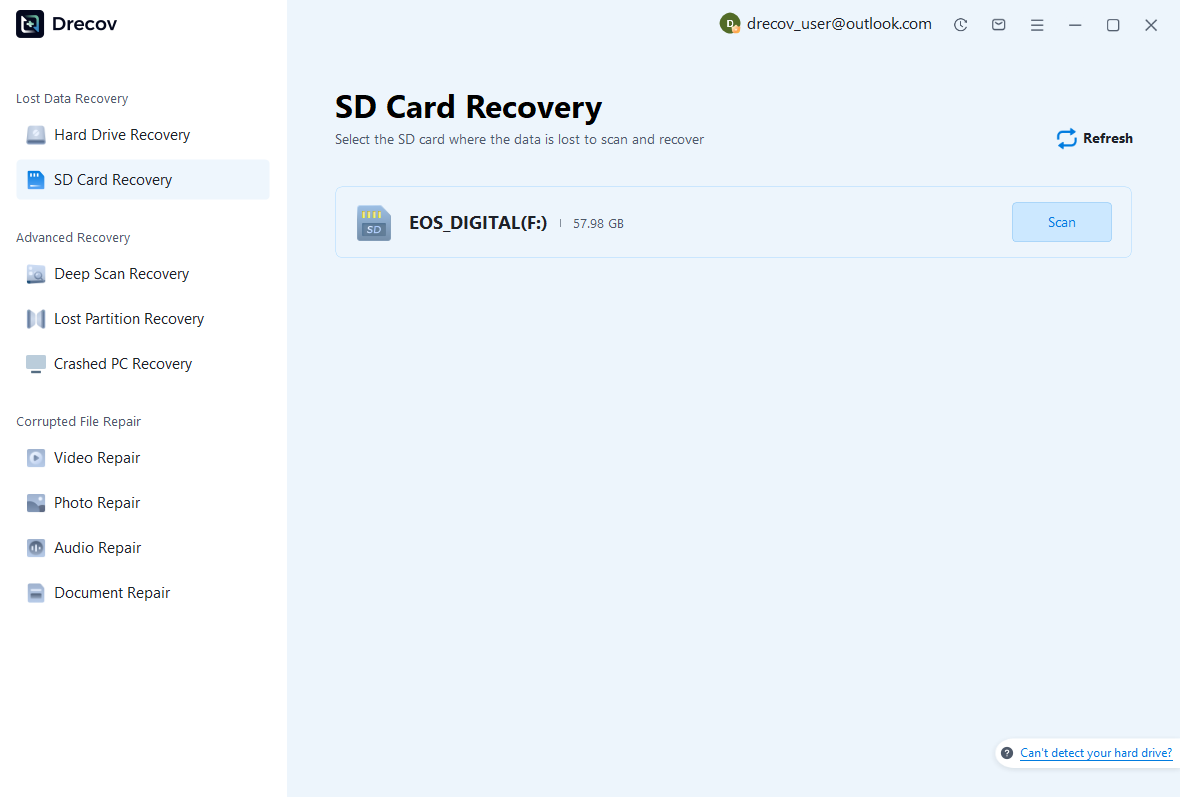
Step 1 – Launch and select SD card
Open PandaOffice Drecov and connect the SD card via card reader. Select it from the device list.
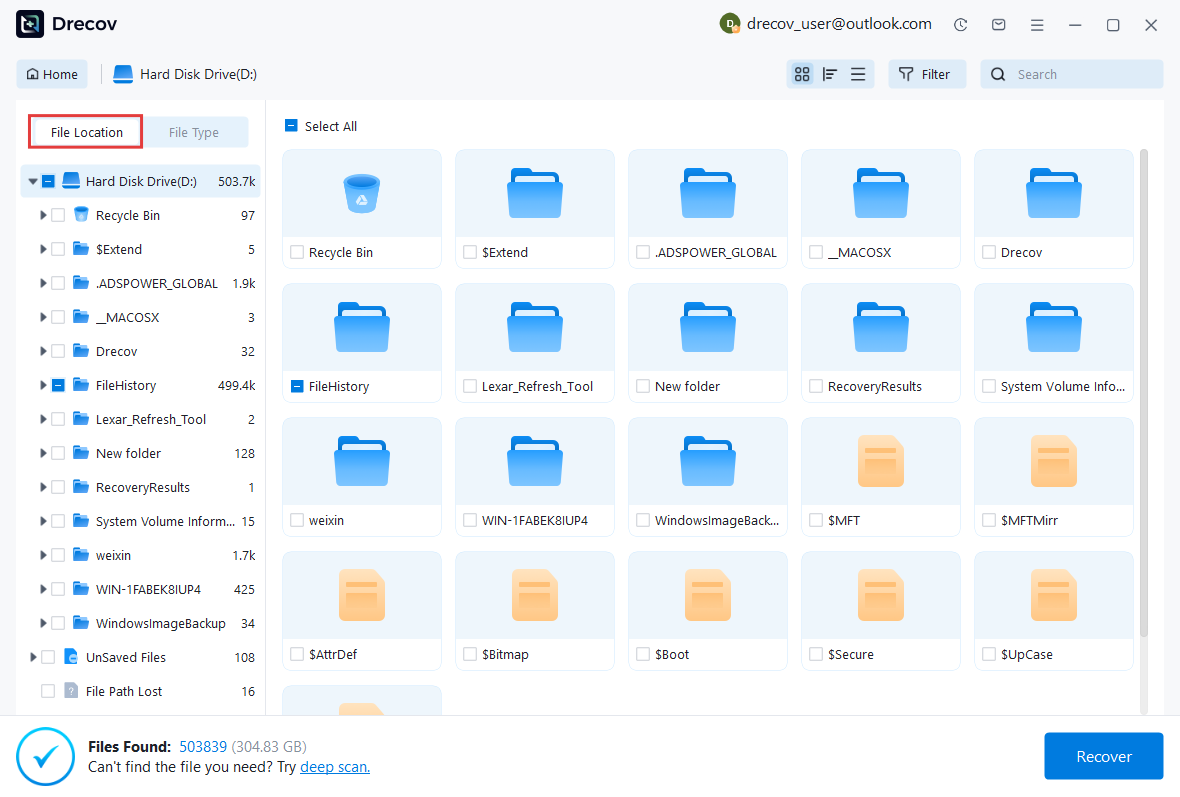
Step 2 – Start scan process
Click Scan and choose Deep Scan if the SD card contains corrupted partitions or old Raspberry Pi system data.
The tool analyzes:
- Deleted system files
- Raspberry Pi project folders
- Hidden partitions
- Raw storage sectors
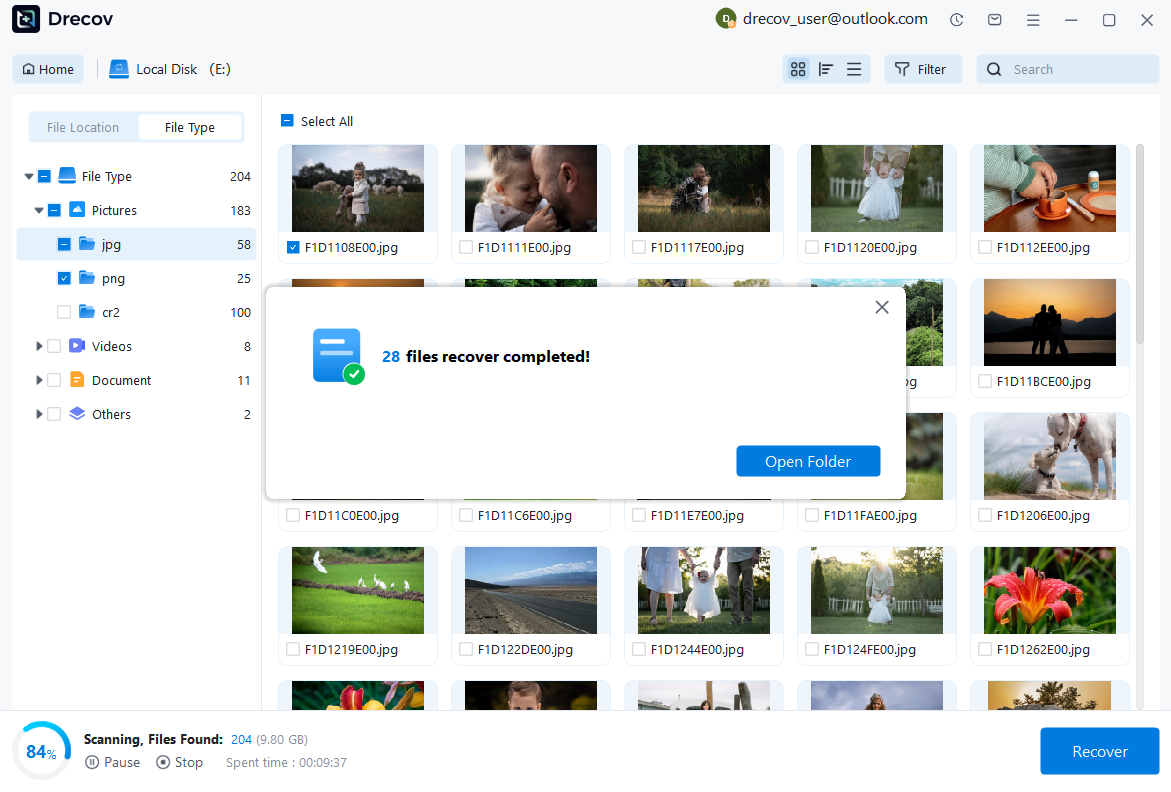
Step 3 – Preview detected files
Browse recoverable data such as scripts, images, and system configuration files.
Step 4 – Recover files safely
Select files and click Recover.
⚠️Warning: Do not save recovered files back to the same SD card.
Recommended locations:
- Local hard drive
- External storage
- Desktop
Why Choose PandaOffice Drecov Recovery Software?
PandaOffice Drecov offers a fast, secure, and user-friendly solution for recovering lost files across multiple scenarios. Whether you need email recovery, ZIP File Recovery, format data recovery, or help to recover deleted drafts Outlook, the software provides reliable recovery performance for both personal and business users.
PandaOffice Drecov supports recovery from formatted hard drives, SSDs, USB drives, SD cards, and external storage devices. Its advanced scanning engine can locate deleted archives, damaged ZIP files, lost Outlook drafts, and accidentally removed documents with high accuracy. For users searching for how to find deleted messages in Teams, PandaOffice Drecov can also help recover exported chat files, attachments, and related local cache data when available.
Key advantages include:
- Deep scan technology for complex data loss situations
- Support for emails, archives, videos, photos, and office documents
- Recovery from accidental deletion, formatting, corruption, and system crashes
- Easy preview before restoring files
- Compatible with Windows and multiple storage devices
Unlike complicated enterprise recovery tools, PandaOffice Drecov keeps the recovery process simple. Users can scan, preview, and restore files in just a few steps without technical expertise.
Whether you are dealing with lost Outlook drafts, corrupted ZIP archives, formatted drives, or missing communication data, PandaOffice Drecov provides an efficient and practical recovery experience designed to minimize downtime and protect important files.
Test Environment
- Windows 11 Pro
- 128GB SDXC card
- Raspberry Pi project backup scenario
Raspberry Pi Boot Issues Related to SD Card Format
Why Raspberry Pi fails to boot after formatting or flashing
Even after correctly performing a raspberry pi sd card format, some users still face boot failure. This usually happens not because of the format itself, but due to incorrect system image writing or incompatible partition structure.
Common symptoms include:
- Black screen after power on
- No LED activity or constant blinking
- “No boot device found” errors
- Endless reboot loop
These issues are often mistaken as SD card damage, but they are usually related to improper format sd card raspberry pi preparation or incorrect OS installation.
Boot partition not detected by Raspberry Pi
Raspberry Pi firmware requires a visible boot partition (usually FAT32). If the SD card is formatted incorrectly or the partition is missing, the system cannot start.
This is especially common when users manually try how to format sd card for raspberry pi using generic tools that do not preserve boot structure.
⚠️Warning: improper flashing may break boot structure
⚠️Warning: Formatting alone does not make an SD card bootable. You must also properly write Raspberry Pi OS using a compatible tool.
Common SD Card Formatting Errors on Raspberry Pi
SD card showing incorrect capacity or unreadable format
Sometimes after format sd card in raspberry pi, the system shows:
- Reduced storage capacity
- RAW file system
- Unallocated space only
This happens when partitions were not fully removed or reinitialized.
Windows cannot format Raspberry Pi SD card properly
Windows File Explorer may fail when:
- SD card has Linux partitions
- Card is corrupted
- Previous Raspberry Pi OS structure still exists
In these cases, users often switch to reformat raspberry pi sd card using DiskPart or SD Card Formatter.
SD card write-protected error
Another frequent issue is write protection, which blocks formatting completely. This may occur due to:
- Faulty SD card adapter
- Physical lock switch enabled
- Internal firmware lock from corruption
⚠️Warning: repeated failed formatting may indicate hardware damage
⚠️Warning: If formatting fails multiple times, the SD card may be physically degraded and unreliable for Raspberry Pi use.
How to Optimize Raspberry Pi SD Card After Formatting
Choosing the correct file system for Raspberry Pi
After formatting, file system selection plays a critical role in performance:
- FAT32 → required for boot partition
- ext4 → used for Linux system partition
- exFAT → not recommended for boot but useful for storage cards
Correct configuration improves raspberry pi format sd card stability.
Improving SD card performance for Raspberry Pi workloads
To ensure smooth operation after format an sd card for raspberry pi, consider:
- Using high-speed SD cards (Class 10 or UHS-I)
- Avoiding low-quality cards
- Keeping at least 20% free space
- Minimizing unnecessary write cycles
Reducing SD card corruption risk in Raspberry Pi systems
Raspberry Pi systems are sensitive to sudden power loss. To reduce corruption:
- Use proper shutdown commands
- Avoid unplugging power directly
- Use stable power supply
These practices reduce the need for frequent how to reformat raspberry pi sd card operations.
Advanced Troubleshooting for Raspberry Pi SD Card Issues
SD card not detected by Raspberry Pi or PC
If the SD card is not detected:
- Try another card reader
- Check USB port stability
- Test SD card on another device
If still not detected, the card may be permanently damaged.
Raspberry Pi stuck on rainbow screen
This usually indicates:
- Corrupt boot files
- Incorrect SD card image
- Faulty formatting before OS installation
Reapplying raspberry pi sd card format and rewriting OS usually fixes this.
System freezes after booting Raspberry Pi OS
This may be caused by:
- Slow or low-quality SD card
- File system errors
- Improper formatting before installation
⚠️Warning: avoid repeated unsafe formatting cycles
⚠️Warning: Constant formatting and rewriting on low-quality SD cards can shorten their lifespan significantly.
Best Practices for Raspberry Pi SD Card Formatting
Always use verified tools for formatting
For stable how to format sd card raspberry pi results, prefer:
- Raspberry Pi Imager
- SD Card Formatter
- Reliable Disk Management tools
Avoid unknown third-party tools that may corrupt partition structure.
Keep backup before every formatting operation
Before performing any format sd card raspberry pi action:
- Backup code projects
- Save system configurations
- Export logs and data
This prevents irreversible data loss.
Use proper SD card classes for Raspberry Pi
Recommended:
- Class 10 minimum
- UHS-I or higher for performance
- A1/A2 rated cards for application-heavy workloads
Reformat periodically for long-term projects
For long-running Raspberry Pi systems:
- Reformat SD card every few months if heavily used
- Reinstall clean OS when performance drops
- Avoid overfilling storage
Conclusion:
Proper raspberry pi sd card format is essential for ensuring that Raspberry Pi systems boot correctly, run smoothly, and remain stable over time. Unlike standard formatting, Raspberry Pi SD card preparation requires careful attention to boot partitions, file system compatibility, and OS imaging.
Most issues such as boot failure, unreadable SD cards, or system crashes are not caused by the Raspberry Pi itself, but by incorrect formatting or improper OS writing procedures. By using reliable tools and following correct format sd card raspberry pi methods, users can avoid most common errors.
For advanced cases involving corrupted or previously used cards, recovery tools can help secure data before reformatting. Once properly configured, a well-prepared SD card ensures optimal Raspberry Pi performance across all projects—from basic learning setups to advanced IoT systems.





