







Understanding Corrupted SD Card Problems and Why They Happen
What a corrupted SD card actually means
A corrupted sd card is a storage device that can no longer properly read or write data because its file system, partition table, or storage sectors have become damaged. Corruption may affect only a few files at first, but over time the entire card may become inaccessible.
Many users first notice corruption when:
- Photos disappear unexpectedly
- Videos stop playing
- Devices suddenly request formatting
- File transfer freezes midway
- SD card becomes unreadable on PC or Android
This is why searches like fix corrupted sd card, repair corrupted sd card, and how to fix corrupted sd card are extremely common.
Unlike physical damage, logical corruption often still allows partial recovery if handled correctly. Acting quickly improves the chance of saving important files before permanent damage spreads.
Common symptoms of a corrupted SD card
A damaged SD card usually shows warning signs before complete failure occurs. Understanding these symptoms helps users respond earlier and avoid irreversible data loss.
Typical corruption symptoms include:
- “SD card is damaged” notifications
- “You need to format the disk before use” messages
- Missing folders or empty storage
- Very slow copying speed
- File names turning into random symbols
- Card appearing as RAW format
- Camera refusing to record
Sometimes the card works intermittently, appearing normal for a short period before disconnecting again. This unstable behavior often indicates file system corruption or memory wear.
Users frequently search:
- how do you fix a corrupted sd card
- how can i fix a corrupted sd card
- how do i fix a corrupted sd card
because these symptoms usually appear without warning.
Main causes behind SD card corruption
Several factors can trigger SD card corruption. Some are software-related, while others involve hardware wear.
The most common causes include:
- Unsafe removal during transfer
- Sudden power interruption
- Malware infection
- Low-quality counterfeit cards
- Excessive write cycles
- Improper formatting
- Using same card across many devices
For example, removing an SD card while files are still being written can interrupt the file allocation table and damage the storage structure.
In Raspberry Pi systems, improper shutdowns are also a major cause of corruption because the OS constantly writes temporary files to the SD card.
Why corruption becomes worse over time
Corruption usually spreads gradually. Initially, only a few sectors fail, but repeated usage may overwrite damaged areas and affect surrounding storage blocks.
Continuing to use a corrupted SD card may lead to:
- Permanent unreadable partitions
- More bad sectors
- File fragmentation
- Recovery failure
That is why experts recommend immediately stopping usage once corruption appears.
⚠️Warning: continued usage may destroy recoverable data
⚠️Warning: Avoid copying new files onto a corrupted SD card because overwritten sectors may permanently erase recoverable information.
Why It Is Important to Repair Corrupted SD Card Quickly
Preventing permanent data loss
The earlier corruption is addressed, the higher the recovery success rate. Many files remain physically present even after the file system becomes inaccessible.
However, delaying repair may cause:
- File overwrite
- Partition collapse
- Controller failure
- RAW format conversion
This is why users urgently search how to repair corrupted sd card immediately after noticing problems.
Protecting important photos and videos
SD cards are widely used in:
- Cameras
- Drones
- Smartphones
- Raspberry Pi devices
- Dashcams
These devices often store irreplaceable data such as travel photos, wedding videos, or work projects. A corrupted SD card may therefore represent significant personal or professional loss.
Restoring device functionality
Many devices depend entirely on SD cards for normal operation. Corruption may prevent:
- Cameras from recording
- Android phones from saving media
- Raspberry Pi from booting
- Game consoles from loading data
Repairing the SD card restores both data access and device stability.
Reducing long-term hardware damage
When a card repeatedly fails to read or write, the internal controller may continuously retry operations. This increases wear and may accelerate total hardware failure.
Proper repair and early backup reduce stress on damaged storage sectors.
Basic Methods to Fix Corrupted SD Card
Method 1 – Reconnect SD card and test different hardware
Some corruption symptoms are caused by unstable connections rather than actual storage failure.
Steps:
- Remove SD card safely
- Clean metal contacts gently
- Insert card again
- Test another USB port
- Try another card reader
- Test on another computer or phone
In many cases, faulty adapters or unstable readers create false corruption symptoms.
Test Environment
- Windows 11 Home
- 64GB SanDisk microSD
- USB 3.0 reader
The original card reader failed to detect the SD card, while another reader worked normally.
Method 2 – Assign a new drive letter in Windows
Windows sometimes fails to mount SD cards correctly even though storage remains healthy.
Steps:
- Open Disk Management
- Locate SD card
- Right-click partition
- Select “Change Drive Letter and Paths”
- Assign new letter
- Reconnect SD card
This often restores accessibility without formatting.
Method 3 – Repair file system using CHKDSK
CHKDSK repairs logical file system errors automatically.
Steps:
- Open Command Prompt as Administrator
- Enter:
chkdsk X: /f /r
- Replace X with SD card letter
- Press Enter
- Wait for repair process
This command scans:
- File allocation table
- Directory structure
- Damaged sectors
It is one of the most common solutions for how to fix a corrupted sd card.
Test Environment
- Windows 10 Pro
- 128GB SDXC card
- RAW file system corruption
CHKDSK repaired directory errors and restored partial file access.
Method 4 – Use Windows Error Checking utility
Windows includes a graphical repair tool for storage devices.
Steps:
- Open This PC
- Right-click SD card
- Select Properties
- Open Tools tab
- Click Check
- Start repair scan
This method is easier for users unfamiliar with command-line tools.
Why software repair works for logical corruption
Logical corruption means the physical memory still functions, but indexing or file system information becomes damaged.
Repair tools work by:
- Rebuilding directory tables
- Repairing partition metadata
- Marking damaged sectors
- Restoring file allocation records
This is different from physical damage, which usually requires hardware-level repair.
Advanced Repair Methods for Corrupted SD Cards
Method 5 – Rebuild SD card partitions using DiskPart
When partitions disappear or become RAW permanently, DiskPart can completely rebuild the SD card structure.
Steps:
- Open CMD as Administrator
- Run:
diskpart
- Enter:
list disk
- Select SD card:
select disk X
- Clean storage:
clean
- Create partition:
create partition primary
- Format:
format fs=fat32 quick
This process completely resets the storage structure.
⚠️Warning: DiskPart permanently erases all partitions
⚠️Warning: DiskPart clean removes all partition information immediately and cannot be undone easily.
Method 6 – Full formatting corrupted SD card
If repair utilities fail repeatedly, a full format may restore functionality.
Full formatting:
- Checks bad sectors
- Rebuilds file system
- Removes damaged allocation tables
Unlike quick formatting, this process takes longer but provides more reliable results.
Test Environment
- Windows 11 Pro
- 256GB SDXC card
- Severe file system corruption
Full formatting restored usable storage capacity successfully.
Method 7 – Reinstall drivers for unreadable SD cards
Corruption symptoms may sometimes be driver-related rather than storage-related.
Steps:
- Open Device Manager
- Locate SD card reader
- Uninstall device
- Restart computer
- Reconnect SD card
Windows automatically reinstalls fresh drivers after reboot.
Recover Files Before Repairing Corrupted SD Card
Why recovery should happen before formatting
Repair operations sometimes overwrite damaged sectors. If files are important, recovery should always happen first.
This is especially important for:
- Wedding photography
- Drone footage
- Raspberry Pi project files
- Security camera recordings
Once overwritten, recovery becomes far more difficult.
Pandaoffice Drecov recovery workflow
Pandaoffice Drecov can scan corrupted SD cards deeply and recover files before repair or formatting.
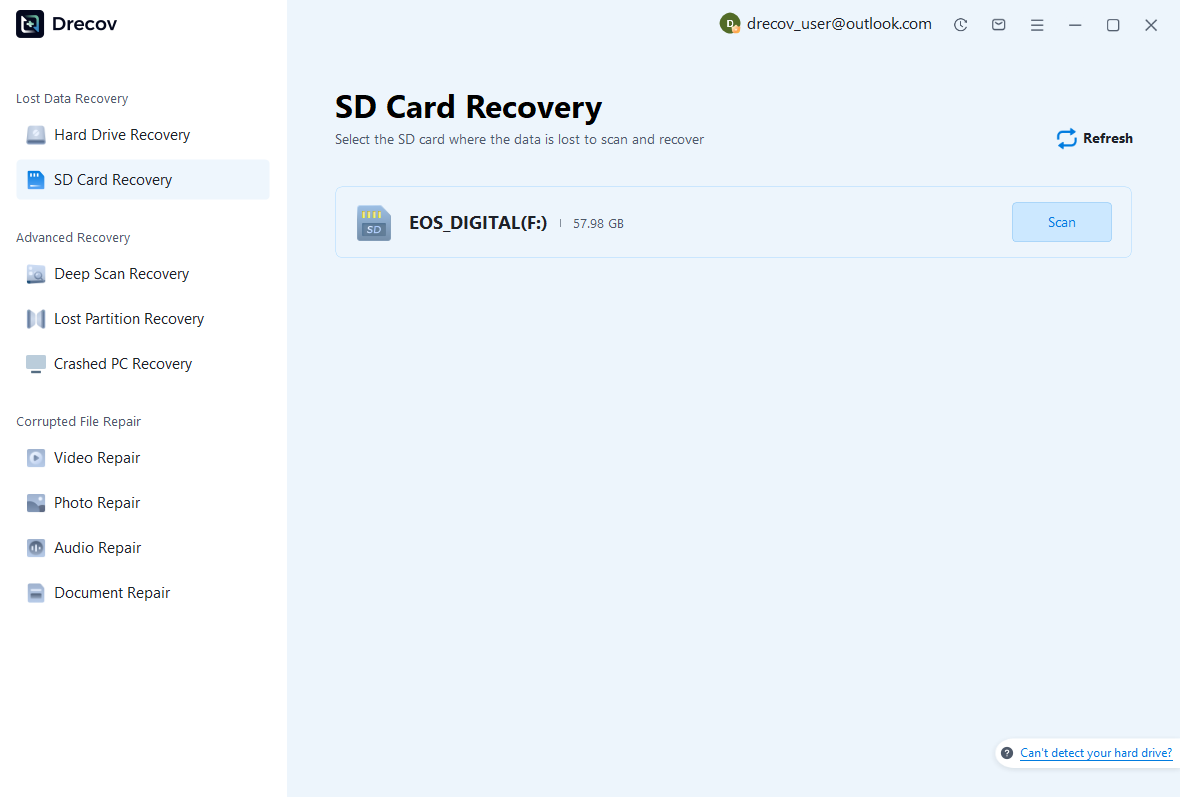
Step 1 – Connect SD card and launch software
Insert the corrupted SD card into the computer and open Pandaoffice Drecov. Select the SD card from the available storage list.
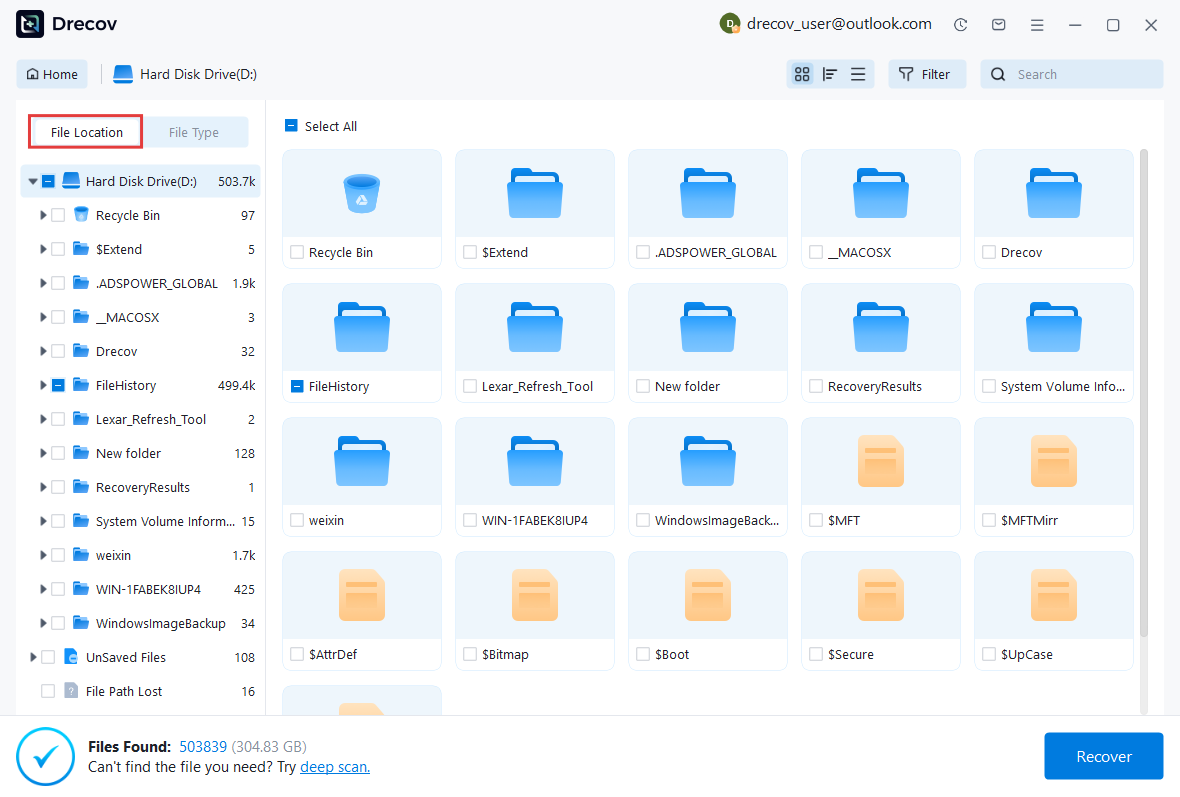
Step 2 – Start Deep Scan
Click Scan and choose Deep Scan for severe corruption or inaccessible partitions.
The tool scans:
- Deleted files
- RAW partitions
- Hidden sectors
- Lost directory structures
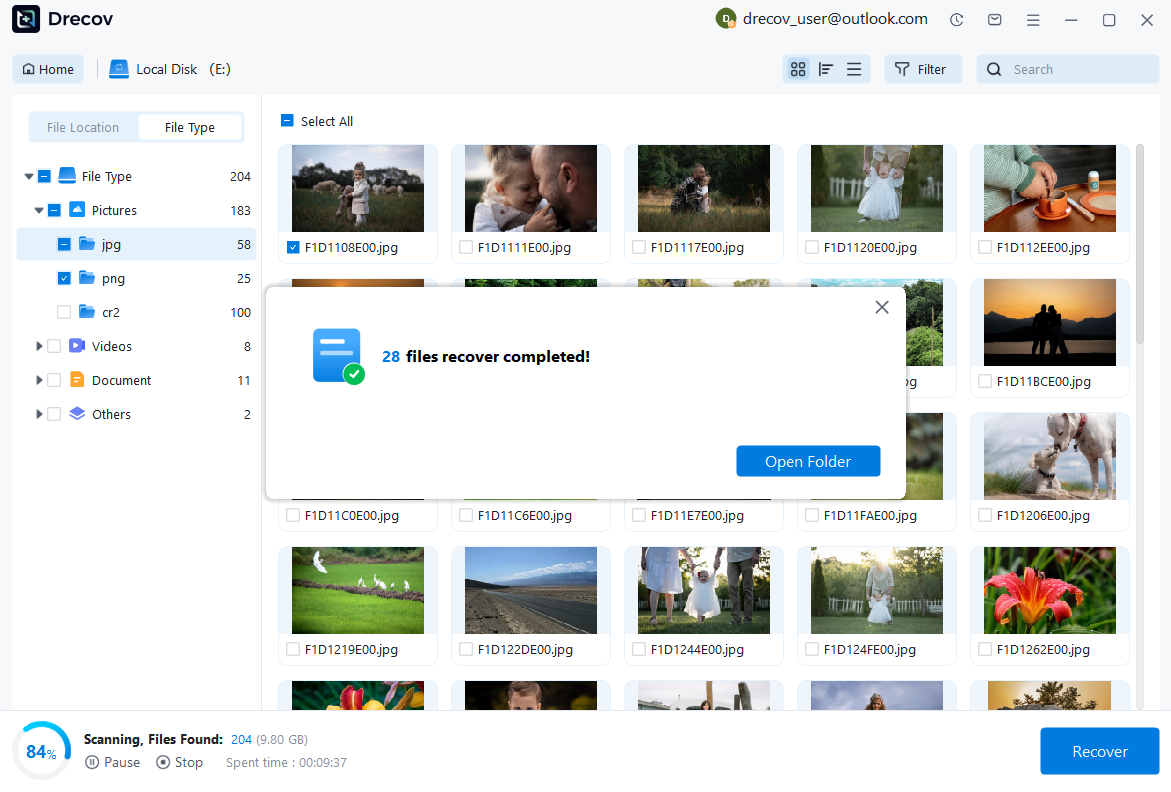
Step 3 – Preview recoverable files
Preview detected photos, videos, documents, and folders before recovery.
Step 4 – Recover files safely
Select wanted files and click Recover.
⚠️Warning: Never restore files back to the same corrupted SD card.
Recommended recovery locations:
- Desktop
- Internal SSD
- External hard drive
Test Environment
- Windows 11 Pro
- 512GB SDXC card
- Severe RAW corruption case
Most multimedia files were successfully restored before repair.
Why Choose PandaOffice Drecov Recovery Software?
PandaOffice Drecov offers a fast, secure, and user-friendly solution for recovering lost files across multiple scenarios. Whether you need email recovery, ZIP File Recovery, format data recovery, or help to recover deleted drafts Outlook, the software provides reliable recovery performance for both personal and business users.
PandaOffice Drecov supports recovery from formatted hard drives, SSDs, USB drives, SD cards, and external storage devices. Its advanced scanning engine can locate deleted archives, damaged ZIP files, lost Outlook drafts, and accidentally removed documents with high accuracy. For users searching for how to find deleted messages in Teams, PandaOffice Drecov can also help recover exported chat files, attachments, and related local cache data when available.
Key advantages include:
- Deep scan technology for complex data loss situations
- Support for emails, archives, videos, photos, and office documents
- Recovery from accidental deletion, formatting, corruption, and system crashes
- Easy preview before restoring files
- Compatible with Windows and multiple storage devices
Unlike complicated enterprise recovery tools, PandaOffice Drecov keeps the recovery process simple. Users can scan, preview, and restore files in just a few steps without technical expertise.
Whether you are dealing with lost Outlook drafts, corrupted ZIP archives, formatted drives, or missing communication data, PandaOffice Drecov provides an efficient and practical recovery experience designed to minimize downtime and protect important files.
Formatting Methods for Severely Corrupted SD Cards
When formatting becomes the only repair option
Sometimes repair utilities cannot restore a corrupted sd card because the file system damage is too severe. In these situations, formatting becomes necessary to rebuild the storage structure from scratch.
Formatting is commonly required when:
- The SD card constantly appears as RAW
- Windows repeatedly asks to format the card
- File system repair tools fail multiple times
- Partitions disappear entirely
- The card becomes inaccessible across several devices
Many users searching how to fix the corrupted sd card eventually reach this stage after basic repair attempts stop working.
Although formatting may restore functionality, users should always attempt recovery before proceeding because formatting may reduce the chance of restoring lost files later.
Quick format vs full format for damaged SD cards
There are two main formatting approaches available for SD cards.
Quick format:
- Faster process
- Rebuilds file system only
- Does not scan for damaged sectors
Full format:
- Much slower
- Scans for bad sectors
- More reliable for corrupted storage
For lightly corrupted cards, quick formatting may be enough. However, severe corruption usually requires full formatting because damaged sectors need to be isolated.
Users searching repair corrupted sd card often choose full formatting for stability and long-term reliability.
How to perform a full SD card format in Windows
Steps:
- Insert SD card into PC
- Open File Explorer
- Right-click SD card
- Select Format
- Disable Quick Format option
- Choose FAT32 or exFAT
- Click Start
A full format may take much longer depending on SD card capacity.
Test Environment
- Windows 11 Pro
- 128GB SDXC card
- Severe partition corruption scenario
Full formatting restored stable accessibility and removed RAW errors.
Formatting SD card using Disk Management
Windows Disk Management can rebuild corrupted partitions graphically.
Steps:
- Press Win + X
- Open Disk Management
- Locate corrupted SD card
- Delete damaged partition
- Create New Simple Volume
- Assign drive letter
- Format partition
This method is safer for users unfamiliar with command-line tools.
Using SD Card Formatter utility
The SD Association provides an official formatter designed specifically for SD cards.
Advantages include:
- Better compatibility
- Proper partition alignment
- More reliable formatting for SDXC cards
This tool is especially helpful when Windows formatting repeatedly fails.
How to Prevent SD Card Corruption in the Future
Always eject SD cards safely
Unsafe removal is one of the most common causes of corruption.
Never remove an SD card while:
- Files are transferring
- Video recording is active
- Raspberry Pi is running
- Background saving is occurring
Always use safe eject procedures before removal.
Avoid low-quality or counterfeit SD cards
Cheap fake SD cards often report false storage capacities and fail quickly.
Common fake card symptoms:
- Missing files after copying
- Storage capacity mismatch
- Sudden formatting requests
- Extremely slow write speeds
Purchasing reliable branded cards greatly reduces corruption risk.
Use high-quality card readers and adapters
Faulty card readers can interrupt file transfers and damage storage structure.
Recommended practices:
- Use USB 3.0 readers
- Avoid loose adapters
- Replace damaged connectors immediately
Protect SD cards from physical damage
Physical stress can damage internal memory chips or controller circuits.
Avoid:
- Water exposure
- Excessive heat
- Bending the card
- Static electricity
Physical damage may eventually make even software repair impossible.
Keep multiple backups of important files
No SD card lasts forever. Even premium cards eventually degrade after repeated write cycles.
Best practices:
- Backup important files regularly
- Store copies on cloud or external drives
- Avoid relying on one storage device only
This minimizes risk even if corruption occurs unexpectedly.
How Corruption Affects Different Devices
Corrupted SD card in Android phones
Android devices commonly display:
- “SD card damaged” notifications
- Apps crashing unexpectedly
- Missing photos or videos
Android corruption often results from:
- Unsafe removal
- System updates interrupted midway
- Battery removal during file operations
Users searching how do i fix a corrupted sd card frequently encounter these problems on smartphones.
Corrupted SD card in cameras
Digital cameras rely heavily on continuous writing during photo or video capture. Corruption may occur when:
- Battery dies during recording
- SD card becomes full
- Camera freezes during save process
This often results in lost media files and inaccessible folders.
Corrupted SD card in Raspberry Pi systems
Raspberry Pi systems constantly write logs and temporary files to SD cards. Improper shutdowns are therefore a major corruption source.
Common Raspberry Pi symptoms:
- Boot failure
- Endless reboot loops
- File system errors
- Missing boot partition
Using stable power supplies and proper shutdown procedures reduces corruption significantly.
Corrupted SD card in dashcams or drones
Dashcams and drones continuously overwrite recordings, causing high wear rates.
Heavy usage may lead to:
- Fragmented video files
- Incomplete recordings
- Sudden card failure
High-endurance SD cards are recommended for these workloads.
Advanced Troubleshooting for Unrepairable SD Cards
When the SD card becomes completely unreadable
If no device detects the SD card:
- Test multiple readers
- Try another operating system
- Inspect physical contacts carefully
If detection still fails, the controller chip may be damaged permanently.
Checking for fake SD card capacity
Some counterfeit SD cards falsely report larger capacities than physically available.
You may notice:
- Files disappearing after reaching certain size
- Corruption repeating after formatting
- Inconsistent available storage
Capacity testing tools can identify fake cards.
Understanding bad sectors on SD cards
Bad sectors are damaged memory areas that can no longer store data reliably.
Symptoms include:
- File transfer freezing
- CRC errors
- Corrupted media playback
A growing number of bad sectors usually indicates aging hardware nearing failure.
⚠️Warning: repeated corruption often indicates hardware failure
⚠️Warning: If corruption returns repeatedly after formatting, replace the SD card immediately to avoid permanent data loss.
FAQ About Corrupted SD Card Repair
How to fix corrupted sd card without formatting
Try CHKDSK, Windows Error Checking, drive reassignment, or recovery software before formatting.
How do you fix a corrupted sd card that cannot be detected
Test another card reader or PC first. If still undetected, the SD card may have physical controller damage.
Can a corrupted SD card be repaired permanently
Logical corruption often can be repaired, but physically damaged cards may fail again later.
How to repair corrupted sd card on Android
Remove the SD card, connect it to a computer, recover files if possible, then repair or format the card safely.
Why does my SD card keep becoming corrupted
Possible causes include:
- Unsafe removal
- Counterfeit storage
- Power interruptions
- Excessive write cycles
- Aging hardware
Conclusion: Best Practices to Fix Corrupted SD Card Safely
A corrupted sd card does not always mean permanent data loss. In many cases, the problem is related to file system corruption rather than physical destruction, meaning recovery and repair are still possible.
Users should stop using the card immediately after corruption appears and attempt recovery before formatting or rebuilding partitions. Tools such as CHKDSK, Disk Management, and deep recovery software can often restore accessibility and retrieve important files successfully.
Long-term SD card health depends heavily on safe usage habits, reliable hardware, regular backups, and proper ejection procedures. By understanding how to fix corrupted sd card problems correctly, users can minimize data loss risks and maintain stable storage performance across phones, cameras, Raspberry Pi systems, drones, and other devices.





