







What is SD data recovery and why it matters today
SD cards are one of the most widely used portable storage media across cameras, smartphones, drones, and other digital devices. Their convenience and portability make them a default choice for capturing photos, recording videos, and storing important documents. However, despite their popularity, SD cards are highly vulnerable to corruption, accidental deletion, and physical failure. This is where sd data recovery becomes essential.
In simple terms, sd data recovery refers to the process of retrieving lost, deleted, or inaccessible files from an SD card. These files may include images, videos, audio recordings, or documents that were previously stored but became unavailable due to system errors or user actions. The recovery process attempts to reconstruct these files from remaining data fragments stored on the memory chip.
The need for sd card file recovery has increased significantly due to the growing reliance on digital storage. Photographers, content creators, and even everyday users often store irreplaceable data on SD cards. A single corruption event can result in the loss of entire projects, making recovery solutions extremely important.
Modern workflows also increase the risk. Many professionals shoot directly to SD cards without immediate backups. In such cases, any failure during shooting or transferring files can result in sudden and unexpected data loss. Therefore, understanding recovery methods is no longer optional but necessary.
Key role of SD card recovery services in real-world situations
While many users first try sd recovery software, not all cases can be solved through basic tools. SD card recovery services play a more advanced role, especially when data is critically important or the card is severely damaged.
Professional recovery services are designed to handle complex scenarios that software cannot solve. These include physically damaged SD cards, corrupted firmware, or cases where the card is not even detected by a computer. In such situations, specialized hardware and controlled environments are required to extract data safely.
One of the main advantages of professional sd card recovery is its ability to recover data at a deeper level. Instead of relying on the file system, experts may directly access memory chips and rebuild data structures manually. This increases the chances of recovering files that appear completely lost.
Another important function of these services is diagnosis. Before recovery begins, technicians analyze whether the issue is logical or physical. This helps determine whether sd card recovery tool software is sufficient or whether hardware-level intervention is needed.
In many cases involving business data, legal evidence, or irreplaceable memories, users prefer professional recovery due to higher success rates. However, these services are typically more expensive and time-consuming compared to software solutions.
⚠️Warning: Stop using the SD card immediately after data loss
One of the most important rules in sd file recovery is to stop using the SD card immediately after data loss occurs. Continuing to use the card significantly reduces the chance of successful recovery.
When a file is deleted, it is not instantly erased. Instead, the system marks the space as available for new data. If new files are written, they may overwrite the deleted data permanently. Once overwritten, recovery becomes extremely difficult or even impossible.
Many users make the mistake of continuing to use the SD card, such as taking new photos or recording videos. This action often destroys recoverable data fragments. Even inserting the card repeatedly into different devices can increase the risk of corruption.
To maximize recovery success, users should:
- Stop writing any new data immediately
- Remove the SD card safely
- Avoid formatting or repairing prompts
- Prepare a separate device for recovery
Following these steps greatly improves the success rate of any sd recovery software or professional recovery attempt.
Common Causes of SD Card Data Loss and Failure Scenarios
Logical errors affecting SD card recovery tool performance
Logical errors are one of the most frequent causes of SD card failure. These issues occur when the file system becomes corrupted or unreadable, even though the physical hardware is still functional.
Common examples include accidental deletion, formatting errors, or file system conversion to RAW format. When this happens, the SD card may still be detected by the system, but files become inaccessible.
In many cases, sd card recovery tool software can successfully restore data by scanning file system structures or analyzing metadata. These tools often perform quick scans to locate recently deleted files and deep scans to rebuild damaged directories.
However, severe logical corruption can make recovery more difficult. If the file system structure is heavily damaged, only partial files or fragments may be recoverable. This is why early action is critical in recovery situations.
Logical errors are generally the most recoverable type of SD card issue, especially when no new data has been written after the incident.
Physical damage is a more serious form of SD card failure. Unlike logical errors, physical damage affects the hardware components of the card itself, including memory chips and circuit boards.
Common causes include water exposure, overheating, electrical surges, or physical breakage. Even a small crack in the card or exposure to moisture can make it unreadable.
When physical damage occurs, sd recovery software is usually ineffective because the system cannot communicate with the storage device. In such cases, specialized tools and hardware-level techniques are required.
Professional recovery labs often use chip-off methods, where memory chips are removed and read directly. This allows technicians to bypass damaged controllers and retrieve raw data.
However, physical recovery is complex and not always guaranteed. The success rate depends on the extent of the damage and the condition of the memory chips.
Human errors and device malfunction scenarios
Human error is one of the leading causes of SD card data loss. Accidental deletion, improper ejection, or interrupting file transfers are common mistakes that lead to corruption.
For example, removing an SD card while data is being written can interrupt the file system structure, causing unreadable files. Similarly, power loss during recording or transfer can result in incomplete data.
Device malfunctions also contribute to data loss. Cameras, smartphones, or card readers may crash unexpectedly, leaving the SD card in an inconsistent state.
In these cases, sd file recovery tools can often restore lost data, provided the storage sectors have not been overwritten.
⚠️Warning: Do not format the SD card after error messages
When an SD card shows error messages, many systems suggest formatting as a solution. However, this is one of the worst actions for data recovery.
Formatting rewrites file system structures and may erase metadata required for recovery. Even quick formatting can significantly reduce the success rate of sd card recovery.
Users should avoid formatting until recovery is completed or professional assistance is obtained.
Overview of SD Recovery Software and Tools for SD File Recovery
Types of SD recovery software available in the market
There are many types of sd recovery software available, each designed for different levels of data loss. Basic tools are intended for simple file deletion recovery, while advanced tools handle deep corruption cases.
A free sd recovery program is often suitable for beginners or minor data loss situations. These programs typically offer limited scanning depth and basic file restoration features.
Paid tools provide more advanced capabilities such as deep scanning, partition recovery, and RAW file system reconstruction. They are more effective in complex recovery scenarios.
The effectiveness of a tool depends on its scanning algorithm, file system support, and ability to reconstruct fragmented data.
How an SD card recovery tool scans lost files
An sd card recovery tool works using two main scanning methods: quick scan and deep scan.
Quick scan focuses on recently deleted files by analyzing file system records. It is fast but limited in scope.
Deep scan examines raw memory sectors and identifies file signatures. This allows recovery even when file system data is missing.
Advanced tools can detect image, video, and document formats based on internal structure rather than file names.
Limitations of basic SD data recovery tools
Despite their usefulness, basic recovery tools have limitations. They cannot repair physically damaged cards or recover overwritten data.
In some cases, recovered files may be incomplete or corrupted due to fragmentation. Compatibility issues may also prevent certain file types from being restored.
These limitations highlight the importance of choosing the right recovery method based on the severity of data loss.
⚠️Warning: Avoid installing recovery software on the same SD card
Installing recovery software on the affected SD card can overwrite lost data, reducing recovery chances. Always install tools on a separate drive.
Step-by-Step SD Card File Recovery Methods and Practical Solutions
Method 1: Use Windows built-in repair tools
Test environment: Windows 10 + USB SD card reader + 32GB SD card (accidental deletion case)
This method is suitable for minor logical errors or file system corruption. It does not require third-party tools and can be done directly in Windows.
Follow these steps:
- Insert the SD card into a card reader and connect it to your computer
- Open “This PC” and check if the SD card is detected
- If accessible, first check Recycle Bin or recent file history
- Press Win + R, type
cmd, and open Command Prompt - Run the command:
chkdsk X: /f(replace X with your SD card drive letter) - Wait for the system to scan and fix file system errors
This process helps repair logical issues such as directory corruption, making it useful for basic sd card file recovery scenarios.
⚠️Warning: If the system prompts to format the card, do NOT confirm. Formatting can significantly reduce recovery success.
Method 2: Deep scan using SD recovery software
Test environment: Windows 11 + 64GB SD card (formatted DSLR card)
When files are deleted or the SD card is formatted, advanced sd recovery software is required.
Step-by-step process:
- Connect the SD card to your computer
- Install recovery software on your system drive (NOT the SD card)
- Launch the software and select “Deep Scan” mode
- Choose the SD card as the target device
- Start full-sector scanning (may take 10 minutes to several hours)
- After scanning, filter results by file type (photos, videos, documents)
- Preview files to verify integrity
- Recover selected files to a different drive
This method is highly effective for logical damage and is one of the most common solutions for sd data recovery.
Method 3: Quick recovery using free SD recovery program
Test environment: macOS + 16GB SD card (mobile photo deletion)
A free sd recovery program is useful for recently deleted files that have not been overwritten.
Steps:
- Download a trusted recovery tool
- Install it on your computer (not SD card)
- Choose “Quick Scan” mode
- Select the SD card as the scanning target
- Wait for scan completion (usually a few minutes)
- Sort files by deletion time
- Preview and restore files to a safe location
This method works best for simple sd file recovery cases like accidental deletion.
⚠️Warning: Avoid repeated scanning on the same SD card as it may increase wear and reduce recoverability.
Method 4: Cloud backup and sync recovery
Test environment: Android phone + cloud-synced SD card media
Sometimes recovery does not require scanning at all.
Steps:
- Log into your cloud storage account (Google Photos, device backup, etc.)
- Open “Recently Deleted” or Trash folder
- Check retention period (usually 7–30 days)
- Restore or download lost files
- Sync recovered files back to device or SD card
This is not a traditional sd card recovery tool, but often the fastest recovery method when backups exist.
⚠️Warning: Avoid repeated recovery attempts on unstable cards
If the SD card disconnects frequently, becomes slow, or shows read errors, stop using it immediately. Continuous attempts may worsen corruption and reduce success rates of sd card recovery.
Advanced SD Data Recovery Techniques and Professional Methods
RAW file system recovery using Linux tools
Test environment: Linux boot USB + RAW SD card
When an SD card becomes RAW or unreadable, deeper recovery techniques are required.
Steps:
- Boot into a Linux system using USB
- Insert the SD card
- Open disk management tools (Disks / GParted)
- Check if the device is detected
- Attempt to rebuild partition table
- Use recovery utilities to extract raw data
This method is useful for advanced sd data recovery when Windows cannot access the drive.
Chip-level recovery for physically damaged SD cards
Test environment: Cleanroom lab + water-damaged 128GB SD card
When physical damage occurs, software is no longer effective.
Steps:
- Inspect SD card for hardware failure
- Remove NAND memory chip in a cleanroom environment
- Read raw data using specialized hardware
- Reconstruct file system structure manually
- Export recovered files
This is the most advanced form of SD recovery and is used in severe cases such as fire, water damage, or broken controllers.
AI-assisted recovery and file reconstruction
Modern sd card recovery tool systems increasingly use AI algorithms to improve recovery accuracy.
Process:
- Scan fragmented data blocks
- Identify file patterns using AI models
- Reconstruct incomplete files
- Restore usable versions of photos or videos
This is especially effective for damaged video files where manual recovery is difficult.
⚠️Warning: Do not attempt DIY hardware repair
Opening or physically handling SD cards without proper equipment can permanently destroy data due to static discharge or chip damage.
FAQ: SD Card Recovery Common Questions
Can all deleted files be recovered?
No. If data has been overwritten, recovery is impossible. Otherwise, most deleted files can be recovered using proper sd card recovery methods.
What is the difference between software and professional recovery?
Software handles logical issues like deletion or formatting. Professional recovery handles physical damage and chip-level extraction.
Is a free SD recovery program reliable?
It is reliable for simple cases but limited for deep or corrupted data recovery.
Why do recovered files sometimes appear broken?
This usually happens when files are partially overwritten or fragmented during loss.
How long does recovery take?
From a few minutes (quick scan) to several hours or days (deep scan or professional recovery).
Conclusion: Best practices for SD card recovery
Successful sd card recovery depends on timing, method selection, and avoiding further writes to the card.
- Simple deletion → use built-in tools or free programs
- Formatting or corruption → use deep scan sd recovery software
- Physical damage → professional recovery methods
The most important rule is: stop using the SD card immediately after data loss.
Natural Integration of Pandaoffice Drecov (Non-promotional use)
In more complex recovery situations—especially when an SD card becomes RAW or deep scan results are incomplete—additional reconstruction tools may be used during the final recovery stage.
For example, some recovery workflows include tools like Pandaoffice Drecov to re-analyze fragmented sectors and improve file structure reconstruction. In cases where standard scanning detects partial images or corrupted video segments, this type of tool can help refine recovery results by reassembling scattered data blocks into usable files.
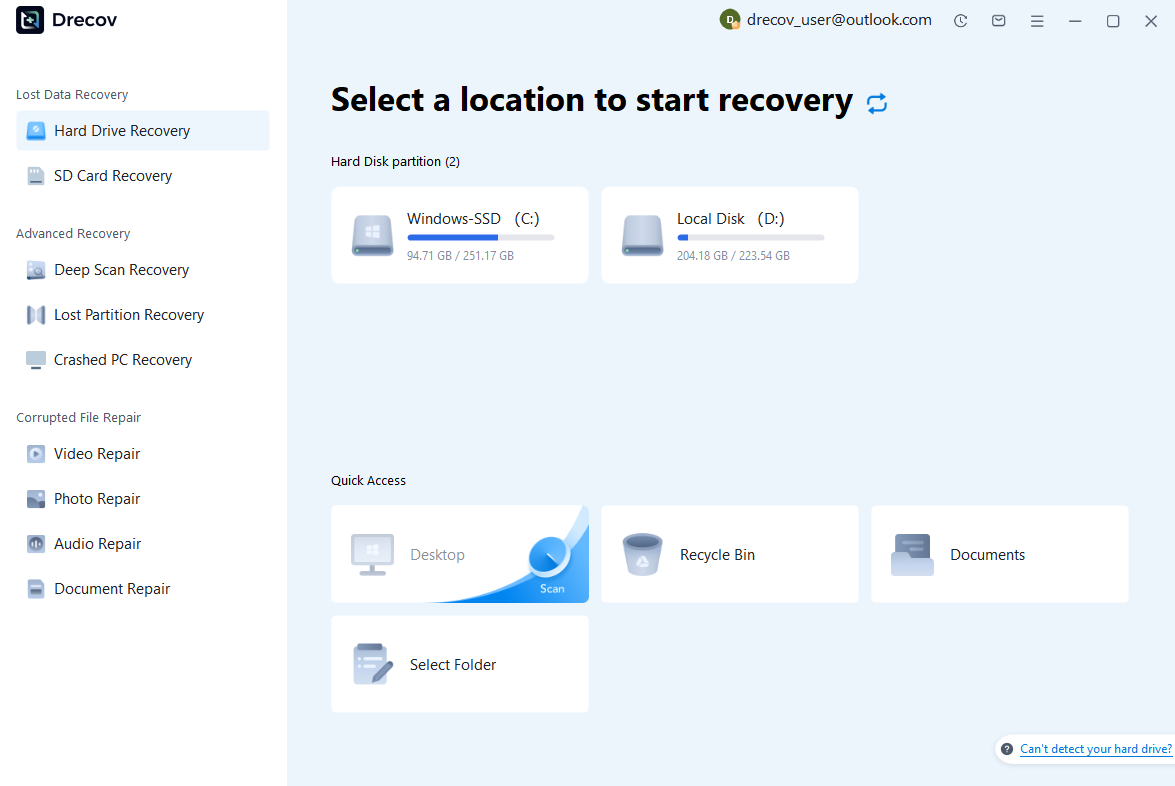
Step 1: Connect the Drive / USB)
Connect your device (SD card, HDD/SSD, or USB drive) to your computer and launch PandaOffice Drecov. Select the target device and start the scan. The software will perform a quick scan and deep scan to detect lost or deleted data.
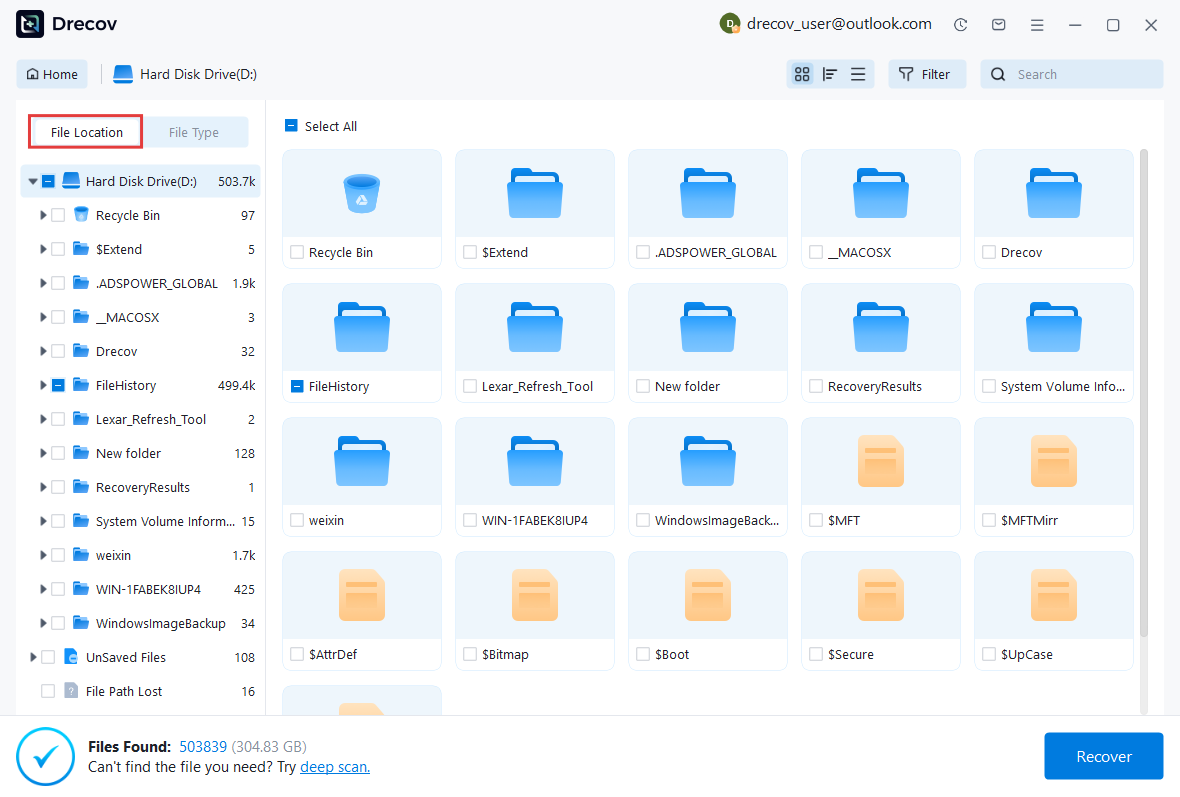
Step 2: Locate and Preview Lost Files
After scanning, browse the detected files and use the preview feature to check recoverable data. You can preview documents (Word, Excel, PDF), photos, and videos to ensure file integrity before recovery.
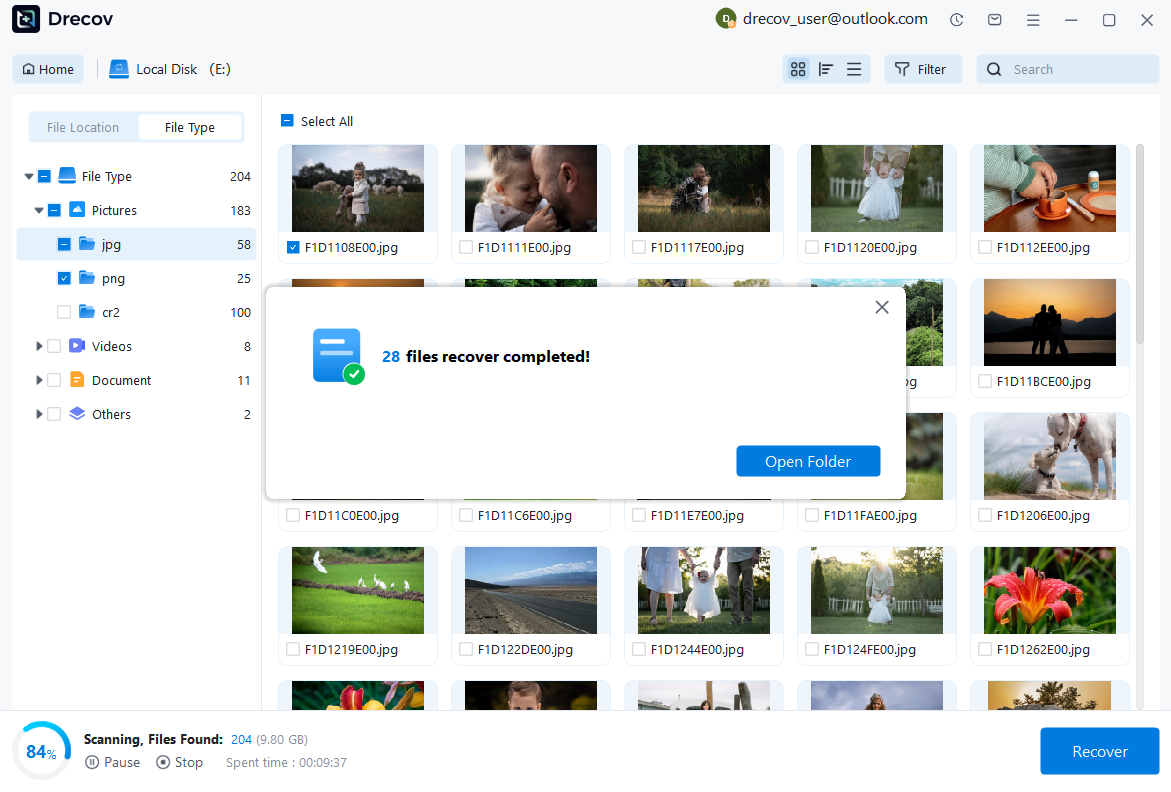
Step 3: Recover and Save to a New Location
Select the files you want to restore and click recover. Save all recovered data to a different drive or location (not the original device) to avoid overwriting lost data.
Why Choose PandaOffice Drecov Recovery Software?
PandaOffice Drecov offers a fast, secure, and user-friendly solution for recovering lost files across multiple scenarios. Whether you need email recovery, ZIP File Recovery, format data recovery, or help to recover deleted drafts Outlook, the software provides reliable recovery performance for both personal and business users.
PandaOffice Drecov supports recovery from formatted hard drives, SSDs, USB drives, SD cards, and external storage devices. Its advanced scanning engine can locate deleted archives, damaged ZIP files, lost Outlook drafts, and accidentally removed documents with high accuracy. For users searching for how to find deleted messages in Teams, PandaOffice Drecov can also help recover exported chat files, attachments, and related local cache data when available.
After recovery, test the file again. If the audio stream was damaged because of storage issues, a recovered version may play normally.
This method is particularly useful when only a few files exhibit audio problems while VLC works correctly with all other media.
This method can help users recover files from floppy disk storage after accidental deletion, formatting, or logical corruption.
It is typically used as a supplementary step after primary scanning, rather than replacing standard sd card recovery tool processes.
Final Summary
SD card recovery is not a single-step action but a layered process. The success of sd data recovery depends on how quickly the user stops writing data and selects the correct recovery method based on damage level.





