







The Internal Mechanics of High-Performance SanDisk Flash Storage
Professional photography workflows, mobile device storage arrays, and high-resolution video recording setups rely heavily on advanced solid-state storage solutions. The underlying infrastructure of these modules depends on complex NAND flash memory matrices designed by SanDisk to handle dense data packets at high speeds. Unlike traditional hard drives that rely on moving parts, these flash blocks utilize floating-gate transistors to trap electrons and preserve binary code configurations. When an unexpected system disruption occurs, executing a proper sandisk sd card recovery protocol requires a solid understanding of how these silicon structures handle data layout.
The onboard memory controller acts as the primary manager, organizing where individual data streams write information across physical blocks. When a user modifies a file, the controller balances the write load across cells to prolong the lifespan of the storage medium. However, because manufacturers pack these cells so tightly, unexpected voltage shifts and logical confusion easily disrupt them. When these anomalies corrupt the layout map, specialized software must read the raw binary code directly from the memory blocks to reconstruct the lost files before new data permanently overwrites the sectors.
How File Allocation Protocols Manage SanDisk Storage Sectors
Every external memory card uses a structured file allocation layout, usually exFAT or FAT32, to index where files reside on the storage medium. This index acts as a roadmap, allowing host cameras and computers to locate, view, or change files quickly without scanning the entire storage card. When a file is accidentally deleted, the host operating system does not instantly wipe the file contents from the storage blocks. Instead, it simply deletes the file’s index pointer and marks that storage space as available for future use.
This fundamental separation between the file directory index and the raw data blocks creates a reliable opportunity to recover files from sandisk sd card systems. As long as no new data is written to the card, the original file structures remain intact inside the memory blocks. Specialized data recovery tools can bypass the broken index completely, analyzing the raw hexadecimal data to identify file headers and footers, allowing them to rebuild the original files successfully.
⚠️Warning: Stop using the storage card immediately after noticing any missing files; taking new photos or copying files will overwrite the vacant sectors and permanently destroy the recoverable data.
Primary Causes of SanDisk Card Failure and Accessibility Issues
Logical File System Corruption and Improper Disconnection
Logical file directory errors are a frequent cause of sudden data loss in professional memory card setups. Users often cause this type of corruption when they pull a memory card from a camera or card reader while an active data transfer is running. If someone abruptly disconnects the host device before the file allocation table finishes updating, the system leaves the index incomplete, which causes the operating system to misread the drive.
When an operating system encounters a corrupted index, it cannot map the directory structure and will often label the card as an unallocated “RAW” volume. Additionally, malware or system software bugs can alter partition sectors, hiding entire folders or changing file access permissions. Utilizing specialized sandisk sd card data recovery methods allows technicians to scan these hidden sectors directly, bypassing the broken operating system paths to safely extract the files.
Physical Wear Factors and Controller Unit Anomalies
While logical errors involve software file structures, memory cards are also subject to physical degradation over time. Silicon storage cells have a limited number of write cycles before the underlying insulation weakens, leading to data errors and bad sectors. Low-quality card readers, unstable USB ports, and static electricity can cause electrical spikes that confuse or damage the card’s controller chip.
Physical damage to the copper connection pins can also increase electrical resistance, causing connection drops during data transfers. When these communication drops occur, the computer’s operating system may lock the card to prevent further errors. Deploying target solutions to recover sandisk sd card structures helps safely extract data using gentle read parameters, saving vital files before the controller chip fails entirely.
Technical Recovery Protocols for SanDisk Memory Cards
Setting Up a Secure Testing Environment for Data Extraction
Test Environment: Windows 11 Enterprise, Intel Core i7 Processor, 32GB RAM, SanDisk Extreme Pro 128GB SDXC Card (exFAT).
Before starting any recovery process, it is vital to set up a secure testing environment to protect the storage card from extra wear. Connect the memory card to your computer using a high-quality, dedicated USB 3.0 card reader plugged directly into the motherboard, rather than using an unpowered external USB hub. This ensures a stable electrical connection and steady data transfer speeds throughout the scanning process.
Ensure the target computer has enough free storage space on its internal drive to save the recovered files, as saving files back to the source card during recovery will destroy the remaining data. Close any unnecessary background applications and turn off automatic antivirus scans on external drives to prevent other software from trying to modify the card during extraction.
Pros:
- Direct motherboard connections prevent accidental power drops.
- A stable testing environment lowers the risk of drive disconnection.
- Closing background apps ensures full system resources for the scan.
Cons:
- Setting up a clean, isolated environment requires extra preparation time.
Utilizing Pandaoffice Drecov for Deep Sector Extraction
Test Environment: Windows 11 Enterprise, Intel Core i7 Processor, 32GB RAM, SanDisk Extreme Pro 128GB SDXC Card (exFAT).
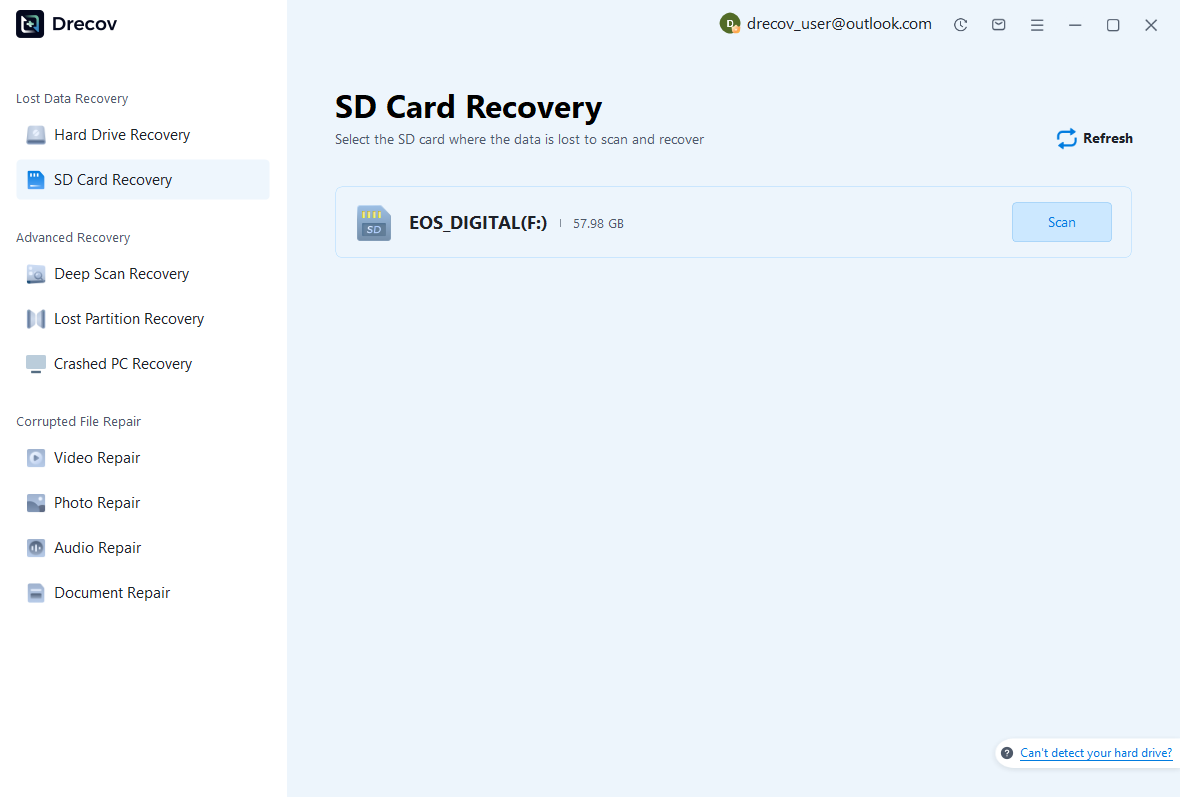
Pandaoffice Drecov provides an advanced, highly reliable solution for restoring missing data from high-capacity memory cards. The software features specialized deep-scanning algorithms engineered to read raw binary sectors, making it exceptionally effective at reassembling fragmented video clips and raw image formats. It works by looking past corrupted file system paths to analyze data clusters directly, ensuring a thorough recovery even from cards showing file system errors.
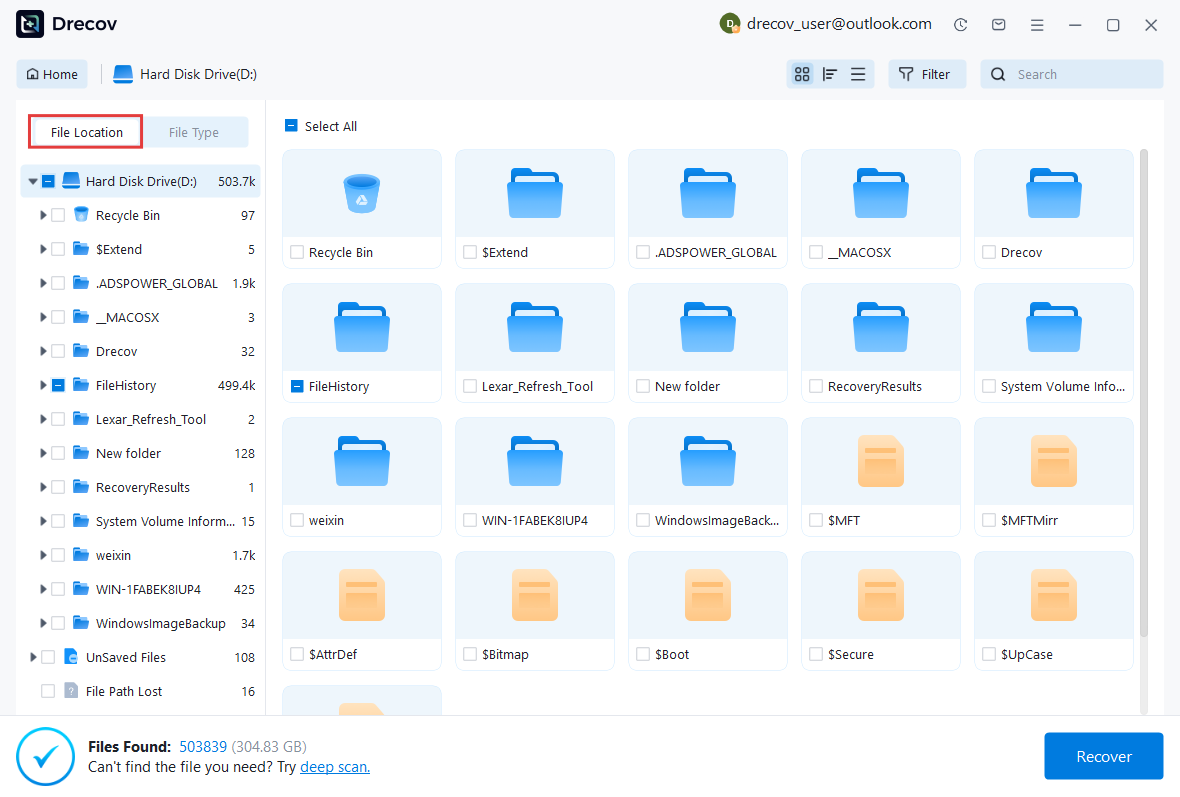
The interface offers a clear, step-by-step setup that makes partition mapping simple for users of any technical background. It maintains safe, read-only communication with the storage medium, displaying real-time file previews during the scan so you can verify the integrity of your photos and videos before exporting them.
Pros:
- Highly effective at reassembling fragmented high-definition video files.
- Low system processor overhead during intensive deep-scanning tasks.
- Real-time file previews let you verify data before saving.
Cons:
- Deep sector scanning can take longer on large-capacity storage cards.

Why Choose PandaOffice Drecov Recovery Software?
PandaOffice Drecov offers a fast, secure, and user-friendly solution for recovering lost files across multiple scenarios. Whether you need email recovery, ZIP File Recovery, format data recovery, or help to recover deleted drafts Outlook, the software provides reliable recovery performance for both personal and business users.
PandaOffice Drecov supports recovery from formatted hard drives, SSDs, USB drives, SD cards, and external storage devices. Its advanced scanning engine can locate deleted archives, damaged ZIP files, lost Outlook drafts, and accidentally removed documents with high accuracy. For users searching for how to find deleted messages in Teams, PandaOffice Drecov can also help recover exported chat files, attachments, and related local cache data when available.
Key advantages include:
- Deep scan technology for complex data loss situations
- Support for emails, archives, videos, photos, and office documents
- Recovery from accidental deletion, formatting, corruption, and system crashes
- Easy preview before restoring files
- Compatible with Windows and multiple storage devices
Unlike complicated enterprise recovery tools, PandaOffice Drecov keeps the recovery process simple. Users can scan, preview, and restore files in just a few steps without technical expertise.
Whether you are dealing with lost Outlook drafts, corrupted ZIP archives, formatted drives, or missing communication data, PandaOffice Drecov provides an efficient and practical recovery experience designed to minimize downtime and protect important files.
Manual File System Diagnostics Using Native Command Line Tools
Test Environment: Windows 10 Professional, AMD Ryzen 5 Processor, 16GB RAM, SanDisk Ultra 64GB MicroSDHC Card (FAT32).
When a memory card displays logical errors but is still recognized by the computer, native command-line tools can help diagnose file system issues. The built-in command line allows users to run system checks to identify directory indexing issues without needing to install third-party software first. This method attempts to read the current partition table and verify if the data structure can be aligned safely.
However, using system repair commands requires caution, as these tools are designed to fix file structures rather than protect deleted data, meaning they may alter storage sectors during the process.
Pros:
- Uses built-in operating system tools with no extra downloads needed.
- Quickly identifies basic logical errors in the drive index.
- Free to use on all standard Windows operating systems.
Cons:
- Risk of overwriting fragmented data if the tool tries to auto-fix sectors.
- Requires manual command entry with no visual user interface.
⚠️Warning: Avoid running automatic system repair commands if you have deleted files you need to rescue; these utilities can overwrite file fragments during the repair process.
Advanced Technical Troubleshooting for Unresponsive Storage Media
Resolving Digital Write Protection and Driver Recognition Failures
A common issue with memory cards is when the host system labels the drive as write-protected, blocking any file modification or recovery attempts. This safety lock can trigger if the physical write-protect switch on the side of the card is damaged or accidentally moved. If the switch is fine, the issue is likely a logical lock triggered by the card’s controller chip when it detects critical sector errors.
To clear logical locks, technicians can use system disk tools to reset the card’s read and write attributes. Updating the computer’s card reader drivers through the Device Manager can also resolve connection drops, allowing recovery software to communicate clearly with the card.
Managing RAW Storage Status and Unallocated Volumes
When a memory card’s partition table is severely corrupted, computers will often display the drive status as RAW, prompting you to format the card before you can use it. This happens because the operating system can no longer find a recognizable file format like exFAT or FAT32. It is vital to decline any formatting prompts, as formatting creates a new index table that makes recovering the original data much harder.
When dealing with a RAW volume, specialized recovery utilities can scan the unallocated space bit-by-bit. By reading the raw binary data directly, the software can locate original file headers and extract the files safely, completely bypassing the broken partition map.
⚠️Warning: Never format a memory card that prompts a RAW error if it contains missing data; formatting will erase the current index maps and complicate the recovery process.
Strategic Summary and Preventive Measures for SanDisk Media
Best Practices for Maximum Data Extraction Success
To ensure the best possible results when attempting a sandisk sd card recovery, always follow a strict media isolation process. Remove the card from your camera or device the moment you suspect data loss to prevent the system from writing background cache files or thumbnails over the lost data sectors.
When saving your recovered files, always choose a destination folder on your computer’s internal hard drive or a separate external drive. Never save recovered files back onto the same memory card you are scanning, as doing so will overwrite the remaining data sectors and permanently ruin the recovery.
⚠️Warning: Do not run multiple recovery programs at the same time on an unstable memory card; multiple scans can cause read conflicts and stress the card’s internal components.
Long-Term Habits to Avoid Storage Card Failures
While recovery tools provide a helpful safety net, building dependable backup habits is the best way to keep your important files safe. Maintaining a clear backup routine that saves duplicate file copies to cloud storage and separate local drives removes reliance on a single memory card.
Always use your operating system’s safe ejection option before physically removing a memory card from your computer to ensure all data cycles are completed safely. Finally, because flash memory cells naturally wear out over time from repeated use, replacing older memory cards every few years is a practical way to prevent unexpected hardware failures.
⚠️Warning: Keep memory cards away from strong static electricity and extreme temperatures; electrical shorts can damage the internal controller chip and make data recovery impossible.





