







Data loss on a memory card often happens without warning. One moment your photos, videos, or documents are safely stored, and the next they seem to disappear completely. For users of Adata storage devices, this situation can be especially stressful, particularly when the missing files are important or irreplaceable.
Whether you’re using a standard SD card or a microSD version, recovery is often still possible. Modern sd card recovery software tools can scan storage sectors and reconstruct lost files even after deletion, formatting, or corruption.
In many cases, users search for adata sd card recovery solutions immediately after discovering missing data. The good news is that most SD card failures are logical rather than physical, meaning recovery is often achievable if the card is handled correctly.
This guide explains how Adata SD cards work, why data loss happens, and how to begin the recovery process safely and effectively.
Understanding Adata SD Card Data Loss and Recovery
What Makes Adata SD Cards Popular for Storage
Adata SD cards are widely used in smartphones, cameras, drones, and portable gaming devices. They are designed to store large amounts of data in a compact and durable format, making them a convenient option for everyday users and professionals.
Adata produces both standard SD cards and microSD variants, which are commonly used in devices that require small yet high-capacity storage. These cards are often used to store high-resolution photos, 4K videos, music files, application data, and system backups.
One reason Adata storage devices are popular is their balance between performance and affordability. Many users rely on them for continuous recording, travel photography, and mobile storage expansion.
Despite their reliability, no flash storage device is completely immune to failure. Even high-quality cards can experience corruption, accidental deletion, or formatting issues.
Understanding how these cards store data helps explain why recovery is often possible even after files appear to be lost.
When data is deleted, the system usually removes access pointers rather than immediately erasing the actual file content. This is why sd card recovery software can often reconstruct lost files.
When Adata SD Card Recovery Becomes Necessary
There are many situations where users may need adata micro sd card recovery solutions.
One of the most common scenarios is accidental deletion. Users may mistakenly delete photos while organizing files or clearing storage space. Because SD cards do not have a recycle bin, deleted files are not easily retrievable without specialized tools.
Another frequent issue occurs when a device prompts the user to format the card. Cameras, drones, and smartphones may display formatting errors when the file system becomes unstable. If the user proceeds with formatting, the card may appear empty even though the data still exists in recoverable form.
Corruption is also a major cause of data loss. This can happen when a card is removed during file transfer, when power is interrupted, or when the device crashes unexpectedly. In such cases, the file structure becomes unreadable even though the underlying data remains intact.
Users also experience issues where the card becomes inaccessible or unreadable by the operating system. This may be due to logical errors, compatibility issues, or hardware communication problems.
In all of these cases, adata sd card recovery tool solutions can help scan the storage device and restore lost data.
Can Lost Files Be Recovered from an Adata SD Card?
In many cases, yes—lost files can be recovered successfully from an Adata SD card.
When a file is deleted, the operating system typically marks the storage space as available rather than permanently erasing the content. This means the file still exists on the memory chip until new data overwrites it.
This behavior is what makes sd card recovery software effective. It scans the storage sectors and looks for file signatures that indicate recoverable data.
However, recovery success depends on several important factors:
- Whether the card has been reused after data loss
- Whether formatting has occurred
- The level of file system corruption
- Whether physical damage is present
If the card has not been overwritten, recovery chances are often very high.
⚠️ Warning: Do not save new files to the SD card after data loss. Every new file increases the risk of permanent data overwrite.
Common Reasons for Data Loss on Adata SD Cards
Accidental File Deletion During Daily Use
Accidental deletion is one of the most frequent causes of data loss. Users often delete files while trying to organize storage or free up space on their devices.
In many cases, multiple files or entire folders are selected unintentionally. This is especially common on smartphones and cameras with small screens, where file selection errors can easily occur.
Unlike desktop systems, SD cards usually do not offer a built-in recovery bin. Once files are deleted, they are immediately marked as removed from the file system.
However, the actual data often remains physically stored on the card until overwritten.
This is why sd card recovery software can still retrieve deleted images, videos, and documents.
The key to successful recovery is avoiding further use of the card after deletion.
Formatting the Memory Card by Mistake
Formatting is another major reason users seek sd card recovery software free download solutions.
Devices such as cameras, drones, and smartphones often prompt formatting when they detect file system inconsistencies. Users may confirm the process without realizing that it will erase access to stored files.
A quick format typically removes file system indexes but does not immediately erase the data itself. This means recovery is often possible using specialized tools.
A full format, however, may overwrite data blocks, reducing the chances of recovery depending on the device.
Many users only realize the importance of recovery after formatting has already been completed, making tools like adata sd card recovery tool essential.
⚠️ Warning: Avoid formatting the card multiple times, as repeated formatting reduces recovery success rates.
File System Corruption and Device Errors
File system corruption occurs when the structure used to organize data becomes damaged or unreadable.
This can happen due to:
- Sudden device shutdowns
- Removing the card during file transfer
- Software crashes
- Malware infections
- Incomplete writes to the card
When corruption occurs, the SD card may appear empty or prompt the user to format it before use.
Even though the system cannot access the data normally, the files often still exist on the card.
This makes corruption-related issues one of the most important use cases for sd card data recovery software.
In many cases, recovery tools can bypass the damaged file system and reconstruct usable files from remaining data fragments.
Physical Damage and Hardware Problems
Not all data loss is caused by software or logical errors. Physical damage can also affect SD card performance and accessibility.
Common physical issues include:
- Water exposure
- Heat damage
- Bent connectors
- Wear from repeated use
- Faulty card readers
Sometimes the problem is not the SD card itself but the adapter or card reader being used. Testing the card on another device can help identify whether the issue is hardware-related.
Severe physical damage may require professional recovery services, but many cases are still recoverable if the memory chip remains intact.
⚠️ Warning: If the SD card becomes unusually hot or physically damaged, stop using it immediately to avoid further data loss.
Adata SD Card Recovery Methods That Actually Work
Method 1: Check Whether Files Are Hidden
Before using advanced recovery tools, it is important to check whether files are simply hidden rather than deleted.
Sometimes system errors or malware change file attributes, making files invisible in File Explorer while still keeping them on the card.
Test Environment
- Operating System: Windows 11 Pro
- Storage Device: Adata 32GB SD Card
- Connection Method: USB 3.0 Card Reader
To begin, insert the SD card into a computer and open File Explorer. Enable the option to show hidden files, folders, and system items.
If files appear after enabling this setting, copy them immediately to another storage device.
In some cases, hidden attributes can be removed using command-line tools, restoring full access to files without requiring deeper recovery methods.
This is often the simplest and fastest way to resolve minor file visibility issues.
Method 2: Repair File System Errors with CHKDSK
If files are still missing after checking hidden items, the next step is to repair file system errors using Windows CHKDSK utility.
CHKDSK is designed to detect and fix logical errors in storage devices, including SD cards.
Test Environment
- Operating System: Windows 10 22H2
- Storage Device: Adata microSD Card
- Tool Used: Command Prompt (Administrator)
After connecting the SD card, open Command Prompt as administrator and run a CHKDSK scan using the assigned drive letter.
The tool will scan for directory errors, corrupted file entries, and structural inconsistencies.
Once completed, reconnect the SD card and check whether files have become accessible again.
This method is especially useful for corruption caused by improper removal or sudden system shutdowns.
⚠️ Warning: CHKDSK may modify file system structures, so it should be used carefully when dealing with critical data.
Method 3: Recover Lost Files Using PandaOffice Drecov
When basic fixes fail, dedicated recovery software becomes the most reliable way to retrieve lost files from an SD card. One such solution is PandaOffice Drecov, a Windows-based recovery tool designed to scan storage devices at a deep level and reconstruct lost data even when the file system is severely damaged.
This method is especially useful for users dealing with formatting, accidental deletion, or corrupted partitions where normal access is no longer possible.
Test Environment
- Operating System: Windows 11 Home
- Storage Device: Adata SD Card (64GB microSD)
- Software: PandaOffice Drecov Latest Version
- Connection Method: USB Card Reader
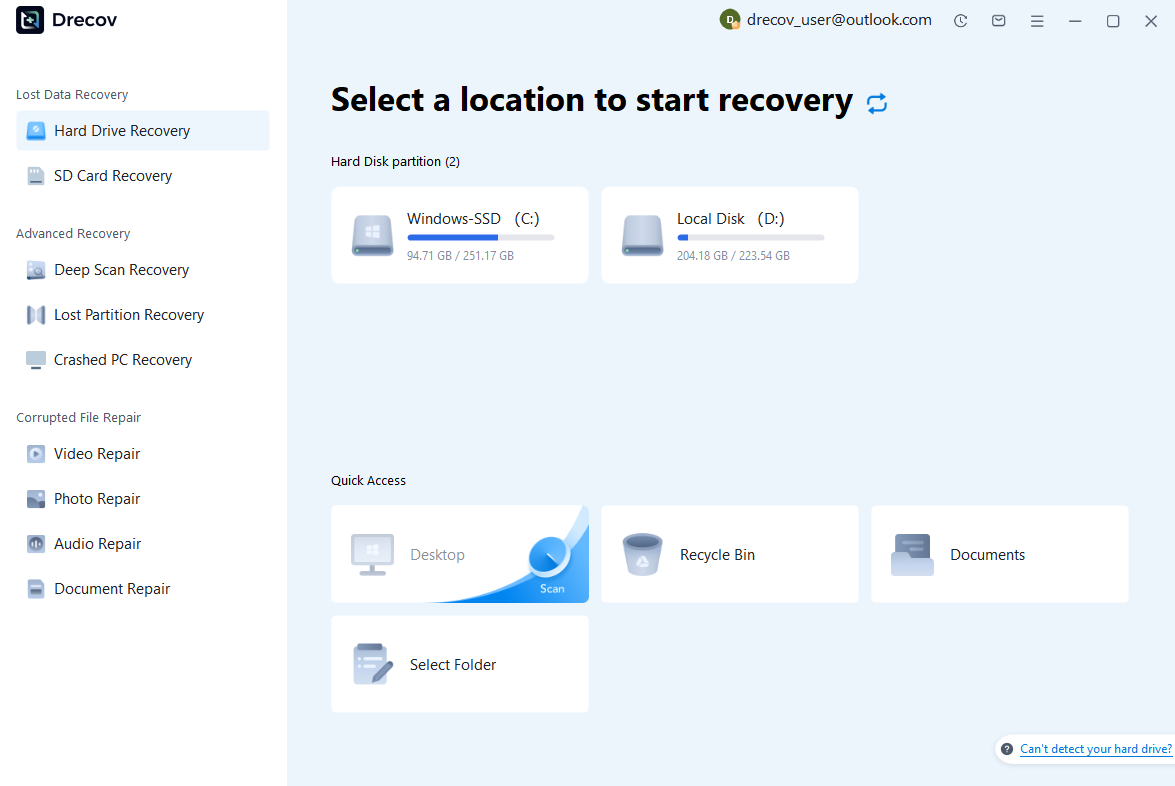
Step 1: Connect the Drive / USB)
Connect your device (SD card, HDD/SSD, or USB drive) to your computer and launch PandaOffice Drecov. Select the target device and start the scan. The software will perform a quick scan and deep scan to detect lost or deleted data.
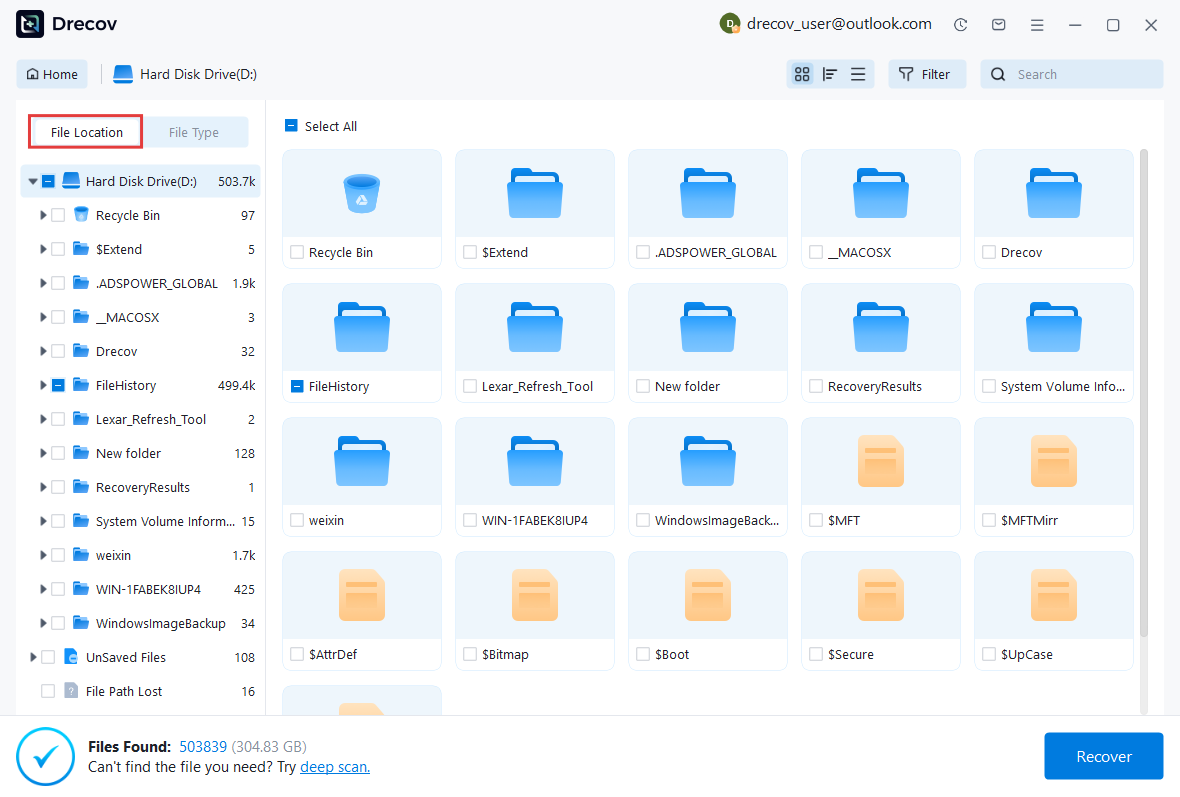
Step 2: Locate and Preview Lost Files
After scanning, browse the detected files and use the preview feature to check recoverable data. You can preview documents (Word, Excel, PDF), photos, and videos to ensure file integrity before recovery.
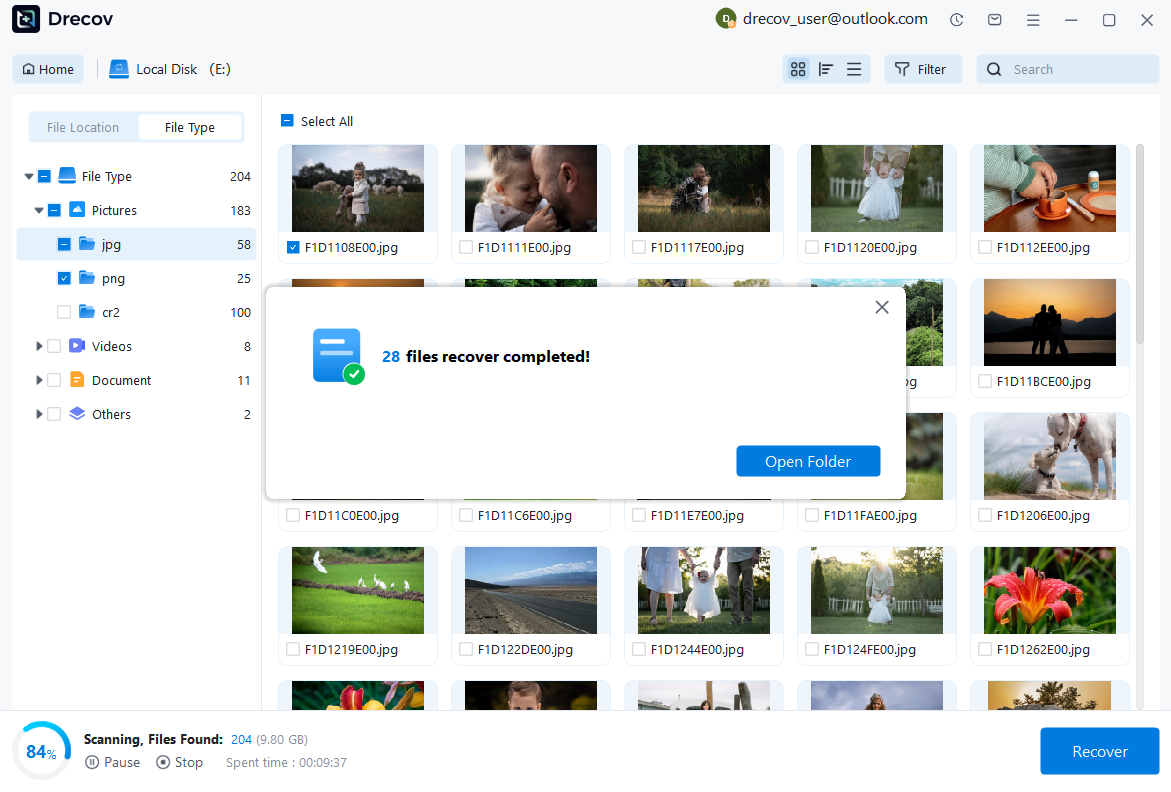
Step 3: Recover and Save to a New Location
Select the files you want to restore and click recover. Save all recovered data to a different drive or location (not the original device) to avoid overwriting lost data.
Why Choose PandaOffice Drecov Recovery Software?
PandaOffice Drecov offers a fast, secure, and user-friendly solution for recovering lost files across multiple scenarios. Whether you need email recovery, ZIP File Recovery, format data recovery, or help to recover deleted drafts Outlook, the software provides reliable recovery performance for both personal and business users.
PandaOffice Drecov supports recovery from formatted hard drives, SSDs, USB drives, SD cards, and external storage devices. Its advanced scanning engine can locate deleted archives, damaged ZIP files, lost Outlook drafts, and accidentally removed documents with high accuracy. For users searching for how to find deleted messages in Teams, PandaOffice Drecov can also help recover exported chat files, attachments, and related local cache data when available.
After recovery, test the file again. If the audio stream was damaged because of storage issues, a recovered version may play normally.
This method is particularly useful when only a few files exhibit audio problems while VLC works correctly with all other media.
This method can help users recover files from floppy disk storage after accidental deletion, formatting, or logical corruption.
This process is highly effective for adata sd card recovery, especially when file system damage prevents normal access.
⚠️ Warning: Never save recovered files back to the original SD card, as this may overwrite other recoverable data.
Method 4: Restore Files from Backup Sources
Before assuming data is permanently lost, it is always worth checking whether backups already exist. Many users unknowingly sync their files to cloud storage or local backup systems.
Test Environment
- Operating System: Windows 10/11
- Storage Device: Adata SD Card Used in Camera/Phone
- Backup Sources: Google Photos, OneDrive, Local Backup Drive
Start by checking cloud services linked to your devices. For example, smartphones often automatically upload photos and videos to services like Google Photos or manufacturer cloud systems.
Next, check local backup folders on your computer. Many users copy SD card contents after transferring files, creating duplicate storage locations.
If you use backup software or file history tools, restore previous versions of folders where the missing files were stored.
Even partial backups can significantly reduce data loss impact.
While this method does not technically involve sd card data recovery software, it is often the fastest and safest way to restore important files.
Method 5: Reassign a Drive Letter to the SD Card
In some cases, the SD card is not damaged at all—the issue lies in how the system recognizes the device.
Windows may fail to assign a drive letter, making the card invisible in File Explorer even though it is detected by the system.
Test Environment
- Operating System: Windows 11 Pro
- Storage Device: Adata SD Card
- Tool Used: Disk Management Utility
To fix this, open Disk Management by right-clicking the Start menu.
Locate the SD card in the list of storage devices. If it appears without a drive letter, right-click and select “Change Drive Letter and Paths.”
Assign an available letter and confirm the changes.
After reconnecting the card, check File Explorer again. In many cases, the missing data becomes accessible immediately.
This method does not recover deleted files, but it resolves recognition issues that often appear similar to data loss.
⚠️ Warning: If the card repeatedly disconnects or fails to appear in Disk Management, it may indicate hardware failure.
Choosing the Right SD Card Recovery Software for Adata Devices
Key Features of Reliable Recovery Tools
Not all recovery tools offer the same performance. When selecting sd card recovery software, certain features are essential for effective recovery.
A strong recovery tool should include deep scanning capabilities, allowing it to search beyond visible file structures and locate hidden data fragments.
Preview functionality is also important because it helps users verify file integrity before recovery.
Additionally, support for multiple file types—including images, videos, documents, and compressed files—ensures that all recoverable content can be restored.
The ability to handle both corrupted and formatted cards is another critical feature.
Why Professional Recovery Software Matters
While free tools can handle simple deletion cases, more complex issues such as formatting or file system corruption often require advanced solutions.
Professional-grade sd card data recovery software can analyze damaged storage sectors and reconstruct file structures that basic tools cannot detect.
This makes them more reliable for critical data recovery situations where file integrity is essential.
Understanding Adata Micro SD Card Recovery Needs
Different devices use SD cards in different ways. Cameras, drones, smartphones, and dashcams all generate unique file structures and storage patterns.
Because of this, adata micro sd card recovery often requires software that supports a wide range of file systems and media formats.
Choosing compatible tools improves both scan accuracy and recovery success rates.
Frequently Asked Questions About Adata SD Card Recovery
Can I Recover Files After Formatting an Adata SD Card?
Yes, in many cases formatted files can still be recovered. Quick formatting usually removes file indexing rather than permanently deleting data, allowing recovery software to reconstruct lost files if they have not been overwritten.
What Is the Best Adata SD Card Recovery Tool?
The best tool depends on the situation, but effective recovery software should include deep scanning, file preview, and support for multiple file formats. Tools like adata sd card recovery tool solutions are commonly used for this purpose.
Is Free SD Card Recovery Software Effective?
Free recovery tools can work for simple deletion cases. However, they often have limitations in scan depth, file recovery size, and format support compared to professional solutions.
Can Corrupted SD Cards Be Recovered?
Yes, if the damage is logical rather than physical. In many cases, sd card recovery software can bypass corrupted file structures and retrieve data directly from storage sectors.
Will Recovery Affect My SD Card?
Recovery processes are generally safe, but improper handling—such as saving recovered files back to the same card—can overwrite remaining data.
Final Thoughts on Adata SD Card Recovery
Data loss on an SD card can be stressful, but it does not always mean permanent loss. With the right approach, many files can be recovered successfully.
The key is to act quickly and avoid using the SD card after data loss occurs. Simple checks like hidden files or drive letter fixes may resolve minor issues, while advanced sd card recovery software is required for more complex cases.
Tools like adata sd card recovery tool solutions can significantly improve recovery success when formatting or corruption occurs.
Ultimately, prevention is just as important as recovery. Regular backups, safe device removal, and careful handling of storage cards can greatly reduce the risk of future data loss.
By following the methods outlined in this guide, users can maximize their chances of successful adata sd card recovery and protect their valuable files more effectively in the future.





