







Understanding EPUB File and EPUB File Format Basics
The epub file format is one of the most widely used standards for digital books and electronic publications. An epub file is essentially a compressed package that contains text, images, fonts, and layout information, allowing content to adapt dynamically to different screen sizes. This is why epub files are preferred for smartphones, tablets, and e-readers compared to fixed-layout formats.
Unlike traditional documents, an .epub file is built using HTML and CSS technologies, meaning its content is reflowable. This allows readers to adjust font size, spacing, and screen orientation without breaking the layout. The flexibility of the epub file format makes it ideal for modern digital reading experiences.
In real-world usage, EPUB has become a global standard for e-books distributed through platforms like online bookstores, libraries, and educational systems. Many readers specifically search for how can i open epub file because not all devices support this format natively.
On modern systems such as Windows 11 or macOS Sonoma, EPUB support is improving, but users still often rely on third-party readers for full compatibility. This makes understanding the epub file format essential for smooth digital reading.
Why EPUB Files Sometimes Cannot Be Opened
Although the epub file format is widely supported, users still encounter issues when trying to open epub files on certain devices. One of the most common reasons is missing software support. Without a dedicated EPUB reader, the system may not recognize the file at all.
Another issue is compatibility differences between devices. For example, an epub file created with advanced formatting may not display correctly on older e-readers or outdated applications. This leads to broken layouts or unreadable content.
File corruption is also a significant factor. A damaged .epub file may fail to open entirely, especially if its internal structure (HTML, metadata, or images) is incomplete or broken.
⚠️Warning: Corrupted EPUB Files May Appear Blank
A damaged epub file format can sometimes open but display empty pages or missing content due to broken internal links.
In addition, some users confuse EPUB with other formats like PDF or MOBI, which leads to incorrect software usage and opening failures.
How to Open EPUB File on Different Devices and Platforms
Below are several practical methods to open epub files across different systems, based on real-world usage scenarios.
Method 1: Open EPUB File Using Apple Books
When using a macOS environment such as Sonoma on a MacBook Air M2, Apple Books provides native support for epub file format without additional installation.
Steps:
- Locate the epub file in Finder
- Right-click and choose “Open With”
- Select Apple Books
- The file will automatically import into the library
- Start reading with adjustable display settings
This method is ideal for users who want a clean, integrated reading experience without third-party tools.
Method 2: Open EPUB Files on Windows Using Calibre
In a Windows 11 environment, Calibre is one of the most reliable tools for handling epub files.
Steps:
- Install Calibre on Windows
- Launch the application
- Click “Add Books” and import the .epub file
- Double-click to open and read
- Adjust reading preferences as needed
Calibre also supports library management, making it useful for users with large ebook collections.
Method 3: Open EPUB File on Android Devices
On Android 14 devices, EPUB support is commonly provided through apps like Google Play Books.
Steps:
- Download Google Play Books or similar reader
- Upload or import the epub file format
- Open the file from your library
- Adjust reading settings like font size and theme
- Continue reading offline if downloaded
This method is highly convenient for mobile reading.
Method 4: Open EPUB Files Using Browser-Based Readers
In a Chrome browser environment, online EPUB readers offer quick access without installation.
Steps:
- Open a trusted online EPUB viewer
- Upload the epub file
- Wait for processing
- Read directly in the browser
- Adjust display settings if available
This method is useful for temporary access to epub files.
Method 5: Convert EPUB File Format for Compatibility
In a Windows 10 environment using Calibre, converting EPUB files into PDF or MOBI can improve compatibility across older devices.
Steps:
- Open Calibre
- Import the epub file format
- Click “Convert Books”
- Choose output format (PDF or MOBI)
- Start conversion and save file
This method is helpful when devices cannot directly open EPUB content.
Method 6: Advanced EPUB File Recovery Using PandaOffice Drecov
In cases where an epub file is corrupted or cannot open due to file damage, recovery may be necessary before attempting reading or conversion.
In a Windows 11 environment where storage corruption or incomplete downloads occur, PandaOffice Drecov can be used to scan storage devices and recover damaged ebook data. It helps restore readable fragments of epub files, making them accessible again for reading or conversion.
Once recovered, users can open the file using Calibre or other EPUB readers depending on the device.
⚠️Warning: Avoid Downloading EPUB Files from Untrusted Sources
Unverified epub file format downloads may contain broken or malicious content that cannot be safely opened.
Common Problems When Opening EPUB Files
Users often experience issues such as unsupported format errors, missing images, or broken layouts when opening epub files. These problems usually occur due to incomplete downloads, outdated readers, or incompatible formatting styles within the epub file format.
Large EPUB files may also load slowly on older devices, especially if they contain high-resolution images or complex layouts.
Common Problems When Opening EPUB Files and How to Fix Them
Even though the epub file format is widely supported, users still encounter a variety of issues when working with epub files across different devices. One frequent problem is that an epub file fails to open even after installing a reader. This often happens when the file structure is incomplete or the application does not fully support modern EPUB standards.
Another common issue is layout distortion. Some epub files may open correctly but display broken formatting, misaligned text, or missing images. This usually occurs when the reading app does not properly interpret the CSS styling embedded inside the .epub file.
In other cases, users report slow loading or freezing when opening large epub file format books. This is especially common on older smartphones or low-memory devices where rendering complex EPUB content becomes resource-intensive.
⚠️Warning: Do Not Open EPUB Files from Unknown Sources
Downloading epub files from untrusted websites may lead to corrupted layouts, missing content, or security risks.
Method 1: Fix EPUB Display Issues by Changing Reader Settings
In a Windows 11 environment using Calibre or similar readers, many rendering problems can be solved by adjusting display settings rather than changing the file itself.
Steps:
- Open the epub file format in your reader
- Go to display or rendering settings
- Disable custom fonts or reset styling
- Switch to default reading mode
- Reopen the epub file to check improvements
This method helps resolve formatting issues caused by incompatible styling interpretations.
Method 2: Improve EPUB Reading Performance on Mobile Devices
In an Android 14 environment using Google Play Books, performance issues are often related to background processes or large file sizes.
Steps:
- Close unused background apps
- Open the epub files in a dedicated reader
- Enable simplified reading mode if available
- Reduce font rendering complexity
- Reopen the book for smoother scrolling
This helps improve responsiveness when handling large epub file format content.
Method 3: Convert EPUB Files for Better Compatibility
In a Windows 10 environment using Calibre conversion tools, converting EPUB files into PDF or other formats can solve compatibility issues.
Steps:
- Import the epub file format into Calibre
- Select “Convert Books”
- Choose PDF or MOBI as output format
- Adjust layout and font settings
- Start conversion and save output file
This method ensures broader compatibility across devices that struggle with epub files.
Method 4: Update EPUB Reader Applications
In a macOS Sonoma environment using Apple Books or third-party readers, outdated software can cause file compatibility issues.
Steps:
- Open App Store or software manager
- Check for updates to EPUB reader apps
- Install latest version
- Restart application
- Reopen the epub file
Updated software improves compatibility with modern epub file format standards.
Method 5: Recover Damaged EPUB Files Using PandaOffice Drecov
When an epub file becomes corrupted due to incomplete downloads or storage errors, standard readers may fail to open it entirely. In such cases, recovery is necessary before any reading or conversion.
In a Windows 11 environment, PandaOffice Drecov can scan storage devices such as hard drives or USB drives to locate damaged or deleted ebook data. It helps reconstruct readable portions of epub files, allowing users to restore access to their digital books.
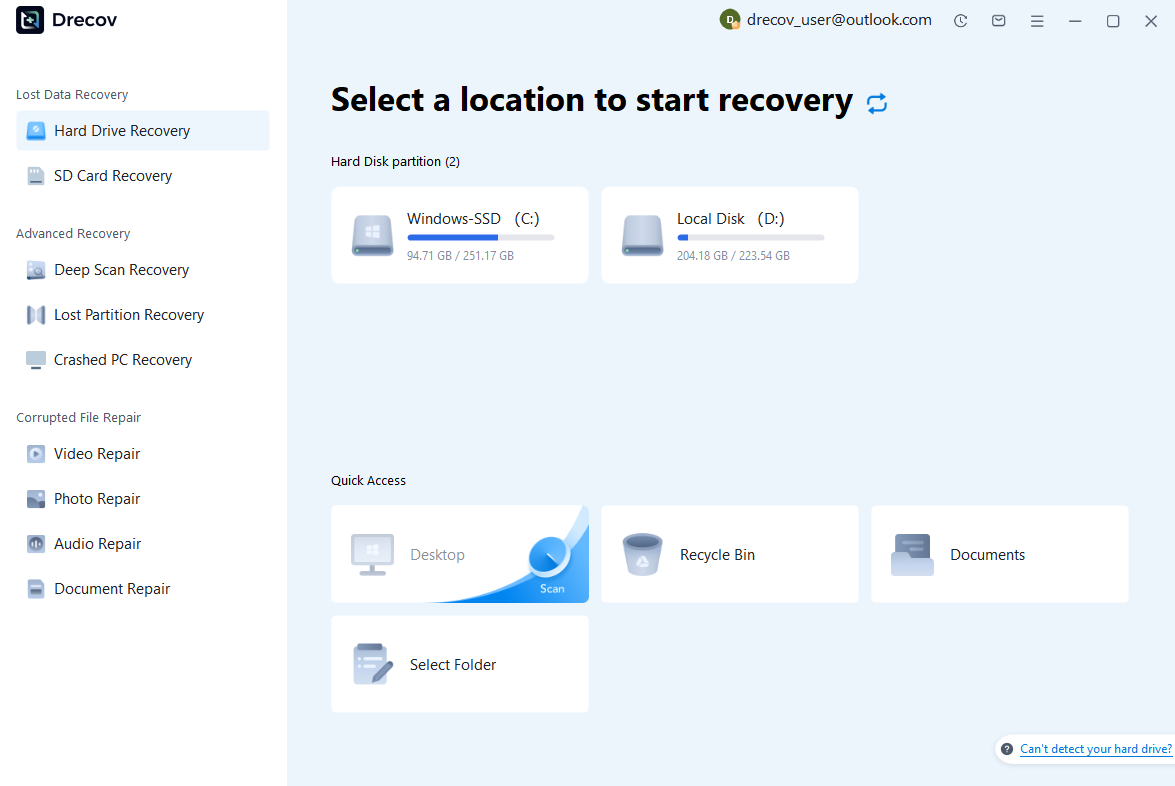
Step 1: Connect the Drive / USB)
Connect your device (SD card, HDD/SSD, or USB drive) to your computer and launch PandaOffice Drecov. Select the target device and start the scan. The software will perform a quick scan and deep scan to detect lost or deleted data.
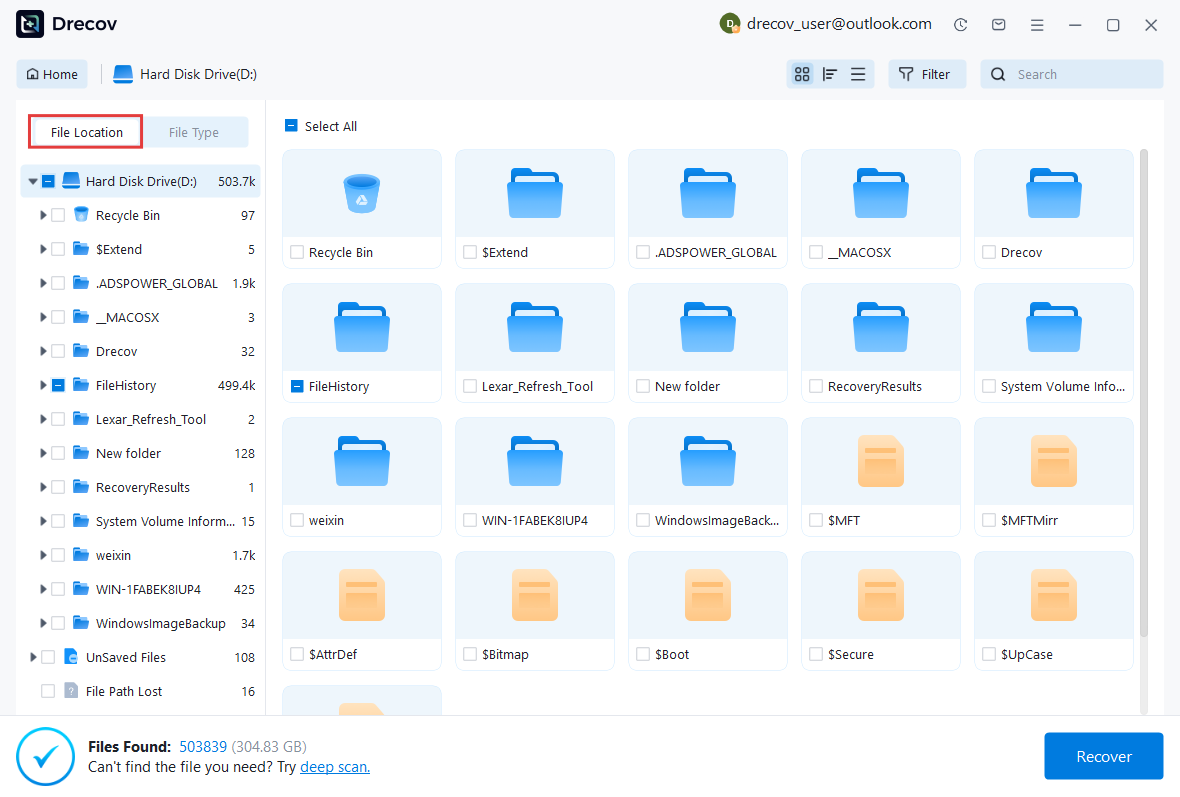
Step 2: Locate and Preview Lost Files
After scanning, browse the detected files and use the preview feature to check recoverable data. You can preview documents (Word, Excel, PDF), photos, and videos to ensure file integrity before recovery.
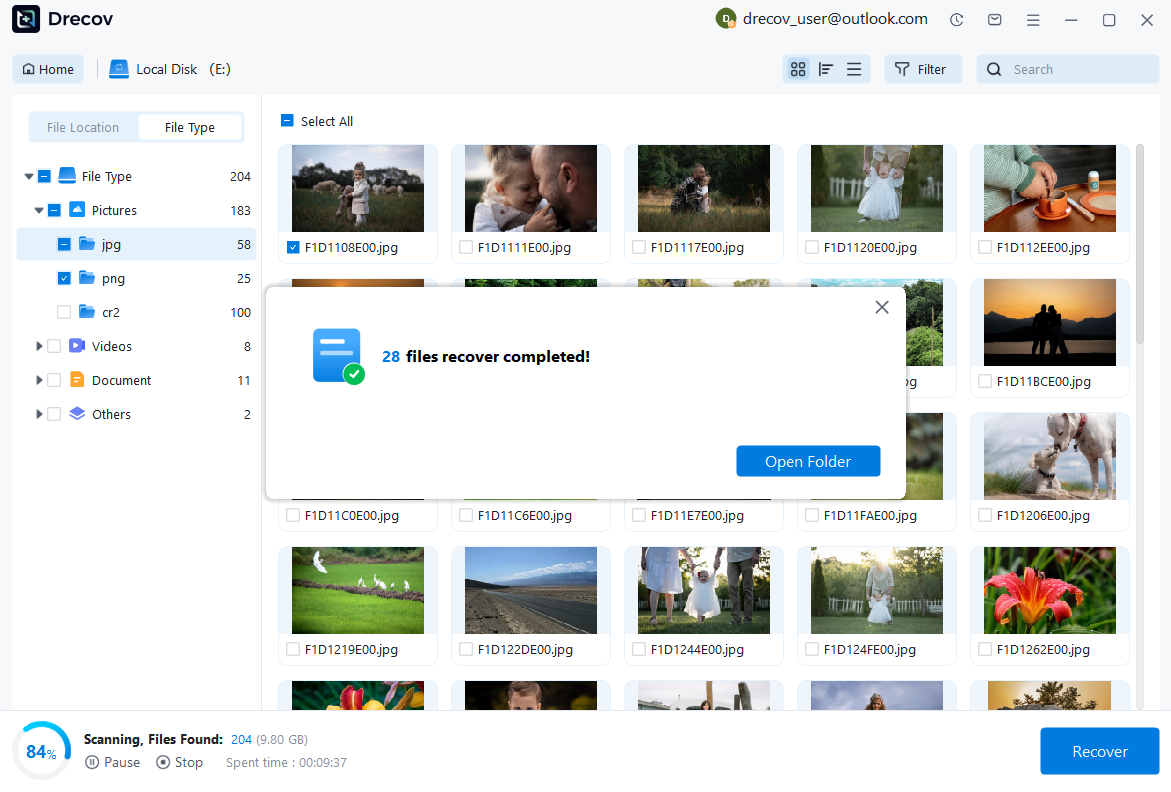
Step 3: Recover and Save to a New Location
Select the files you want to restore and click recover. Save all recovered data to a different drive or location (not the original device) to avoid overwriting lost data.
Why Choose PandaOffice Drecov Recovery Software?
PandaOffice Drecov offers a fast, secure, and user-friendly solution for recovering lost files across multiple scenarios. Whether you need email recovery, ZIP File Recovery, format data recovery, or help to recover deleted drafts Outlook, the software provides reliable recovery performance for both personal and business users.
PandaOffice Drecov supports recovery from formatted hard drives, SSDs, USB drives, SD cards, and external storage devices. Its advanced scanning engine can locate deleted archives, damaged ZIP files, lost Outlook drafts, and accidentally removed documents with high accuracy. For users searching for how to find deleted messages in Teams, PandaOffice Drecov can also help recover exported chat files, attachments, and related local cache data when available.
After recovery, the restored epub file format can be opened using Calibre or converted into more stable formats like PDF for long-term use.
⚠️Warning: Avoid Repeatedly Opening Corrupted EPUB Files
Repeated attempts to open a damaged .epub file may cause reader applications to freeze or crash.
Best Practices for Managing EPUB Files Efficiently
To ensure a smooth reading experience, users should follow several best practices when handling epub files. First, always download books from trusted sources to avoid corrupted or incomplete epub file format structures.
Second, regularly update your reading applications to ensure compatibility with the latest EPUB standards. Many issues with how to open epub file scenarios are simply caused by outdated software.
Third, organize your digital library properly. Keeping epub files in structured folders helps prevent confusion and makes large collections easier to manage.
Finally, always back up important ebooks, especially if they contain personalized notes or highlights.
Frequently Asked Questions About EPUB File Format
What is an EPUB file and why is it used?
An epub file format is a digital ebook standard designed for flexible reading across different screen sizes and devices.
How can I open EPUB file on any device?
You can open epub files using dedicated apps like Apple Books, Calibre, Google Play Books, or browser-based readers.
Is EPUB better than PDF?
In many cases, yes. The epub file format is reflowable, meaning it adapts to screen size, while PDF has a fixed layout.
Why can’t I open some EPUB files?
This usually happens due to corrupted files, unsupported formatting, or missing EPUB reader software.
Conclusion: Key Takeaways on EPUB File Format
The epub file format is one of the most flexible and widely used standards for digital reading. It allows users to enjoy reflowable text, adjustable layouts, and cross-device compatibility, making epub files ideal for modern ebooks.
However, issues such as compatibility errors, corrupted downloads, or outdated readers can still affect how users access content. Understanding how to open epub file correctly ensures a smoother reading experience across different platforms.
For damaged ebooks, recovery tools like PandaOffice Drecov can help restore unreadable files in a Windows environment before conversion or reuse.
Overall, choosing the right reader, maintaining updated software, and managing files properly are key to ensuring stable and enjoyable use of the epub file format in any digital reading workflow.






