







Losing files from a storage device can be frustrating, especially when important photos, videos, work documents, or backups are involved. Although SimpleTech storage products were popular for many years, many users still rely on these devices today for data storage and backup purposes. Unfortunately, accidental deletion, formatting, corruption, and hardware issues can lead to unexpected data loss.
If your SimpleTech external hard drive suddenly stops working or important files disappear, recovery may still be possible. The success rate depends on the cause of the problem, whether the drive has physical damage, and how quickly recovery actions are taken.
This guide explains common causes of data loss, how to determine whether recovery is possible, and several proven methods to recover files from an external hard drive SimpleTech device.
Understanding Data Loss on a SimpleTech External Hard Drive
What Is a SimpleTech External Hard Drive?
SimpleTech was a well-known storage manufacturer that produced external hard drives, portable storage devices, flash drives, and backup solutions. Many of these devices are still in use because of their reliability and large storage capacities.
A typical SimpleTech external hard drive may be used to store:
- Family photos
- Business documents
- Music collections
- Video projects
- Backup archives
Because these drives often contain years of valuable information, unexpected data loss can become a serious issue.
How Data Disappears from a SimpleTech Drive
Many users assume files are permanently gone once they disappear. In reality, data often remains on the drive until it is overwritten.
Common situations include:
- Accidental file deletion
- Formatting mistakes
- File system corruption
- Virus infections
- Power interruptions
- Partition loss
In these cases, recovery may still be possible if the drive is handled correctly.
Can Files Be Recovered Successfully?
In many situations, yes.
If the storage sectors containing the original files have not been overwritten, recovery software may be able to locate and restore the missing data.
However, recovery becomes more difficult when:
- New files have been written to the drive.
- Physical damage exists.
- Severe corruption affects the file system.
- Internal hardware components fail.
⚠️ Warning: Stop using the drive immediately after data loss is discovered. Continued use may overwrite recoverable files.
Common Reasons for Data Loss on External Hard Drive SimpleTech Devices
Accidental File Deletion
One of the most common causes of data loss is accidental deletion.
Users may:
- Delete the wrong folder.
- Empty the Recycle Bin.
- Remove backup archives.
- Use Shift + Delete unintentionally.
Although the files appear gone, the actual data may still exist on the drive.
Accidental Formatting
Formatting a drive can instantly make large amounts of data inaccessible.
This often occurs when:
- Connecting the drive to a new computer.
- Reinstalling Windows.
- Converting file systems.
- Initializing the wrong disk.
Quick formatting generally removes file references while leaving much of the original data intact.
File System Corruption
A corrupted file system may prevent access to stored data.
Common causes include:
- Sudden power loss
- Unsafe device removal
- Malware attacks
- Software crashes
Users may see messages such as:
- “Drive is not accessible.”
- “You need to format the disk.”
- “File directory is corrupted.”
Virus and Malware Attacks
Malicious software can:
- Hide files
- Encrypt folders
- Delete data
- Damage partitions
Some ransomware attacks specifically target external storage devices connected to the computer.
Physical Hardware Failure
Physical failures represent the most challenging recovery scenario.
Examples include:
- Clicking sounds
- Grinding noises
- PCB failures
- Motor problems
- Head crashes
In these situations, professional assistance may be necessary.
⚠️ Warning: Do not open a hard drive enclosure if you suspect internal damage.
How to Determine Whether Your SimpleTech Drive Can Be Recovered
Check Whether the Drive Is Detected
First, connect the drive to another computer.
Verify whether it appears in:
- File Explorer
- Disk Management
- Device Manager
- BIOS settings
If the device is detected, recovery chances are generally higher.
Evaluate the Type of Data Loss
Different problems require different recovery approaches.
For example:
| Problem | Recovery Possibility |
|---|---|
| Deleted Files | High |
| Quick Format | High |
| Lost Partition | Medium to High |
| Corrupted File System | Medium |
| Physical Failure | Low to Medium |
Identifying the exact issue helps determine the best recovery strategy.
Listen for Unusual Sounds
A healthy drive should operate quietly.
Warning signs include:
- Repeated clicking
- Beeping
- Grinding noises
- Failure to spin
These symptoms may indicate mechanical damage.
Check SMART Information
SMART diagnostics can reveal:
- Bad sectors
- Read errors
- Temperature problems
- Hardware degradation
Monitoring these indicators helps assess the overall health of the drive.
Methods to Recover Data from a SimpleTech External Hard Drive
Recover Deleted Files with PandaOffice Drecov
Test Environment
- Operating System: Windows 11 Pro
- Storage Device: 1TB SimpleTech External HDD
- File System: NTFS
- Data Loss Scenario: Accidental deletion
- Connection Type: USB 3.0
When files have been deleted or lost due to formatting or corruption, recovery software may help restore them before they are overwritten.
PandaOffice Drecov is designed to scan storage devices for lost, deleted, and inaccessible files. It supports recovery from external hard drives, USB flash drives, memory cards, and other storage media.
Steps to Recover Files
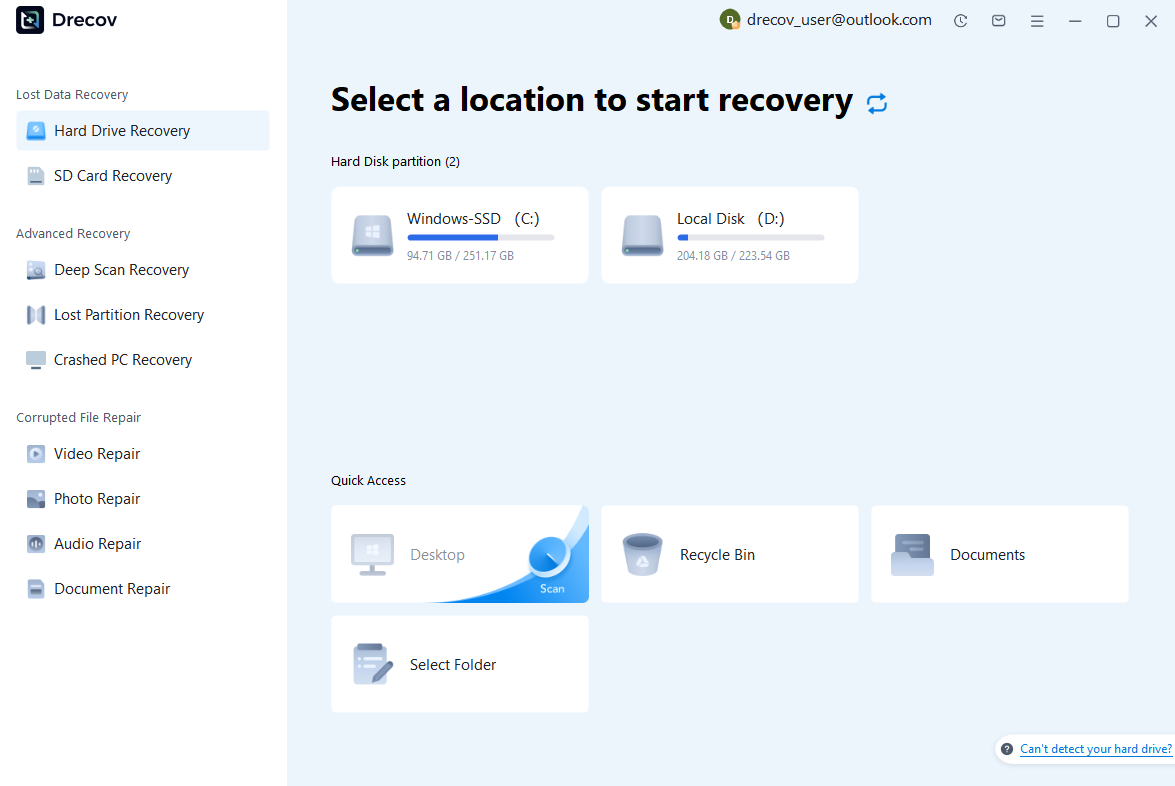
Step 1: Connect the Drive / USB)
Connect your device (SD card, HDD/SSD, or USB drive) to your computer and launch PandaOffice Drecov. Select the target device and start the scan. The software will perform a quick scan and deep scan to detect lost or deleted data.
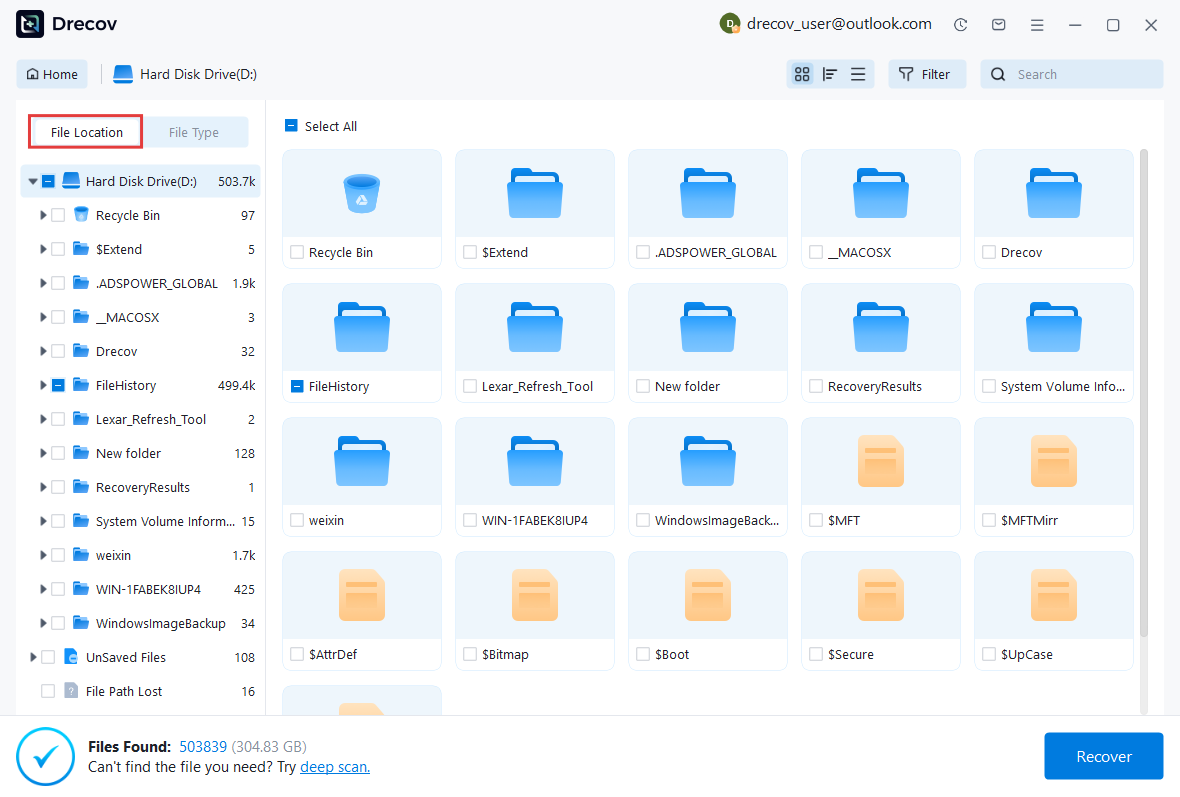
Step 2: Locate and Preview Lost Files
After scanning, browse the detected files and use the preview feature to check recoverable data. You can preview documents (Word, Excel, PDF), photos, and videos to ensure file integrity before recovery.
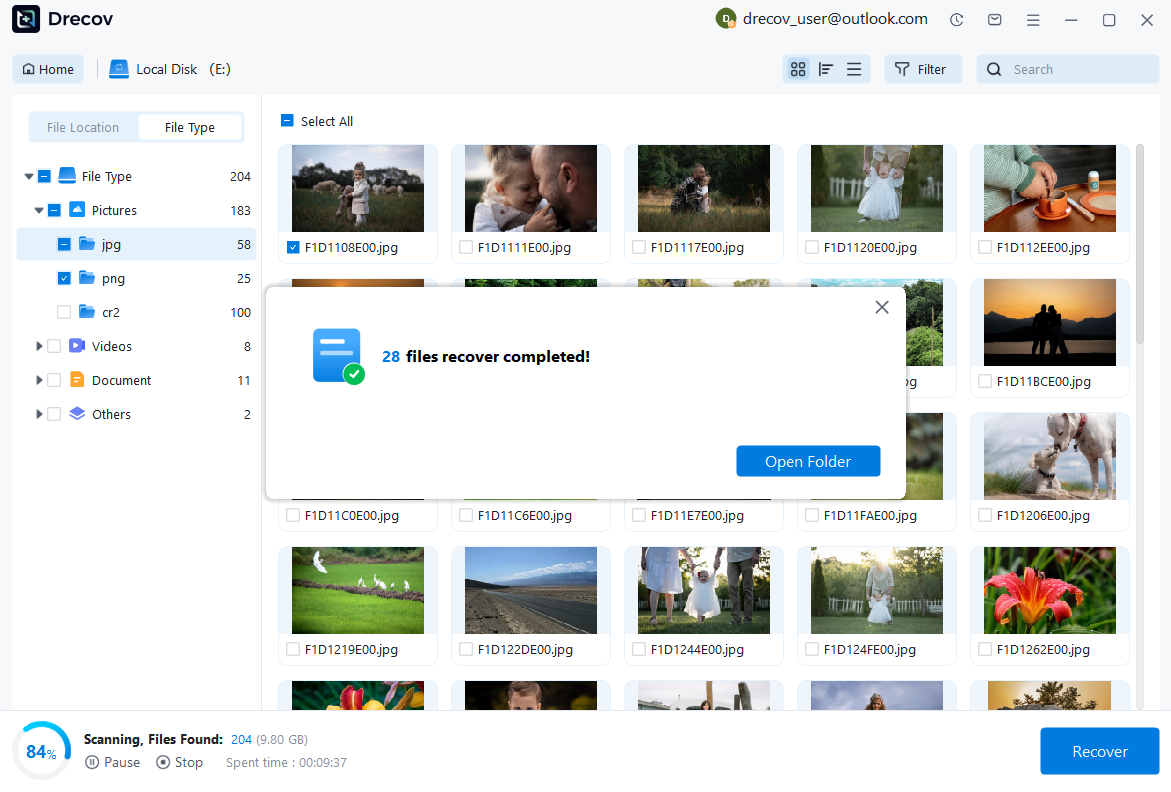
Step 3: Recover and Save to a New Location
Select the files you want to restore and click recover. Save all recovered data to a different drive or location (not the original device) to avoid overwriting lost data.
Why Choose PandaOffice Drecov Recovery Software?
PandaOffice Drecov offers a fast, secure, and user-friendly solution for recovering lost files across multiple scenarios. Whether you need email recovery, ZIP File Recovery, format data recovery, or help to recover deleted drafts Outlook, the software provides reliable recovery performance for both personal and business users.
PandaOffice Drecov supports recovery from formatted hard drives, SSDs, USB drives, SD cards, and external storage devices. Its advanced scanning engine can locate deleted archives, damaged ZIP files, lost Outlook drafts, and accidentally removed documents with high accuracy. For users searching for how to find deleted messages in Teams, PandaOffice Drecov can also help recover exported chat files, attachments, and related local cache data when available.
After recovery, test the file again. If the audio stream was damaged because of storage issues, a recovered version may play normally.
This method is particularly useful when only a few files exhibit audio problems while VLC works correctly with all other media.
This method can help users recover files from floppy disk storage after accidental deletion, formatting, or logical corruption.
Advantages
- Supports multiple file formats
- Deep scanning technology
- Easy-to-use interface
- Suitable for beginners
Limitations
- Cannot recover overwritten data.
- Recovery success depends on drive condition.
⚠️ Warning: Never save recovered files back to the same drive being scanned.
Restore Data from a Backup
Test Environment
- Operating System: Windows 10
- Backup Source: External Backup Drive
- Data Loss Scenario: Accidental formatting
- Backup Age: Two Weeks
If a backup exists, restoration is often the safest recovery option.
Potential backup sources include:
- Windows File History
- Cloud Storage
- NAS Systems
- External Backup Drives
- System Images
Steps to Restore Files
- Locate the latest backup.
- Verify backup integrity.
- Connect a healthy storage device.
- Start the restoration process.
- Confirm recovered files are accessible.
Advantages
- Fast recovery
- High success rate
- Preserves folder structures
- No risk of further data loss
Limitations
- Requires a previously created backup.
- Recently added files may be missing.
Repair File System Errors with CHKDSK
Test Environment
- Operating System: Windows 11 Pro
- Storage Device: 500GB SimpleTech External HDD
- File System: NTFS
- Data Loss Scenario: Drive shows “You need to format the disk before you can use it”
- Connection Type: USB 3.0
Sometimes files are not actually deleted. Instead, file system corruption prevents Windows from accessing the stored data. This often occurs after an unsafe ejection, sudden power loss, or system crash.
Windows includes a built-in utility called CHKDSK that can identify and repair logical file system errors.
Steps to Run CHKDSK
- Connect the drive to your computer.
- Open Command Prompt as Administrator.
- Type:
chkdsk X: /f /r
- Replace X with the correct drive letter.
- Press Enter.
- Wait for the scan and repair process to complete.
- Reconnect the drive and check whether files become accessible.
Advantages
- Built into Windows.
- Free to use.
- Repairs logical file system errors.
- May restore access without additional software.
Limitations
- Does not recover permanently deleted files.
- Ineffective for severe physical damage.
- May not resolve extensive corruption.
This method is often helpful when an external hard drive SimpleTech device is detected by Windows but cannot be opened normally.
Recover Lost Partitions on a SimpleTech External Hard Drive
Test Environment
- Operating System: Windows 10 Pro
- Storage Device: 2TB SimpleTech External HDD
- File System: NTFS
- Data Loss Scenario: Missing partition after accidental deletion
- Connection Type: USB 3.0
Partition loss is another common issue affecting older storage devices.
A partition can disappear due to:
- Accidental deletion
- Formatting mistakes
- Malware activity
- Partition table corruption
- Operating system errors
When a partition is lost, the drive may appear as unallocated space even though the original files still exist.
Steps to Recover a Lost Partition
- Connect the drive to a working computer.
- Launch a partition recovery tool.
- Perform a full disk scan.
- Search for deleted or lost partitions.
- Review the detected results.
- Restore the correct partition.
- Mount the recovered volume.
- Copy important files immediately.
Advantages
- Can restore entire folders.
- May recover original file structures.
- Useful after partition deletion.
Limitations
- Success depends on the amount of overwritten data.
- Severe corruption may prevent reconstruction.
Users often recover large amounts of data from a SimpleTech external hard drive when partition information is the only damaged component.
Use Professional Data Recovery Services
Test Environment
- Storage Device: 4TB SimpleTech HDD
- Failure Type: Mechanical Clicking Noise
- Detection Status: Not Recognized by BIOS
- Data Importance: Critical Business Files
When software-based recovery methods fail, professional recovery services may be the only remaining option.
Specialized laboratories have access to:
- Cleanroom environments
- Firmware repair tools
- Advanced imaging equipment
- Hardware-level recovery technologies
These resources allow technicians to recover data from damaged storage devices that cannot be accessed through conventional methods.
Situations That May Require Professional Recovery
- Clicking hard drives
- Water damage
- Fire damage
- PCB failures
- Severe bad sectors
- Head crashes
Advantages
- Highest success rate for physical failures.
- Advanced diagnostic capabilities.
- Suitable for critical business data.
Limitations
- More expensive than software recovery.
- Recovery cannot be guaranteed.
- Turnaround times vary.
⚠️ Warning: Repeatedly powering on a physically damaged drive may worsen the damage and reduce recovery chances.
Best Practices to Protect Data on SimpleTech Storage Devices
Maintain Regular Backups
Backups remain the most reliable defense against data loss.
A good backup strategy should include:
- Local backups
- External backups
- Cloud backups
Many professionals follow the 3-2-1 backup rule:
- 3 copies of data
- 2 different storage media
- 1 offsite copy
This approach significantly reduces recovery risks.
Safely Eject the Drive
Improperly disconnecting a storage device can lead to corruption.
Before unplugging the drive:
- Close all active files.
- Stop ongoing transfers.
- Use the “Safely Remove Hardware” option.
- Wait for confirmation before disconnecting.
This simple habit can prevent many file system issues.
Monitor Drive Health Regularly
Storage devices often show warning signs before failure occurs.
Watch for:
- Slow performance
- Frequent disconnections
- Unusual noises
- Read/write errors
- Increasing bad sectors
Regular monitoring allows users to back up important data before a complete failure develops.
Protect Against Malware
Security threats remain a common cause of file loss.
To reduce risks:
- Keep antivirus software updated.
- Avoid suspicious downloads.
- Scan external drives regularly.
- Enable ransomware protection when available.
⚠️ Warning: Malware infections can spread quickly to connected external storage devices.
Frequently Asked Questions About SimpleTech Data Recovery
Can Deleted Files Be Recovered from a SimpleTech External Hard Drive?
Yes. In many cases, deleted files remain on the storage device until they are overwritten by new data.
The sooner recovery attempts begin, the higher the likelihood of success.
Why Is My SimpleTech Drive Asking to Be Formatted?
This usually indicates file system corruption.
Possible causes include:
- Unsafe removal
- Power interruption
- Virus infection
- Damaged partition tables
Before formatting the drive, attempt recovery or file system repair.
Can a Formatted SimpleTech Drive Be Recovered?
In many situations, yes.
Quick formatting typically removes file references while leaving much of the original data intact.
Recovery becomes more difficult if new data has been written afterward.
What Should I Do If My Drive Is Clicking?
A clicking sound often suggests mechanical failure.
Immediately:
- Stop using the drive.
- Disconnect it safely.
- Avoid repeated power cycles.
- Consider professional recovery assistance.
How Long Does Data Recovery Take?
Recovery time depends on:
- Drive capacity
- Drive condition
- Amount of data
- Scan method
Simple deletion recovery may take minutes, while deep scans and professional recovery can take significantly longer.
Can a Virus Delete Files on a SimpleTech Drive?
Yes.
Some malware programs can:
- Hide files
- Encrypt folders
- Corrupt partitions
- Permanently delete information
Regular security scans help reduce these risks.
Is Recovery Possible After Physical Damage?
Recovery may still be possible depending on the severity of the damage.
Professional recovery specialists often achieve better results because they can access hardware-level recovery tools unavailable to typical users.
Can I Recover Data Without Software?
If backups exist, you may not need recovery software.
However, when files have been deleted, formatted, or lost due to corruption, recovery tools are often required to locate and restore the data.
How Can I Improve Recovery Success?
The best practices include:
- Stop using the drive immediately.
- Avoid writing new files.
- Create a backup image if possible.
- Use recovery software quickly.
- Seek professional help when physical damage is suspected.
Final Thoughts on SimpleTech Data Recovery
Although storage devices can fail unexpectedly, data loss does not always mean your files are gone forever. Whether the issue involves accidental deletion, formatting, corruption, partition loss, or malware, there are several recovery methods available depending on the condition of the drive.
For logical data loss situations, solutions such as PandaOffice Drecov, backup restoration, CHKDSK repair, and partition recovery may help restore important files from a SimpleTech external hard drive. When physical damage is involved, professional recovery services often provide the best chance of success.
The key to successful recovery is acting quickly. Avoid writing new data to the affected device, identify the cause of the problem, and choose the most appropriate recovery approach. With the right strategy, many users can successfully retrieve valuable information from an external hard drive SimpleTech device and avoid permanent data loss.






