







Understanding PS4 Hard Drive Failure
What Is a PS4 Hard Drive Failure
A PlayStation 4 relies on its internal hard drive to store the operating system, installed games, saved progress, screenshots, and other important data. When that storage device begins to malfunction, users may experience what is commonly referred to as ps4 hard drive failure.
A failing drive does not always stop working immediately. In many cases, the deterioration happens gradually. The console may become slower, games may take longer to load, or random system errors may start appearing. Eventually, the storage device can reach a point where the PS4 is unable to read essential files.
Unlike temporary software glitches, hardware-related storage issues often worsen over time. Recognizing the early warning signs can help prevent complete data loss and avoid unexpected downtime.
Many users first notice problems when games freeze, updates fail, or the system repeatedly enters Safe Mode. These symptoms frequently indicate underlying storage instability rather than a problem with the game itself.
Understanding how hard drive failures develop is the first step toward identifying the right ps4 hard drive fix before the situation becomes more serious.
How the PS4 Storage System Works
The PS4 uses an internal storage drive to manage nearly every operation performed by the console. Whenever a game launches, the system reads data from the drive. Likewise, game updates, downloads, and save files are continuously written to storage.
The hard drive stores:
- System firmware
- Installed applications
- Downloaded games
- Saved game progress
- Media files
Because the drive handles constant read and write operations, it experiences wear throughout its lifespan.
Traditional mechanical hard drives contain moving components that eventually degrade. As these parts age, data access becomes slower and less reliable. This can lead to various ps4 hard drive issues, especially in older consoles that have been used heavily for several years.
A healthy storage device allows the operating system to access files efficiently. Once problems begin developing, the PS4 may struggle to locate or load data correctly, resulting in crashes, freezes, and installation errors.
Why Hard Drive Health Matters for Gaming Performance
Many players focus on graphics performance or internet speed while overlooking storage health. However, a deteriorating drive can have a significant impact on overall gaming performance.
A failing drive may cause:
- Long loading screens
- Game installation failures
- Texture pop-in issues
- Random freezing
- Save file corruption
- Unexpected restarts
These symptoms often appear gradually. Because of this, users may mistake them for software bugs rather than early signs of ps4 hard drive problems.
Storage reliability becomes even more important when dealing with large modern games. Many titles exceed 100GB in size and require constant data streaming from storage. A drive struggling to read data efficiently can negatively affect gameplay quality.
Maintaining storage health helps improve performance, system responsiveness, and long-term console stability.
⚠️ Warning: Repeated storage-related errors should not be ignored, as they may indicate an impending hard drive failure.
Common Signs and Causes of PS4 Hard Drive Problems
Symptoms of a Failing PS4 Hard Drive
Before complete failure occurs, most drives display warning signs.
Test Environment:
- PS4 Slim with original 1TB HDD
- Four years of daily gaming usage
- Mixed digital and physical game library
Common symptoms include:
- Slow startup times
- Frequent application crashes
- Games failing to install
- Corrupted save data
- Black screens during boot
- Repeated Safe Mode prompts
In some cases, players encounter database rebuilding loops or receive messages indicating system storage errors.
The more frequently these symptoms occur, the more likely they are to be connected to ps4 hard drive issues rather than isolated software glitches.
Monitoring these warning signs can help users take action before complete drive failure occurs.
Physical Damage and Hardware Wear
Mechanical hard drives are subject to physical wear over time.
Test Environment:
- PS4 Pro with stock HDD
- Heavy gaming workload
- Continuous operation for several years
Common causes of hardware degradation include:
- Aging drive components
- Excessive heat exposure
- Physical impacts
- Manufacturing defects
- Long-term vibration
Unlike software problems, hardware wear cannot be reversed through updates or system resets.
As internal components deteriorate, the drive may develop bad sectors. These sectors become increasingly difficult for the system to read, leading to game crashes and storage errors.
Many cases of ps4 hard drive failure originate from normal wear accumulated over years of operation.
File System Corruption and Software Issues
Not all storage-related problems originate from failing hardware.
Test Environment:
- PS4 interrupted during game update
- Forced restart during installation
File system corruption can occur when data-writing operations are interrupted.
Possible causes include:
- Power outages
- Sudden shutdowns
- Incomplete updates
- Corrupted downloads
- System crashes
These events may damage storage structures even when the physical drive remains healthy.
As a result, users may experience symptoms that resemble ps4 hard drive problems, despite the drive itself being functional.
Fortunately, software-related corruption is often easier to repair than hardware failure.
Power Interruptions and Improper Shutdowns
Unexpected power loss is one of the leading contributors to storage corruption.
Test Environment:
- PS4 connected without surge protection
- Simulated power interruption during gameplay
When power is removed unexpectedly, the console may be unable to complete active write operations.
Potential consequences include:
- Corrupted game data
- Damaged database entries
- File system inconsistencies
- Boot failures
Over time, repeated interruptions can contribute to both logical corruption and physical storage stress.
For this reason, proper shutdown procedures remain an important preventive measure against ps4 hard drive failure.
Effective Ways to Fix PS4 Hard Drive Issues
Method 1. Rebuild the PS4 Database
Test Environment:
- PS4 Slim 500GB
- Slow menu performance
- Repeated storage warnings
Database rebuilding is one of the safest repair procedures available.
Steps:
- Power off the PS4 completely.
- Hold the power button until the second beep.
- Connect a controller using a USB cable.
- Enter Safe Mode.
- Select “Rebuild Database.”
The process reorganizes system data and repairs indexing issues without deleting installed games.
This solution often resolves minor ps4 hard drive issues caused by corrupted database entries.
Method 2. Check and Reinstall PS4 System Software
Test Environment:
- PS4 experiencing boot failures after update interruption
- USB flash drive prepared with firmware files
When operating system files become corrupted, reinstalling system software may restore functionality.
Steps:
- Download the latest PS4 firmware.
- Copy installation files to a USB drive.
- Boot the console into Safe Mode.
- Choose the reinstall system software option.
- Complete installation.
This approach can resolve software-related ps4 hard drive problems that are not caused by physical storage damage.
⚠️ Warning: Reinstalling system software may erase locally stored data if backups are unavailable.
Method 3. Replace the PS4 Hard Drive
Test Environment:
- PS4 Pro 1TB with original HDD
- Frequent boot failures
- Multiple bad sector warnings
- Database rebuild unsuccessful
If software repairs fail and storage errors continue appearing, replacing the drive may be the most reliable ps4 hard drive fix.
A replacement becomes necessary when symptoms include:
- Continuous freezing
- Repeated Safe Mode loops
- Failed game installations
- Clicking or grinding drive noises
- Persistent storage-related error codes
Steps to replace the drive:
- Power off the PS4 completely.
- Disconnect all cables.
- Remove the hard drive cover.
- Unscrew and slide out the drive tray.
- Remove the old drive.
- Install a compatible replacement drive.
- Reinsert the tray and secure it.
- Reinstall PS4 system software using a USB drive.
Sony allows users to replace internal storage without voiding normal hardware upgrade rights.
Many players choose:
- 1TB HDD replacements
- 2TB HDD upgrades
- SATA SSD upgrades
SSD upgrades often improve loading speeds and overall responsiveness.
After replacement, most ps4 hard drive problems associated with aging hardware disappear immediately.
⚠️ Warning: Always back up save data before replacing the internal drive whenever possible.
Method 4. Recover Important Data Before Replacing the Drive Using PandaOffice Drecov
Test Environment:
- Removed PS4 HDD connected to Windows PC
- External USB adapter
- Partially readable storage drive
Before replacing a failing drive, users may want to recover important files.
In some situations, game captures, exported media, backups, or transferred files may still be accessible even when the PS4 can no longer boot correctly.
PandaOffice Drecov can help scan accessible storage areas and recover available files before permanent replacement or reformatting.
General workflow:
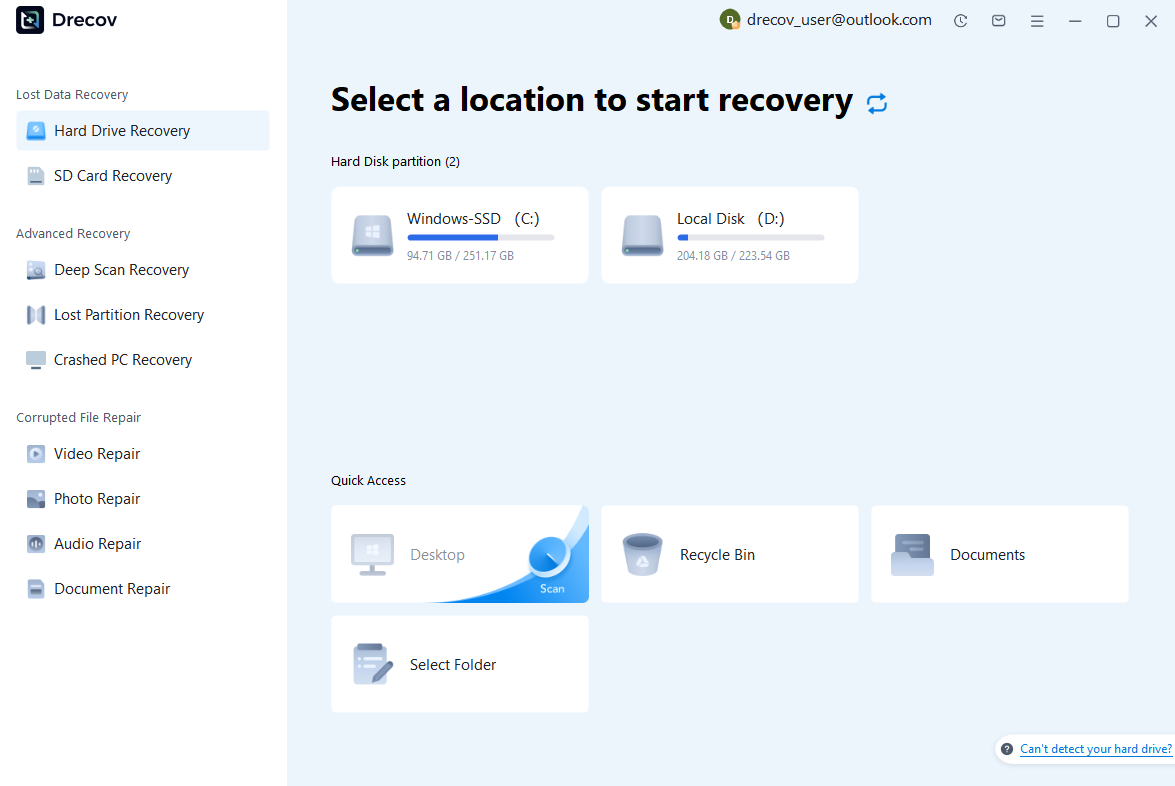
Step 1: Scan the Storage Device (SD Card / Hard Drive / USB)
Connect your device (SD card, HDD/SSD, or USB drive) to your computer and launch PandaOffice Drecov. Select the target device and start the scan. The software will perform a quick scan and deep scan to detect lost or deleted data.
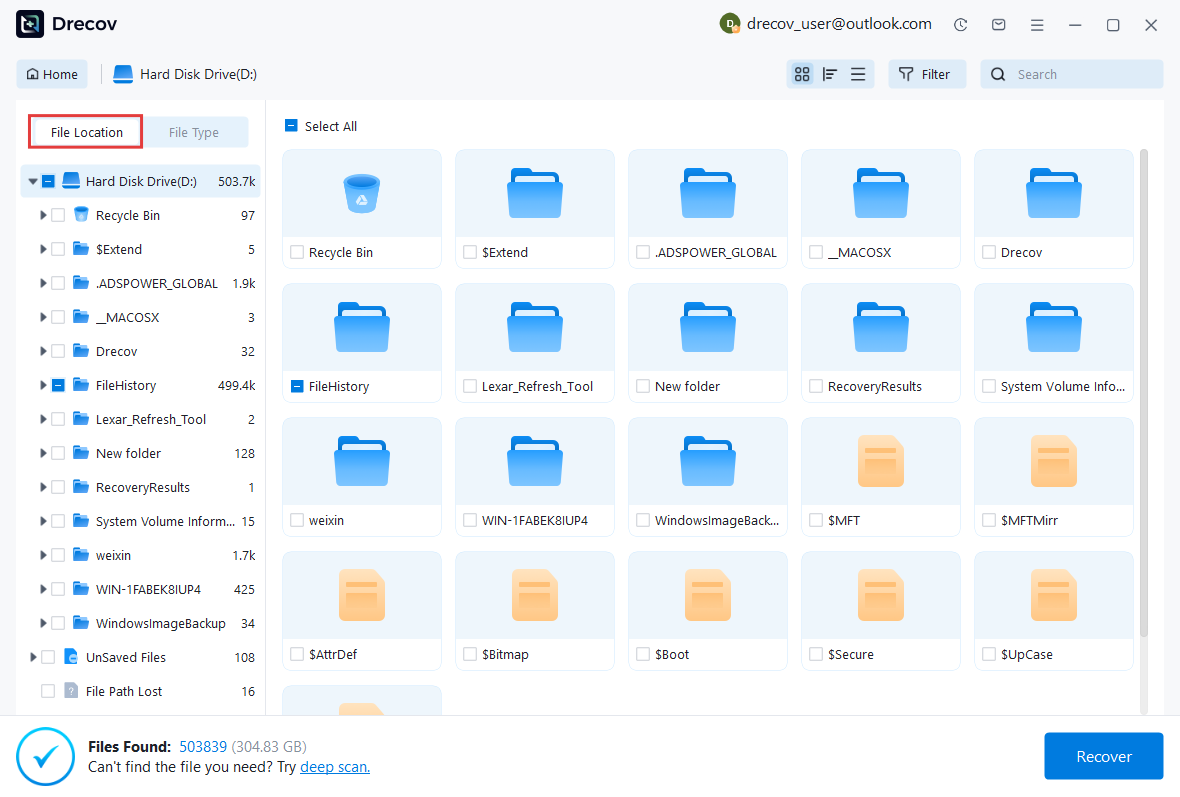
Step 2: Locate and Preview Lost Files
After scanning, browse the detected files and use the preview feature to check recoverable data. You can preview documents (Word, Excel, PDF), photos, and videos to ensure file integrity before recovery.
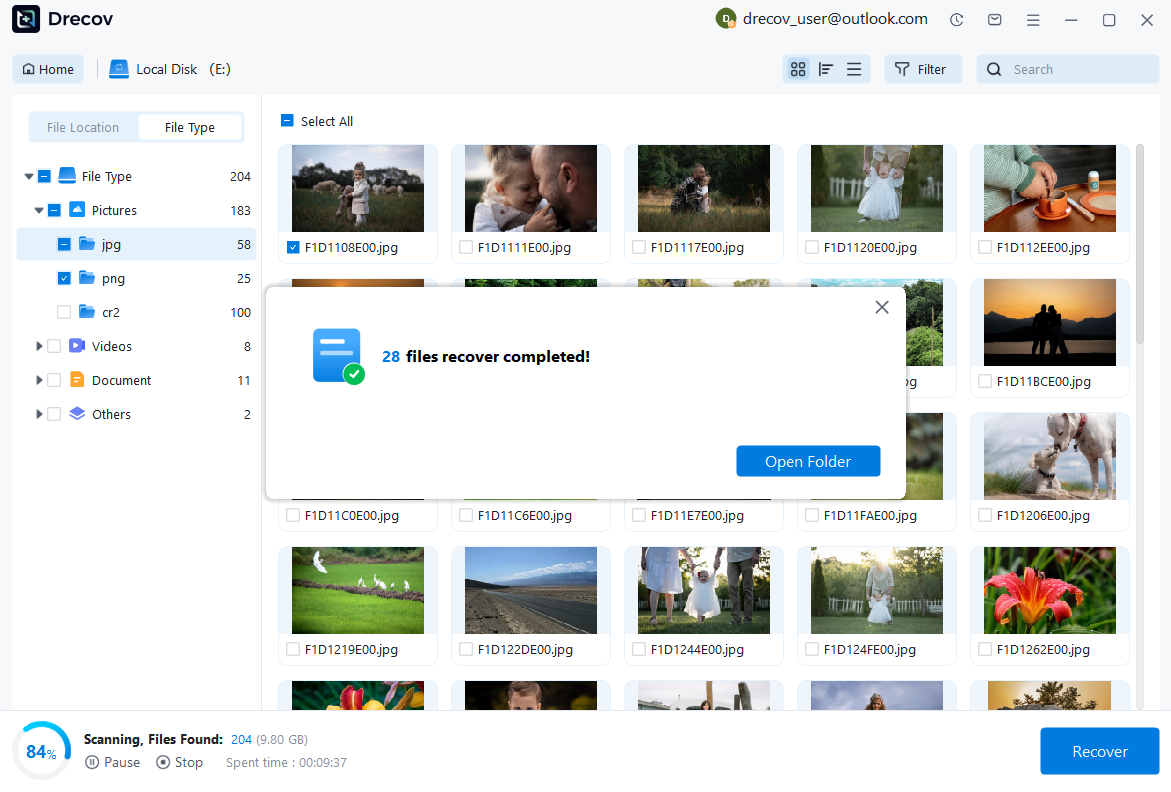
Step 3: Recover and Save to a New Location
Select the files you want to restore and click recover. Save all recovered data to a different drive or location (not the original device) to avoid overwriting lost data.
Why Choose PandaOffice Drecov Recovery Software?
PandaOffice Drecov offers a fast, secure, and user-friendly solution for recovering lost files across multiple scenarios. Whether you need email recovery, ZIP File Recovery, format data recovery, or help to recover deleted drafts Outlook, the software provides reliable recovery performance for both personal and business users.
PandaOffice Drecov supports recovery from formatted hard drives, SSDs, USB drives, SD cards, and external storage devices. Its advanced scanning engine can locate deleted archives, damaged ZIP files, lost Outlook drafts, and accidentally removed documents with high accuracy. For users searching for how to find deleted messages in Teams, PandaOffice Drecov can also help recover exported chat files, attachments, and related local cache data when available.
Key advantages include:
- Deep scan technology for complex data loss situations
- Support for emails, archives, videos, photos, and office documents
- Recovery from accidental deletion, formatting, corruption, and system crashes
- Easy preview before restoring files
- Compatible with Windows and multiple storage devices
Unlike complicated enterprise recovery tools, PandaOffice Drecov keeps the recovery process simple. Users can scan, preview, and restore files in just a few steps without technical expertise.
Whether you are dealing with lost Outlook drafts, corrupted ZIP archives, formatted drives, or missing communication data, PandaOffice Drecov provides an efficient and practical recovery experience designed to minimize downtime and protect important files.
Preventing Future PS4 Hard Drive Failure
Proper Console Shutdown Practices
Test Environment:
- PS4 Slim
- Daily gaming sessions
- Long-term monitoring period
Many storage-related issues originate from improper shutdown behavior.
To reduce the risk of future failures:
- Use the system shutdown menu.
- Wait until power indicators fully turn off.
- Avoid disconnecting power cables directly.
- Allow updates to complete before powering off.
Unexpected interruptions can damage file structures and contribute to long-term storage deterioration.
Users who consistently follow proper shutdown procedures are less likely to experience serious ps4 hard drive issues.
Managing Storage Capacity and Game Installations
Test Environment:
- PS4 Pro with nearly full 1TB storage
- Large digital game library
Storage devices generally perform better when sufficient free space remains available.
Recommended practices include:
- Keeping at least 15–20% free storage
- Removing unused games
- Archiving old captures and media
- Monitoring available space regularly
A nearly full drive can contribute to slower performance and increase stress on storage operations.
Effective storage management helps reduce the likelihood of future ps4 hard drive problems.
Keeping the Console Cool and Well Ventilated
Test Environment:
- PS4 installed in enclosed entertainment cabinet
- Elevated operating temperatures
Heat is one of the most common contributors to hardware degradation.
To improve storage longevity:
- Ensure adequate airflow around the console.
- Remove dust regularly.
- Avoid placing the PS4 in enclosed spaces.
- Keep cooling vents unobstructed.
Lower operating temperatures help extend the lifespan of both the console and its storage device.
Considering an SSD Upgrade
Test Environment:
- PS4 upgraded from 1TB HDD to SATA SSD
- Performance comparison over several months
Although SSDs can still fail, they eliminate many mechanical weaknesses associated with traditional hard drives.
Benefits include:
- Faster game loading
- Improved system responsiveness
- Reduced vibration
- Better shock resistance
- Lower noise levels
For users experiencing recurring ps4 hard drive issues, upgrading to an SSD may improve both performance and reliability.
⚠️ Warning: Verify SSD compatibility before purchasing replacement hardware.
Frequently Asked Questions About PS4 Hard Drive Failure
What Causes PS4 Hard Drive Failure?
Several factors can contribute to ps4 hard drive failure.
The most common causes include:
- Mechanical wear over time
- Excessive heat exposure
- Physical impact
- Power interruptions
- Manufacturing defects
- Repeated improper shutdowns
Most storage devices eventually wear out after years of regular use. The likelihood increases as the drive ages and accumulates more read/write cycles.
Can a Failing PS4 Hard Drive Be Repaired?
In some cases, yes.
If the problem is caused by:
- Database corruption
- File system errors
- Interrupted updates
software repairs may resolve the issue.
However, physical hardware damage usually cannot be permanently repaired.
When bad sectors continue increasing or hardware components deteriorate, replacement is typically the most dependable ps4 hard drive fix.
How Do I Know If My PS4 Hard Drive Is Bad?
Common indicators include:
- Frequent game crashes
- Slow startup times
- Safe Mode loops
- Corrupted save files
- Storage error messages
- Installation failures
A combination of these symptoms often suggests developing ps4 hard drive problems.
Users noticing multiple warning signs should back up important data as soon as possible.
Should I Upgrade to an SSD?
Many PS4 owners choose SSD upgrades because they offer several advantages over traditional hard drives.
Benefits include:
- Faster loading screens
- Reduced texture-loading delays
- Improved menu responsiveness
- Better durability
Although SSDs cost more per gigabyte, many users consider the performance improvements worthwhile.
For consoles experiencing aging storage hardware, SSD upgrades can provide both reliability and speed improvements.
Will Replacing the Hard Drive Delete My Games?
Yes.
Installing a new drive requires reinstalling:
- System software
- Downloaded games
- Updates
Users should back up:
- Save files
- Screenshots
- Videos
- Important settings
before replacing storage hardware whenever possible.
Final Thoughts on PS4 Hard Drive Health
Choosing the Best Solution for Long-Term Reliability
Storage reliability plays a critical role in overall PlayStation performance.
While occasional software glitches can mimic drive-related problems, repeated storage errors often indicate deeper issues that should not be ignored.
Most cases of ps4 hard drive issues begin with relatively small warning signs such as slow loading, game crashes, or database rebuilding prompts. Addressing these symptoms early may prevent complete drive failure later.
For minor software-related problems, rebuilding the database and reinstalling system software are often effective solutions.
When hardware deterioration becomes the cause, replacing the drive is generally the most reliable ps4 hard drive fix.
Users who maintain healthy storage habits, keep sufficient free space available, perform proper shutdowns, and monitor system performance can significantly reduce the likelihood of future failures.
Whether you continue using a traditional HDD or upgrade to an SSD, proactive maintenance remains the best defense against unexpected ps4 hard drive failure and long-term data loss.






